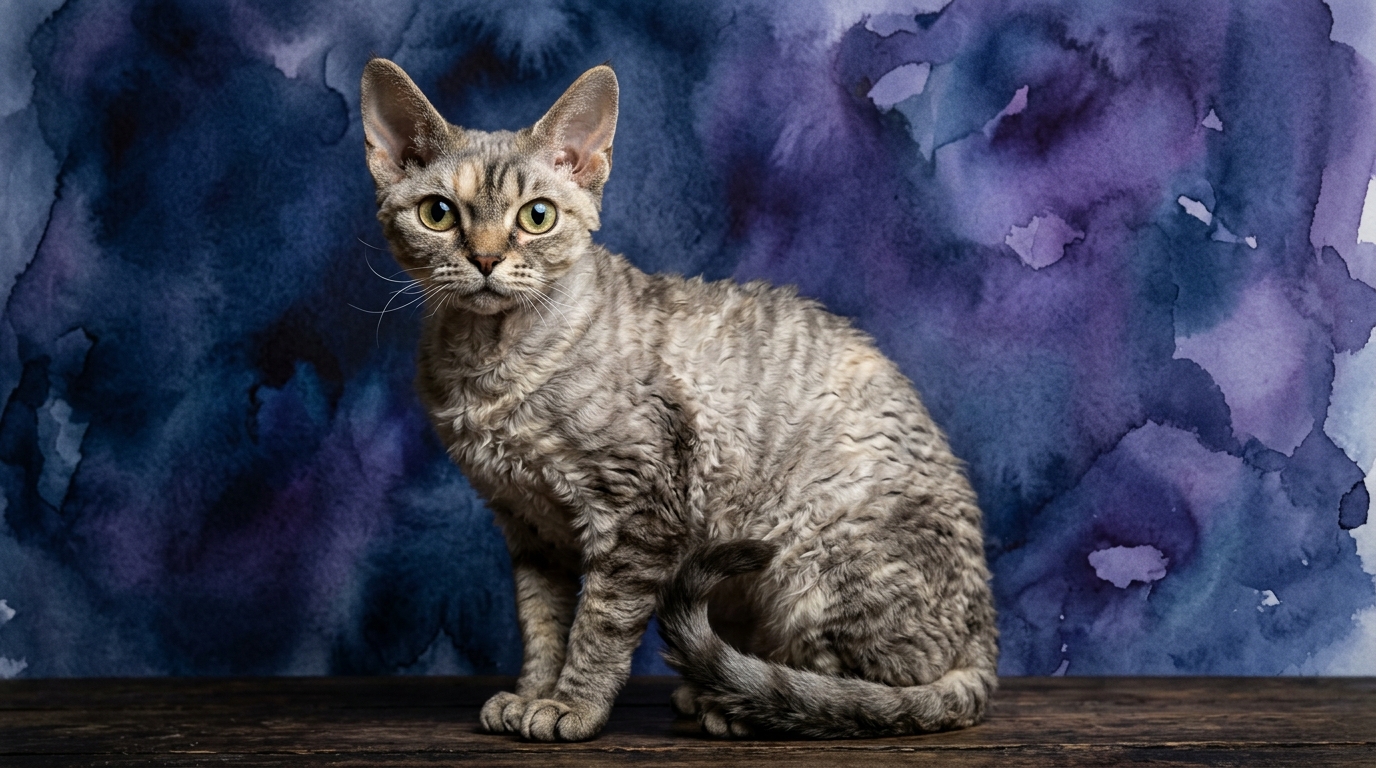
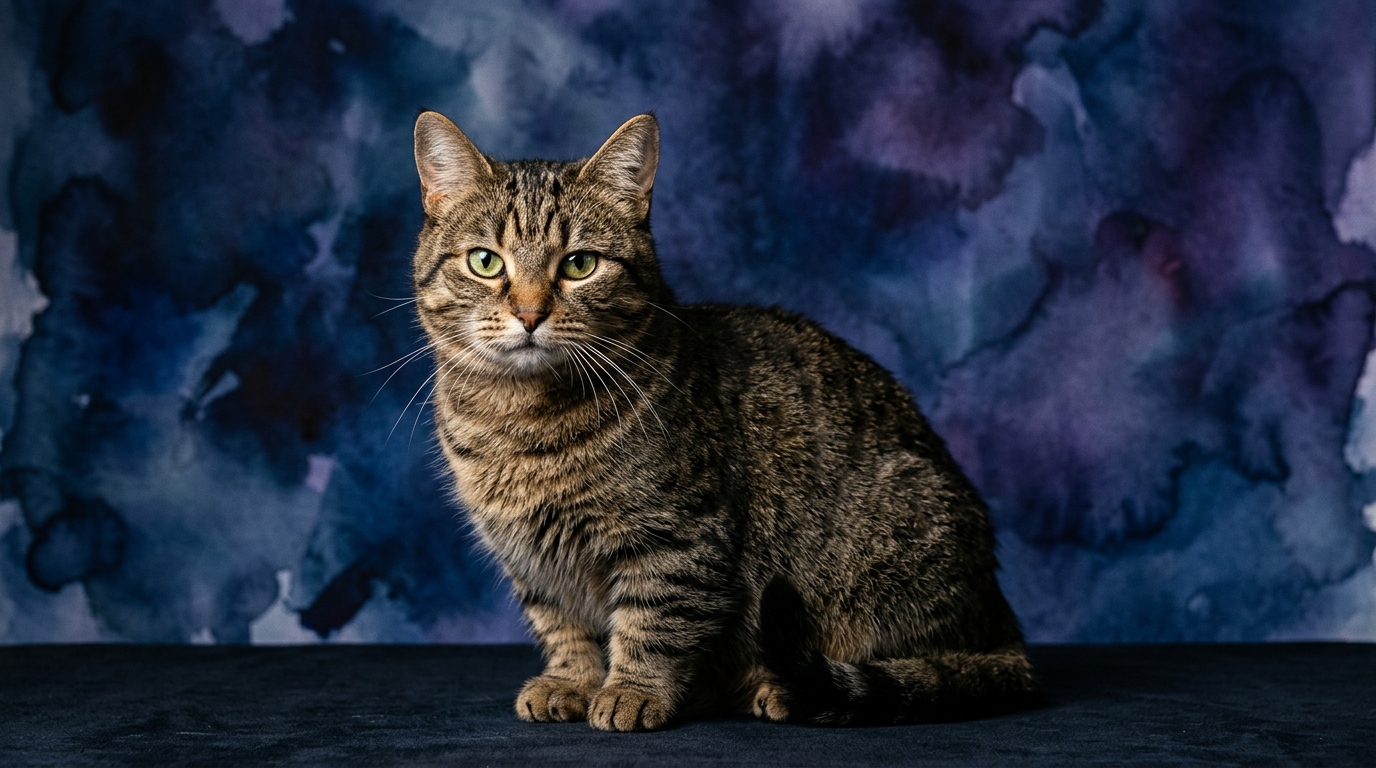
Understanding Feline Cognition: A Side-by-Side IQ Profile
The Cosmic Pet Pet IQ Lab evaluates feline cognition across five key dimensions, providing a nuanced understanding of each breed's mental aptitudes. For the Devon Rex and Munchkin, these scores illuminate distinct approaches to their world and interactions.
The Devon Rex displays a robust capacity for problem-solving, scoring 4/5, suggesting they can navigate complex environments and figure out how to access desired objects or overcome minor obstacles. This aptitude often manifests as clever strategies to open cabinets or retrieve hidden toys, indicating a thoughtful approach to challenges.
Their exceptional training speed, rated 5/5, highlights a quick grasp of new commands and routines. This breed readily forms associations between actions and consequences, making them highly responsive to positive reinforcement methods and capable of learning intricate tricks or even leash walking with relative ease.
A standout feature of the Devon Rex is their profound social intelligence, scoring 5/5. They are acutely aware of human emotions and social cues, often seeking interaction and forming strong, interactive bonds with their families. Their ability to read moods and respond empathetically makes them highly engaging companions.
While still possessing natural feline instincts, the Devon Rex exhibits a moderate instinctive drive, at 3/5. Their predatory behaviors, such as hunting for toys or exploring, are present but typically less intense or singularly focused compared to some other breeds, allowing for a balanced blend of play and companionship.
The Devon Rex possesses a strong memory, rated 4/5, enabling them to recall past experiences, learned behaviors, and the locations of favored items or people. This cognitive strength contributes to their training success and their ability to maintain routines and recognize familiar faces even after some absence.
In contrast, the Munchkin demonstrates a moderate capacity for problem-solving, scoring 3/5. While they can certainly navigate their world and learn from experience, their approach to novel challenges might be more straightforward or require more trial-and-error compared to their more cognitively agile counterparts. They are competent but not necessarily innovators in complex scenarios.
Their training speed is considered average, at 3/5, meaning Munchkins are receptive to learning but may require more repetitions or a more consistent approach to master new commands or behaviors. Patience and positive reinforcement are key, as they will eventually pick up routines, just perhaps not with lightning speed.
Munchkins exhibit a moderate level of social intelligence, scoring 3/5. They are affectionate and enjoy companionship but might not display the same nuanced understanding of human emotions or social dynamics as breeds with higher scores. They form bonds and engage socially, but their interactions are often more direct and less interpretative.
Similar to the Devon Rex, the Munchkin also has a moderate instinctive drive, at 3/5. They enjoy play that mimics hunting and possess natural curiosity, but these drives are typically balanced and do not overwhelmingly dominate their behavior, making them adaptable to indoor living without constant stimulation for intense predatory outlets.
The Munchkin's memory is also moderate, rated 3/5. They can remember routines, recognize people, and recall learned behaviors, but their recall might not be as sharp or long-lasting for specific details or less frequently encountered information compared to breeds with higher memory scores. They learn and remember what's important for their daily lives.
Where the Devon Rex Shines Cognitively
The Devon Rex clearly distinguishes itself in several key cognitive domains. Their superior problem-solving ability (4/5) means they are more likely to independently figure out how to open a door or retrieve a toy from a tricky spot, demonstrating an intrinsic curiosity and a knack for strategizing beyond simple trial and error. This breed’s exceptional training speed (5/5) is another significant advantage; they absorb new information and commands with remarkable alacrity, often mastering complex tricks or routines in fewer repetitions than many other felines. Their profound social intelligence (5/5) sets them apart, as they not only seek human company but actively engage in reciprocal communication, interpreting subtle cues and often initiating interactions that feel deeply connected. Furthermore, a stronger memory (4/5) underpins their quick learning and complex social interactions, allowing them to build upon past experiences and recall specific details about their environment and companions with greater precision.
Exploring the Munchkin's Unique Cognitive Strengths
While the Munchkin's cognitive profile leans towards a more balanced, moderate range across several dimensions, their strengths lie in their consistent and adaptable nature. Their moderate problem-solving skills (3/5) mean they are competent in navigating their daily lives without being overly disruptive in their quest for novel challenges; they are content with simpler solutions. The average training speed (3/5) of a Munchkin means they are certainly trainable, responding well to patient and consistent methods, making them accessible to owners who enjoy a steady pace of learning. Their moderate social intelligence (3/5) translates into a straightforward, affectionate companionship, less demanding of complex emotional interpretation, and more focused on simple, loving interaction. Crucially, their moderate instinctive drive (3/5), similar to the Devon Rex, ensures they are not overly driven by intense predatory urges, making them well-suited for a relaxed indoor lifestyle where play is enjoyable but not overwhelmingly dominant. The Munchkin's cognitive profile, therefore, fosters a predictable and endearing companion, comfortable within established routines.
Ease of Training: Devon Rex vs. Munchkin
When it comes to training, the Devon Rex holds a distinct advantage due to its exceptional training speed (5/5) and strong memory (4/5). These cats not only pick up new commands rapidly but also retain them effectively, making them prime candidates for learning complex tricks, responding to verbal cues, or even performing agility courses. Their high social intelligence (5/5) also plays a crucial role; they are highly motivated by human interaction and praise, viewing training as a collaborative game rather than a chore. For instance, a Devon Rex might quickly learn to fetch small toys or walk on a leash, driven by the desire to engage with their owner. In contrast, the Munchkin, with its moderate training speed (3/5) and memory (3/5), requires a more patient and repetitive approach. While certainly trainable, they may take longer to grasp new concepts and might need more consistent reinforcement to solidify learned behaviors. Their social intelligence (3/5) means they appreciate interaction, but perhaps not with the same depth of motivation for complex, shared activities. Owners of Munchkins will find success with short, frequent training sessions focused on basic commands and positive reinforcement, understanding that the learning curve will be gentler and more gradual.
Matching Personalities: Active vs. Relaxed Owners
The cognitive profiles of these two breeds offer clear guidance for potential owners. The Devon Rex, with its high problem-solving (4/5), training speed (5/5), and social intelligence (5/5), thrives with active, engaged owners. These cats enjoy mental stimulation, interactive play, and opportunities to learn and explore. An owner who enjoys teaching tricks, providing puzzle toys, or even taking their cat on supervised outdoor adventures would find a highly compatible companion in a Devon Rex. Their strong memory and social drive mean they actively seek out interaction and can become bored or mischievous if left without sufficient engagement. Conversely, the Munchkin, characterized by its moderate scores across the board (3/5 for most categories), is an ideal fit for more relaxed owners. While they enjoy play and affection, their cognitive needs are generally less intense. They are content with predictable routines, gentle play sessions, and ample cuddle time. An owner seeking a charming, affectionate lap cat who enjoys a calm home environment and doesn't demand constant mental challenges would find the Munchkin's adaptable nature highly appealing. Both breeds share a moderate instinctive drive, meaning neither will be overwhelmingly driven by intense hunting behaviors, making them suitable for indoor life; however, the *intensity* of their engagement with their environment and people differs significantly.
The Verdict
Choose the Devon Rex if you seek a highly interactive, quick-witted feline companion eager to learn tricks, engage in complex play, and form a deeply communicative bond. They thrive with owners who provide consistent mental stimulation and appreciate a cat that actively participates in family life.
Opt for the Munchkin if you desire a charming, affectionate cat who enjoys a more relaxed pace, appreciates consistent routines, and offers straightforward, loving companionship without demanding constant, intricate mental challenges.
🧠 Find Your Pet's IQ Score
Our Pet IQ Lab assessment covers 25+ tests across 5 cognitive dimensions — personalized to your breed.
Take the Full IQ Test →Frequently Asked Questions
Are Devon Rex cats good with children?
Yes, the Devon Rex's high social intelligence and affectionate nature often make them excellent companions for children. They are typically playful and tolerant, enjoying interactive games and forming strong bonds with all family members, provided interactions are respectful.
Do Munchkin cats have health problems due to their short legs?
Munchkin cats are generally healthy, and their short legs, a natural genetic mutation, do not typically cause spinal problems or mobility issues. They are agile and can run and jump effectively, though perhaps not to the same heights as long-legged cats.
Which cat is better for a first-time cat owner?
Both breeds can be suitable, but for a first-time owner seeking a more predictable and less cognitively demanding companion, the Munchkin's moderate needs might be slightly easier to manage. However, a first-time owner willing to dedicate time to mental stimulation and training will find the responsive Devon Rex incredibly rewarding.