Side-by-Side Cognitive Profiles
Delving into the cognitive makeup of these two breeds reveals fascinating distinctions despite some shared high scores. The Cosmic Pet Pet IQ Lab's framework allows us to dissect their mental attributes across five critical dimensions, providing a nuanced understanding of their operational intellect.
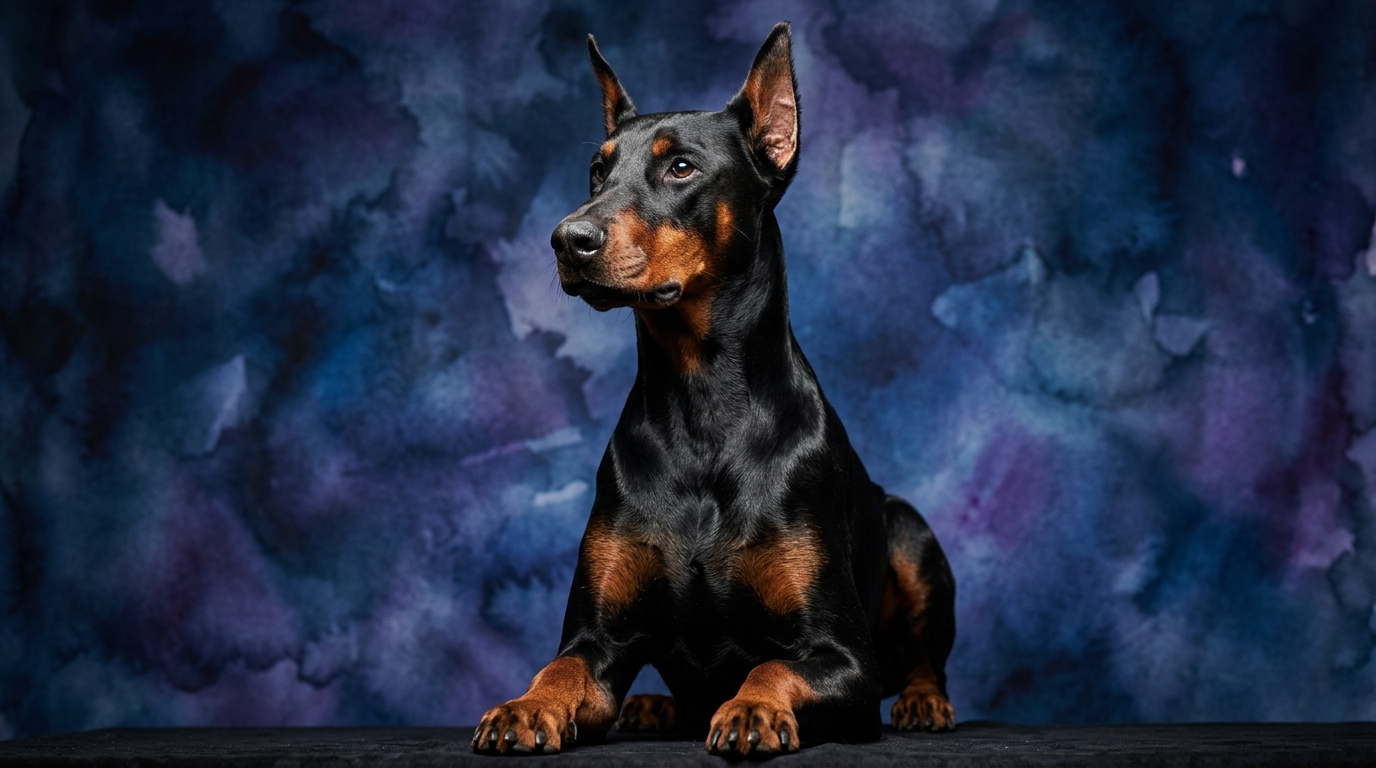
The Doberman Pinscher, a Working breed ranked #5 by Coren, exhibits a comprehensive cognitive toolkit. Their Problem Solving is rated 5/5, indicating an analytical mind capable of dissecting complex tasks, such as navigating intricate scent puzzles or executing multi-stage obedience routines with precision. Training Speed also stands at 5/5, reflecting their exceptional ability to absorb and implement new commands, often grasping concepts in just a few repetitions, driven by a strong desire to cooperate. Their Social Intelligence, at 4/5, highlights a pronounced attunement to human emotional states and subtle non-verbal cues, making them highly responsive and interactive companions. An Instinctive Drive of 5/5 underscores their powerful protective and working motivations, manifesting as vigilance and a readiness for action, rooted in their original purpose as guardians. Finally, their Memory, rated 5/5, ensures long-term retention of learned behaviors, commands, and environmental lessons, enabling consistent performance.
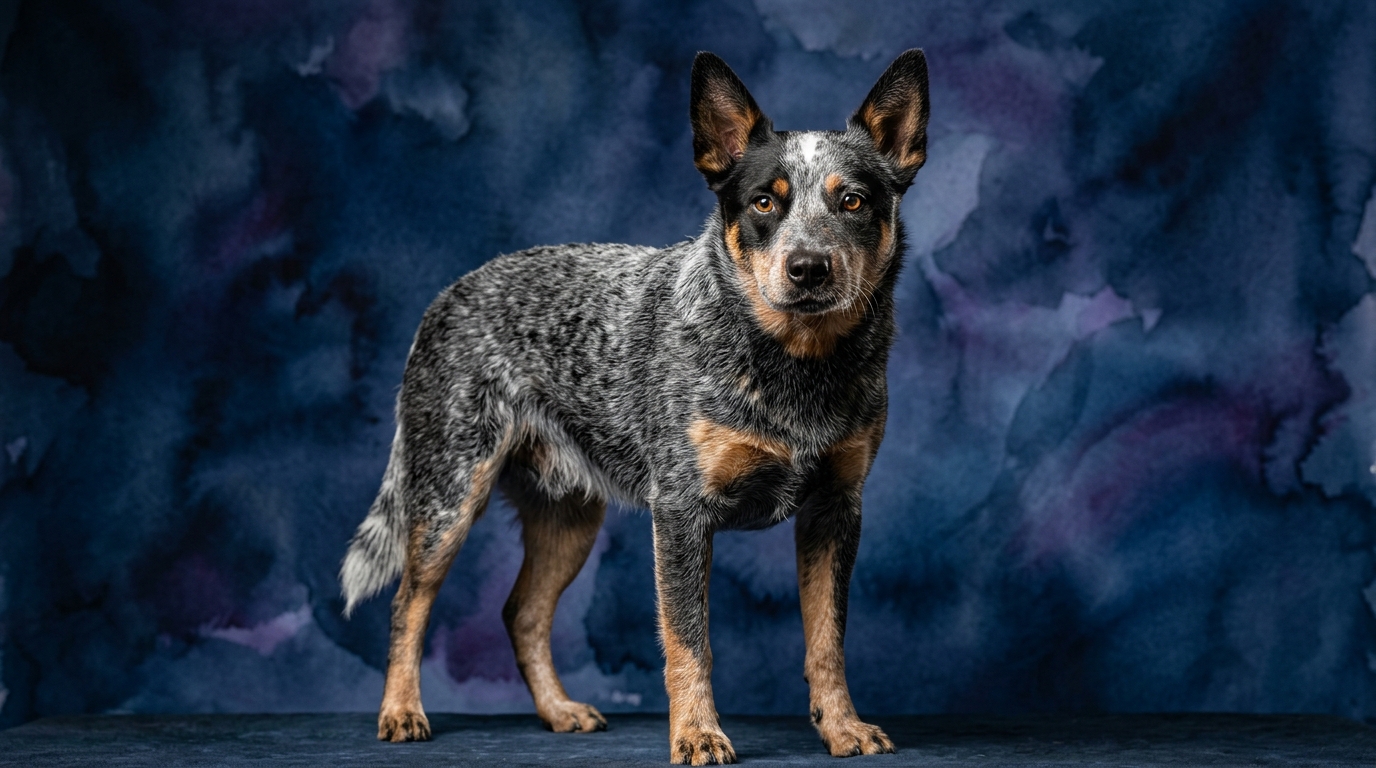
The Australian Cattle Dog, a Herding breed ranked #10 by Coren, demonstrates a different flavor of mental prowess, geared towards independent action. Their Problem Solving is also 5/5, but this manifests as ingenious improvisation and strategic thinking in dynamic environments, such as devising novel ways to turn a stubborn cow or outsmarting livestock. Training Speed is 5/5, meaning they absorb information quickly, particularly when tasks align with their natural herding instincts or offer a compelling mental challenge. However, their Social Intelligence at 3/5 suggests a more task-oriented approach to human interaction; while deeply loyal, they are less naturally inclined to interpret subtle human emotional nuances, focusing more on direct commands. An Instinctive Drive of 5/5 is profoundly evident in their intense herding impulse, a relentless desire to control movement and direct, requiring significant mental and physical outlets. Like the Doberman, their Memory is 5/5, allowing for robust recall of spatial layouts, routines, and complex learned tasks, vital for their demanding work.
Where the Doberman Pinscher Shines Cognitively
The Doberman Pinscher's primary cognitive advantage lies in its superior Social Intelligence (4/5 compared to the ACD’s 3/5). This isn't merely about being 'friendly'; it signifies a deeper, more nuanced understanding of human communication and emotional states. Dobermans are acutely perceptive of subtle shifts in their handler's body language, vocal tone, and even underlying mood. This allows them to anticipate needs and react empathetically, fostering an almost telepathic bond in cooperative tasks. For instance, a Doberman might adjust its pace during a heel based on a handler's slight hesitation or offer comfort when sensing distress, even without explicit command. Their protective instincts are finely tuned to perceive human vulnerability or threat, allowing for highly calibrated responses rather than generic aggression. This heightened social awareness makes them exceptional partners in roles requiring close, intuitive collaboration, such as therapy work, service dog duties, or intricate protection training where understanding context and intent is paramount. They excel at deciphering complex social cues, making them highly adaptable in varied human environments and facilitating smoother integration into family life.
Where the Australian Cattle Dog Excels Cognitively
While both breeds score 5/5 in Problem Solving, the Australian Cattle Dog's cognitive edge manifests in its capacity for independent, autonomous decision-making within dynamic and often chaotic environments. Unlike the Doberman, which often seeks handler direction, the ACD's historical role demanded quick, strategic judgments made at a distance from its human partner, often with minimal immediate input. This translates into a dog that doesn't just solve problems but actively anticipates and mitigates them, devising original strategies on the fly. Consider an ACD navigating a complex agility course: they might independently adjust their approach to an obstacle based on a slight misstep, or creatively herd a wayward ball back into play during a game, without waiting for explicit instructions. Their problem-solving isn't just about following a sequence; it's about innovating to achieve a goal, often against resistance. This self-reliance and ingenious adaptability are invaluable in tasks requiring strategic thinking, resourcefulness, and the ability to operate effectively without constant supervision, making them masters of their domain, whether it's a ranch or a challenging dog sport.
Training: Cooperation vs. Independent Drive
Both Doberman Pinschers and Australian Cattle Dogs boast a 5/5 Training Speed, indicating rapid learning. However, the 'ease' of training can differ significantly due to their distinct social intelligence and inherent drives. The Doberman's higher Social Intelligence and strong desire to please their handler make them generally more straightforward to train for a wider range of owners. They thrive on cooperative learning, readily engaging in structured obedience, and are highly motivated by positive reinforcement from their human partner. Their focus during training is typically intensely directed at the handler, making them receptive to intricate command sequences and precise execution. They enjoy the process of working *with* their person, and their responsiveness makes advanced training a rewarding experience.
Conversely, while the Australian Cattle Dog learns commands quickly, their powerful independent drive and lower social intelligence (3/5) can present unique challenges. They are less inherently motivated by simple praise and more by the mental challenge and purpose of the task itself. Training an ACD requires a handler who understands how to channel their intense herding instincts and independent nature into constructive outlets. They excel when given a 'job' that engages their problem-solving abilities and allows for some autonomy. A novice trainer might find an ACD's tendency to 'work' rather than simply 'obey' more demanding, as they often question the 'why' behind a command or prefer to solve a problem their own way. Additionally, their innate herding tendency to nip at heels, while manageable with early training, requires consistent attention and redirection, a behavioral aspect less prevalent in Dobermans.
Suitability for Active vs. Relaxed Owners
It's crucial to state upfront: neither the Doberman Pinscher nor the Australian Cattle Dog is suited for a relaxed, sedentary lifestyle. Both breeds demand significant mental and physical engagement from their owners; under-stimulated, they can develop destructive behaviors stemming from boredom and unchanneled drive. However, the *type* of activity they thrive on offers a point of distinction.
The Doberman Pinscher suits owners who are active and committed to structured activities that foster partnership and mental stimulation. They excel in sports like obedience, rally, protection sports (like Schutzhund), scent work, or even as running companions, provided these activities involve close interaction and direction from their human. They need consistent training and a clear role within the family unit, thriving on a routine that provides both physical exertion and cognitive challenges focused on cooperative work. An owner who enjoys teaching complex tricks or engaging in detailed command sequences will find a Doberman a willing and capable student.
The Australian Cattle Dog is best suited for highly active owners who embrace a lifestyle of intense physical exertion and independent problem-solving challenges. They are ideal for individuals involved in dog sports like agility, flyball, dock diving, or actual herding work. They require a 'job' that utilizes their inherent drive to control and direct, often preferring tasks that allow for some autonomy in execution. Long hikes, trail running, or extensive off-leash exploration in safe environments are crucial. An ACD owner must be prepared to provide daily, vigorous exercise combined with stimulating mental tasks that tap into their resourcefulness, recognizing that their satisfaction often comes from overcoming a challenge rather than simply pleasing their owner.
The Verdict
Choose the Doberman Pinscher if you seek a highly cooperative, socially attuned partner for structured activities, protection, or family integration, valuing a dog that anticipates your needs and thrives on close collaboration.
Opt for the Australian Cattle Dog if you desire a tenacious, independent problem-solver for demanding physical challenges, working roles, or dog sports, appreciating a dog that thinks for itself and tackles complex tasks with grit.
🧠 Find Your Pet's IQ Score
Our Pet IQ Lab assessment covers 25+ tests across 5 cognitive dimensions — personalized to your breed.
Take the Full IQ Test →Frequently Asked Questions
Which breed is generally more affectionate towards family members?
While both breeds form strong bonds, the Doberman Pinscher's higher social intelligence (4/5) often translates to a more outwardly affectionate and demonstrative nature within the family. They are typically more attuned to human emotional states and enjoy close physical proximity and interaction with their people, often seeking out connection and comfort.
Do Doberman Pinschers or Australian Cattle Dogs require more mental stimulation?
Both breeds require significant mental stimulation, scoring 5/5 in problem-solving and memory, but their needs differ in *type*. Dobermans thrive on structured, cooperative tasks that engage their social intelligence, while ACDs need challenges that allow for independent problem-solving and channel their intense herding drive.
Which breed is better suited for a first-time dog owner?
Given their higher social intelligence and desire to please, a Doberman Pinscher might be a more manageable choice for a committed first-time owner willing to dedicate time to structured training. The Australian Cattle Dog's strong independent drive and specific herding behaviors can be more challenging for an inexperienced owner to navigate effectively.