Side-by-Side IQ Profile: Doberman Pinscher vs. Australian Shepherd
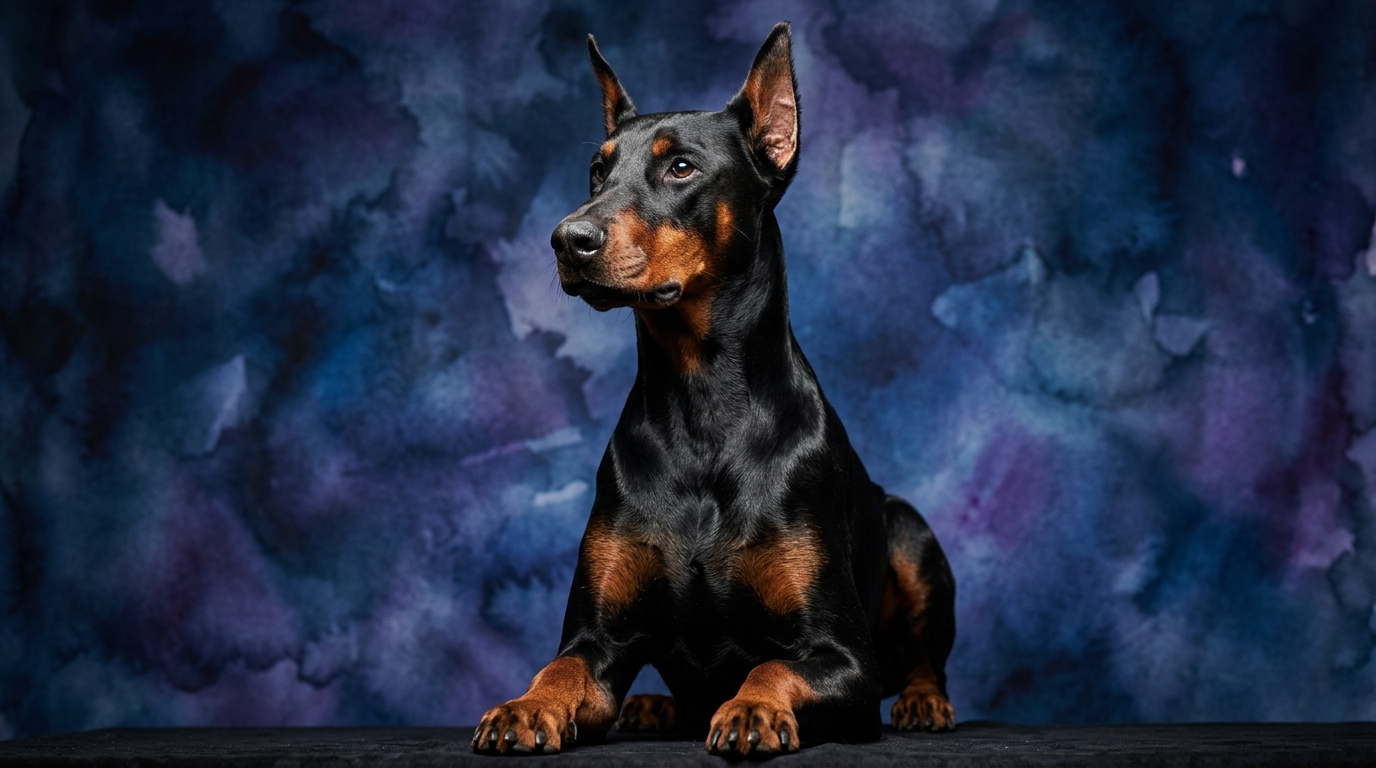
The Cosmic Pet IQ Lab evaluates canine intelligence across five critical dimensions. For the Doberman Pinscher, a Working breed ranked #5 by Coren, these scores are all impressive: Problem Solving 5/5, Training Speed 5/5, Social Intelligence 4/5, Instinctive Drive 5/5, and Memory 5/5. This profile speaks to a canine engineered for complex tasks, rapid learning, and robust retention, often in high-stakes environments where precision is paramount.
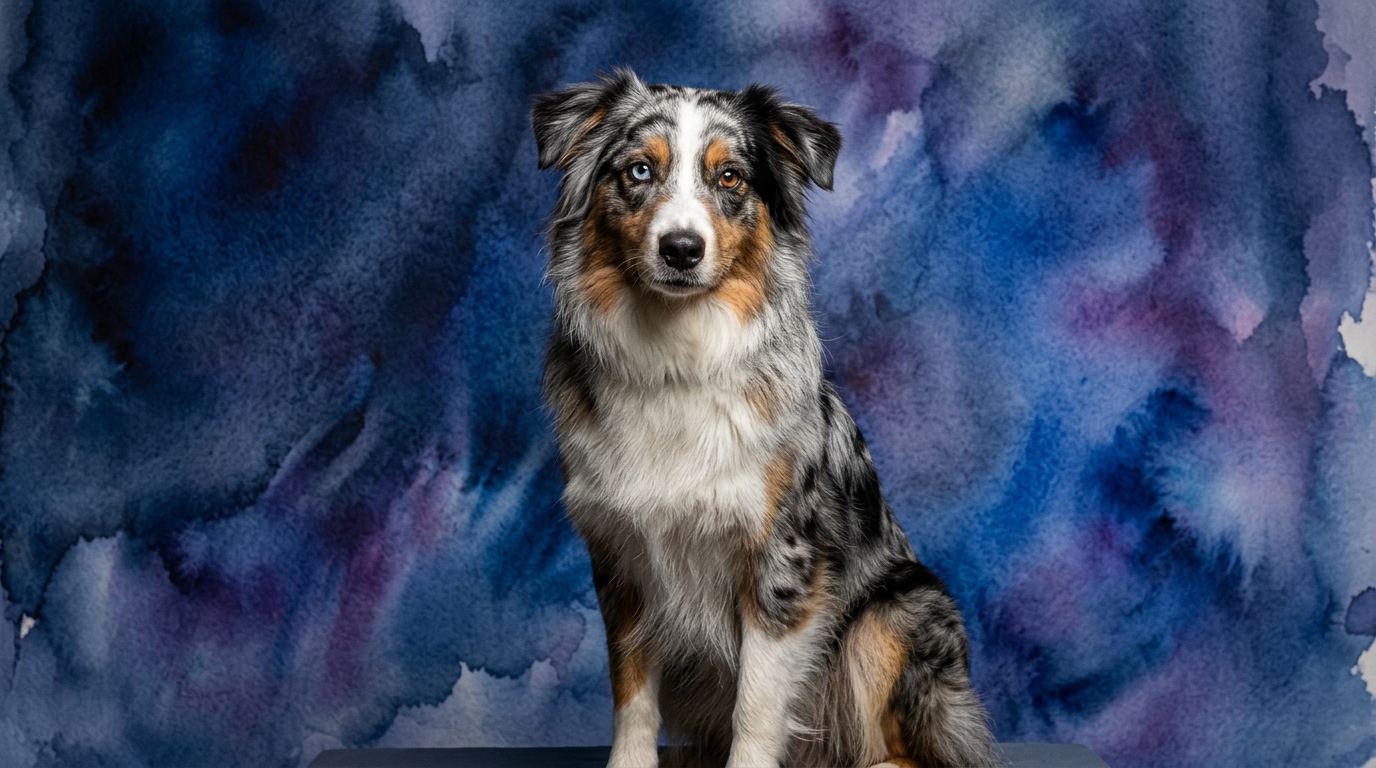
The Australian Shepherd, a Herding breed not ranked by Coren but equally formidable in the IQ Lab, mirrors these top scores: Problem Solving 5/5, Training Speed 5/5, Social Intelligence 4/5, Instinctive Drive 5/5, and Memory 5/5. While the scores are identical, the context of their application differs profoundly. The Aussie's intellect is honed for the dynamic, often unpredictable, challenges of livestock management, demanding adaptability and keen situational awareness.
Where the Doberman Pinscher Excels Cognitively
The Doberman's cognitive strengths are deeply rooted in its heritage as a protector and guardian, demanding a specific type of problem-solving and memory. Their 5/5 Problem Solving score shines in scenarios requiring strategic assessment of threats and decisive action, often involving a direct, focused approach. This manifests as a remarkable ability to understand and execute multi-step commands in protection work or police trials, requiring not just memory but also contextual application.
Their 5/5 Training Speed is underpinned by an intense desire to work closely with a single handler, quickly internalizing commands and routines. This breed demonstrates a profound capacity for remembering complex sequences and patterns, crucial for advanced obedience or specialized tasks where consistency and reliability are non-negotiable. The Doberman's Instinctive Drive, also 5/5, channels into a powerful defense mechanism and a strong work ethic, allowing them to maintain focus and drive through challenging mental and physical exercises.
Where the Australian Shepherd Excels Cognitively
The Australian Shepherd's identical 5/5 Problem Solving score reflects a different kind of mental agility, one perfected in the fluid, unpredictable environment of herding. They excel at real-time decision-making, anticipating the movements of livestock, and adapting strategies on the fly. This involves processing multiple variables simultaneously – the flock's behavior, the terrain, and the handler's subtle cues – requiring a dynamic form of intelligence that is constantly re-evaluating and adjusting.
Their 5/5 Training Speed is fueled by an innate eagerness to engage and a natural propensity for understanding non-verbal communication, essential for coordinating with a handler over long distances. The Aussie's 5/5 Memory is particularly strong for spatial layouts and the intricate patterns of movement within a 'flock,' whether it's sheep or family members. Their 5/5 Instinctive Drive translates into an unwavering focus on their 'job,' often expressed through an almost intuitive understanding of how to manage and direct, showcasing a nuanced application of their cognitive abilities.
Training: Precision vs. Adaptability
Both breeds achieve a 5/5 Training Speed, yet the 'how' and 'why' of their learning styles diverge. Dobermans typically thrive on precision, consistency, and a clear chain of command. Their deep loyalty and powerful drive to please a specific handler make them exceptionally quick at mastering obedience routines, protection work, and intricate sequences. They respond well to structured, repetitive training that reinforces their role as a dedicated partner, driven by a desire for a defined purpose and an innate sense of responsibility.
Australian Shepherds, while equally fast learners, often approach training with a more independent, problem-solving mindset. Their herding background necessitates adaptability; they might try to 'think around' a command if they perceive a more efficient solution, or if the task lacks perceived purpose. Effective training for an Aussie often involves variety, engagement, and tapping into their natural herding instincts, such as using toys or obstacles. They excel when given tasks that allow them to utilize their quick reflexes and mental agility to solve dynamic puzzles, rather than just rote memorization.
Matching Canine Intellect to Owner Lifestyle
Neither the Doberman Pinscher nor the Australian Shepherd is suited for genuinely relaxed owners who prefer minimal engagement. Both are working breeds demanding substantial physical and mental exertion, but the *nature* of that engagement differs. The Doberman, with its strong guarding instincts and desire for a clear role, thrives with an owner who provides structured exercise, consistent leadership, and opportunities for purposeful work like advanced obedience, protection sports, or even scent work. They need an owner who can channel their intense focus and loyalty into productive outlets, fostering a calm, confident demeanor.
The Australian Shepherd, conversely, requires an owner who can keep pace with their boundless energy and insatiable desire to 'work.' Their cognitive profile makes them excellent candidates for agility, flyball, frisbee, or actual herding. Without sufficient physical outlets and mental challenges, an Aussie's problem-solving skills and instinctive drive can lead to self-employment, manifesting as undesirable behaviors like herding children, nipping heels, or excessive barking. They need an owner who can provide varied, engaging activities that stimulate both their body and their quick-thinking mind.
The Verdict
Choose a Doberman Pinscher if you seek a dedicated, focused partner for structured activities like protection sports or advanced obedience, and value a clear, decisive cognitive approach.
Opt for an Australian Shepherd if you thrive on dynamic challenges, enjoy engaging in high-energy activities like agility or herding, and appreciate a dog with adaptable, real-time problem-solving skills.
🧠 Find Your Pet's IQ Score
Our Pet IQ Lab assessment covers 25+ tests across 5 cognitive dimensions — personalized to your breed.
Take the Full IQ Test →Frequently Asked Questions
Do Dobermans and Australian Shepherds have similar exercise needs?
Both breeds require substantial daily exercise, but the type often varies. Dobermans benefit from structured walks, runs, and mental work like obedience drills, while Australian Shepherds need intense, varied activities such as running, agility, or herding simulation to satisfy their high energy and working drive.
How does their social intelligence score of 4/5 manifest differently?
For Dobermans, a 4/5 social intelligence often means they are discerning, forming strong bonds with their immediate family but maintaining a reserved stance with strangers, aligning with their protective role. Australian Shepherds, with the same score, tend to be more attuned to group dynamics and subtle cues, crucial for cooperative herding, yet can still be wary of new people initially as they assess the social environment.
Can either breed live happily in an apartment?
While possible with dedicated effort, neither breed is ideally suited for apartment living due to their high energy and need for space and a 'job.' Both require extensive daily exercise, mental stimulation, and outdoor access to prevent boredom and destructive behaviors, making a home with a yard generally more appropriate.