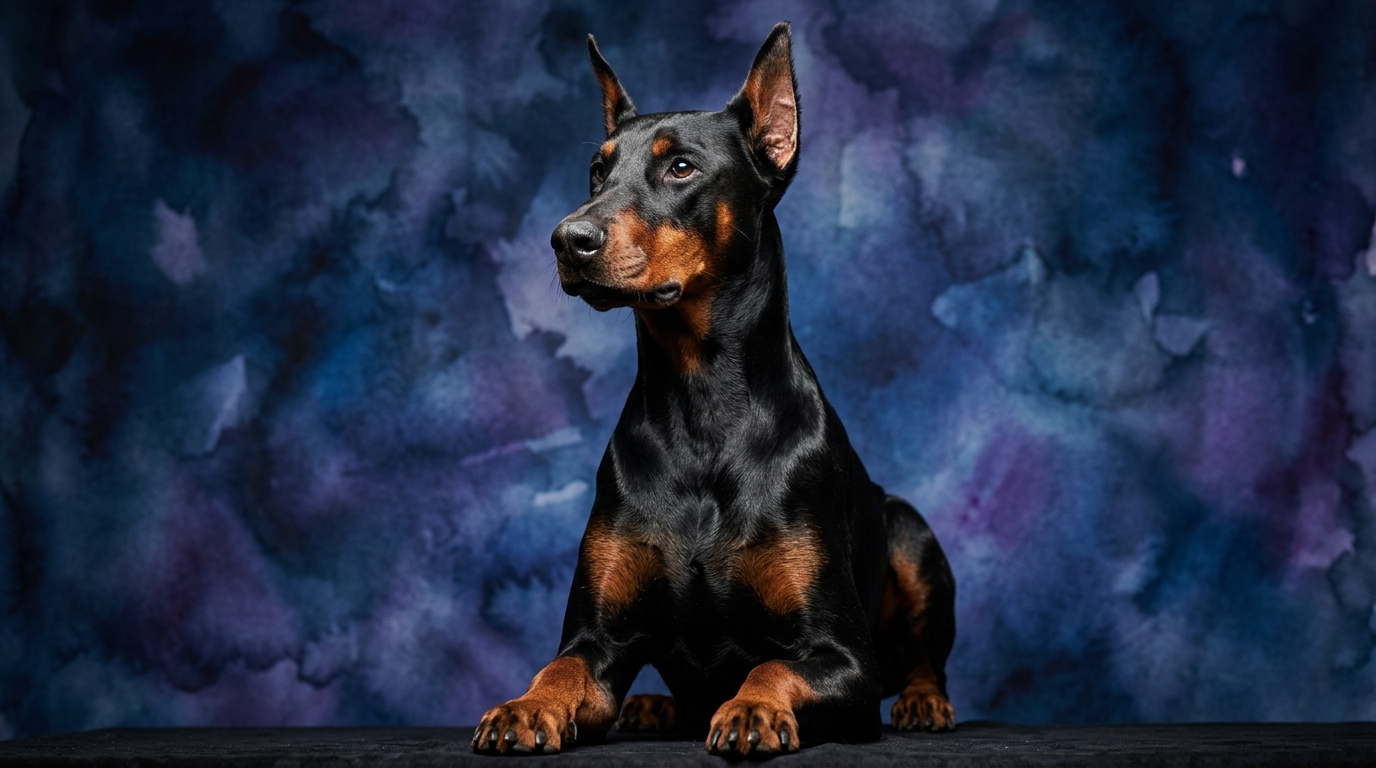
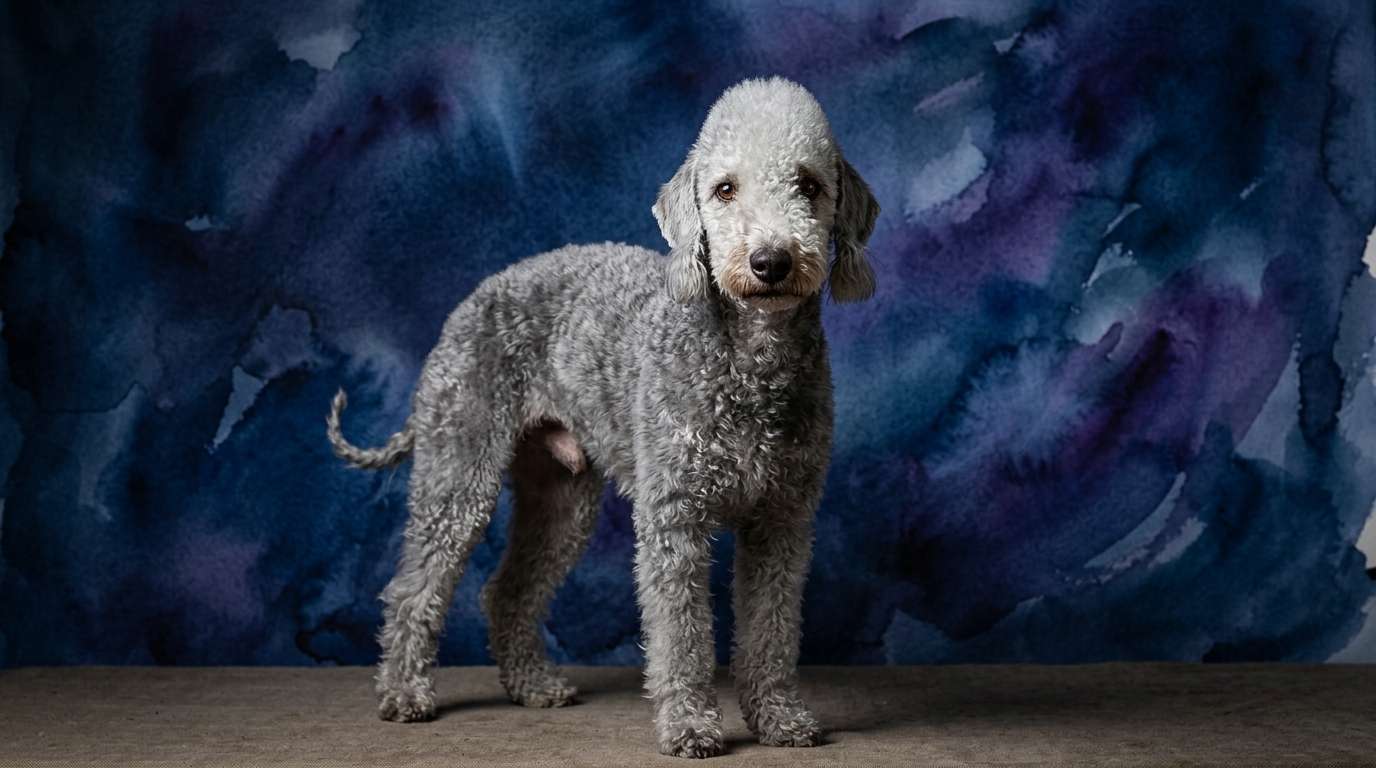
Side-by-Side Cognitive Profile
The Cosmic Pet Pet IQ Lab assesses canine intelligence across five key dimensions, offering a nuanced view beyond simple obedience. For the Doberman Pinscher, a breed belonging to the Working Group and ranked #5 by Coren, its scores reflect a profound capacity for complex engagement. Conversely, the Bedlington Terrier, a Terrier Group member without a Coren rank, presents a different cognitive blueprint, emphasizing independence.
**Doberman Pinscher:** This breed exhibits exceptional aptitude for dissecting complex situations and formulating solutions (Problem Solving 5/5). Their cognitive framework allows them to grasp multi-step commands, navigate intricate environments, and adapt strategies quickly when faced with novel challenges, often anticipating human intentions. Dobermans absorb new information with remarkable rapidity (Training Speed 5/5), mastering commands and routines in very few repetitions, demonstrating an eagerness to learn and a strong desire to comply, making them highly responsive to structured instruction. While not quite a 5/5, their social intelligence is robust (Social Intelligence 4/5), enabling them to keenly interpret human cues, moods, and intentions, forming deep bonds and often acting in protective or supportive roles based on perceived needs. Their drives are profound and purpose-driven (Instinctive Drive 5/5), rooted in their heritage as working dogs, manifesting as a powerful inclination towards guarding, protection, and task completion, requiring outlets for their inherent need to work and contribute. Dobermans possess an outstanding capacity for recall (Memory 5/5), retaining learned behaviors, environmental details, and past experiences with long-term precision, contributing to their reliability in complex tasks and their ability to generalize learning across different contexts.
**Bedlington Terrier:** Bedlington Terriers approach problem-solving with a distinctive independent streak (Problem Solving 3/5). Their solutions often stem from self-motivation and a pragmatic assessment of how a situation benefits them, rather than seeking human direction. They can be resourceful, especially when it involves their interests, but might not engage with abstract or human-centric problems as readily. While capable of learning, Bedlingtons acquire new commands at a moderate pace (Training Speed 3/5). Their independent nature means they require consistent, engaging methods, and may not show the same immediate eagerness to please as breeds with higher training speed scores; repetition needs to be varied to maintain their interest. Bedlingtons are affectionate within their family but tend to be more reserved in interpreting complex social signals from a wide range of people or other animals (Social Intelligence 3/5). Their social interactions are often direct and less nuanced, preferring clear boundaries and familiar companions. Their instinctive drive (Instinctive Drive 3/5) is primarily rooted in their terrier heritage – hunting small prey. This manifests as a focused, persistent drive, but it’s often self-directed rather than seeking human partnership for its fulfillment; it is present but more contained than a working breed's intense drives. Bedlingtons have a functional memory (Memory 3/5), retaining important lessons and routines, particularly those that are consistently reinforced or directly related to their daily lives. However, they might not demonstrate the same expansive recall for intricate, less relevant details as breeds with higher memory scores.
Where the Doberman Pinscher Wins Cognitively
The Doberman Pinscher's cognitive framework truly excels in areas demanding intricate coordination, rapid learning, and unwavering focus on a human partner. Their supreme problem-solving ability (5/5) means they can quickly process multi-stage commands, such as navigating an agility course with precision or executing complex protection scenarios. This is amplified by their top-tier training speed (5/5), allowing them to acquire new behaviors in mere repetitions, making them highly adaptable to evolving tasks or environments. Furthermore, their powerful instinctive drive (5/5) is channeled into purposeful work, making them exceptionally reliable in roles requiring vigilance and consistent application of learned skills. This breed's strength lies in their capacity for collaborative, high-performance tasks that demand both mental agility and steadfast dedication to their handler's directives. Their memory (5/5) also ensures that these complex learnings are retained over time, building a robust behavioral repertoire.
Where the Bedlington Terrier Wins Cognitively
While the Doberman shines in collaborative tasks, the Bedlington Terrier's cognitive strengths lean into independent resourcefulness and a more self-directed approach to their environment. Their problem-solving (3/5), though moderate, is often applied to tasks that benefit them directly, like figuring out how to access a forbidden treat or navigating a unique path in the yard. This isn't about human-directed complex tasks, but rather about clever, often persistent, solutions to personal objectives. Their instinctive drive (3/5), while lower than a Doberman's, is acutely focused on their terrier heritage, making them exceptionally adept at detecting and pursuing small, quick movements – a specific cognitive strength requiring sharp sensory processing and quick reaction times. This focused drive means they can exhibit remarkable tenacity when engaged in activities that align with their innate predispositions, demonstrating a unique form of self-motivated cognitive engagement that doesn't always require human prompting.
Which Is Easier to Train and Why
The Doberman Pinscher is unequivocally easier to train, primarily due to their exceptional training speed (5/5) and robust social intelligence (4/5). They possess an inherent desire to work alongside their human companions and quickly grasp new concepts, often thriving on the structure and challenge of learning. Their strong memory (5/5) ensures that once a behavior is learned, it is retained, reducing the need for constant re-teaching. A Doberman's focus is typically directed towards their handler, making them highly receptive to cues and corrections. In contrast, the Bedlington Terrier’s moderate training speed (3/5) and more independent social intelligence (3/5) mean training requires more patience, creativity, and consistency. A Bedlington might quickly become bored with repetitive drills, requiring trainers to make sessions fun and varied to maintain engagement. Their problem-solving often prioritizes their own interests, meaning they might weigh the 'what's in it for me' factor before complying, whereas a Doberman often finds compliance itself rewarding. Real behavioral differences include the Doberman's natural inclination for heelwork and focused attention versus the Bedlington's tendency to follow scent trails or explore independently, making off-leash reliability more challenging for the latter without significant effort.
Which Suits Active Owners vs. Relaxed Owners
The Doberman Pinscher is ideally suited for active owners who relish a highly engaged and collaborative canine partnership. Their profound instinctive drive (5/5) and exceptional cognitive abilities demand consistent mental and physical stimulation, making them excellent companions for activities like obedience trials, agility, protection work, or long, structured hikes. These dogs thrive when given a 'job' and an owner who can consistently provide direction and challenge their keen minds. A relaxed owner who cannot commit to daily training, exercise, and mental enrichment would likely find a Doberman overwhelming, as their unchanneled energy and intellect can lead to destructive behaviors, requiring an owner prepared for a significant commitment.
Conversely, the Bedlington Terrier, with its moderate instinctive drive (3/5) and more self-directed cognitive style, can fit into a slightly less demanding, though still active, household. They enjoy regular walks, playtime, and opportunities for independent exploration in a secure yard, but generally don't require the same intensity or structured 'work' as a Doberman. They appreciate owners who understand their independent spirit and can offer consistent, positive reinforcement training without expecting immediate, flawless compliance. While not a couch potato, a Bedlington is more adaptable to an owner who values a clever, spirited companion but may not dedicate hours daily to advanced obedience or competitive dog sports. They suit owners who enjoy a dog with a distinct personality and a moderate activity level.
The Verdict
Select a Doberman Pinscher if you are an experienced, active owner seeking a highly trainable, intensely focused canine partner for advanced obedience, protection work, or competitive dog sports, and are prepared to provide rigorous mental and physical engagement daily.
Opt for a Bedlington Terrier if you appreciate an independent, spirited companion with a moderate activity level and enjoy a dog who approaches life with self-directed curiosity, understanding that their training will require patience and creative engagement.
🧠 Find Your Pet's IQ Score
Our Pet IQ Lab assessment covers 25+ tests across 5 cognitive dimensions — personalized to your breed.
Take the Full IQ Test →Frequently Asked Questions
Which breed is better for first-time dog owners?
Generally, the Bedlington Terrier might be a more manageable choice for a first-time owner due to its moderate energy and less demanding training intensity compared to the Doberman Pinscher. However, both breeds require consistent training and socialization, so a prepared first-timer could succeed with either.
Do Doberman Pinschers and Bedlington Terriers get along with other pets?
Doberman Pinschers, with their good social intelligence, can often coexist peacefully with other pets if properly socialized from a young age. Bedlington Terriers, due to their terrier hunting drive, may have a stronger inclination to chase smaller animals, requiring careful introductions and supervision, especially with non-canine pets.
What kind of mental stimulation do these breeds need?
Doberman Pinschers require constant mental challenges like puzzle toys, advanced obedience training, and complex scent work to satisfy their high cognitive needs. Bedlington Terriers benefit from interactive games, varied walks, and opportunities to explore safely, engaging their more independent problem-solving and sensory drives.