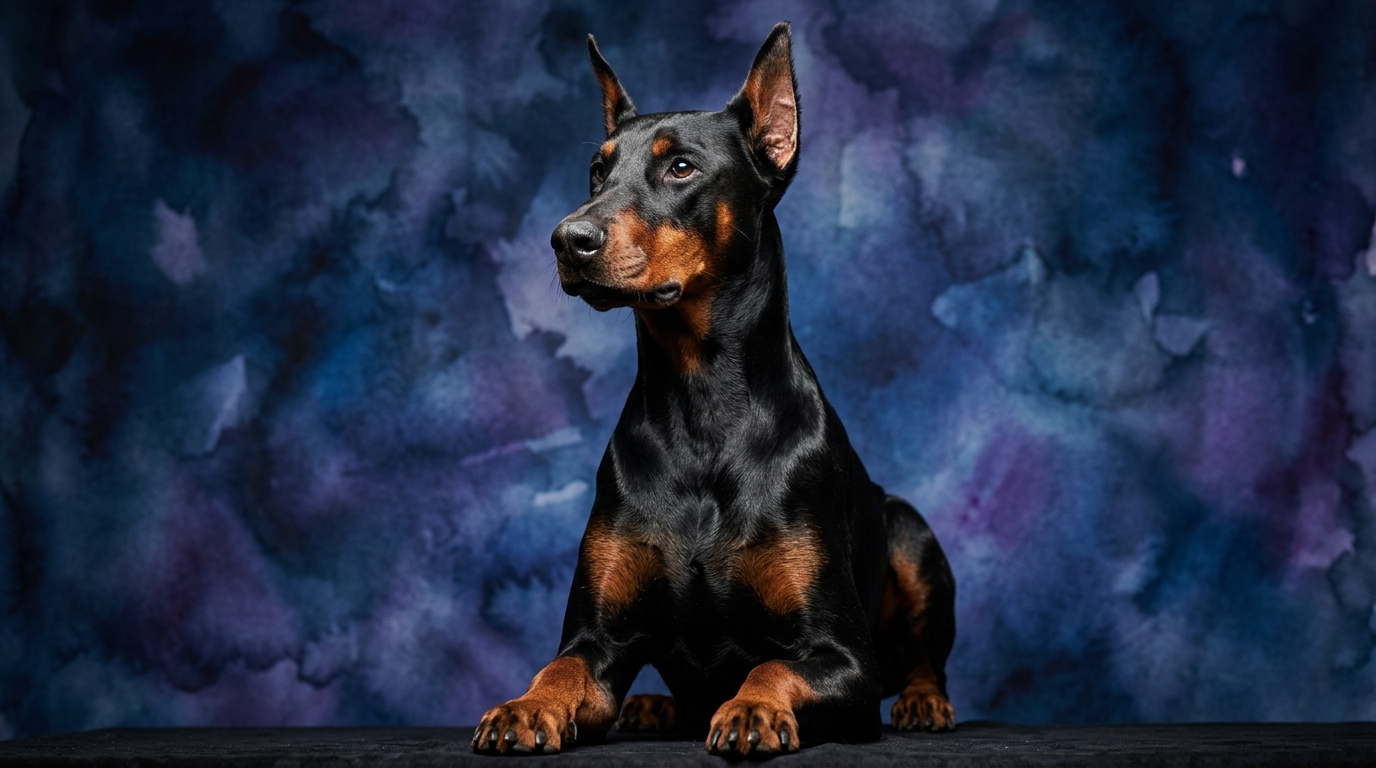
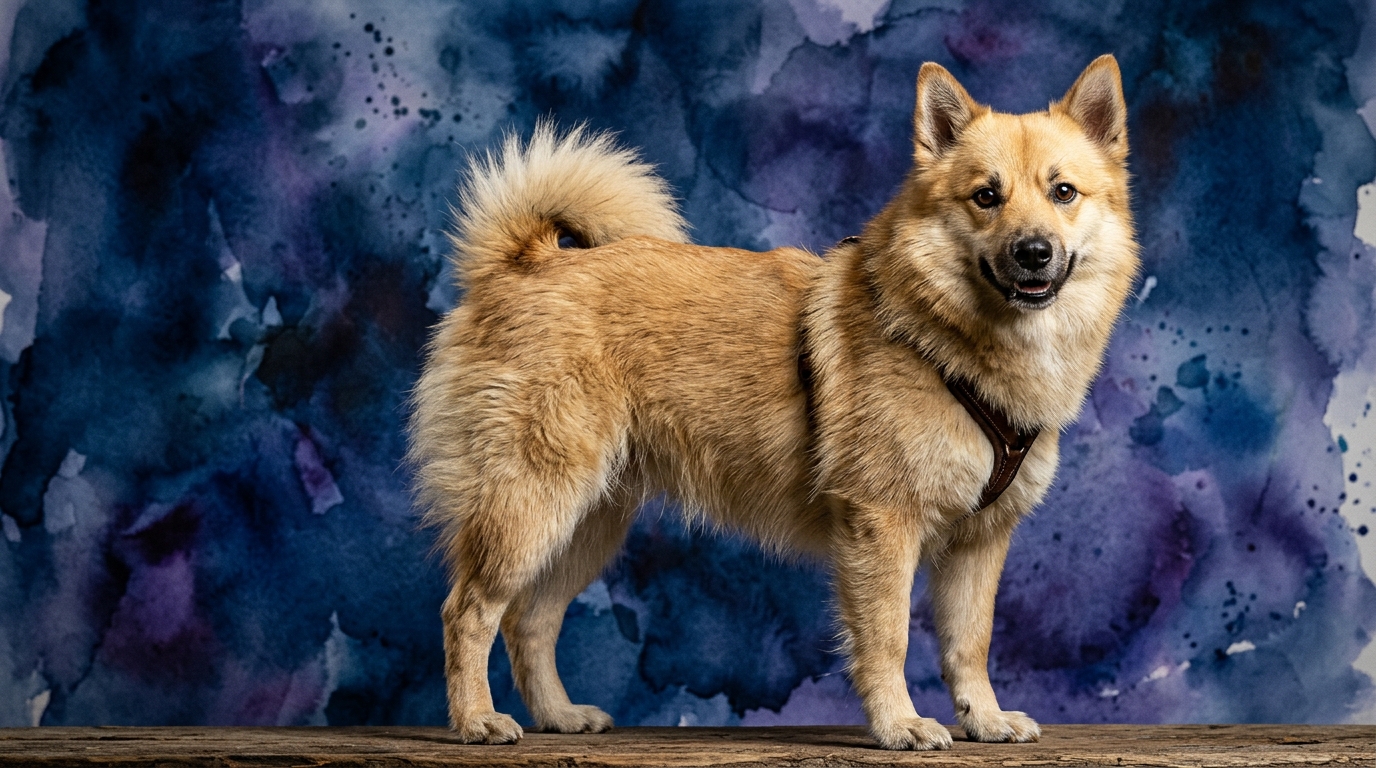
Side-by-Side IQ Profile: Doberman Pinscher vs. Norwegian Buhund
The Cosmic Pet Pet IQ Lab provides a unique framework for evaluating canine intelligence, dissecting it into five core dimensions. Applying this lens to the Doberman Pinscher and the Norwegian Buhund highlights their inherent cognitive blueprints, shaped by centuries of selective breeding for specific roles. The Doberman Pinscher, a breed forged for protection and companionship, consistently demonstrates a high-octane mental capacity across the board, earning a Coren rank of #5.
For the Doberman Pinscher, Problem Solving registers a perfect 5/5. This indicates an exceptional capacity to analyze novel situations, devise solutions, and navigate complex environments, often with a strategic foresight. Their Training Speed also scores 5/5, reflecting an extraordinary ability to grasp new commands and routines with minimal repetition. This rapid assimilation is a hallmark of their working heritage.
Social Intelligence in the Doberman Pinscher is rated 4/5. They exhibit a nuanced understanding of human cues and social hierarchies, making them highly attuned to their family's dynamics and intentions, though their intensity might require careful management in broader social contexts. Their Instinctive Drive is a powerful 5/5, encompassing a strong desire to work, protect, and fulfill a purpose, which is deeply ingrained in their psychological makeup. Finally, their Memory is also a robust 5/5, allowing them to recall complex sequences, past experiences, and learned behaviors with remarkable accuracy over extended periods.
In contrast, the Norwegian Buhund, a spirited herding dog, presents a different cognitive profile. While not Coren-ranked, its intelligence dimensions reflect its independent, agile herding background. The Buhund's Problem Solving ability is rated 3/5. This suggests a practical, direct approach to challenges, capable of finding solutions but perhaps less inclined towards intricate multi-step reasoning compared to the Doberman. Their Training Speed also stands at 3/5, indicating a willingness to learn but requiring more consistent effort and repetition to solidify new commands.
The Norwegian Buhund's Social Intelligence is 3/5. They are generally amiable and capable of forming strong bonds, understanding social cues within their immediate family and flock. However, their social interactions might be less intensely focused or nuanced than a Doberman's, reflecting a more generalized social awareness rather than a specialized protective sensitivity. Their Instinctive Drive is likewise 3/5. This translates to a moderate inherent desire to work, often expressed through herding behaviors, but without the intense, unwavering focus seen in the Doberman. Lastly, their Memory is rated 3/5, meaning they can recall learned behaviors and routines, but perhaps not with the same intricate detail or long-term precision as a breed with a 5/5 score.
Where the Doberman Pinscher Excels Cognitively
The Doberman Pinscher's cognitive architecture is built for rapid acquisition and application of knowledge under pressure. Its 5/5 Problem Solving score means it can quickly assess a novel situation, such as an unfamiliar obstacle course or a new training scenario, and formulate an effective strategy. This isn't just about brute force; it's about mental agility and foresight, adapting to changing variables with precision. Coupled with a 5/5 Training Speed, a Doberman can master intricate command sequences and chain behaviors with astonishing alacrity, making it a preferred candidate for advanced obedience, protection work, or competitive dog sports where complex routines are essential. Their 5/5 Memory further solidifies this advantage, allowing them to retain vast amounts of information and recall it accurately, ensuring consistency in performance and a deep understanding of established routines and expectations. This combination creates a canine that not only learns quickly but also remembers and applies that learning with exceptional reliability, a crucial trait for roles demanding consistent, high-stakes performance.
Where the Norwegian Buhund Offers Distinct Cognitive Strengths
While the Norwegian Buhund's scores are more moderate, its cognitive profile offers distinct advantages, particularly in environments where extreme intensity might be counterproductive. Its 3/5 Instinctive Drive means it possesses a working inclination without the overwhelming demands for constant, complex mental engagement that a Doberman might require. This makes the Buhund less prone to boredom-driven destructive behaviors if its mental stimulation isn't always at an elite level, and its drive can be satisfied with more traditional herding games or moderate activity. The Buhund's 3/5 Social Intelligence, while not as acutely sensitive as a Doberman's, fosters a more generalized, adaptable social disposition. They are capable of integrating well into varied family structures and social scenarios without the same intensity of protective instincts, making them often more approachable by strangers or in busy public settings. Their cognitive makeup leans towards a resilient, practical intelligence that thrives on clear routines and consistent interaction, offering a steadfast companionship without the need for constant mental challenge in every waking moment.
Training Dynamics: Doberman Pinscher vs. Norwegian Buhund
Training a Doberman Pinscher is often a swift and rewarding experience due to their 5/5 Training Speed and 5/5 Memory. They tend to pick up new commands on the first few repetitions and can generalize concepts quickly, applying learned behaviors to new contexts with ease. This rapid assimilation means that advanced training, such as multi-stage obedience routines or specialized tasks, can be introduced relatively early. However, this also means they can learn undesirable behaviors just as quickly, so consistent, clear, and positive reinforcement is paramount to channel their sharp mind effectively. Their powerful Instinctive Drive (5/5) means they thrive on having a job, and training serves as a vital outlet for this mental energy; without it, their minds can become restless.
The Norwegian Buhund, with a 3/5 Training Speed and Memory, requires a more patient and consistent approach. They are certainly capable of learning, but the process will involve more repetitions and a slower progression through complex tasks. Their independent herding spirit can sometimes manifest as a thoughtful deliberation before complying, rather than immediate, eager execution. Behavioral differences stem from their herding background; a Doberman's focus is often on its handler, while a Buhund's intelligence is geared towards independent problem-solving within a flock, requiring a handler to be persistent and engaging. Building strong foundational behaviors through consistent, positive methods will yield a reliable companion, even if the initial learning curve is longer than with a Doberman. Their moderate Instinctive Drive (3/5) means they enjoy engaging in tasks but are less likely to become frustrated if not constantly challenged with high-level work.
Matching Canine Cognition to Owner Lifestyles
For owners with active lifestyles who seek a canine partner for demanding activities, the Doberman Pinscher's cognitive profile aligns perfectly. Their 5/5 Problem Solving and Instinctive Drive mean they need a consistent outlet for their mental prowess, excelling in roles like advanced obedience, agility, protection sports, or even service work. An owner who enjoys structured training, provides complex mental puzzles, and engages in rigorous physical exercise will find the Doberman a highly receptive and capable companion. Their 4/5 Social Intelligence makes them deeply attuned to their family, thriving on close interaction and clear leadership. This breed needs an owner who can consistently provide intellectual challenges and purposeful engagement to prevent boredom and channel their considerable mental energy constructively.
Conversely, the Norwegian Buhund is better suited for owners who appreciate a companion with a moderate drive and a practical, resilient intelligence. While still active, their 3/5 Instinctive Drive means they are content with regular walks, interactive play, and opportunities for herding games, rather than requiring constant, high-level mental stimulation. Owners who enjoy outdoor activities but perhaps don't pursue competitive dog sports or highly specialized work will find the Buhund's energy and cognitive needs more manageable. Their 3/5 Social Intelligence allows them to integrate well into family life without the intense protective vigilance of a Doberman, making them suitable for owners seeking a friendly, adaptable, and less demanding companion for general family life, provided they receive consistent, clear training and socialization from an early age.
The Verdict
Choose a Doberman Pinscher if you desire a canine partner with exceptional learning speed, problem-solving skills, and a powerful drive for purpose-driven work, prepared to provide consistent, high-level mental engagement and leadership. This breed thrives with owners who can match their intense cognitive demands.
Opt for a Norwegian Buhund if you seek a resilient, adaptable companion with a moderate drive and a practical intelligence, ideal for an active family life that includes regular interaction and clear training without requiring constant, advanced mental challenges.
🧠 Find Your Pet's IQ Score
Our Pet IQ Lab assessment covers 25+ tests across 5 cognitive dimensions — personalized to your breed.
Take the Full IQ Test →Frequently Asked Questions
Does the Doberman Pinscher's 5/5 Instinctive Drive make it difficult to manage?
The Doberman's powerful 5/5 Instinctive Drive means they possess a strong desire for purpose and activity, which can manifest as restlessness if not properly channeled. While not inherently difficult, it requires an owner committed to providing consistent physical exercise and mental stimulation through training or a 'job' to ensure their well-being and prevent boredom-related behaviors.
How does the Norwegian Buhund's 3/5 Problem Solving compare in a home environment?
A Norwegian Buhund's 3/5 Problem Solving suggests they approach everyday challenges with a more straightforward, practical mindset compared to the Doberman's complex strategizing. In a home environment, this means they are capable of navigating routines and learning rules, but might not be as inclined to devise intricate ways to 'outsmart' their owners or solve elaborate puzzles without guidance.
Can a Norwegian Buhund excel in dog sports despite a 3/5 Training Speed?
Absolutely. While their 3/5 Training Speed indicates they may require more repetition and patience, Norwegian Buhunds are capable and willing learners. With a dedicated trainer and consistent, positive reinforcement, they can certainly achieve success in various dog sports, especially those that align with their herding instincts like agility or rally, where their stamina and enthusiasm can shine.