
Side-by-Side IQ Profile: Doberman vs. Toller
At The Cosmic Pet's IQ Lab, we dissect canine cognition into five core dimensions. For the Doberman Pinscher, a breed ranked #5 by Coren, its profile paints a picture of exceptional acumen: problem-solving scores 5/5, indicating an outstanding capacity to analyze complex scenarios and devise effective solutions, often with minimal human intervention. Their training speed, also 5/5, means they acquire new commands and intricate routines with remarkable swiftness, demanding fewer repetitions than most breeds. Social intelligence, rated 4/5, reflects their keen awareness of environmental cues and human intentions, though often expressed with a focused intensity. An instinctive drive of 5/5 signifies a powerful internal motivation for purpose-driven activity, manifesting as vigilance or an unwavering work ethic. Lastly, their memory, a perfect 5/5, ensures that learned information is retained over extended periods, making advanced training remarkably durable.
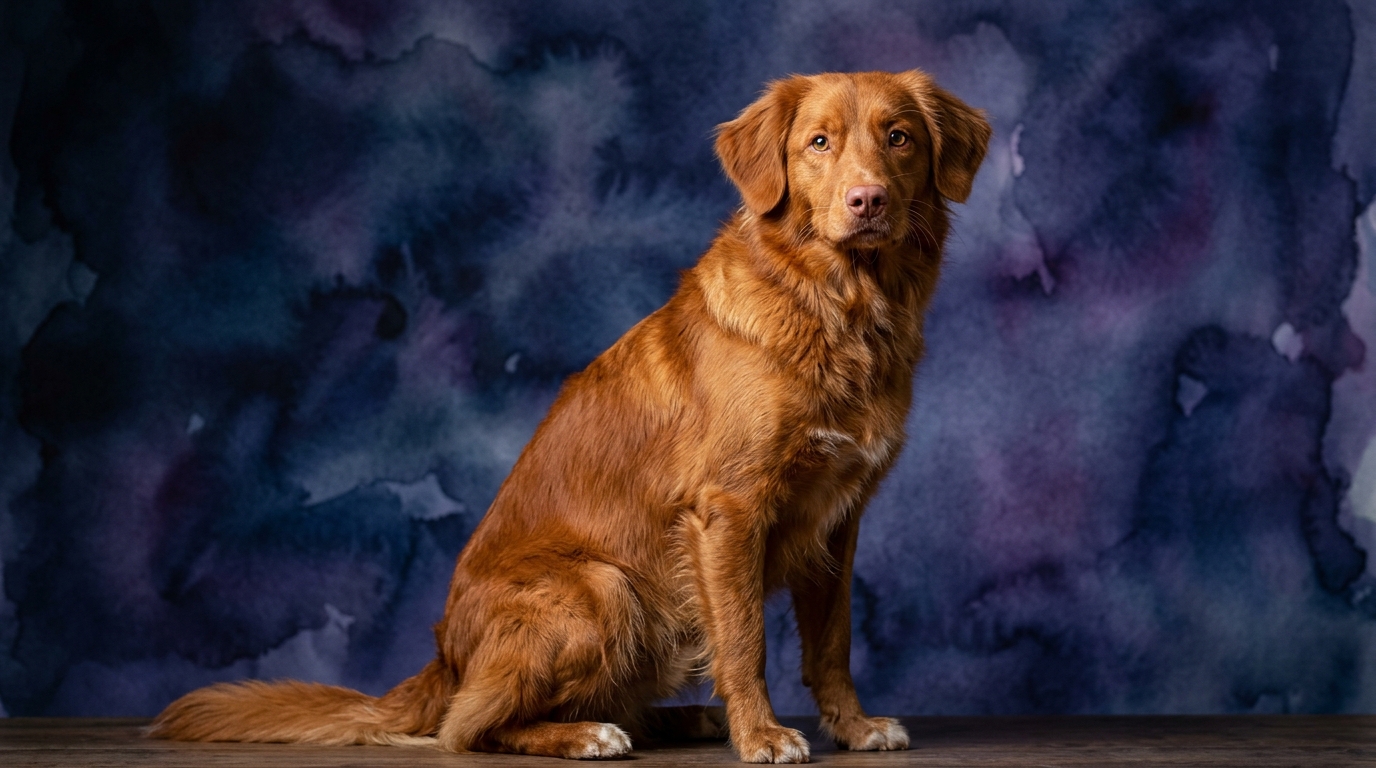
The Nova Scotia Duck Tolling Retriever, a vibrant sporting dog, presents a more uniformly balanced cognitive profile. Their problem-solving ability is rated 3/5, suggesting they are capable of navigating moderately complex challenges but may benefit from more guidance. Training speed, also 3/5, indicates a steady learning pace, where consistency and positive reinforcement yield solid results. Social intelligence, scoring 3/5, reflects a generally amiable and responsive nature, allowing them to adapt well to various social settings without intense scrutiny. An instinctive drive of 3/5 shows a moderate natural inclination for retrieving and engagement. Finally, their memory, at 3/5, ensures effective retention of information with regular reinforcement, forming strong associations over time.
Where the Doberman Pinscher Excels Cognitively
The Doberman Pinscher's cognitive architecture, highlighted by its Coren ranking of #5, showcases a remarkable aptitude for demanding tasks and high-stakes environments. Their problem-solving ability, rated 5/5, means they excel at navigating novel situations, quickly assessing variables, and executing precise, effective responses, whether in protection scenarios or methodical searches. Their capacity to independently strategize and adapt makes them invaluable in roles requiring quick, critical thinking. This breed’s training speed, also 5/5, allows them to grasp new commands and complex routines with minimal repetition, making them exceptionally responsive to advanced obedience, intricate protection work, or competitive dog sports where every second counts. Their 5/5 memory ensures that once a concept or command is learned, it is deeply ingrained and reliably recalled, providing consistent performance even after long breaks. Furthermore, their instinctive drive, rated 5/5, manifests as an unwavering focus and determination, propelling them through demanding tasks and extended training sessions with sustained vigor and precision.
Where the Nova Scotia Duck Tolling Retriever Shines
While the Toller's cognitive profile, with 3/5 across all dimensions, suggests a more moderate approach to learning and interaction, this balance presents its own distinct advantages. Their social intelligence, rated 3/5, indicates a generally amiable, adaptable, and less intensely focused demeanor, allowing them to integrate smoothly into various family dynamics and social settings without the intense scrutiny sometimes observed in more driven breeds. This balanced social awareness, paired with a moderate instinctive drive (3/5), means they typically possess a strong desire to cooperate and engage without being overly demanding or exhibiting extreme vigilance. Their problem-solving at 3/5 suggests they are capable of learning and adapting to new situations, but often prefer to work collaboratively with their handler, thriving on clear direction and teamwork rather than independent strategizing. This creates a highly engaging and cooperative partner for activities like agility, retrieving games, or scent work, where enthusiasm, biddability, and a desire to work alongside their human are prized over independent decision-making.
Training Dynamics: Doberman Pinscher vs. Nova Scotia Duck Toller
When assessing ease of training, the Doberman Pinscher generally presents a faster initial learning curve due to its 5/5 training speed and memory. They absorb new commands and complex sequences with remarkable rapidity, often understanding a concept after only a few repetitions. This makes them appear 'easier' in the sense of quick command acquisition and retention, especially for an experienced trainer. However, their potent instinctive drive (5/5) and strong-willed nature mean that while they learn quickly, their training requires profound consistency, clear boundaries, and an experienced hand to channel their considerable focus and energy effectively. Without consistent, confident leadership, their exceptional problem-solving ability (5/5) can be directed towards independent, potentially undesirable behaviors.
In contrast, the Nova Scotia Duck Tolling Retriever, with its 3/5 training speed, may take more repetitions to solidify new behaviors. Yet, their moderate instinctive drive (3/5) and less intense social intelligence (3/5) often translate to a more forgiving and less dominant training partner. Tollers respond exceptionally well to positive reinforcement methods and can be more amenable to a wider range of training styles, making them an excellent choice for novice owners. Their motivation typically stems from a desire to please and engage with their owner, rather than an inherent, relentless drive for control.
Owner Lifestyle Match: Active vs. Relaxed
For active owners seeking a canine partner that thrives on intense, structured engagement, the Doberman Pinscher is a clear and compelling match. Their 5/5 instinctive drive and problem-solving capacity demand consistent, challenging mental and physical stimulation, from advanced obedience and protection training to competitive sports. A Doberman left without sufficient mental and physical outlets can quickly become bored, potentially leading to destructive behaviors or excessive vigilance. They require an owner committed to providing structured activities, significant daily exercise, and ongoing mental enrichment to channel their powerful cognitive and physical energy productively. Their need for a 'job' is profound.
Conversely, the Nova Scotia Duck Tolling Retriever, while certainly an active breed with a sporting heritage, presents a more adaptable profile for owners who appreciate a balanced energy level. Their 3/5 instinctive drive means they enjoy vigorous play, long walks, swimming, and retrieving games, but typically don't possess the relentless 'on' switch or the same depth of demanding mental intensity as a Doberman. They are content with a good run or swim, followed by relaxed family time indoors. This makes them suitable for active families who enjoy outdoor adventures but also appreciate a dog that can settle down calmly, rather than constantly seeking the next challenging task.
The Verdict
Choose a Doberman Pinscher if you are an experienced owner seeking a highly responsive, dedicated working partner for demanding roles, advanced training, or competitive sports where precision and independent problem-solving are paramount.
Opt for a Nova Scotia Duck Tolling Retriever if you are an active family or individual seeking an enthusiastic, adaptable companion who enjoys engaging activities but also values a balanced temperament and a more cooperative training dynamic.
🧠 Find Your Pet's IQ Score
Our Pet IQ Lab assessment covers 25+ tests across 5 cognitive dimensions — personalized to your breed.
Take the Full IQ Test →Frequently Asked Questions
Is a Doberman Pinscher too smart for a first-time dog owner?
Dobermans possess a 5/5 problem-solving ability and strong instinctive drive, meaning they require consistent, confident leadership and extensive mental engagement. Their cognitive prowess can be overwhelming for first-time owners without a deep commitment to intensive training.
Do Nova Scotia Duck Tolling Retrievers require a lot of mental stimulation?
Tollers have a 3/5 rating across cognitive dimensions, indicating they benefit from regular mental stimulation like retrieving games, puzzle toys, and obedience training. While not as demanding as a Doberman, they are not suited for a sedentary lifestyle and thrive on engagement.
How do their social intelligence ratings impact family life?
The Doberman's 4/5 social intelligence can mean a focused, observant interaction, often reserved with strangers but devoted to family. The Toller's 3/5 social intelligence typically translates to a more uniformly friendly, adaptable, and less intensely scrutinizing demeanor within a family setting, making them generally amenable to varied social dynamics.