Side-by-Side IQ Profile: Deconstructing Canine Cognition
The Cosmic Pet Pet IQ Lab employs a comprehensive framework to assess canine intelligence, moving beyond simple obedience to evaluate five critical cognitive dimensions. For the Doberman Pinscher and the Papillon, comparing these specific scores provides a clearer understanding of their mental faculties.
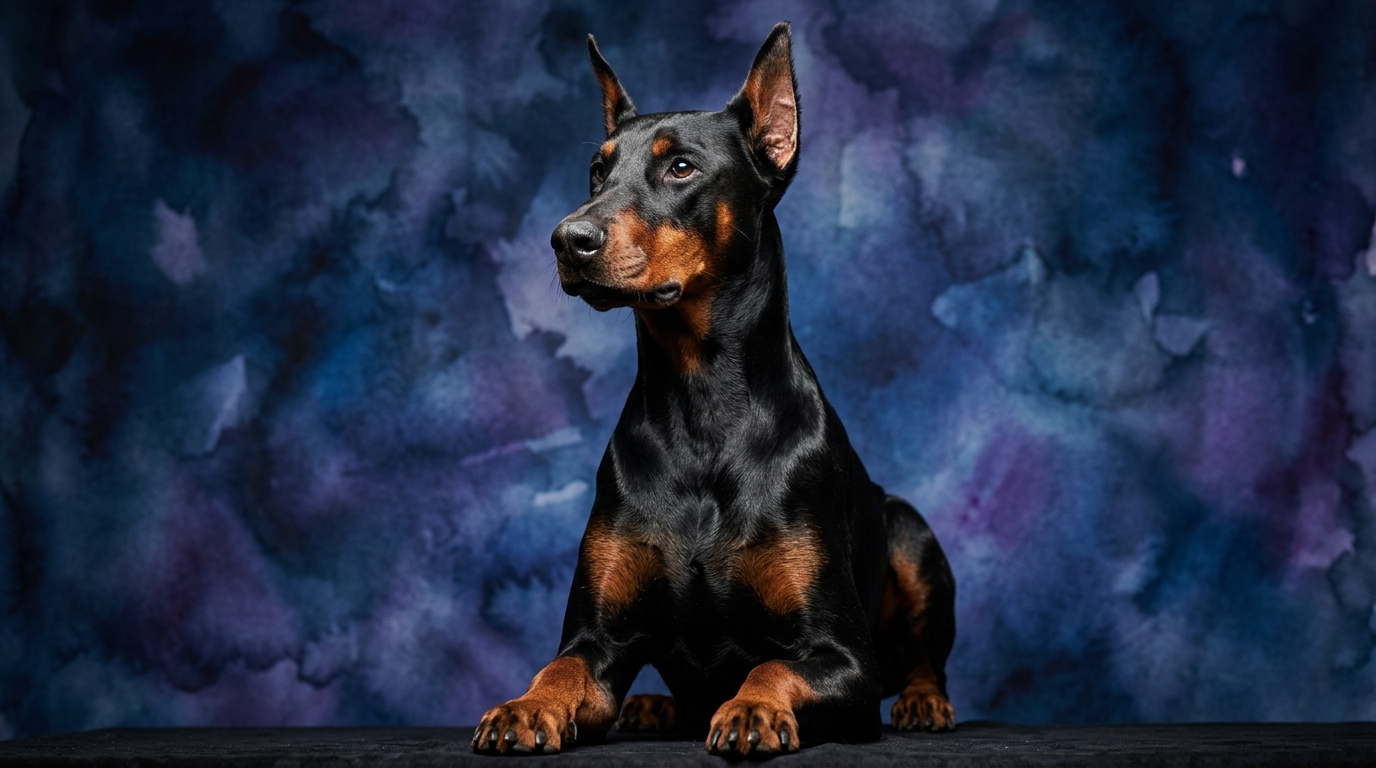
The Doberman Pinscher, a Working breed, holds a Coren rank of #5, placing it among the top echelons for working intelligence and obedience. Its Problem Solving score of 5/5 indicates an exceptional aptitude for navigating complex environments and devising strategies to overcome obstacles. Their cognitive approach often involves assessing situations with a practical, goal-oriented mindset, whether it's figuring out a gate latch or understanding a multi-step command sequence. Their Training Speed is also 5/5, reflecting their ability to rapidly acquire new commands and routines, grasping intent and consequence with minimal repetition. Social Intelligence stands at 4/5; Dobermans are perceptive of human cues and capable of complex communication within their established social structures, often directed towards forming a profound, task-oriented partnership. A notable 5/5 in Instinctive Drive underscores their inherent tendencies for protection, guarding, and focused work, providing an intrinsic motivation that profoundly influences their learning. Finally, their Memory is 5/5, ensuring outstanding recall for learned behaviors, intricate command sequences, and environmental details, contributing to their reliability.
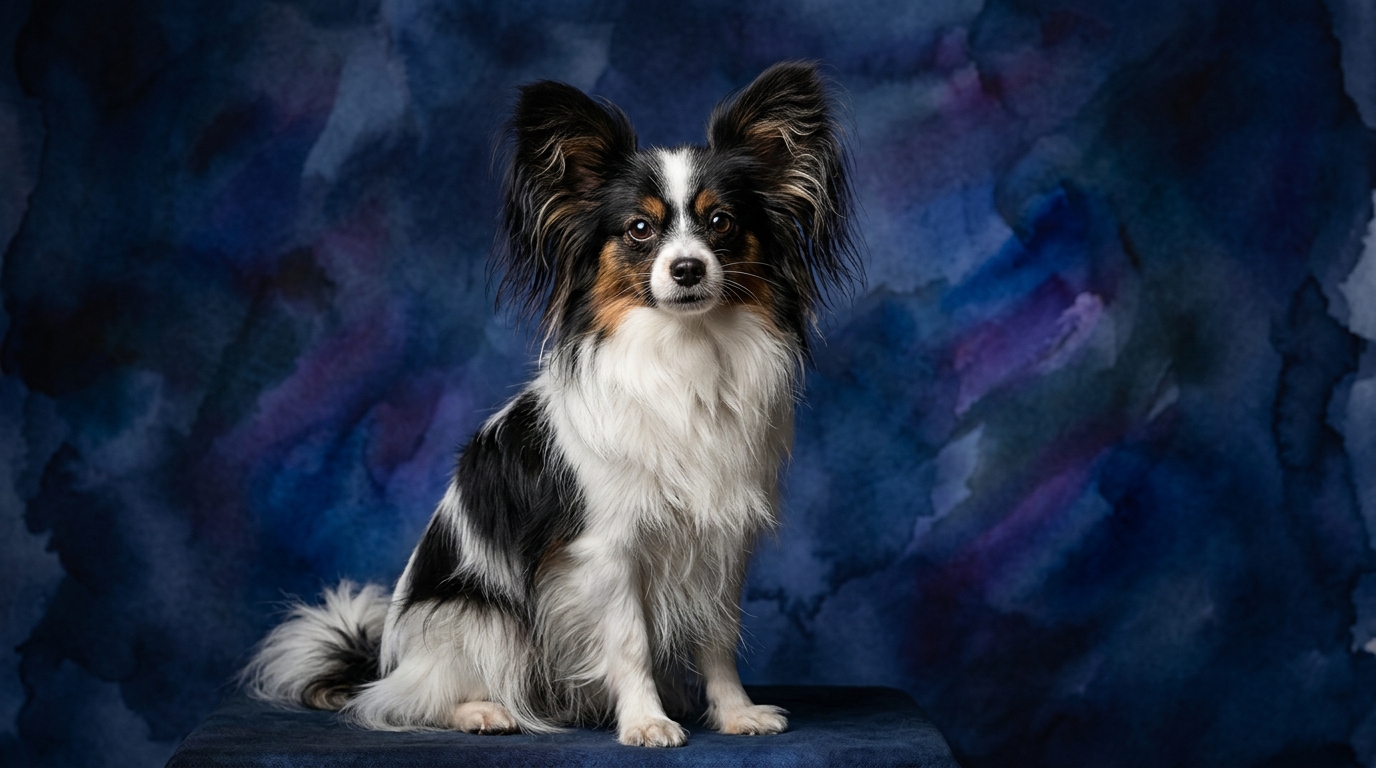
The Papillon, a Toy breed, secures a Coren rank of #8, just a few positions below the Doberman, signifying a substantial cognitive capacity for its size and challenging traditional stereotypes. Like the Doberman, the Papillon achieves a 5/5 in Problem Solving, demonstrating a remarkable facility for navigating puzzles and learning intricate sequences. Their cognitive approach is often characterized by curiosity and nimble mental agility, allowing them to devise creative solutions to perceived challenges. Their Training Speed is also 5/5, meaning these dogs quickly absorb new information and commands, displaying an eager readiness to learn new tricks and obedience exercises with impressive speed. Social Intelligence is 4/5; Papillons are acutely attuned to human emotions and social interactions, frequently seeking to engage and communicate, often anticipating owner needs or moods. Their Instinctive Drive, however, is 3/5. While possessing innate curiosity and playfulness, these drives are generally less pronounced or less geared towards demanding working tasks compared to breeds bred for utility. Their Memory is also 5/5, exhibiting excellent retention of commands, routines, and past experiences, contributing to their consistent performance in training and trick recall.
Where the Doberman Pinscher's Cognition Excels
While both breeds exhibit high scores in problem-solving and training speed, the Doberman Pinscher's distinct advantage lies in its profound 5/5 Instinctive Drive. This potent innate force means their cognitive abilities are inherently geared towards sustained, purpose-driven work. A Doberman's 5/5 problem-solving isn't merely about solving abstract puzzles; it's about strategizing in real-world, often high-stakes scenarios, such as navigating a complex search pattern, understanding an intruder's movements, or executing precise commands under pressure. This drive provides an unwavering commitment to tasks that demand endurance and precision.
Furthermore, their 4/5 Social Intelligence is deeply intertwined with their role as a dedicated partner in a task. Dobermans excel at understanding subtle handler cues not just for general interaction, but to execute precise commands in critical situations. This demonstrates a profound grasp of their working relationship, where communication is geared towards achieving a shared objective. Their cognitive prowess is optimized for roles requiring robust physical application, unwavering focus, and an inherent drive to perform protective or service duties, making them exceptional in fields like protection sports, competitive obedience, and search and rescue. They don't just learn a task; they commit to its successful execution with an unwavering focus and the physical fortitude to match their mental resolve.
Where the Papillon's Cognition Shines
The Papillon, despite its lower 3/5 Instinctive Drive compared to the Doberman, reveals a different, equally impressive facet of cognitive excellence. This less intense drive isn't a deficiency but an advantage, allowing for a unique kind of cognitive flexibility. Papillons are not burdened by intense working imperatives, making them remarkably adaptable to a wider range of activities and environments without displaying frustration from unfulfilled working needs. Their problem-solving (5/5) often manifests in intricate agility courses, mastering complex trick sequences, or ingeniously navigating the nuances of a home environment with finesse.
Their cognitive strengths are particularly evident in tasks requiring fine motor control and quick, precise mental adjustments, often delighting in the process itself rather than a specific utilitarian outcome. The Papillon's 4/5 Social Intelligence is geared towards highly interactive companionship, making them profoundly intuitive companions. They are adept at reading subtle human emotional states and responding with comforting or engaging behaviors, frequently anticipating needs or desires without explicit commands. This makes them exceptional at forming deep emotional bonds and thriving on reciprocal connection. Combined with their 5/5 Memory, they can retain a vast repertoire of tricks and behaviors, often surprising owners with their capacity for nuanced performance in activities like freestyle obedience or competitive rally, showcasing their vibrant mental agility and eagerness to engage.
Training Aptitude: Doberman Pinscher vs. Papillon
Both Doberman Pinschers and Papillons achieve an impressive 5/5 in Training Speed, indicating that both breeds grasp new concepts rapidly. However, the practical experience of training each breed differs significantly due to their distinct Instinctive Drives and the motivations they respond to most effectively. For the Doberman Pinscher, with its 5/5 Instinctive Drive, training is most effective when it channels their powerful innate impulses into productive outlets. They thrive on structure and purpose, responding exceptionally well to clear, consistent commands and excelling at tasks that provide a sense of responsibility or challenge. Their training is often about directing their formidable will and inherent protective instincts towards desired behaviors, making them outstanding candidates for complex, multi-step tasks or protection work. Without proper management of their drives and consistent training, their strong will can lead to behaviors that are difficult to redirect, as they seek to fulfill their intrinsic need for a 'job.'
Conversely, the Papillon, with its 3/5 Instinctive Drive, is often more amenable to varied training approaches, being less insistent on a demanding 'job' and more driven by positive reinforcement and owner interaction. Their 5/5 problem-solving and training speed make them quick studies in agility, tricks, and general obedience, often eager to please and finding intrinsic joy in the learning process itself. Papillons are highly responsive to engaging, reward-based methods, thriving on praise and interactive play. Their smaller size and less intense drives mean their potential for challenging behaviors stemming from unfulfilled working drives is significantly lower. For the average owner seeking a well-mannered companion, the Papillon might feel 'easier' to train because their motivations are more directly tied to social interaction and positive reinforcement, rather than fulfilling a deep-seated working purpose.
Lifestyle Suitability: Active vs. Relaxed Owners
The Doberman Pinscher and Papillon, despite their similar high scores in several cognitive areas, are suited to very different owner lifestyles, primarily due to their contrasting needs for physical exertion and mental engagement. For active owners, the Doberman Pinscher is an unparalleled partner. An owner who thrives on providing consistent structure, challenging physical activity, and profound mental engagement will find a Doberman to be a devoted companion. Their 5/5 instinctive drive and high problem-solving capacity demand an owner who can commit to rigorous training, protection sports, competitive obedience, or extensive outdoor adventures. These dogs flourish when given a clear purpose and ample opportunities to use their formidable physical and cognitive abilities, requiring significant dedication to harness their potential and maintain their well-being.
For more relaxed owners, the Papillon often presents a more suitable match. While energetic for their size, Papillons, with their 3/5 instinctive drive, have more manageable activity requirements. They are well-suited for owners who enjoy interactive games, trick training, and consistent companionship without the necessity of intense physical demands or a demanding 'job.' Their 5/5 problem-solving and 4/5 social intelligence make them engaging companions for owners who appreciate mental stimulation through puzzles, interactive play, and close emotional connection. They fit comfortably into a home environment where intellectual engagement and social interaction, rather than strenuous physical work, are prioritized, offering a vibrant presence without the intensity of a high-drive working breed.
The Verdict
Select a Doberman Pinscher if you are prepared for a devoted working partner, thrive on structured training, and can fulfill a breed's profound need for purpose and significant physical exertion.
Opt for a Papillon if you desire a vibrant, engaging companion who excels in interactive learning and adapts readily to diverse lifestyles, offering companionship without the intense demands of a high-drive working breed.
🧠 Find Your Pet's IQ Score
Our Pet IQ Lab assessment covers 25+ tests across 5 cognitive dimensions — personalized to your breed.
Take the Full IQ Test →Frequently Asked Questions
Do Papillons require as much mental stimulation as Dobermans?
While both breeds score 5/5 in problem-solving and training speed, the *type* of mental stimulation differs. Dobermans require stimulation that taps into their high instinctive drive for purpose-driven work, whereas Papillons thrive on interactive games, trick training, and agility that challenge their quick minds in a less intense, more companion-focused manner.
How does the difference in instinctive drive impact daily life with each breed?
A Doberman's 5/5 instinctive drive means they actively seek a 'job' or purpose, requiring consistent engagement and structured activities to prevent boredom or destructive behaviors. A Papillon's 3/5 instinctive drive makes them more adaptable; their drives are typically satisfied with play, companionship, and mental games, making them generally easier to integrate into less demanding daily routines.
Despite similar IQ scores, why are these breeds suited to different owners?
The difference primarily lies in their intrinsic drives and how their intelligence manifests. Dobermans channel their cognitive prowess into robust, purpose-driven activities demanding high physical output and unwavering focus, while Papillons apply their intellect to agile, interactive tasks and companionship, thriving on mental games and close social bonds.