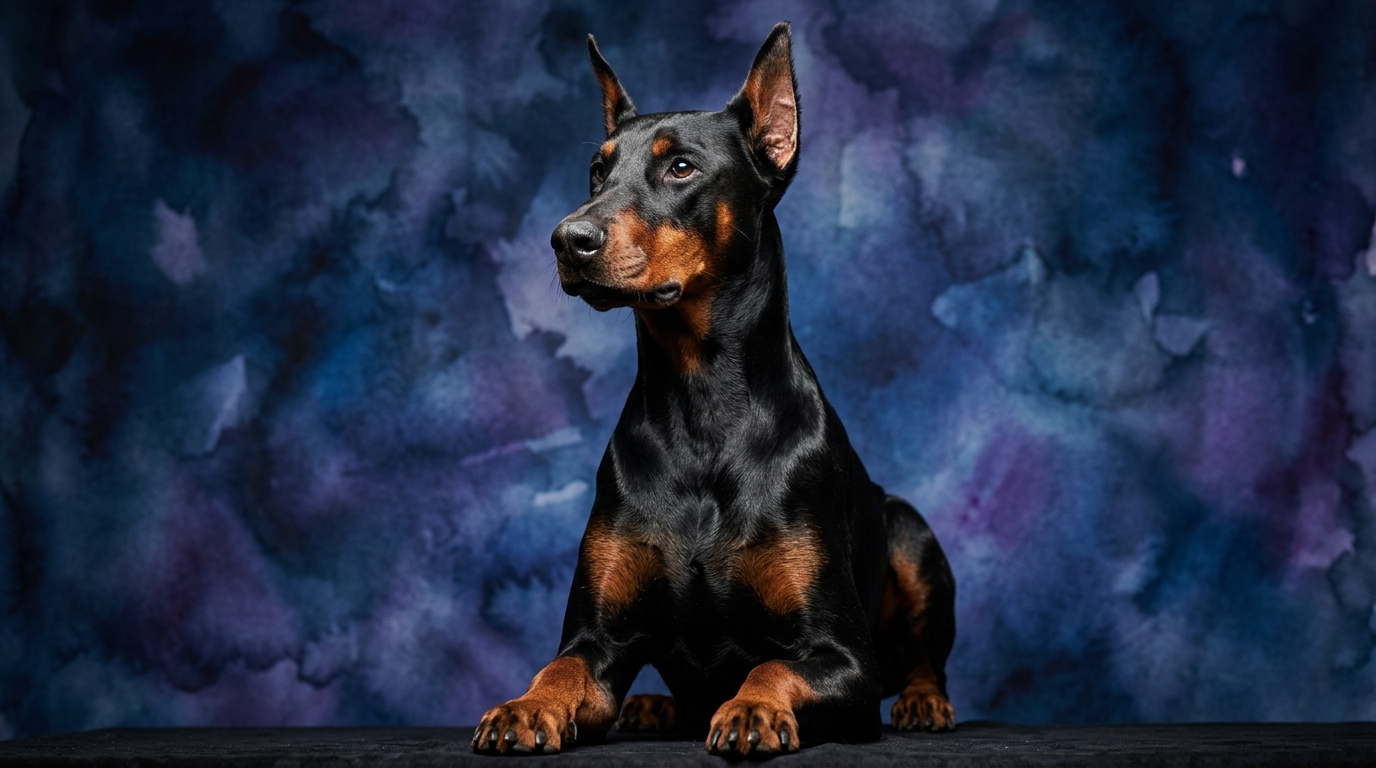
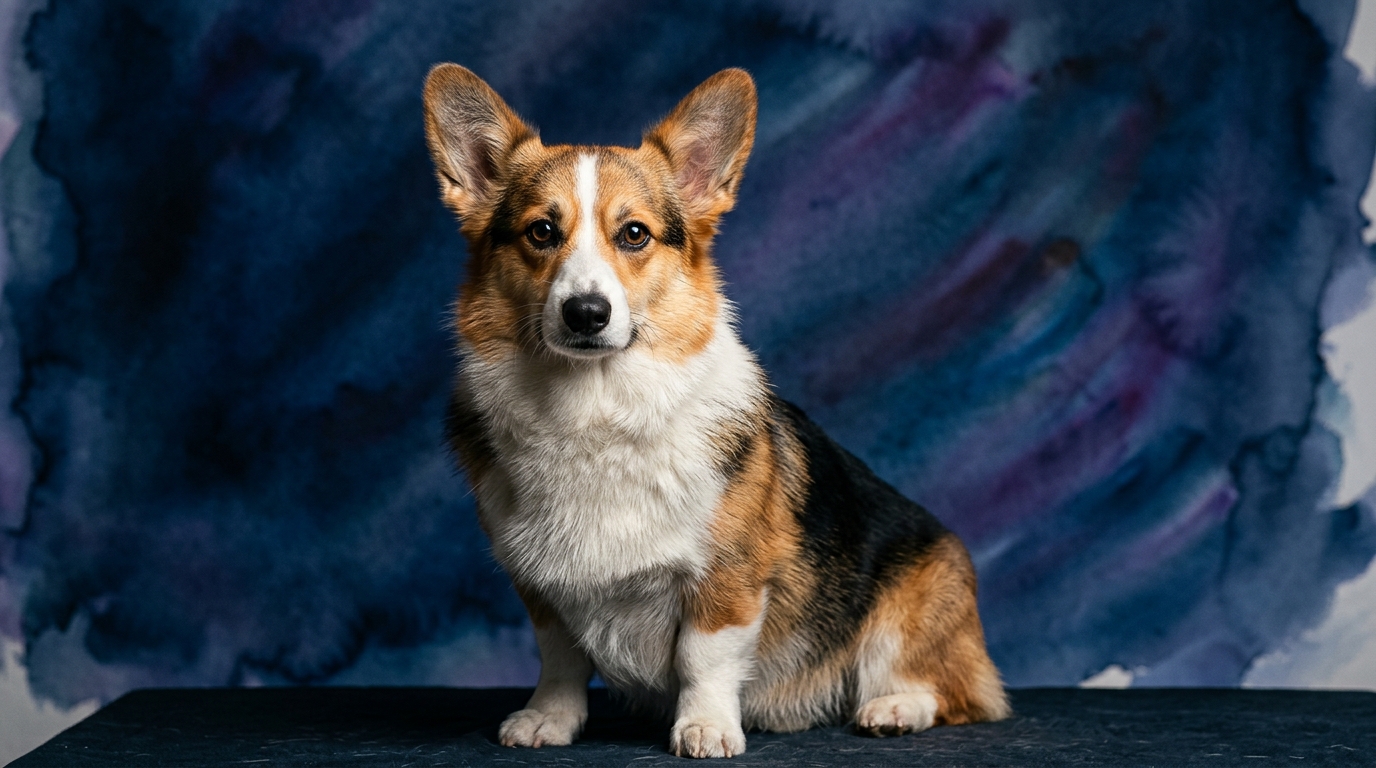
Side-by-Side IQ Profile: Doberman Pinscher vs. Pembroke Welsh Corgi
The Cosmic Pet Pet IQ Lab employs five key dimensions to assess canine intelligence, offering a granular view of each breed's cognitive strengths. Let’s dissect the profiles of the Doberman Pinscher and the Pembroke Welsh Corgi.
**Doberman Pinscher (Working Group, Coren Rank #5):** This breed's top-tier ranking is underscored by several outstanding cognitive attributes. Their **Problem Solving (5/5)** reflects a profound capacity for independent thought and complex strategizing, allowing them to quickly assess novel situations and devise solutions. An exceptional **Training Speed (5/5)** means Dobermans grasp new commands and routines with remarkable swiftness, often requiring only a few repetitions to solidify a behavior. Their **Social Intelligence (4/5)** indicates a perceptive understanding of human emotions and intentions, forming deep bonds with their families, though they can be reserved with strangers. A perfect **Instinctive Drive (5/5)** speaks to powerful, innate predispositions, particularly for protection and vigilance, guiding their actions with a persistent work ethic. Finally, their **Memory (5/5)** ensures that learned behaviors, past experiences, and familiar routines are retained over long periods, contributing significantly to their training retention and ability to navigate complex environments.
**Pembroke Welsh Corgi (Herding Group, Coren Rank #11):** While a few ranks below the Doberman, the Corgi presents a robust cognitive profile tailored to its heritage. Their **Problem Solving (4/5)** demonstrates a strong ability to figure out how to achieve goals, such as outsmarting a gate or finding a hidden toy, showcasing resourcefulness and determination. Matching the Doberman, their **Training Speed (5/5)** means Corgis learn new commands and tasks with impressive alacrity, thriving on consistent and positive reinforcement. Corgis possess notable **Social Intelligence (4/5)**, allowing them to read human moods and respond appropriately, often acting as cheerful and empathetic companions, though their herding nature can sometimes translate into bossiness. A perfect **Instinctive Drive (5/5)** highlights their powerful, inherent herding behaviors, including nipping at heels and organizing their 'flock'—a fundamental part of their being influencing their play and interactions. Their **Memory (4/5)** capabilities are strong, retaining learned commands and routines effectively, more than sufficient for mastering complex sequences and remembering past interactions, contributing to their reliability in established routines.
Where the Doberman Pinscher Wins Cognitively
The Doberman's cognitive edge primarily lies in its superior problem-solving capacity and memory. With a perfect 5/5 in both, Dobermans not only devise intricate solutions to novel challenges but also retain those solutions and a vast array of learned information over extended periods. This combination makes them exceptional at tasks requiring independent decision-making, long-term retention of complex sequences, and adaptability in dynamic environments, such as advanced protection work or competitive obedience where intricate routines must be flawlessly executed. Their ability to strategize and recall detailed instructions gives them an advantage in roles where a nuanced understanding of a situation and a precise response are paramount.
Where the Pembroke Welsh Corgi Wins Cognitively
While the Doberman excels in raw problem-solving and memory, the Corgi's cognitive strengths shine particularly brightly when their instinctive drive is channeled. Their perfect 5/5 in instinctive drive, coupled with their 5/5 training speed, means Corgis are incredibly adept at learning and performing tasks that align with their herding nature. They quickly pick up on cues to gather, direct, or organize, and their social intelligence allows them to apply these drives within a family structure, often 'herding' children or other pets with playful determination. Their resourcefulness (4/5 problem-solving) is frequently applied to situations where their innate drives can be satisfied, demonstrating a practical, goal-oriented application of their intellect, even if their strategic depth is marginally less than a Doberman's.
Which is Easier to Train and Why
Both breeds share a perfect 5/5 score in training speed, indicating they learn new commands quickly. However, the *ease* of overall training experience can differ due to their distinct instinctive drives and problem-solving approaches. The Doberman's problem-solving (5/5) and memory (5/5) allow for rapid absorption of complex, multi-step commands and the ability to generalize learning across different situations with fewer repetitions. Their strong drive to work alongside their handler, inherent in a working breed, often translates into a keen desire to please and perform. In contrast, while Corgis learn commands just as fast (5/5 training speed), their powerful herding instinct (5/5 instinctive drive) can sometimes manifest as independent decision-making or a tendency to 'herd' things they shouldn't, requiring more consistent redirection and management of these innate urges. While both are highly trainable, the Doberman might be perceived as 'easier' for advanced, precision-based obedience or tasks requiring independent initiative within a structured framework, whereas Corgis might require more creative approaches to channel their herding behaviors into acceptable outlets.
Which Suits Active Owners vs. Relaxed Owners
Owners seeking a companion for highly structured activities and demanding mental engagement will find the Doberman Pinscher a compelling match. Their intense instinctive drive (5/5), coupled with top scores in problem-solving and memory, means they thrive on consistent challenges, advanced obedience, protection sports, or jobs that require sustained focus and strategic thinking. They are not content with mere casual walks; they require a 'job' or a purpose to truly flourish mentally and physically. For those with a more relaxed lifestyle, the Pembroke Welsh Corgi might be a more suitable, though still active, choice. While they possess a strong instinctive drive (5/5) for herding and require regular physical activity to satisfy it, their needs often manifest as energetic play sessions, brisk walks, or participating in agility and herding trials rather than the intense, focused work a Doberman craves. Corgis are adaptable and enjoy being part of family activities, but their mental and physical exercise requirements, while significant, are generally less demanding in terms of constant, high-stakes cognitive engagement than a Doberman's.
The Verdict
Choose a Doberman Pinscher if you are an experienced owner prepared to provide extensive mental and physical stimulation, desiring a partner for advanced training, protective roles, or complex tasks where independent thought and flawless recall are paramount.
Opt for a Pembroke Welsh Corgi if you appreciate a spirited, problem-solving companion with a strong herding drive, are willing to manage their innate urges, and seek an active yet adaptable dog for family life and engaging activities like agility or herding games.
🧠 Find Your Pet's IQ Score
Our Pet IQ Lab assessment covers 25+ tests across 5 cognitive dimensions — personalized to your breed.
Take the Full IQ Test →Frequently Asked Questions
Is a Doberman Pinscher or a Pembroke Welsh Corgi better for first-time dog owners?
A Doberman Pinscher, with its intense drives and cognitive demands, generally suits experienced owners. A Pembroke Welsh Corgi can be a good fit for dedicated first-time owners who are prepared for their herding instincts and provide consistent training and socialization.
Do both breeds require a lot of exercise?
Yes, both breeds have significant exercise needs, but they manifest differently. Dobermans require intense physical activity combined with extensive mental work, while Corgis need regular brisk walks, play, and opportunities to channel their herding energy, which can be less structured.
How do their social intelligence scores of 4/5 compare in daily life?
Both breeds are perceptive of human emotions and bond deeply with their families. Dobermans often exhibit a more reserved demeanor towards strangers, focusing their social intelligence on their primary group, while Corgis tend to be more outwardly social and adaptable to various family dynamics, sometimes using their social intelligence to 'manage' their human 'flock'.