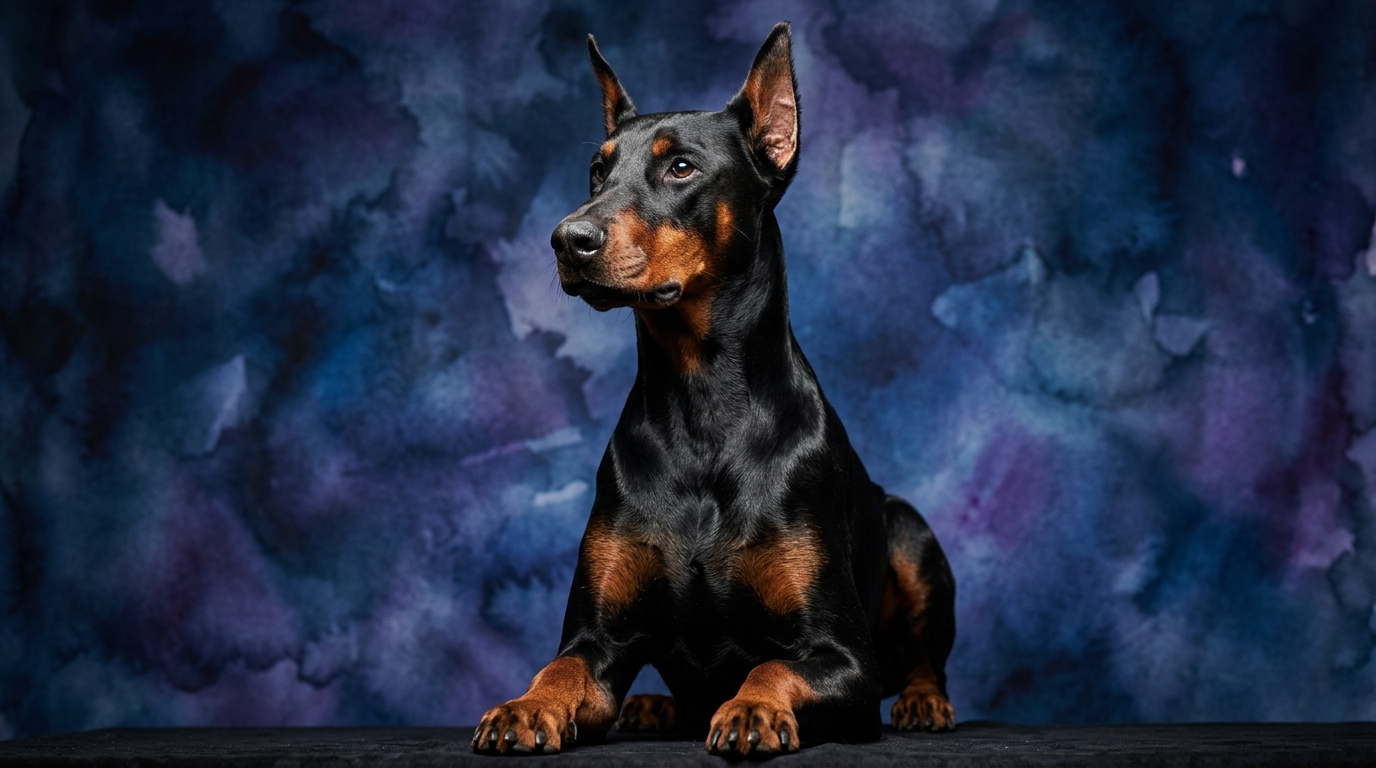
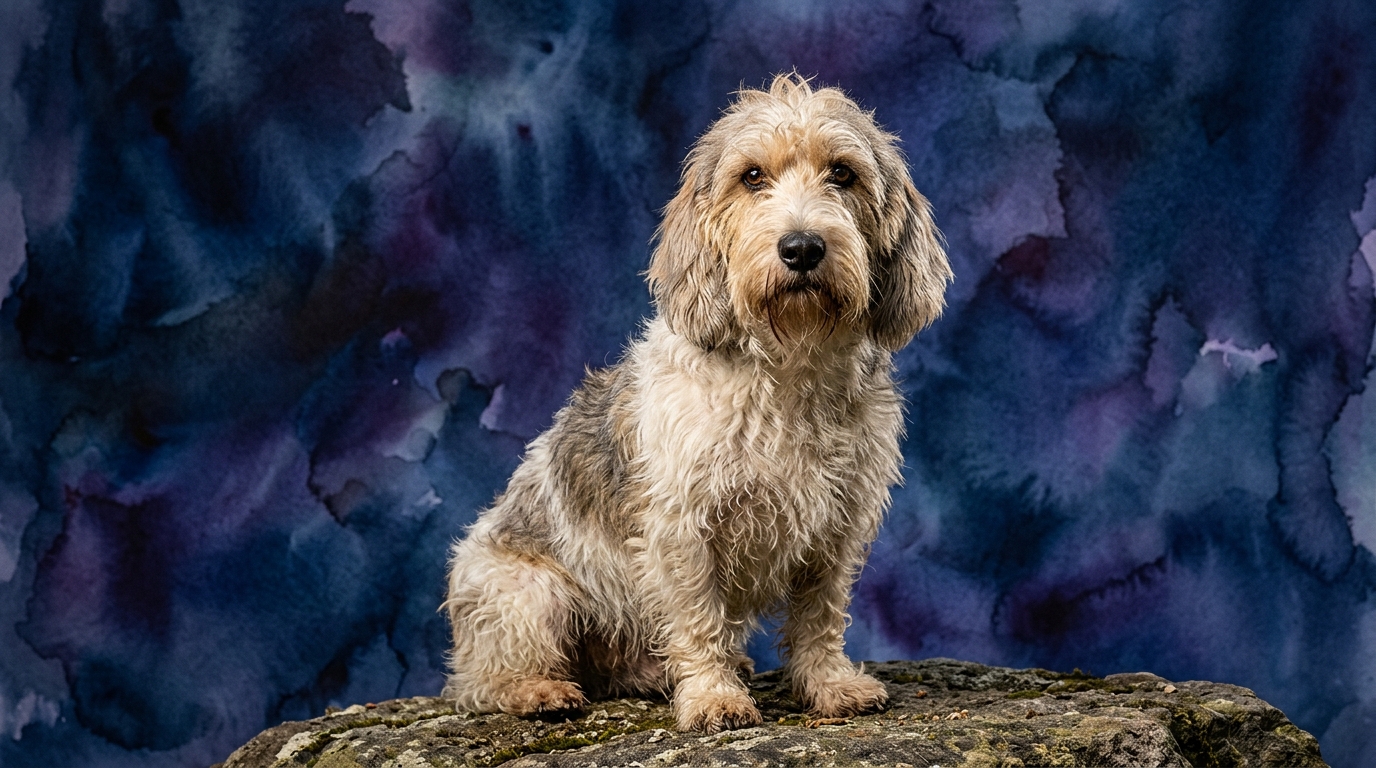
Side-by-Side Cognitive Profile
The Doberman Pinscher consistently demonstrates a high aptitude across multiple cognitive domains, earning it a Coren rank of #5 among working breeds. Its problem-solving capacity is exceptional at 5/5, indicating a strong ability to navigate novel situations and figure out complex tasks with minimal guidance. Training speed also rates 5/5, reflecting a swift grasp of new commands and routines, often requiring fewer repetitions than many other breeds. Social intelligence, at 4/5, points to a strong understanding of human cues and a desire to interact and cooperate, though perhaps with a touch of independence. The Doberman's instinctive drive is also 5/5, channeling its natural protective and working instincts into focused, purposeful action. Finally, its memory is rated 5/5, allowing for long-term retention of learned behaviors and experiences.
The Petit Basset Griffon Vendéen's (PBGV) cognitive profile, while not Coren-ranked, reflects the specialized intelligence of a traditional scenthound. Its problem-solving ability is rated 3/5, suggesting it can tackle challenges but might prefer to rely on its powerful senses rather than abstract reasoning. Training speed also stands at 3/5; while capable of learning, the PBGV often requires more patience and creative motivation to master commands, owing to its independent nature. Social intelligence is 3/5, indicating a friendly disposition but one that values autonomy and might not always prioritize human directives over its own interests, especially when a compelling scent presents itself. The PBGV's instinctive drive, at 3/5, is primarily geared towards scenting and trailing, making it less inclined towards human-directed tasks that don't align with its core purpose. Its memory, also 3/5, allows it to recall basic commands and routines but may not be as robust for complex sequences or long-term retention of non-instinctive behaviors as a working breed.
Where the Doberman Pinscher Excels Cognitively
The Doberman Pinscher's cognitive strengths are particularly evident in its capacity for structured learning and task execution. Its 5/5 problem-solving score means it can quickly analyze environmental cues and devise solutions to intricate puzzles, whether that involves opening a gate or navigating an agility course with precision. This breed excels at understanding multi-step commands and anticipating consequences, making it adept at roles requiring complex decision-making, such as police work or search and rescue operations. The Doberman's exceptional training speed (5/5) allows it to absorb new information rapidly, often mastering a command after only a few repetitions, which is crucial for advanced obedience or competitive dog sports. Furthermore, its 5/5 memory ensures that once a skill is learned, it is retained for extended periods, building a vast repertoire of understood behaviors. This robust memory also contributes to its consistency in performance and reliability in executing trained tasks. The breed's 4/5 social intelligence, coupled with its strong instinctive drive (5/5) towards purpose-driven activities, allows it to form a highly cooperative working partnership with its handler, interpreting subtle cues and responding with focused intent. This combination of cognitive traits makes the Doberman a standout in roles demanding precise execution, quick comprehension, and unwavering dedication to a task.
Where the Petit Basset Griffon Vendéen Excels Cognitively
While the PBGV's scores might appear lower in traditional obedience metrics, its cognitive strengths lie in its specialized sensory intelligence and independent processing, particularly related to scent work. The PBGV's instinctive drive (3/5), though moderate in general terms, is intensely focused on its olfactory capabilities. This drive translates into an exceptional ability to discriminate and follow complex scent trails, a cognitive feat that requires sustained focus, environmental interpretation, and problem-solving within its specific domain. A PBGV might not solve a puzzle feeder with the same speed as a Doberman, but it possesses an unparalleled capacity to “solve” the puzzle of a lost scent, demonstrating a different kind of cognitive aptitude. Their 3/5 problem-solving, when applied to navigating varied terrain and obstacles to maintain a trail, reveals a practical, goal-oriented intelligence driven by its primary instinct. Its moderate social intelligence (3/5) allows for cooperation, but its independent spirit, essential for a dog working alone or in a small pack in dense undergrowth, means it trusts its own judgment when on a scent. This independence is a cognitive strength for a scenthound, allowing it to persist in a task without constant human direction, making crucial decisions about the trail based on its own sensory input. This breed's memory (3/5) is particularly strong for scent-related information, recalling specific odors and their associations over time, which is vital for effective hunting and tracking. Therefore, the PBGV's wins are rooted in its highly developed sensory cognition and autonomous decision-making in the field.
Training Ease: Doberman Pinscher vs. Petit Basset Griffon Vendéen
The Doberman Pinscher is unequivocally easier to train for general obedience and complex tasks, primarily due to its cognitive profile. With a 5/5 training speed and 5/5 memory, Dobermans absorb new commands with remarkable rapidity and retain them over long periods. Their high social intelligence (4/5) means they are eager to please their human companions and highly attuned to verbal and non-verbal cues. This desire for cooperation, coupled with a powerful instinctive drive (5/5) that can be channeled into purposeful work, makes them highly responsive to instruction. For instance, a Doberman can learn a multi-step retrieve sequence or a complex agility course with fewer repetitions and greater precision. Their problem-solving ability (5/5) also means they can generalize learned behaviors to new situations and quickly understand what is being asked of them, even in novel environments.
In contrast, the Petit Basset Griffon Vendéen, with its 3/5 scores across training speed, social intelligence, and memory, presents a different training experience. PBGVs are independent thinkers, driven primarily by their profound sense of smell. While they are capable of learning, their attention can be easily diverted by interesting odors, making consistent focus a challenge. Their moderate social intelligence means they are friendly but may prioritize following a scent over a handler's command if the scent is compelling. Training a PBGV requires significant patience, consistency, and a deep understanding of positive reinforcement to make training more rewarding than the allure of the trail. For example, teaching a PBGV a recall command often demands a higher-value reward and more consistent practice in varied environments to compete with their natural inclination to explore via scent. Their problem-solving (3/5) often manifests in finding creative ways to pursue a scent rather than adhering strictly to human-imposed rules, which can be perceived as stubbornness in a training context.
Matching Breeds to Lifestyles: Active vs. Relaxed Owners
The Doberman Pinscher is an ideal match for active owners who seek a canine partner for engaging, purpose-driven activities. Their high instinctive drive (5/5) necessitates a consistent outlet for their energy and mental faculties. Owners who enjoy advanced obedience, agility, protection sports, or even competitive dock diving will find a Doberman thrives on such challenges. This breed requires daily vigorous exercise, not just a casual walk, but structured activity that engages both body and mind. Their need for mental stimulation, stemming from their 5/5 problem-solving and memory, means they excel when given jobs to do. A Doberman left without sufficient mental and physical engagement can become bored and potentially destructive, channeling its powerful drive into less desirable behaviors. They are not suited for owners seeking a purely decorative companion or those with a sedentary lifestyle.
The Petit Basset Griffon Vendéen, while possessing an active nature, suits owners who appreciate a more free-spirited companion and can accommodate its unique hound instincts rather than demanding strict adherence to human-centric tasks. Their instinctive drive (3/5) is geared towards exploration and scenting, making them excellent companions for long, rambling walks or hikes where they can engage their powerful noses. Owners who enjoy outdoor adventures, perhaps even dabbling in scent work or tracking sports, will find the PBGV's enthusiasm infectious. However, their activity needs are different from a Doberman's; they don't necessarily require highly structured, repetitive training sessions, but rather opportunities for independent exploration and sensory engagement. While active, they can also transition to a more relaxed indoor presence, enjoying family time and cuddles after their daily outdoor excursions. They are less suited for owners who cannot provide secure, fenced areas for off-leash exploration or those who expect a perfectly obedient, always-at-heel companion without understanding their independent hound temperament.
The Verdict
Opt for a Doberman Pinscher if you are an experienced, active owner seeking a highly trainable, dedicated canine partner for advanced obedience, protective roles, or competitive dog sports, and are prepared to provide consistent mental and physical challenges.
Select a Petit Basset Griffon Vendéen if you appreciate an independent, spirited companion with a keen sense of smell, are patient with training, and enjoy exploring the outdoors, allowing your dog to indulge its natural hunting instincts.
🧠 Find Your Pet's IQ Score
Our Pet IQ Lab assessment covers 25+ tests across 5 cognitive dimensions — personalized to your breed.
Take the Full IQ Test →Frequently Asked Questions
Can a PBGV be trained for advanced obedience like a Doberman?
While a PBGV can learn basic obedience, its independent nature and strong scent drive make advanced obedience a significant challenge compared to a Doberman. Their preference is to follow their nose, requiring more creative and patient training methods to achieve consistent, high-level performance.
Are Dobermans good family pets despite their working dog background?
Yes, Dobermans can be excellent family pets when properly socialized and trained from a young age. Their social intelligence and desire to please make them loyal companions, but their protective instincts and high energy mean they thrive best with active families who can provide clear leadership and consistent engagement.
How much exercise does a PBGV truly need daily?
A PBGV requires at least 60-90 minutes of daily exercise, preferably incorporating opportunities for off-leash exploration in a secure area where they can engage their powerful sense of smell. This could include long walks, hikes, or supervised playtime in a fenced yard, ensuring mental stimulation through scenting.