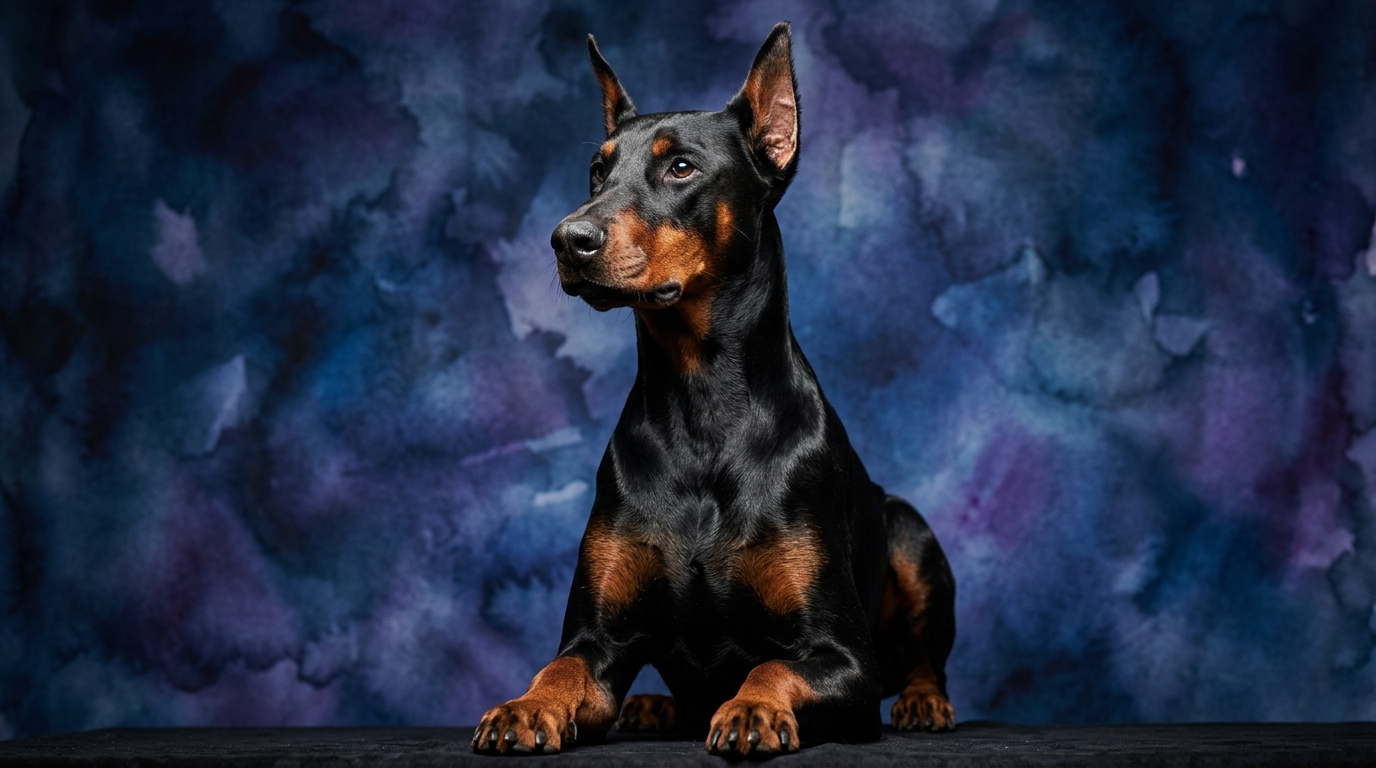
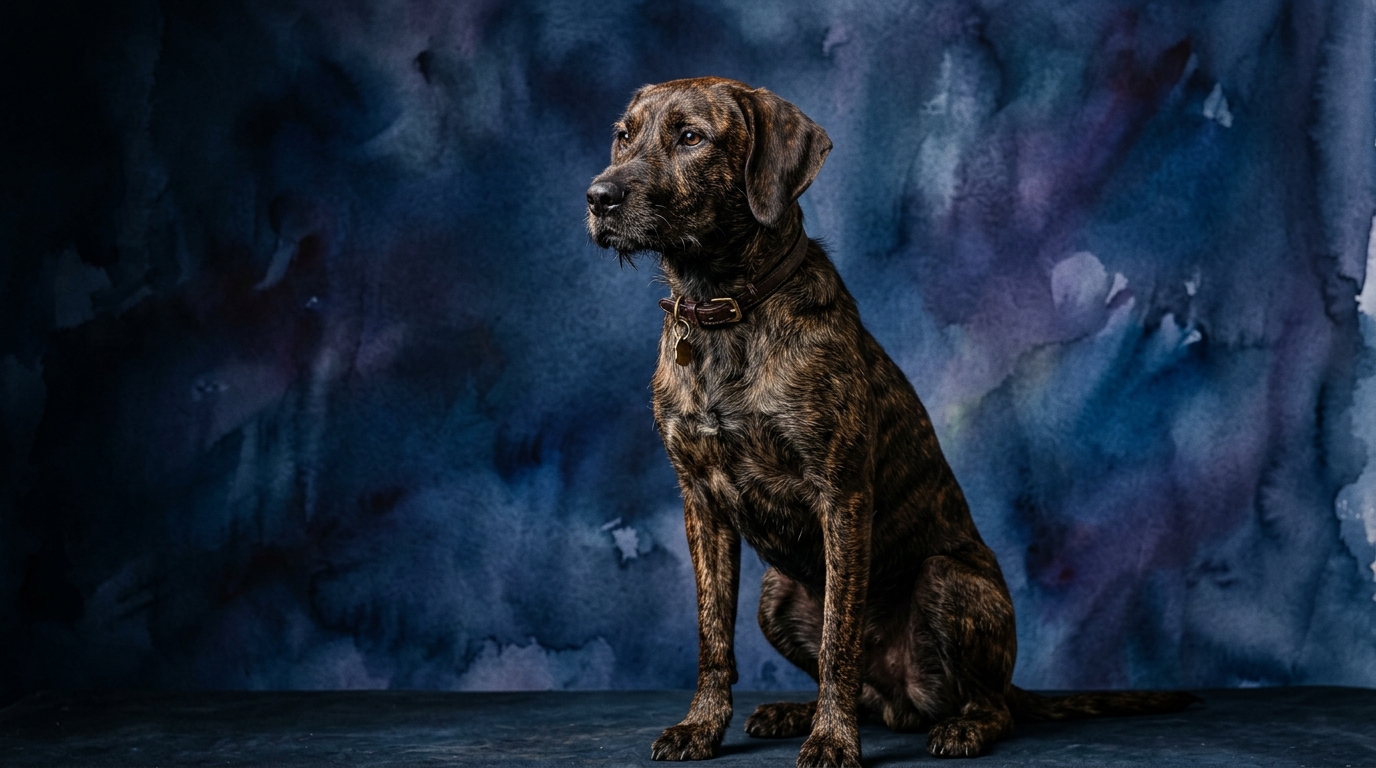
Side-by-Side IQ Profile: Doberman Pinscher vs. Plott Hound
The Cosmic Pet Pet IQ Lab employs five key dimensions to evaluate canine intelligence, offering a granular view beyond simple rankings. For the Doberman Pinscher, a breed from the Working group, its Coren rank of #5 places it among the most capable learners. Its IQ scores are Problem Solving 5/5, Training Speed 5/5, Social Intelligence 4/5, Instinctive Drive 5/5, and Memory 5/5. This profile indicates a dog built for rapid comprehension, quick skill acquisition, and a strong drive to perform complex tasks in partnership with a human.
In contrast, the Plott Hound, a member of the Hound group, is not Coren-ranked, suggesting a different cognitive emphasis. Its IQ scores are Problem Solving 3/5, Training Speed 3/5, Social Intelligence 3/5, Instinctive Drive 3/5, and Memory 3/5. These scores reflect a breed whose cognitive strengths are specialized towards its ancestral role of tracking and hunting, often independently, rather than excelling in generalized obedience or abstract problem-solving.
Delving deeper into the Doberman's profile, its 5/5 in Problem Solving signifies an ability to quickly grasp complex tasks and adapt strategies to overcome new obstacles, demonstrating a robust capacity for reasoning. The 5/5 for Training Speed means new commands are typically learned with minimal repetition, fueled by their eagerness and focus. Social Intelligence at 4/5 shows they are adept at reading human cues and family dynamics, though they can be reserved with strangers. An Instinctive Drive of 5/5 highlights their powerful motivation for tasks like protection or sports, while a 5/5 in Memory ensures excellent recall for routines and complex sequences.
For the Plott Hound, a Problem Solving score of 3/5 suggests their approach is often more independent and scent-driven, focused on navigating their environment through their nose rather than abstract reasoning. Their Training Speed of 3/5 indicates that learning new commands requires more patience and consistent engagement, as their attention can be easily drawn by compelling scents. Social Intelligence at 3/5 means they are generally affable but may be less attuned to subtle human emotional shifts, often prioritizing pack dynamics and collaborative hunting. An Instinctive Drive of 3/5, while lower overall, is intensely powerful within the specific context of scent work. Finally, their Memory at 3/5 is strong for established routines and familiar trails, particularly those linked to olfactory experiences, but less so for abstract commands.
Where the Doberman Pinscher Wins Cognitively
The Doberman Pinscher's cognitive architecture is optimized for precision, speed, and partnership. Their combined 5/5 scores in Problem Solving, Training Speed, and Memory mean they process information and form associations with remarkable efficiency. This translates into an ability to master intricate obedience routines, agility courses, and protection work where sequential actions and precise execution are critical. For instance, a Doberman can learn a multi-step retrieve, identifying specific objects by name, or navigate a complex obstacle course with minimal handler input after initial training, demonstrating their capacity to not just learn 'what' to do, but 'how' to adapt if the situation changes.
Furthermore, their exceptional memory allows them to retain a vast vocabulary of commands and complex behavioral patterns over extended periods. This isn't just about remembering a scent trail, but recalling abstract concepts like 'stay' for prolonged durations in highly distracting environments, or remembering specific hand signals for different actions. Their social intelligence, coupled with their strong drive, means they are constantly looking to their human companion for direction, making them highly responsive to subtle cues and eager to engage in strategic problem-solving tasks presented by their handler. If confronted with a closed door, a Doberman might systematically try the handle, then push, then look for a latch, rather than just barking or relying on brute force.
Where the Plott Hound Wins Cognitively
While the Plott Hound's general IQ scores are modest compared to the Doberman, their cognitive strengths are profoundly specialized and formidable within their domain. Their true advantage lies in their unparalleled olfactory problem-solving and endurance. A Plott Hound can unravel complex scent puzzles, following a faint trail over varied terrain, through numerous distractions, and across long distances for hours. This isn't merely 'following a scent'; it's a dynamic, adaptive cognitive process of filtering, identifying, and committing to a specific olfactory signature amidst a cacophony of others, requiring immense focus and discernment. Their instinctive drive, while rated 3/5 overall, is profoundly powerful and tenacious in this specific context.
Moreover, the Plott Hound excels in independent decision-making in the field, a cognitive advantage that contrasts sharply with the Doberman's reliance on human direction. When on a trail, far from their handler, they must make quick, critical decisions about direction, pace, and persistence based solely on the nuanced information gleaned from scent. This autonomy, while sometimes a challenge for conventional obedience, is a testament to their specialized problem-solving capabilities in their natural element. Their entire cognitive architecture is geared towards processing and interpreting environmental cues through scent, allowing them to build detailed mental maps based on olfactory input, remembering specific trails, game territories, and even the presence of other animals or humans purely through their nose. This specialized memory is a powerful tool in their world.
Which is Easier to Train and Why?
Based on their IQ profiles, the Doberman Pinscher is generally much easier to train for conventional obedience and complex tasks. Their high Training Speed (5/5), Problem Solving (5/5), and Memory (5/5) mean they grasp concepts quickly, require fewer repetitions, and retain information effectively over time. They possess a strong eagerness to please and are highly responsive to handler cues, thanks to their social intelligence (4/5) and powerful instinctive drive (5/5) to work collaboratively. A Doberman will intently watch its trainer for the next command, eager to perform and receive feedback, making structured training a highly efficient and rewarding endeavor.
The Plott Hound, conversely, presents a greater challenge for traditional obedience training. Their lower Training Speed (3/5) and Problem Solving (3/5) scores indicate that they require significantly more patience, repetition, and engaging methods to learn new commands. Their powerful instinctive drive (3/5) is primarily for scent work, which can easily override attention to human commands, especially in environments rich with interesting smells. Their independence means they often prioritize their nose over human instruction. A real behavioral difference illustrates this: a Plott Hound might be mid-way through a 'sit' command when a compelling scent crosses its path, causing it to break focus immediately and requiring the handler to diligently re-engage their attention. Training a Plott Hound often involves channeling their natural drives rather than suppressing them, and accepting that their focus will always be somewhat divided by their extraordinary sense of smell.
Which Suits Active Owners vs. Relaxed Owners?
Neither the Doberman Pinscher nor the Plott Hound is suitable for truly relaxed owners, as both breeds demand significant commitment to physical exercise and mental engagement to thrive. However, the nature of that activity differs considerably. The Doberman Pinscher suits active owners who enjoy structured activities, such as advanced obedience training, competitive dog sports like agility or Schutzhund, and regular mental stimulation through puzzle toys or learning new tricks. They require a 'job' and flourish with consistent training and interaction that challenges their considerable cognitive abilities. Their physical needs are high, but equally important is their constant need for intellectual engagement and a sense of purpose.
The Plott Hound, while also requiring an active lifestyle, suits owners who are passionate about extensive outdoor exploration, scent work, hiking, or hunting. They need ample opportunities to use their extraordinary nose and expend energy through vigorous, often less structured, physical activity. Their activity is less about precision and more about covering ground, exploring, and following trails. For owners who are not prepared to provide outlets for their specific drives, both breeds can develop undesirable behaviors stemming from boredom and pent-up energy, making neither an ideal choice for a sedentary lifestyle.
The Verdict
Choose the Doberman Pinscher for individuals seeking a highly trainable, responsive companion eager to engage in complex tasks, advanced obedience, and protective roles. This breed thrives with owners who can provide consistent structure, mental challenges, and appreciate a partner that learns and adapts rapidly.
Choose the Plott Hound for those who appreciate a tenacious, independent canine companion with an extraordinary nose, ideal for scent work, hunting, or extensive outdoor adventures. This breed flourishes with patient owners who can channel their powerful instincts and enjoy a partner driven by the call of the trail.
🧠 Find Your Pet's IQ Score
Our Pet IQ Lab assessment covers 25+ tests across 5 cognitive dimensions — personalized to your breed.
Take the Full IQ Test →Frequently Asked Questions
Can a Plott Hound be trained for advanced obedience like a Doberman?
While a Plott Hound can certainly learn obedience, their natural inclination and cognitive strengths are geared towards scent work. Achieving the same level of precision and rapid response seen in a Doberman for complex obedience routines typically requires significantly more patience and specialized training techniques to maintain their focus against their powerful olfactory drive.
Do Dobermans require a lot of mental stimulation?
Absolutely. With their high problem-solving and memory scores, Dobermans thrive on consistent mental engagement. Without adequate challenges through training, puzzle toys, and interactive play, they can become bored, potentially leading to undesirable behaviors as they seek their own 'work'.
Is a Doberman Pinscher a good family dog?
With proper socialization and training from a young age, Doberman Pinschers can be devoted and protective family members. Their social intelligence allows them to bond closely, but their strong protective instincts mean they need clear guidance and boundaries to ensure they differentiate between normal interactions and perceived threats.