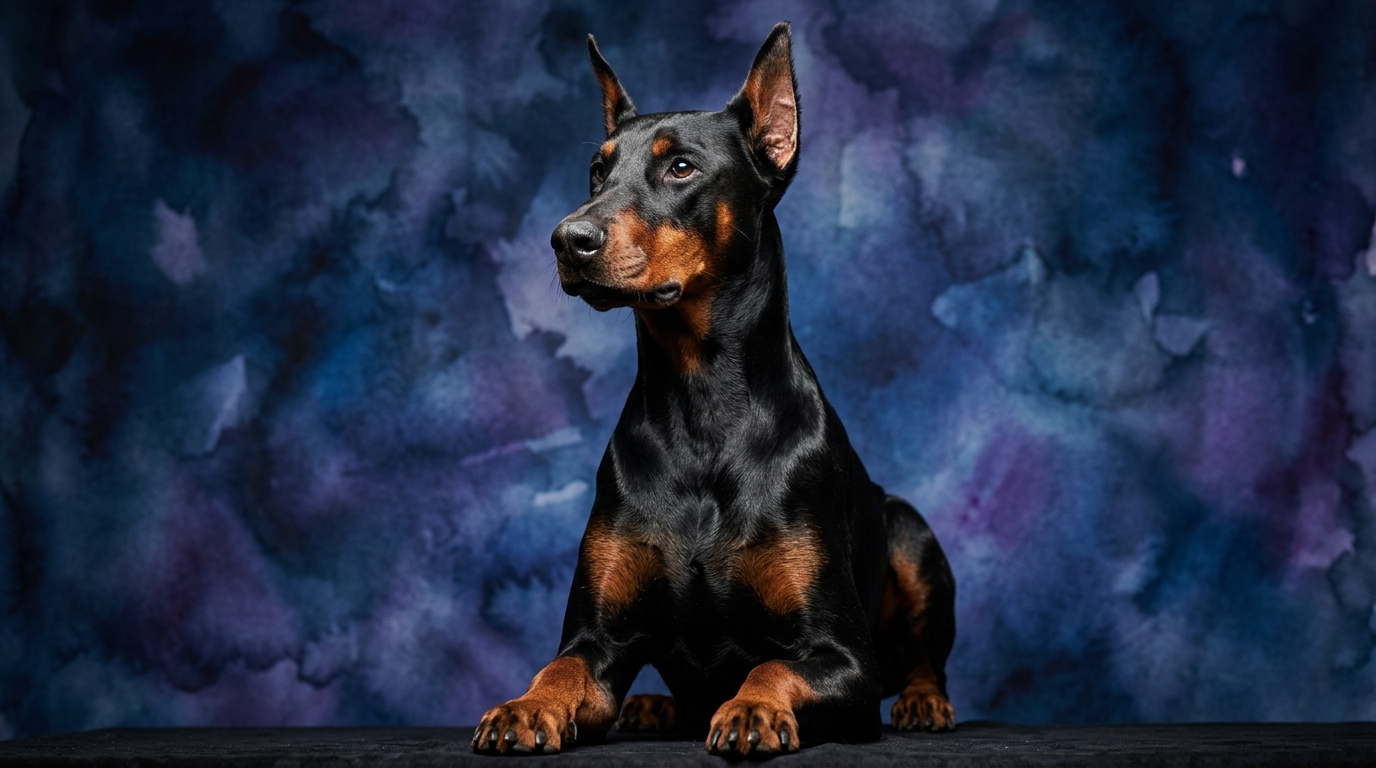
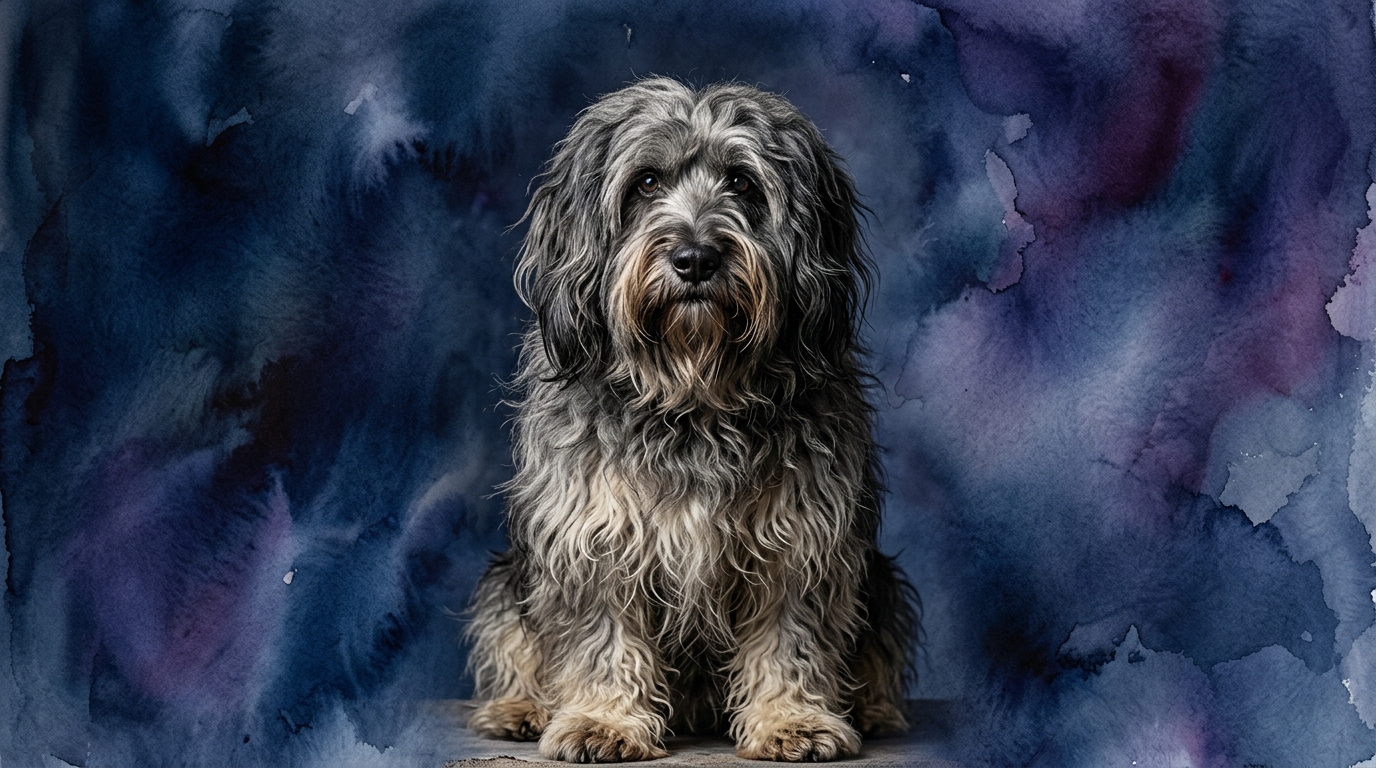
Side-by-Side Cognitive Profiles: Doberman Pinscher vs. Polish Lowland Sheepdog
The Cosmic Pet Pet IQ Lab employs a five-dimensional framework to assess canine cognition, providing a nuanced understanding beyond simple obedience. For the Doberman Pinscher, a breed within the Working group, their profile paints a picture of sharp acumen and drive. They achieve a perfect 5/5 in Problem Solving, indicating an exceptional capacity to analyze novel situations and devise effective solutions. Their Training Speed also rates 5/5, suggesting they absorb new commands and routines with remarkable rapidity. Social Intelligence, while strong, registers at 4/5, reflecting their focus and perhaps a more directed relationship with their primary human. Instinctive Drive is a commanding 5/5, underpinning their powerful motivation and purpose-driven nature, while Memory also earns a top score of 5/5, enabling them to retain vast amounts of information and experiences.
In contrast, the Polish Lowland Sheepdog (PON), a member of the Herding group and not currently Coren-ranked, presents a profile rooted in resilience and independent thought. Across all five dimensions—Problem Solving, Training Speed, Social Intelligence, Instinctive Drive, and Memory—the PON scores a consistent 3/5. This indicates a moderate, steady approach to cognitive tasks rather than the Doberman's intense focus. Their problem-solving is practical and often self-directed, their training speed requires more repetition, and their social intelligence is geared towards cohesive group dynamics rather than intense human-centric partnership. A moderate instinctive drive means they possess the inherent traits of a herder but may not exhibit the same relentless intensity as a high-drive working breed, and their memory is solid for routines and practical applications.
Where the Doberman Pinscher Excels Cognitively
The Doberman Pinscher's cognitive strengths lie in their unparalleled capacity for structured learning and complex task execution. Their 5/5 Problem Solving isn't just about figuring things out; it’s about quickly understanding intricate sequences and adapting strategies in real-time. For instance, in advanced obedience or protection sports, a Doberman can process multi-step commands, anticipate handler cues, and adjust their approach based on environmental changes with precision. This mental agility allows them to excel in roles requiring rapid decision-making under pressure, such as search and rescue or police work, where a split-second assessment can be critical.
Their 5/5 Training Speed is a testament to their neural efficiency, enabling them to form strong associations between commands and actions almost immediately. This means fewer repetitions are needed for skill acquisition, freeing up time for learning more advanced behaviors. Coupled with a 5/5 Memory, Dobermans can store an extensive repertoire of commands, rules, and past experiences, allowing them to perform intricate routines flawlessly and recall specific training scenarios even after long periods. This combination makes them exceptionally adept at mastering a wide array of specialized tasks, from scent detection to competitive dog sports, where consistency and recall of complex patterns are paramount.
Where the Polish Lowland Sheepdog Shows Unique Cognitive Strengths
The Polish Lowland Sheepdog's cognitive profile, while not as outwardly flashy as the Doberman's, holds unique strengths derived from their herding heritage. Their 3/5 Problem Solving, though moderate, is characterized by an independent, persistent approach. A PON might not solve a new puzzle as quickly as a Doberman, but they are likely to methodically work through it, relying on their own observations and trial-and-error rather than seeking immediate human guidance. This self-reliance was crucial for a herding dog working often out of sight of their shepherd, requiring them to make their own judgments in dynamic situations with livestock, such as determining the best route to move a flock or dealing with a stray animal.
Their 3/5 Social Intelligence, while not reaching the Doberman's focused 4/5, often manifests as a keen awareness of family dynamics and subtle cues within their human 'flock.' They might be less inclined to seek constant validation but are observant of routines and emotional states, adapting their behavior to maintain harmony. This can translate to a dog that, while independent, is deeply attuned to the overall mood of the household. The 3/5 Instinctive Drive, while lower than the Doberman's, means they possess an innate desire to organize and manage, which can be channeled into constructive activities like herding games or even 'herding' family members gently. Their 3/5 Memory supports their ability to navigate familiar territories, remember established routines, and recognize individuals, contributing to their steadfast companionship.
Training Dynamics: Doberman Pinscher vs. Polish Lowland Sheepdog
Training a Doberman Pinscher is often a rapid and exhilarating experience due to their 5/5 Training Speed and 5/5 Memory. They grasp concepts almost immediately, making advanced obedience or complex skill acquisition a relatively swift process. However, this speed also means they can just as quickly learn undesirable behaviors if not consistently guided. Their 5/5 Instinctive Drive necessitates an owner who can provide consistent structure, clear expectations, and engaging mental challenges. A Doberman thrives when given a 'job' and will often seek to fulfill it with intense focus. Without proper outlets for their drive and mental energy, they can become bored and channel their considerable cognitive abilities into less desirable activities, such as excessive patrolling or destructive behaviors. Their 4/5 Social Intelligence means they are responsive to their primary handler but need early, broad socialization to develop nuanced interactions with a wider range of people and animals.
Conversely, training a Polish Lowland Sheepdog requires more patience and a different approach, aligning with their 3/5 Training Speed and 3/5 Problem Solving. They learn steadily, but repetition and positive reinforcement are key to embedding commands. A PON is less likely to blindly follow and more inclined to assess the situation, sometimes offering a moment of independent thought before complying. This isn't stubbornness as much as it is a characteristic of a breed bred to make their own decisions in the field. Their 3/5 Instinctive Drive means they enjoy purposeful activities, but their drive is not as overwhelming as a Doberman's, making them potentially more adaptable to a less rigorous schedule, provided they still receive regular mental engagement. Owners need to be consistent and make training enjoyable, understanding that a PON will internalize lessons at their own pace, often performing reliably once a concept is truly understood. Their 3/5 Social Intelligence means they bond closely with their family but might be reserved with strangers, requiring patient and positive introductions to new experiences.
Matching Breeds to Lifestyles: Active vs. Relaxed Owners
The Doberman Pinscher is an ideal companion for active owners who relish a highly engaged and challenging partnership. Their intense 5/5 Instinctive Drive and 5/5 Problem Solving mean they require significant mental and physical stimulation daily. Owners who enjoy advanced dog sports like agility, obedience trials, protection work, or long, vigorous hikes will find a Doberman a willing and capable participant. They thrive on having a purpose and excel when given opportunities to utilize their sharp cognitive abilities. A Doberman requires an owner who is confident, consistent, and committed to providing structured training and ample outlets for their energy and focus. They are not content to be solely backyard companions; their mental architecture demands engagement and partnership.
The Polish Lowland Sheepdog, with its more moderate 3/5 scores across the board, appeals to owners seeking a resilient, self-sufficient, yet devoted companion. While they benefit from regular exercise and mental stimulation, their needs are less intense and perhaps more flexible than a Doberman's. Owners who appreciate a dog that can entertain itself, enjoys exploring, and is comfortable with a mix of structured activity and independent downtime might find a PON a suitable match. They are well-suited to households that can provide consistent, patient training and a stable environment, perhaps with a secure yard for patrolling. Their herding instincts can be satisfied with engaging games or even light herding activities, but they are not typically demanding of constant, high-octane engagement, making them a good fit for owners who enjoy a balanced lifestyle rather than a perpetually high-energy one.
The Verdict: When to Choose Each Breed
Choosing between a Doberman Pinscher and a Polish Lowland Sheepdog ultimately depends on an owner's lifestyle, experience, and the kind of canine partnership they envision. The Doberman is suited for experienced owners who can consistently provide high levels of mental and physical engagement, structured training, and thrive on a deeply focused, active partnership.
The Polish Lowland Sheepdog is a better fit for owners who appreciate an independent yet loyal companion, can offer patient and consistent guidance, and desire a dog whose cognitive strengths lean towards self-sufficiency and observant companionship rather than intense, high-speed task execution.
The Verdict
Choose a Doberman Pinscher if you desire a highly trainable, focused partner for advanced tasks and intense activities, willing to dedicate significant time to their mental and physical needs.
Opt for a Polish Lowland Sheepdog if you prefer a self-reliant, resilient companion that thrives on independent thought, requiring patient, consistent guidance and a balanced, active lifestyle.
🧠 Find Your Pet's IQ Score
Our Pet IQ Lab assessment covers 25+ tests across 5 cognitive dimensions — personalized to your breed.
Take the Full IQ Test →Frequently Asked Questions
How does a Doberman Pinscher's high instinctive drive impact its behavior?
A Doberman's 5/5 Instinctive Drive means they possess a powerful internal motivation and a strong desire for purpose. This manifests as intense focus in training, a need for a 'job,' and often a vigilant nature, requiring consistent direction to channel their energy constructively.
What does a 3/5 in Problem Solving mean for a Polish Lowland Sheepdog?
A 3/5 in Problem Solving for a Polish Lowland Sheepdog indicates a practical and often independent approach to novel situations. They may take more time to assess and solve problems than a Doberman, relying on observation and methodical trial-and-error rather than seeking immediate human intervention.
Can a Polish Lowland Sheepdog excel in dog sports despite a moderate training speed?
Yes, a Polish Lowland Sheepdog can certainly excel in dog sports, especially those that reward persistence and independent decision-making. While their 3/5 Training Speed means they require more repetition, their resilience and practical problem-solving allow them to master skills with consistent, patient coaching, particularly in activities like herding or rally obedience.