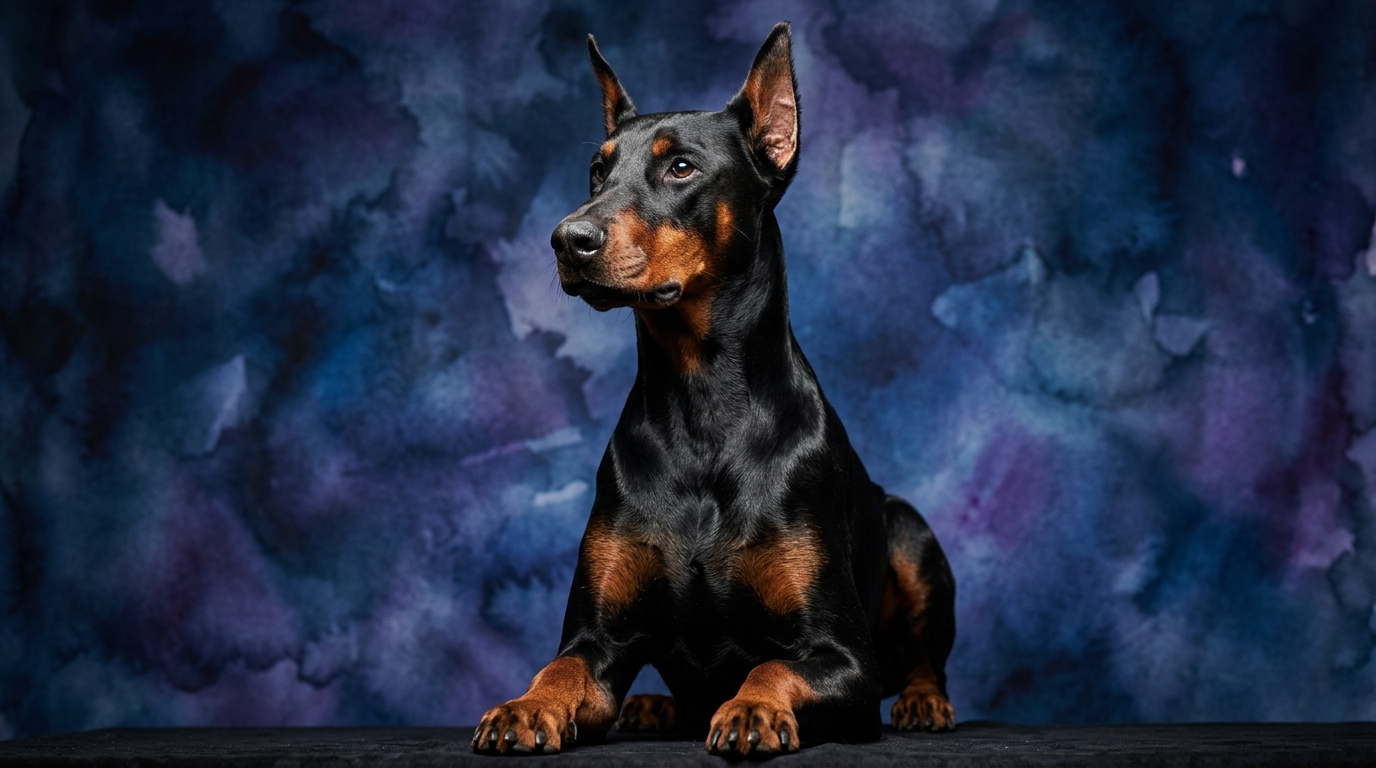
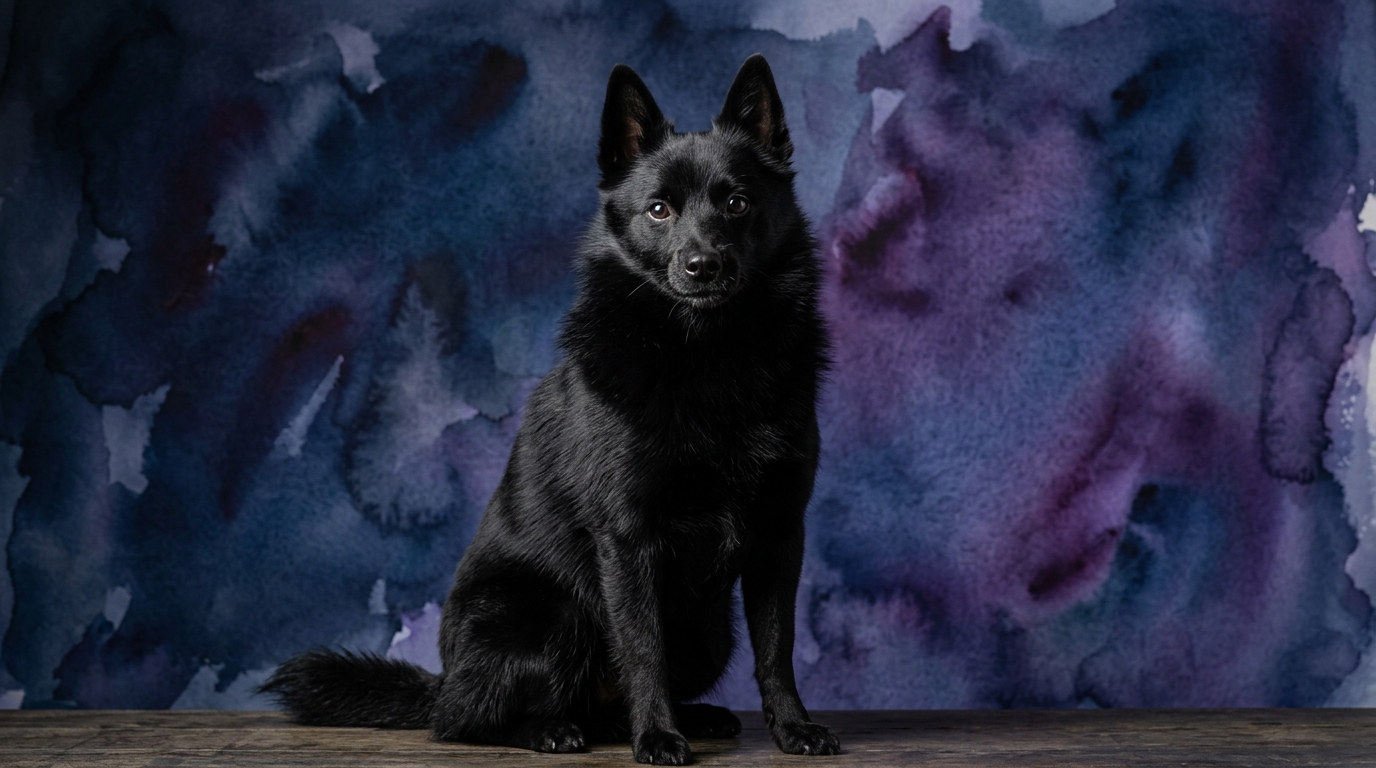
Side-by-Side IQ Profile
The Cosmic Pet Pet IQ Lab assesses canine intelligence across five critical dimensions, providing a nuanced view of each breed's cognitive strengths. Let's delve into the specific profiles of the Doberman Pinscher and the Schipperke.
**Doberman Pinscher (Working Group, Coren Rank #5)**: This breed consistently demonstrates a profound capacity for directed work and partnership. Its **Problem Solving (5/5)** involves analyzing complex situations to devise effective, often strategic, solutions, understanding the broader context of tasks. **Training Speed (5/5)** is exceptional; Dobermans process new commands and behaviors with remarkable rapidity, often grasping concepts in very few repetitions due to their focus and eagerness. Their **Social Intelligence (4/5)** highlights a strong capacity to interpret human cues, understand social dynamics, and respond appropriately within a structured environment, fostering deep handler partnerships. A powerful **Instinctive Drive (5/5)** for protection, guarding, and task fulfillment motivates them with unwavering determination. Finally, their **Memory (5/5)** ensures that once learned, information—be it commands, routines, or recognition of individuals—is retained with enduring clarity.
**Schipperke (Non-Sporting Group, Coren Rank #15)**: The 'Little Captain' presents a distinct, independent cognitive style. Its **Problem Solving (5/5)** is equally robust, adept at tackling and resolving intricate problems, often with a clever, self-directed flair, finding novel or even mischievous solutions. **Training Speed (5/5)** is also excellent; Schipperkes assimilate new information and commands quickly, surprising owners with their rapid understanding. However, their **Social Intelligence (3/5)** is characterized by a more independent streak; while capable of strong bonds, they may prioritize their own agenda or display charming stubbornness, rather than an immediate desire to please. Their **Instinctive Drive (3/5)**, though present, is less intense and handler-focused than the Doberman's, leaning towards curiosity, vigilance, and vermin control. Like the Doberman, the Schipperke also exhibits **Memory (5/5)**, recalling learned behaviors and experiences with impressive permanence, which aids in complex routines despite their independent nature.
Where Doberman Pinscher Wins Cognitively
The Doberman Pinscher demonstrates a clear cognitive advantage in areas directly related to collaborative work and handler-directed performance. Its superior Social Intelligence (4/5 compared to Schipperke's 3/5) means a Doberman is inherently more attuned to human communication, subtle cues, and the emotional landscape of its handler. This translates into a dog that not only understands commands but also anticipates intentions, making it exceptionally responsive in complex scenarios like protection work, competitive obedience, or service roles where seamless partnership is paramount. Furthermore, the Doberman's Instinctive Drive (5/5 versus Schipperke's 3/5) is a powerful engine for sustained effort and unwavering focus on a given task. This intense drive, often rooted in protection or working lineages, allows the Doberman to push through distractions and maintain high levels of performance even under pressure, a critical attribute for demanding occupations. While both breeds solve problems, the Doberman's approach is often more collaborative, aiming to achieve the human-directed goal, whereas the Schipperke's problem-solving might lean towards independent solutions. The Doberman's Coren rank of #5 underscores its profound capacity for understanding and executing complex human instructions consistently.
Where Schipperke Wins Cognitively
While the raw scores might suggest fewer outright 'wins' for the Schipperke, its cognitive profile shines in areas valuing independence, self-reliance, and a unique brand of cleverness. Both breeds score a perfect 5/5 in Problem Solving and Training Speed, but the Schipperke's application of these traits is distinct. Its lower Social Intelligence (3/5) and Instinctive Drive (3/5) compared to the Doberman contribute to a dog that, while capable of rapid learning, often approaches tasks with a more autonomous mindset. This means a Schipperke might 'win' in situations where an owner appreciates a dog that can entertain itself, figure out a novel way to reach a forbidden treat, or navigate its environment with less reliance on constant human direction. Their problem-solving often involves a mischievous ingenuity, finding loopholes or unconventional solutions that reflect their history as independent barge dogs and ratters. This self-sufficiency, coupled with their excellent memory, means they can learn complex routines and boundaries but may choose to push them, showcasing a cognitive agility that involves testing limits. For owners who value a dog with a strong, self-possessed personality and a brain that's always whirring with its own ideas, the Schipperke's particular blend of cognitive attributes can be a delightful and engaging match.
Which Is Easier to Train and Why
Based on their cognitive profiles, the Doberman Pinscher is generally considered easier to train for compliance and complex tasks directed by a human. The Doberman's perfect 5/5 Training Speed combined with its 4/5 Social Intelligence creates a powerful synergy. They not only grasp commands quickly but also possess a strong desire to please their handler and understand the social context of training. Their high Instinctive Drive (5/5) means they are intrinsically motivated to work and achieve, making them highly receptive to reward-based training and eager to engage in structured learning. They thrive on clear direction and purpose. In contrast, while the Schipperke also scores a 5/5 in Training Speed, its lower Social Intelligence (3/5) and Instinctive Drive (3/5) can present a different training dynamic. A Schipperke learns commands just as fast, but its independent nature might lead to selective hearing or a tendency to prioritize its own interests over immediate compliance, especially if the perceived reward isn't compelling. They might understand *what* you want but choose to evaluate *if* they want to do it, making consistency and creative motivation crucial. While both breeds learn quickly, the Doberman's inherent desire for partnership and purpose-driven work makes it a more straightforward and consistently compliant trainee.
Which Suits Active Owners vs. Relaxed Owners
The Doberman Pinscher is unequivocally suited for active, engaged owners who can provide ample mental and physical stimulation. Its 5/5 Instinctive Drive demands an outlet, whether through rigorous exercise, advanced training, or a dedicated working role. Owners who are prepared for daily structured activities, competitive dog sports, or even service work will find the Doberman thrives on having a job and a purpose. Their high Social Intelligence means they deeply value interaction and partnership, making them ideal for owners who want to integrate their dog fully into an active lifestyle. Conversely, the Schipperke, with its 3/5 Instinctive Drive, can suit a broader range of owners, including those who might be considered more relaxed, provided their mental needs are met. While still energetic and requiring regular exercise, the intensity of their physical demands is generally lower than a Doberman's. Schipperkes possess a keen Problem Solving ability (5/5) and Memory (5/5), meaning they benefit greatly from puzzle toys, interactive games, and consistent, engaging training sessions that challenge their clever minds, rather than just their bodies. Owners who enjoy a dog with an independent streak, a mischievous personality, and a sharp mind that appreciates mental puzzles and moderate activity will find the Schipperke a rewarding companion.
The Verdict
For owners seeking a highly biddable, purpose-driven partner who excels in collaborative work and demands intense engagement, the Doberman Pinscher is the definitive choice.
If you appreciate a clever, independent companion with a quick mind, a lower intensity of drive, and a charmingly self-possessed nature, the Schipperke will be an incredibly rewarding addition to your life.
🧠 Find Your Pet's IQ Score
Our Pet IQ Lab assessment covers 25+ tests across 5 cognitive dimensions — personalized to your breed.
Take the Full IQ Test →Frequently Asked Questions
Do both Dobermans and Schipperkes have good memories?
Yes, both Doberman Pinschers and Schipperkes exhibit exceptional memory, scoring 5/5 in this dimension. This means they both retain learned commands, routines, and experiences with remarkable clarity and for extended periods, making their training cumulative.
Which breed is better at understanding human emotions and intentions?
The Doberman Pinscher, with a Social Intelligence score of 4/5, generally shows a greater capacity for interpreting human emotions and intentions compared to the Schipperke, which scores 3/5. Dobermans are typically more attuned to their handler's subtle cues and emotional states.
Can a Schipperke be trained for complex tasks like a Doberman?
While a Schipperke possesses excellent Problem Solving (5/5) and Training Speed (5/5), its lower Instinctive Drive and Social Intelligence mean it might approach complex tasks with more independence. It can certainly learn complex routines, but might require more creative motivation and consistent reinforcement to maintain the same level of consistent, handler-focused performance as a Doberman.