Side-by-Side IQ Profile: Doberman Pinscher vs. Scottish Terrier
At The Cosmic Pet Pet IQ Lab, we delve beyond simple labels to understand the nuanced cognitive landscapes of different breeds. Our framework assesses five key dimensions: Problem Solving, Training Speed, Social Intelligence, Instinctive Drive, and Memory, providing a granular view of how a dog's mind operates.
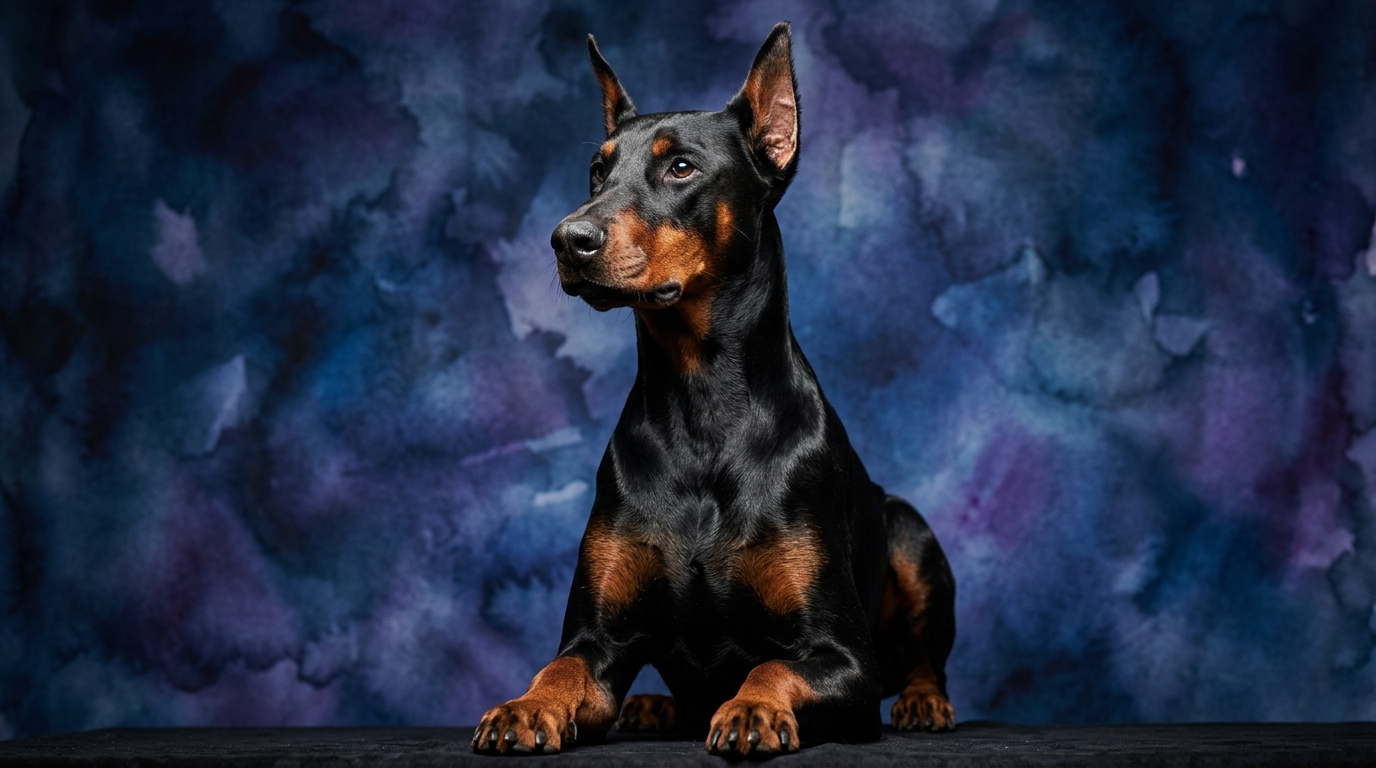
The Doberman Pinscher, a canine athlete of the Working group, consistently ranks among the most capable, holding Coren rank #5. Their cognitive profile is robust: Problem Solving 5/5, Training Speed 5/5, Social Intelligence 4/5, Instinctive Drive 5/5, and Memory 5/5. This breed exhibits a profound capacity for processing information, learning rapidly, and retaining complex sequences of actions.
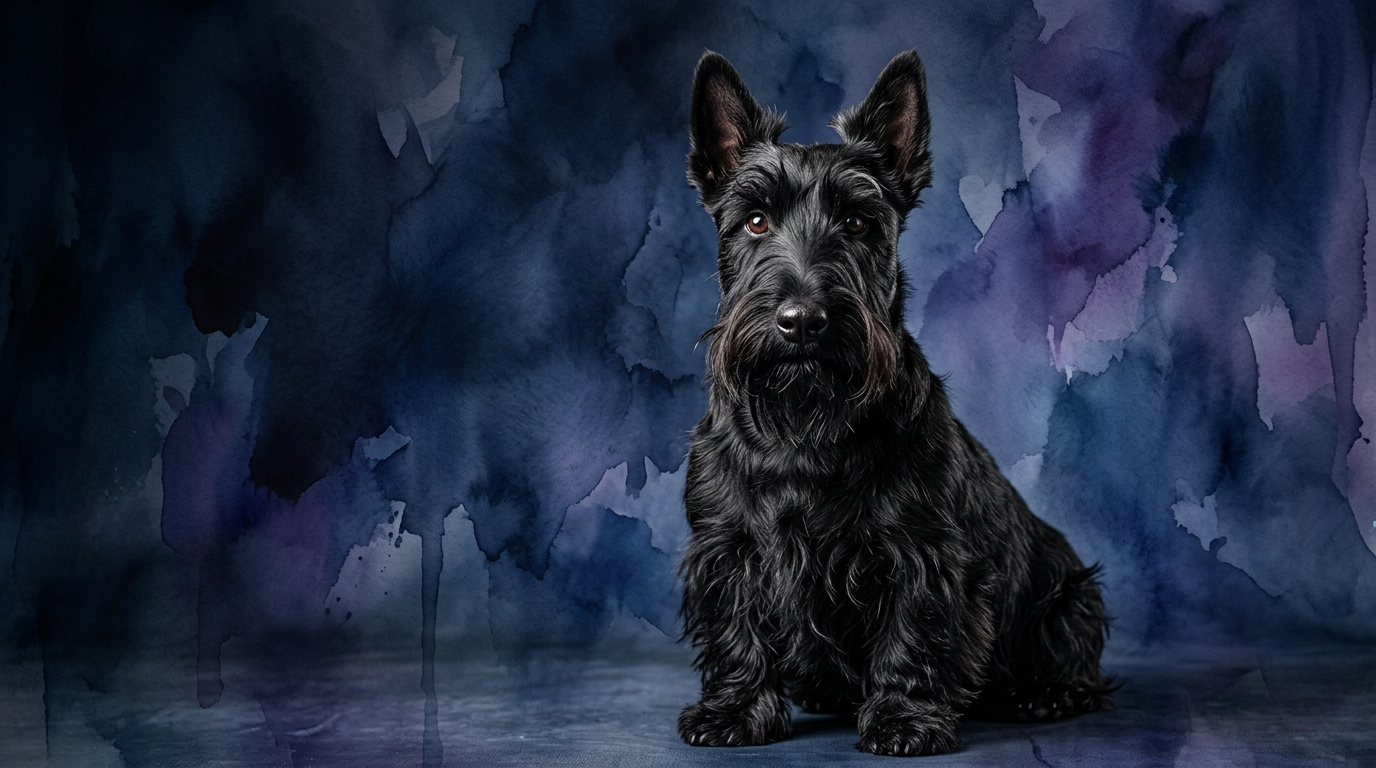
In contrast, the Scottish Terrier, a sturdy member of the Terrier group, occupies Coren rank #65. Their IQ scores reflect a different, yet equally valid, set of cognitive priorities: Problem Solving 3/5, Training Speed 3/5, Social Intelligence 3/5, Instinctive Drive 3/5, and Memory 3/5. These scores point to a more independent and self-directed cognitive style, rooted in their historical role as persistent hunters.
Where the Doberman Pinscher Excels Cognitively
The Doberman Pinscher's cognitive architecture is built for collaborative work and rapid learning, as evidenced by their perfect 5/5 scores in Problem Solving and Training Speed. They possess an exceptional ability to grasp multi-step commands, analyze novel situations, and quickly formulate effective responses, often anticipating human directives. This makes them adept at advanced obedience, protection work, and complex dog sports where precision and speed are paramount.
Their 5/5 Memory score means Dobermans can recall intricate routines and commands with remarkable accuracy, even after long periods. Coupled with an Instinctive Drive of 5/5, which often manifests as a strong desire to engage with and please their human partners, they are tireless and focused pupils. This combination allows them to master and execute sophisticated tasks consistently, making them invaluable in roles requiring reliability and discipline.
While their Social Intelligence stands at a strong 4/5, it signifies a deep capacity to read and respond to human cues, adapting their behavior to different social contexts. They form profound bonds and are keenly attuned to their family's emotional states, which facilitates their roles as companions and guardians. This social awareness, combined with their other cognitive strengths, contributes to their overall adaptability and responsiveness.
Unpacking the Scottish Terrier's Unique Cognitive Strengths
The Scottish Terrier's cognitive strengths, while scoring lower in our human-centric metrics, are perfectly suited to their original purpose. Their Problem Solving at 3/5 is not a deficit, but rather a reflection of a self-reliant approach. They are adept at independently assessing and navigating challenges, particularly those involving scent, terrain, and the pursuit of small prey, where reliance on human direction is less critical than individual tenacity.
Their 3/5 scores in Training Speed and Memory reflect a distinct learning style. Scotties process information deliberately, often weighing commands against their own intrinsic motivations. While they can and do learn, their memory is particularly effective for tasks relevant to their instincts, such as remembering the location of a favored digging spot or a scent trail, rather than long sequences of abstract commands. Training requires patience and an understanding of their independent spirit.
A Social Intelligence score of 3/5 for the Scottish Terrier points to a selective, yet deep, form of social bonding. They tend to be reserved with strangers, forming strong, loyal attachments to their immediate family. This isn't a lack of social capacity, but a preference for a smaller, trusted circle, where their independent spirit can still thrive within the comfort of familiar relationships. Their social cues are often subtle, reflecting their thoughtful nature.
Trainability: Doberman's Eagerness vs. Scottish Terrier's Independence
The Doberman Pinscher's exceptional Training Speed (5/5), coupled with a high Instinctive Drive (5/5) that often translates to a profound desire for purpose and collaboration, makes them remarkably receptive to training. They typically thrive on structured learning environments, soaking up new commands and routines with enthusiasm. Their excellent Memory (5/5) ensures that once a lesson is learned, it is retained, allowing for rapid progression through complex training regimens and advanced obedience exercises.
Conversely, the Scottish Terrier's Training Speed (3/5) and Instinctive Drive (3/5), which is often self-directed towards exploration and pursuit, mean that training them requires a different mindset from the owner. Scotties possess a strong independent streak; they are thinkers who may evaluate the 'worth' of a command before complying. Their learning pace is steady rather than swift, demanding consistent, patient, and highly motivating approaches, often leveraging their natural curiosity and prey drive.
Behaviorally, a Doberman will often look to their owner for direction and tasks, excelling in activities like competitive obedience, agility, and protection work where precision and partnership are key. A Scottish Terrier, however, might find repetitive drills tedious. They respond best to training that engages their natural terrier instincts, such as scent work, earthdog trials, or puzzle toys that allow them to 'solve' problems on their own terms, rather than simply following commands. Owners must understand that 'trainable' for a Scottie means finding ways to channel their inherent tenacity and independence.
Matching Canine Cognition to Lifestyle: Active vs. Relaxed Owners
The Doberman Pinscher, with their high Problem Solving, Instinctive Drive, and Memory, is an ideal match for active owners who can provide ample mental and physical engagement. They require a lifestyle rich in structured activities, advanced training, and a sense of purpose to truly thrive. Owners who enjoy competitive dog sports, advanced obedience, protection work, or who seek a vigilant and highly responsive companion will find the Doberman's cognitive profile exceptionally rewarding. Their need for a 'job' means they are not content to be idle.
The Scottish Terrier, while possessing a different cognitive profile, is not suited for a truly 'relaxed' owner in the sense of minimal engagement. Instead, they suit owners who appreciate and can accommodate an independent spirit and a more self-directed approach to life. 'Relaxed' in this context means less emphasis on formal, high-intensity training, but still a commitment to consistent, firm-but-fair guidance and opportunities for mental stimulation that aligns with their breed's instincts. They thrive with owners who enjoy leisurely walks that allow for sniffing and exploration, and who understand that their contentment comes from engaging their terrier nature.
For a Scottie, mental stimulation doesn't necessarily mean learning advanced tricks, but rather engaging their natural curiosity and drive for exploration. This could involve scent games, supervised digging, or interactive toys that challenge their independent problem-solving skills. They are not dogs who will passively sit by; their cognitive needs require outlets that honor their tenacious, curious spirit, making them suitable for owners who value a dog with a distinct personality and who are prepared to meet those unique needs without expecting the eager compliance of a working breed.
The Verdict: When to Choose Each Breed
The Verdict
Choose a Doberman Pinscher if you seek a highly trainable, collaborative canine partner for advanced obedience, protection work, or dog sports, valuing their eagerness to learn and strong bond.
Opt for a Scottish Terrier if you appreciate an independent, tenacious companion with a unique charm, understanding they require patient, consistent training and enjoy self-directed exploration.
🧠 Find Your Pet's IQ Score
Our Pet IQ Lab assessment covers 25+ tests across 5 cognitive dimensions — personalized to your breed.
Take the Full IQ Test →Frequently Asked Questions
Does a Doberman Pinscher's high problem-solving score mean they are always easy to live with?
While Dobermans possess exceptional problem-solving abilities, this also means they can cleverly devise their own entertainment or solutions if not adequately stimulated or trained. Their cognitive prowess requires consistent mental engagement to prevent boredom-driven behaviors.
Are Scottish Terriers untrainable due to their lower training speed?
Not at all; Scottish Terriers are trainable, but they require a different approach emphasizing consistency, positive reinforcement, and understanding their independent nature. Their training speed reflects their tendency to consider commands rather than instantly comply, requiring owners to be patient and engaging.
How does 'instinctive drive' differ between these two breeds?
The Doberman Pinscher's instinctive drive is often directed towards working alongside humans, fulfilling roles like protection or service with intense focus and purpose. The Scottish Terrier's drive is more geared towards independent hunting, exploration, and tenacious pursuit of their own interests, requiring outlets for these natural behaviors.