Side-by-Side IQ Profile: Unpacking Cognitive Dimensions
Both the Doberman Pinscher and the Toy Poodle earn a perfect 5/5 in Problem Solving and Training Speed, suggesting an exceptional capacity to grasp new concepts and apply learned behaviors. For the Doberman, this often manifests in mastering complex multi-stage commands for protection work or agility courses, where understanding sequences and adapting to changing scenarios is crucial. The Toy Poodle, with its equally impressive score, demonstrates this ability through quick trick acquisition, navigating novel environments, or excelling in competitive obedience, showcasing a flexibility to solve varied cognitive puzzles. Their shared 5/5 training speed means both breeds absorb new instructions with remarkable swiftness, often requiring fewer repetitions than many other breeds to solidify a command.
Here, their cognitive paths diverge more clearly. The Doberman Pinscher scores a robust 4/5 in Social Intelligence and an impressive 5/5 in Instinctive Drive. This profile underscores its refined ability to interpret human intentions, discern subtle environmental cues, and act decisively on strong protective or task-oriented instincts. Its social awareness extends to understanding hierarchy and group dynamics, essential for its traditional roles. In contrast, the Toy Poodle registers a 3/5 for Social Intelligence and a 3/5 for Instinctive Drive. While still capable of forming deep bonds and understanding owner moods, its social radar might be less tuned to broader environmental subtleties or complex social hierarchies.
Both breeds share a perfect 5/5 score in Memory, indicating a superior ability to retain information over long periods. A Doberman will remember intricate command sequences, routines, and specific individuals or situations, which is critical for its security and working roles. Similarly, a Toy Poodle will recall a vast repertoire of tricks, its daily schedule, and the specific nuances of its human companions' behaviors and preferences, demonstrating a lasting cognitive imprint of experiences and training. This high memory score for both underpins their excellent training speed and problem-solving capabilities, allowing them to build upon past learning effectively.
Where the Doberman Pinscher Excels Cognitively
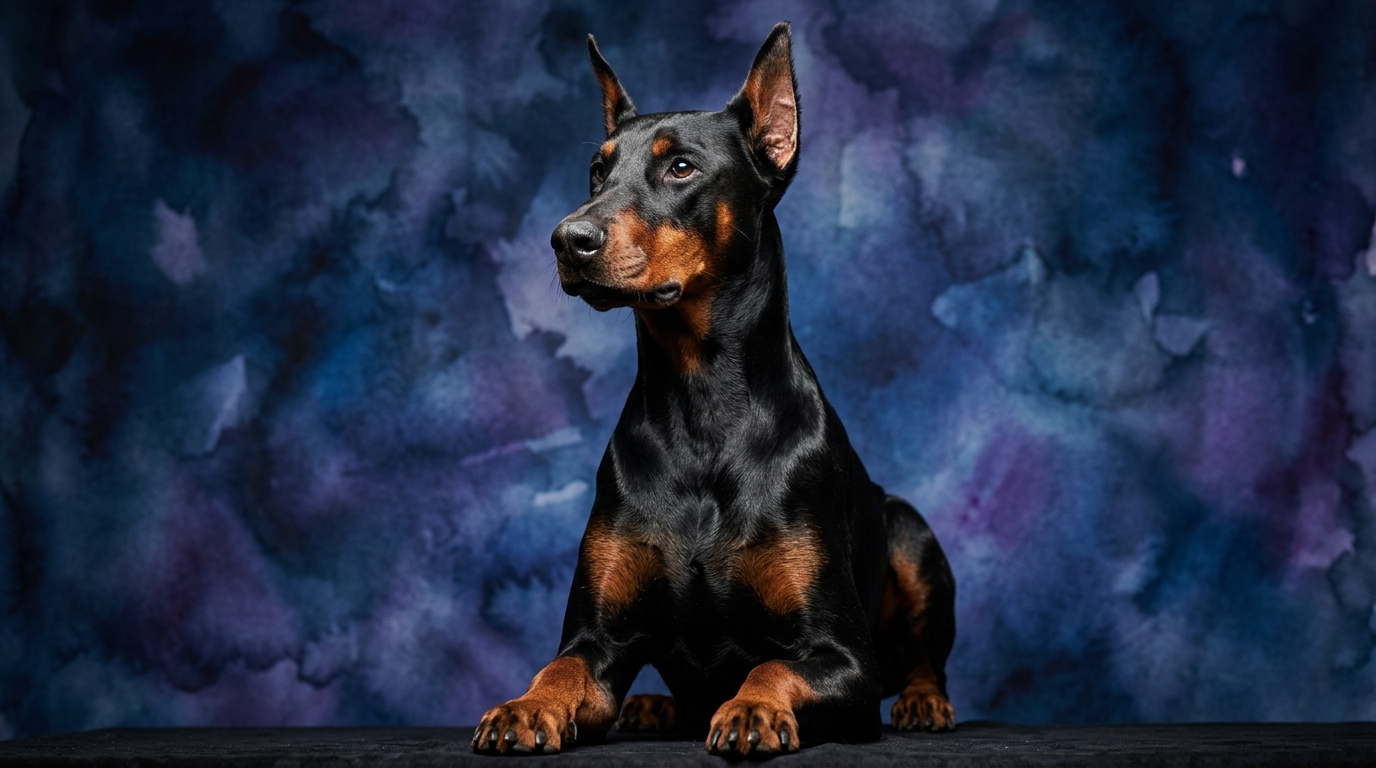
The Doberman Pinscher's cognitive strengths are deeply rooted in its heritage as a protection and working dog. Its 4/5 Social Intelligence, combined with a 5/5 Instinctive Drive, allows it to excel in tasks demanding acute environmental awareness and a strong sense of purpose. This breed possesses an exceptional ability to read human body language and vocal tones, not just for basic obedience, but to anticipate potential threats or changes in a situation, making it adept at discerning friend from foe or recognizing distress signals.
Its high Instinctive Drive translates into an unwavering focus and persistence when engaged in a task. Whether tracking, guarding, or performing complex search and rescue operations, the Doberman will apply its problem-solving skills with intense dedication. This drive isn't merely about physical exertion; it's a cognitive commitment to completing a perceived mission, utilizing its memory to recall past training and strategize in real-time. This combination of social acumen and purposeful drive allows Dobermans to navigate complex, high-stakes scenarios with a level of cognitive precision rarely seen.
Where the Toy Poodle Excels Cognitively
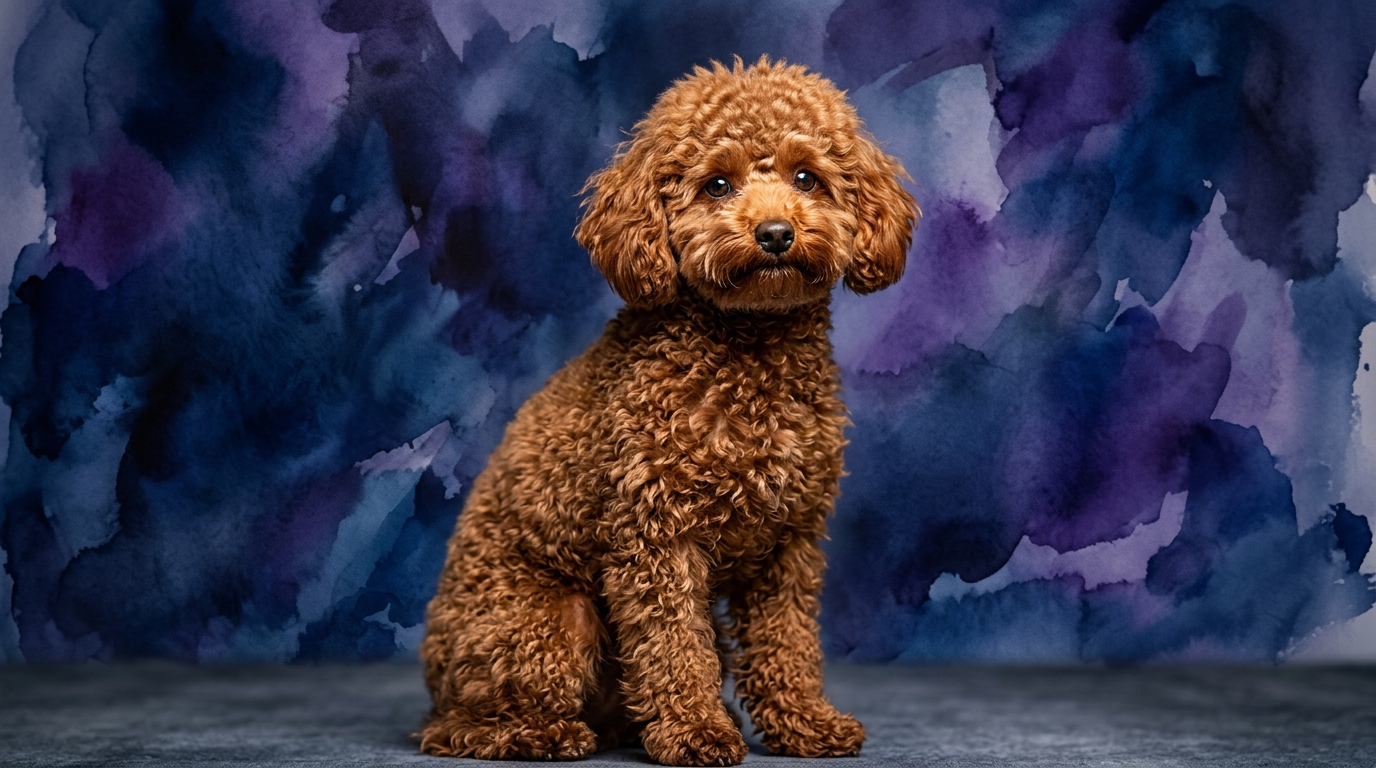
The Toy Poodle, despite its smaller stature and lower scores in social intelligence and instinctive drive compared to the Doberman, holds a unique cognitive advantage highlighted by its Coren rank of #2. Its 5/5 in Problem Solving and Training Speed, coupled with a 5/5 Memory, allows it to demonstrate remarkable cognitive agility and adaptability. This breed often exhibits a creative approach to problem-solving, finding novel ways to achieve desired outcomes, whether it's figuring out how to open a treat container or devising a new trick to gain attention.
While its social intelligence is rated at 3/5, the Toy Poodle compensates with a profound sensitivity to its immediate human companions, often displaying an almost empathetic understanding of their emotional states. This sensitivity, combined with its high cognitive processing speed, enables it to learn and adapt quickly to a wide variety of domestic and competitive environments. Its intellectual prowess is often channeled into elaborate trick training, agility, or obedience, where its quick wit and desire to engage with its owner shine, proving that cognitive excellence isn't solely about guarding instincts or physical tasks.
Which is Easier to Train and Why
Both the Doberman Pinscher and the Toy Poodle boast a 5/5 Training Speed, meaning both breeds are exceptionally quick to learn new commands and behaviors. However, the *ease* of training can differ based on their distinct cognitive profiles and behavioral tendencies. The Doberman's formidable 5/5 Instinctive Drive means it learns rapidly and, crucially, is highly motivated to perform tasks with purpose. This drive can make training for specific jobs, like protection or advanced obedience, incredibly rewarding, as the Doberman eagerly embraces challenges and applies its problem-solving skills. However, this same intense drive, if not properly channeled through consistent, structured training and ample mental stimulation, can lead to independent decision-making or a tendency to 'test' boundaries, requiring a firm yet fair hand.
The Toy Poodle, with its 5/5 Training Speed and more moderate 3/5 Instinctive Drive, often presents a different kind of training experience. While equally fast at picking up commands, its motivation is often more centered on engaging with its owner and gaining positive reinforcement, rather than fulfilling a deep-seated working purpose. This can make general obedience and trick training particularly enjoyable and straightforward, as the Toy Poodle typically possesses a strong desire to please and a high degree of focus on its human companion. Its lower instinctive drive generally translates to fewer inherent 'challenges' related to strong independent urges or territorial behaviors, making it highly adaptable to various training methods and environments, provided mental stimulation is consistent to prevent boredom.
Which Suits Active Owners vs. Relaxed Owners
For owners who lead an active lifestyle and seek a canine partner for demanding activities, the Doberman Pinscher is an ideal match. Its 5/5 Instinctive Drive combined with 5/5 Problem Solving and Memory means it thrives on having a job, whether it's advanced obedience, agility, tracking, or protection sports. These dogs require consistent physical exercise to burn off their abundant energy, but more importantly, they demand significant mental engagement. An active owner who can provide structured training, complex tasks, and consistent mental stimulation will find the Doberman an incredibly capable and devoted companion, one that excels when given a purpose and challenged cognitively.
The Toy Poodle, while still requiring regular mental engagement to keep its keen mind sharp, is generally better suited for owners with a more relaxed lifestyle. Its adaptability, combined with a moderate 3/5 Instinctive Drive, means it can thrive in various living situations, from apartments to larger homes, as long as its need for companionship and cognitive stimulation is met. While it enjoys walks and playtime, its physical exercise requirements are typically less intense than those of a Doberman. A relaxed owner who enjoys teaching tricks, engaging in puzzle toys, or participating in low-impact dog sports like rally obedience will find the Toy Poodle a delightful and highly responsive companion, perfectly content to be a central part of the family's daily routines.
The Verdict
Choose the Doberman Pinscher if you are an experienced, active owner seeking a dedicated working partner for protection, advanced sports, or complex tasks, valuing its profound drive and environmental awareness.
Opt for the Toy Poodle if you are looking for a highly adaptable, quick-witted companion who thrives on close interaction and enjoys learning new things in a more relaxed, yet mentally stimulating, home environment.
🧠 Find Your Pet's IQ Score
Our Pet IQ Lab assessment covers 25+ tests across 5 cognitive dimensions — personalized to your breed.
Take the Full IQ Test →Frequently Asked Questions
Do both breeds require similar amounts of mental stimulation?
Yes, both the Doberman Pinscher and the Toy Poodle possess exceptional cognitive abilities, scoring 5/5 in Problem Solving and Memory. This means both breeds require consistent and varied mental stimulation, such as training, puzzle toys, and new experiences, to prevent boredom and ensure their well-being.
How do their different 'Instinctive Drive' scores impact daily life?
The Doberman's 5/5 Instinctive Drive means it has a strong innate urge for purpose and task fulfillment, often manifesting as guarding or working behaviors, requiring structured outlets. The Toy Poodle's 3/5 Instinctive Drive is less intense, focusing more on companionship and play, making it generally more adaptable to varied domestic routines without needing a specific 'job'.
Is one breed more suitable for a first-time dog owner?
The Toy Poodle, with its lower instinctive drive and generally more adaptable nature, is often a more forgiving choice for first-time dog owners, provided they commit to consistent mental stimulation. The Doberman's intense drive and need for experienced, confident guidance make it generally better suited for owners with prior dog ownership and training experience.