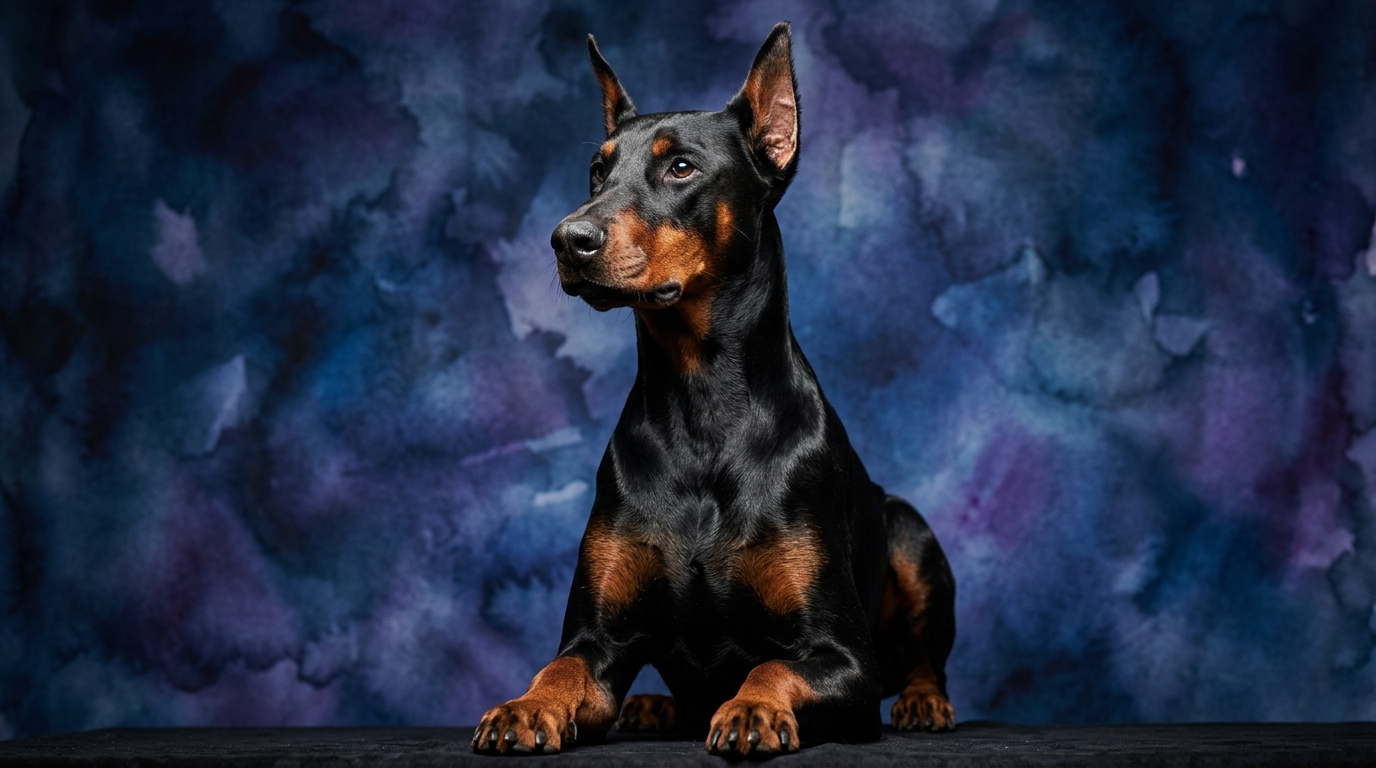
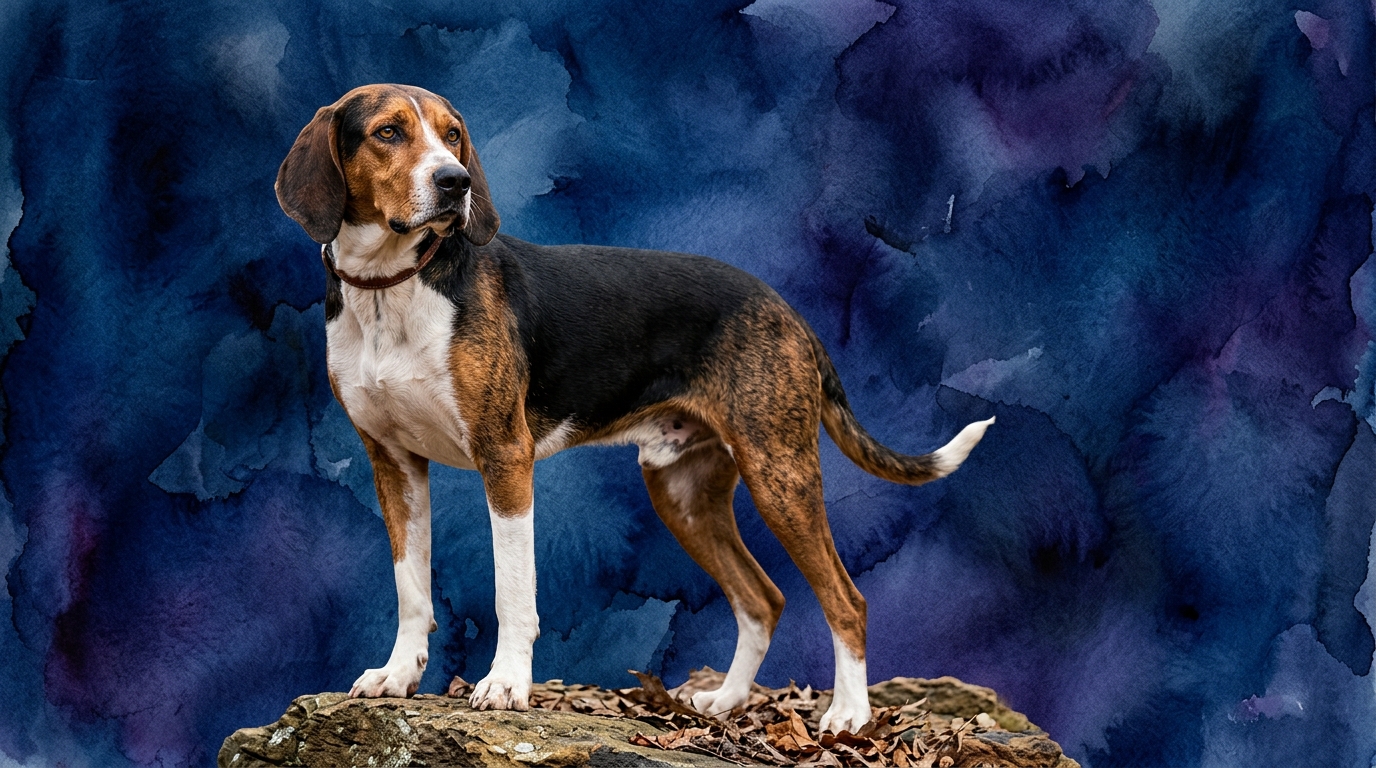
Side-by-Side Cognitive Profiles
The Cosmic Pet Pet IQ Lab categorizes canine intelligence across five key dimensions, providing a nuanced view beyond a single score. For the Doberman Pinscher, a Working breed, its profile reflects a highly adaptive and engaged mind: Problem Solving 5/5, Training Speed 5/5, Social Intelligence 4/5, Instinctive Drive 5/5, and Memory 5/5. This breed's Coren rank of #5 further solidifies its standing among canines exhibiting strong aptitudes for learning and complex tasks.
In contrast, the Treeing Walker Coonhound, a member of the Hound group, presents a different cognitive landscape: Problem Solving 3/5, Training Speed 3/5, Social Intelligence 3/5, Instinctive Drive 3/5, and Memory 3/5. Notably, this breed is not Coren-ranked, which often indicates a specialized intelligence not fully captured by general obedience and working tests. Their scores suggest a canine whose cognitive strengths lie in specific areas, rather than broad, generalized problem-solving.
Specifically, a Doberman Pinscher's 5/5 in Problem Solving indicates an animal that rapidly analyzes complex situations, devising multi-step solutions to novel challenges. Their 5/5 Training Speed means they absorb new commands with minimal repetition, showing a keen desire to engage with their handler. A 4/5 in Social Intelligence reflects their capacity to understand human cues and form deep, responsive bonds. Their 5/5 Instinctive Drive manifests as powerful guardian instincts and a focused work ethic, while a 5/5 Memory ensures they recall past experiences and learned behaviors over long periods, making them consistent performers.
For the Treeing Walker Coonhound, a 3/5 in Problem Solving means they can solve straightforward challenges, but may find more abstract or multi-layered problems perplexing. Their 3/5 Training Speed suggests they require more patience and repetition, with learning often needing to be framed in a highly motivating context. A 3/5 in Social Intelligence indicates they connect well with their family, but often exhibit a more independent streak, less driven by constant human direction. Their 3/5 Instinctive Drive is supremely focused on scent-driven hunting, which, while powerful in its specific domain, is less generalizable across other tasks. Finally, a 3/5 Memory allows them to remember key commands and routines, but perhaps without the intricate detail or long-term recall of more broadly cognitive breeds.
Where the Doberman Pinscher Shines Cognitively
The Doberman Pinscher's cognitive architecture is built for precision and proactive engagement. Their exceptional Problem Solving (5/5) and Training Speed (5/5) allow them to excel in environments demanding rapid learning and adaptive responses. This means a Doberman can quickly grasp the nuances of complex obedience routines, protection work scenarios, or agility courses, often anticipating the next step before a command is fully issued. Their capacity to generalize learned behaviors from one context to another is pronounced, making them versatile partners.
Moreover, the Doberman's 5/5 Memory contributes significantly to their reliability in long-term tasks. Once a behavior is learned, it tends to stick, minimizing the need for constant refreshers. Coupled with a 5/5 Instinctive Drive, which is often directed towards guardianship and partnership, they exhibit a powerful focus and determination to complete tasks assigned by their human companion. This drive isn't just about raw energy; it's about a persistent mental engagement with their role, making them exceptionally consistent in their duties.
Their 4/5 Social Intelligence also means they are highly attuned to their owner's emotional state and intentions, allowing for a deep, almost telepathic connection in working partnerships. This sensitivity aids in fine-tuning responses during training and allows them to adjust their behavior based on subtle human cues, contributing to their reputation as a highly responsive and integrated family member.
Where the Treeing Walker Coonhound Excels Cognitively
While the Treeing Walker Coonhound's general IQ scores might appear lower, their cognitive strengths are uniquely specialized and deeply rooted in their heritage. Their 3/5 Instinctive Drive, though numerically lower, is overwhelmingly focused on scent detection and tracking, reaching an unparalleled intensity within this specific domain. This isn't a lack of drive, but rather a profoundly channeled cognitive energy that allows them to process and follow complex scent trails with astonishing persistence and accuracy, often over vast distances and varied terrain.
Their Problem Solving (3/5) in a hunting context translates to an innate ability to 'puzzle out' a lost trail, using environmental cues and memory of previous scents to re-establish a path. This specific form of problem-solving, while perhaps not transferable to abstract human games, is a testament to their evolutionary success as a tracking hound. Their memory, also rated 3/5, is particularly effective for recalling scent patterns and geographical layouts relevant to their hunting pursuits, enabling them to navigate and retrace steps effectively in the field.
The Treeing Walker Coonhound’s 3/5 Social Intelligence, while indicating more independence, also means they are not overly reliant on constant human direction during their primary work. They are capable of making independent decisions in pursuit of a scent, a crucial cognitive trait for a hound that might work ahead of its handler. This independence isn't a deficit but an adaptation for a role requiring self-reliance and initiative in the field, making them dedicated, albeit self-directed, companions.
Training Dynamics: Doberman vs. Coonhound
When considering ease of training, the Doberman Pinscher (Training Speed 5/5) presents a significantly different experience than the Treeing Walker Coonhound (Training Speed 3/5). A Doberman absorbs new commands with remarkable speed, often understanding a new cue after just a few repetitions. Their high Problem Solving score means they can quickly deduce what is being asked of them and generalize that learning to different situations or environments. They thrive on structure and consistency, finding satisfaction in engaging their active minds with learning tasks.
Behaviorally, a Doberman's strong desire to please and their high Social Intelligence mean they are often eager to work with their handler, making them highly responsive to positive reinforcement and clear directives. They tend to maintain focus on the task at hand, less distracted by environmental stimuli unless specifically trained for it. This translates into quicker progress in obedience, sports, and any complex skill acquisition.
The Treeing Walker Coonhound, by contrast, requires a more patient and nuanced approach to training. Their 3/5 Training Speed means that commands need more repetition and often benefit from being broken down into smaller, more manageable steps. Their profound instinctive drive for scent work can make them appear 'stubborn' or 'distracted' in traditional obedience settings. A sudden enticing scent can override learned commands, leading them to follow their nose regardless of verbal cues, a real behavioral difference stemming from their specialized cognitive priorities.
Effective training for a Coonhound often involves integrating their natural drive. For instance, using scent games as rewards or incorporating tracking into their routine can make learning more engaging and successful. Their independence, a cognitive trait, means they may question commands or prioritize their own perceived 'job' (like following a trail) over a handler's instruction. This requires an owner to be highly motivating, consistent, and understanding of their hound's unique mental framework, often needing to work with their instincts rather than against them.
Suited for Active vs. Relaxed Owners
The Doberman Pinscher is unequivocally suited for active owners who relish a highly engaged, working canine partner. Their 5/5 Problem Solving and Instinctive Drive mean they require significant mental stimulation alongside physical exercise. Owners who enjoy advanced obedience, dog sports like agility orschutzhund, or even structured daily training sessions will find a Doberman thrives under such a regimen. Their robust memory and eagerness to learn make them excellent candidates for complex tasks and consistent performance, requiring an owner who can consistently provide intellectual challenges and clear leadership.
A Doberman is not a dog content with merely lounging; their cognitive makeup demands a 'job' or purpose, even if that purpose is navigating a complex enrichment puzzle or mastering a new trick. They need an owner who is equally active in providing structured activities and mental engagement to prevent boredom and channel their potent cognitive abilities constructively. Their social intelligence also means they crave close partnership and interaction, making them unsuitable for owners seeking a more independent, hands-off companion.
The Treeing Walker Coonhound, while also requiring an active lifestyle, suits owners whose definition of 'active' aligns with long, exploratory walks, hiking, or field activities where their nose can be fully engaged. They are not necessarily looking for complex obedience routines or intricate problem-solving games as their primary outlet. Their strong instinctive drive is best satisfied by opportunities to track scents, whether in a controlled environment or during leisurely hikes. Owners who appreciate a dog with a powerful, specialized drive and a more independent spirit will find a good match.
While they need physical exertion, the Coonhound's cognitive needs are less about mastering complex commands and more about fulfilling their innate desire to trail. They can be more relaxed indoors once their scenting needs are met, but their outdoor activities should be focused on engaging their olfactory senses. They are ideal for owners who enjoy spending time in nature and can appreciate a companion who might be more absorbed in their own sensory world during walks, rather than constantly seeking handler direction.
The Verdict
Choose a Doberman Pinscher if you seek a highly trainable, versatile working partner eager for complex mental challenges and consistent engagement.
Opt for a Treeing Walker Coonhound if you appreciate a devoted, independent companion with an unparalleled nose, ideal for scent-driven activities and a more relaxed approach to obedience.
🧠 Find Your Pet's IQ Score
Our Pet IQ Lab assessment covers 25+ tests across 5 cognitive dimensions — personalized to your breed.
Take the Full IQ Test →Frequently Asked Questions
Are Doberman Pinschers good for first-time dog owners?
Dobermans possess high cognitive abilities and strong drives, making them best suited for experienced owners who can provide consistent training, clear boundaries, and ample mental stimulation. Their responsiveness is rewarding, but their intensity requires careful management.
Can a Treeing Walker Coonhound live in an apartment?
A Treeing Walker Coonhound can adapt to apartment living if their significant exercise and scent-work needs are met daily. They require extensive outdoor activity to satisfy their instinctive drive, otherwise, they may become restless or vocal indoors.
Which breed is more prone to separation anxiety?
Doberman Pinschers, with their higher social intelligence and strong bond with owners, can be more prone to separation anxiety if not properly socialized or left alone for extended periods. Treeing Walker Coonhounds, being more independent, typically handle solitude better, provided their physical and mental needs are met.