
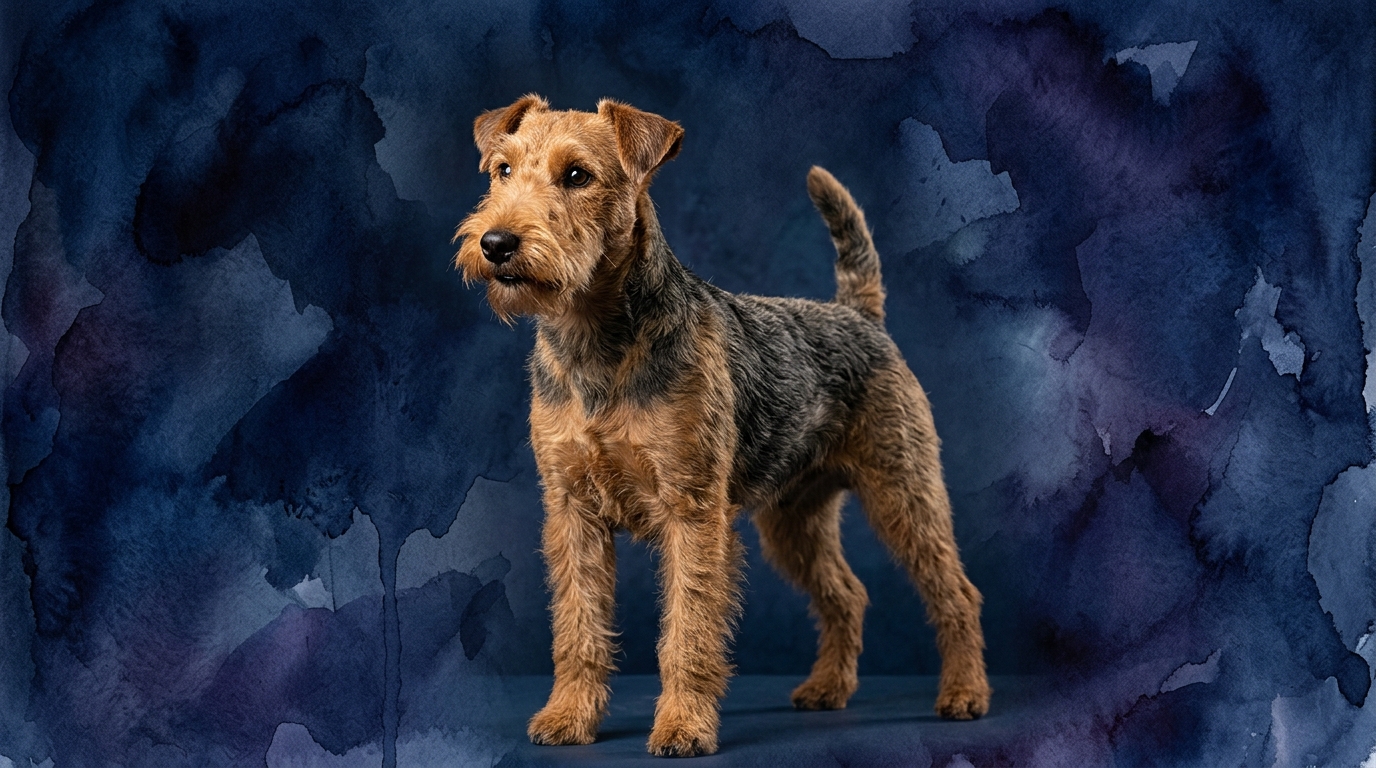
Side-by-Side Cognitive Profiles: Doberman Pinscher vs. Welsh Terrier
The Cosmic Pet Pet IQ Lab employs five key dimensions to evaluate canine intelligence, offering a nuanced understanding beyond simple 'smart' labels. For the Doberman Pinscher, a breed celebrated for its working lineage and ranking #5 on Coren's scale of working and obedience intelligence, these scores reflect a highly capable and adaptable mind. Its Problem Solving is rated 5/5, indicating an exceptional ability to analyze novel situations, strategize, and find solutions efficiently. Training Speed also stands at 5/5, meaning Dobermans grasp new commands and complex routines with remarkable alacrity and minimal repetition. Their Social Intelligence is a robust 4/5, showing a strong capacity to understand and respond to human cues, emotions, and social structures within a household. Instinctive Drive, at 5/5, highlights a powerful innate desire to fulfill their inherent roles, often involving protection, guarding, or focused work, backed by significant energy and determination. Finally, Memory scores 5/5, allowing them to retain vast amounts of learned information, sequences, and experiences over extended periods.
In contrast, the Welsh Terrier, a spirited member of the Terrier group and not specifically ranked on Coren's scale, presents a different cognitive blueprint. Each of its five intelligence dimensions – Problem Solving, Training Speed, Social Intelligence, Instinctive Drive, and Memory – is rated 3/5. A Problem Solving score of 3/5 suggests they are capable of resolving straightforward challenges, often relying on persistence and trial-and-error rather than complex strategic planning. Their Training Speed at 3/5 indicates they learn, but require more consistent repetition and patient, engaging methods to solidify new behaviors. Social Intelligence at 3/5 means they form bonds and understand basic interactions, but may exhibit a more independent streak, less acutely attuned to subtle human emotional shifts compared to their Doberman counterpart. An Instinctive Drive of 3/5 reflects a moderate, yet focused, inherent motivation typically aligned with traditional terrier pursuits like digging, chasing, and exploring, rather than complex human-directed 'work.' Lastly, their Memory at 3/5 allows them to retain basic commands and routines, though less frequently practiced information might require occasional refreshers.
Where the Doberman Pinscher Excels Cognitively
The Doberman Pinscher's cognitive strengths are evident across nearly all measured dimensions, making them exceptional partners for tasks requiring precision, quick learning, and complex retention. Their 5/5 Problem Solving means they aren't merely reactive; they are proactive thinkers, capable of assessing environmental changes or new obstacles and formulating effective responses. For instance, in an obedience competition, a Doberman can quickly understand a novel sequence of commands or adapt if a familiar cue is given in a slightly different context. This strategic aptitude extends to real-world scenarios, such as navigating a complex obstacle course or learning intricate service dog tasks.
The combined power of their 5/5 Training Speed and 5/5 Memory further amplifies their capabilities. A Doberman can master a new command in a handful of repetitions and recall it flawlessly months later. This allows for rapid progression through advanced training, from competitive sports like Schutzhund or agility to specialized roles in police or search and rescue work. Their 4/5 Social Intelligence ensures they are highly receptive to human direction and feedback, making them eager collaborators. This perceptive nature, coupled with a dominant 5/5 Instinctive Drive, means they thrive when given a purpose and are incredibly focused on fulfilling tasks, whether it's guarding their family, performing a routine, or learning an entirely new skill set.
Distinct Cognitive Advantages of the Welsh Terrier
While the Welsh Terrier's cognitive scores are numerically lower than the Doberman's, their profile represents a different, equally effective, type of intelligence tailored to their heritage. Their 3/5 Problem Solving, for example, isn't about strategic planning for complex multi-step tasks, but rather a persistent, resourceful approach to immediate challenges. Imagine a Welsh Terrier determined to unearth a scent; they will employ various digging techniques, try different angles, and continue for extended periods, showcasing a tenacious form of problem-solving driven by instinct and grit rather than elaborate foresight. This resilience in the face of obstacles is a hallmark of their cognitive style.
The Welsh Terrier's 3/5 Instinctive Drive, while not geared towards human-directed 'work' in the same way as a Doberman, is robustly channeled into independent exploration and pursuit. This translates into a dog that is self-motivated to investigate its surroundings, follow interesting scents, and engage in typical terrier behaviors with focused energy. Their 3/5 Social Intelligence, manifesting as a degree of independence, means they are not overly reliant on constant human validation. This can be an advantage for owners who appreciate a companion with a strong sense of self and the ability to entertain themselves, rather than one that constantly seeks direction. Their memory, at 3/5, is perfectly adequate for retaining essential routines and commands, allowing them to navigate their daily lives effectively, even if they require more consistent reinforcement for less common instructions.
Training Dynamics: Doberman Pinscher vs. Welsh Terrier
The stark differences in Training Speed and Social Intelligence fundamentally shape the training experience for these two breeds. Training a Doberman Pinscher is typically a highly rewarding and efficient process. Their 5/5 Training Speed means they learn commands almost instantaneously, often picking up new concepts after just a few repetitions. This is bolstered by their 4/5 Social Intelligence, which makes them highly attuned to their handler's wishes and eager to cooperate. They thrive on structure, consistency, and positive reinforcement, quickly forming strong working partnerships. Their 5/5 Memory ensures that once a behavior is learned, it is retained, allowing for the rapid building of a complex repertoire of skills. Real behavioral differences include their natural inclination to maintain focus on their handler and their desire to please, making them highly biddable.
Training a Welsh Terrier, by contrast, demands a different approach characterized by patience, creativity, and an understanding of terrier independence. Their 3/5 Training Speed means learning takes longer, requiring more consistent and varied repetitions to prevent boredom. Their 3/5 Social Intelligence implies they may not always prioritize human directives over their own immediate interests, especially if a compelling scent or chase opportunity arises. Effective training for a Welsh Terrier often involves short, engaging sessions, positive reinforcement, and making the training feel like a game rather than a chore. They respond best to methods that respect their independent spirit and channel their innate drives, such as scent work or earthdog trials, rather than purely obedience-focused drills. Their inherent determination, while a cognitive strength, can sometimes manifest as stubbornness if they perceive a task as uninteresting or if their own instincts conflict with a command.
Owner Suitability: Active Engagement vs. Independent Spirit
Considering their distinct cognitive profiles, the Doberman Pinscher and Welsh Terrier appeal to different types of owners. The Doberman Pinscher, with its 5/5 Instinctive Drive, 5/5 Problem Solving, and strong Social Intelligence, is best suited for owners who are prepared to provide significant mental and physical engagement. These dogs thrive in structured environments where they have a 'job' to do, whether it's competitive obedience, protection training, or simply being a vigilant family guardian. They need consistent interaction, clear leadership, and opportunities to utilize their sharp minds and abundant energy. Owners who are active, enjoy training, and seek a highly responsive, dedicated, and protective companion will find the Doberman an ideal match. They are not for truly relaxed owners who prefer a low-maintenance pet, as their intelligence and drive require consistent stimulation to prevent boredom and potential behavioral issues.
The Welsh Terrier, while also requiring an active lifestyle, suits owners who appreciate a more independent and spirited companion. Their 3/5 Instinctive Drive, while moderate compared to a Doberman, is nevertheless strong and directed towards typical terrier pursuits. Owners should be active outdoors, enjoying walks, hikes, or activities that allow for sniffing, digging, and exploration. Their 3/5 Problem Solving and Social Intelligence mean they are capable and affectionate, but also possess a resilient, self-reliant character. They are an excellent fit for owners who admire a dog with personality, a playful mischievous streak, and who are prepared to engage in patient, engaging training that respects their terrier nature. They are not for owners seeking a purely biddable, constantly attentive companion, but rather one that brings a lively, independent energy to the home.
The Verdict
Choose the Doberman Pinscher if you seek a highly trainable, exceptionally perceptive, and dedicated companion eager to engage in complex tasks and form a close, working partnership.
Opt for the Welsh Terrier if you value an independent, spirited, and tenacious companion with a unique charm, and are prepared to embrace a dog that solves problems with persistence and enjoys exploring the world on its own terms.
🧠 Find Your Pet's IQ Score
Our Pet IQ Lab assessment covers 25+ tests across 5 cognitive dimensions — personalized to your breed.
Take the Full IQ Test →Frequently Asked Questions
Why is the Doberman's Social Intelligence 4/5, not 5/5, when other scores are perfect?
While the Doberman is highly perceptive to human cues and forms strong bonds, its 4/5 score acknowledges that its social intelligence is often channeled towards specific roles like guarding or working, rather than an all-encompassing, universally adaptable social acumen seen in some other breeds. It's incredibly responsive and loyal to its inner circle, but may exhibit a more reserved or discerning approach to strangers compared to breeds scoring a 5/5 in this dimension.
Can a Welsh Terrier still excel in obedience or dog sports despite its 3/5 training speed?
Absolutely, a Welsh Terrier can excel in obedience and dog sports, but it requires a dedicated and patient approach. Their 3/5 training speed means they learn at a slower pace and require more consistent, engaging reinforcement. Success hinges on making training fun, utilizing their natural drives, and understanding that their independent nature might mean they choose to 'opt out' if not sufficiently motivated, rather than a lack of capability.
How do the instinctive drives of these two breeds differ in practical terms?
The Doberman's 5/5 Instinctive Drive is typically channeled into directed work, protection, and vigilance, manifesting as a strong desire to patrol, guard, and perform tasks for its human companion. The Welsh Terrier's 3/5 Instinctive Drive, while strong, is more self-directed and focused on traditional terrier activities like digging, scent tracking, and chasing small prey. Practically, this means a Doberman often seeks purposeful engagement from its owner, while a Welsh Terrier might be more content pursuing its own explorations.