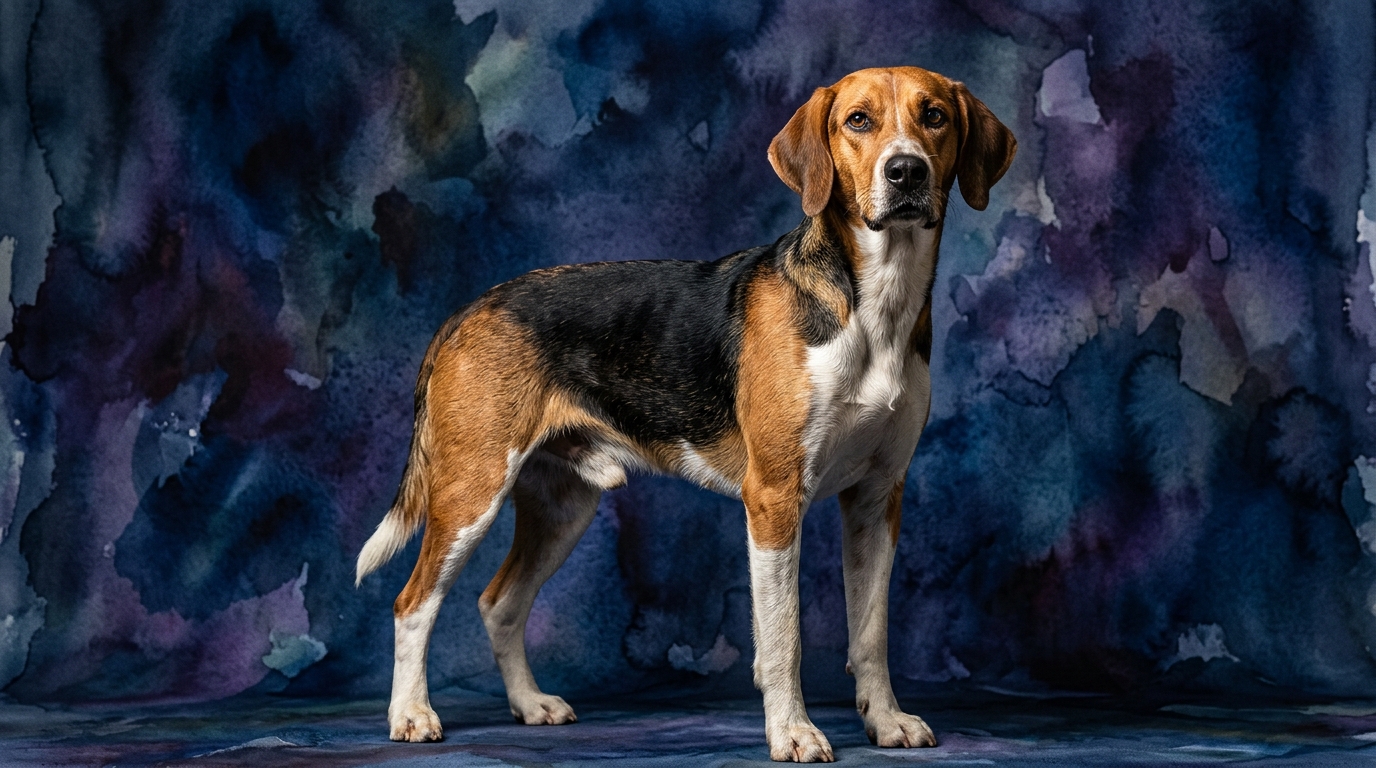

Side-by-Side Cognitive Profile: English Foxhound vs. Miniature Pinscher
While both the English Foxhound and Miniature Pinscher register a consistent 3/5 across the Cosmic Pet Pet IQ Lab's five cognitive dimensions, the context of their breed group profoundly influences how these scores translate into real-world behavior. It's not just about the score, but the specific 'flavor' of their cognitive abilities.
For the **English Foxhound**, a robust hound, their **Problem Solving (3/5)** is keenly applied to deciphering complex scent trails, navigating varied terrain, and coordinating with a pack during a hunt. Their problem-solving is less about abstract thought and more about practical, real-world tracking challenges. Their **Training Speed (3/5)** sees them learn tasks related to their hunting purpose with moderate efficiency, particularly those involving scent work; however, their independent nature and single-minded focus on a trail can make general obedience training, especially off-leash recall, a more protracted process requiring consistent reinforcement. **Social Intelligence (3/5)** is primarily expressed within a pack dynamic, understanding canine hierarchy and communication cues, and while capable of bonding with humans, their social acumen leans towards cooperative effort with other hounds. A powerful, relentless **Instinctive Drive (3/5)** is their defining characteristic, compelling them to follow a trail for miles, often overriding other stimuli. Their **Memory (3/5)** is excellent for scent patterns, terrain, and established hunting routes, crucial for their work, but may not exhibit the same recall for arbitrary human commands.
The **Miniature Pinscher**, a confident toy breed, demonstrates **Problem Solving (3/5)** in clever ways to achieve desired outcomes within a domestic environment, such as figuring out how to get attention, locate hidden toys, or manipulate household routines. They are resourceful in navigating their surroundings and often find creative solutions to minor obstacles. Their **Training Speed (3/5)** allows them to pick up new commands and tricks with moderate efficiency, demonstrating a readiness to learn when motivated; however, their confident, sometimes stubborn personality and tendency for independent thought mean training requires engaging methods and consistency to maintain focus. **Social Intelligence (3/5)** is highly attuned to their human family's moods and routines, often acting as diligent watchdogs who understand household dynamics, capable of being discerning with strangers and showcasing a protective social awareness centered on their immediate human pack. They possess a robust **Instinctive Drive (3/5)** for small vermin, often accompanied by a strong alert barking instinct, making them vigilant and quick to react to perceived intrusions. Their **Memory (3/5)** helps them recall routines, specific people, and the location of favored items or safe spaces within their home with good accuracy, aiding their role as a confident, watchful companion.
Where the English Foxhound Excels Cognitively
The English Foxhound's cognitive strengths are deeply rooted in their heritage as a working scent hound. Their 3/5 Problem Solving and Memory are optimized for sustained focus on a singular, distant goal, specifically deciphering and following complex scent trails over vast distances and varied terrains. This requires a unique blend of environmental navigation and long-term pursuit strategy that few breeds can match. Furthermore, their 3/5 Social Intelligence shines in inter-canine communication and cooperative effort within a pack structure, making them adept at working harmoniously with other hounds, a skill less critical for a companion dog.
Where the Miniature Pinscher Excels Cognitively
The Miniature Pinscher’s cognitive prowess, while sharing the same 3/5 scores, is distinctly tailored for life within a human household. Their 3/5 Problem Solving manifests as resourcefulness and adaptability within a complex domestic environment, such as cleverly finding ways to get treats or navigate furniture. Their quick assessment of immediate domestic situations, like a stranger at the door or an unusual sound, demonstrates a different application of their cognitive speed. Crucially, their 3/5 Social Intelligence is highly developed for understanding human social cues and household routines, allowing them to integrate seamlessly and often take on a 'managerial' role within their family unit.
Training Dynamics: Which is Easier and Why?
When it comes to ease of training, the differences between these two breeds become particularly pronounced, primarily due to how their 3/5 Training Speed and 3/5 Instinctive Drive interact with human directives. The **English Foxhound** generally presents a greater challenge for general obedience training. Their powerful 3/5 Instinctive Drive, particularly their scenting ability, means they are easily distracted from human commands once a compelling scent is present. Their independent nature, bred to work autonomously for long periods, often translates into selective hearing when off-leash, making reliable recall a significant training hurdle. Training requires immense patience, a deep understanding of their hound nature, and highly motivating rewards that can genuinely compete with environmental stimuli.
The **Miniature Pinscher**, while possessing a 3/5 Training Speed that allows them to learn quickly, is not without its own training quirks. Their bold, confident personality and 3/5 Instinctive Drive (alertness, chase) can lead to stubbornness or a tendency to test boundaries. They respond very well to positive reinforcement and consistent methods, thriving on engagement with their human. However, their vocal nature and protective instincts mean that early socialization and consistent management are crucial to prevent the development of undesirable behaviors like excessive barking or resource guarding. Their focus is often more on their human, which can make them more attentive in a focused training session, but also more demanding of attention.
Matching Owners: Active Lifestyle vs. Relaxed Home
The ideal owner for each breed is largely dictated by their inherent energy levels and the demands of their 3/5 Instinctive Drive. The **English Foxhound** is exclusively suited for exceptionally active owners. They possess monumental stamina and require extensive daily exercise, including long runs, hikes, or dedicated scent work sessions. Their powerful 3/5 Instinctive Drive demands a significant outlet; without it, they are prone to boredom, destructive behaviors, and vocalizations. They thrive in environments where their physical and mental energy can be channeled into purposeful, outdoor activity, making them unsuitable for relaxed, sedentary households.
The **Miniature Pinscher**, while energetic for a toy breed, suits moderately active owners. Their exercise needs are manageable with regular daily walks, interactive playtime, and consistent mental enrichment. They enjoy being involved in family activities but do not demand the marathon-level stamina required by a Foxhound. Their 3/5 Instinctive Drive requires consistent engagement and stimulation, but they are generally content with a blend of activity and relaxed indoor time with their family. This adaptability makes them suitable for a wider range of living situations, including apartments, provided their moderate exercise and mental stimulation needs are consistently met.
The Verdict
Choose an English Foxhound when you possess the dedication, ample space, and active lifestyle to accommodate a dog with monumental endurance and an unwavering scent drive, thriving on long, purposeful outdoor adventures.
Opt for a Miniature Pinscher if you seek a confident, alert companion who thrives on consistent routines, enjoys moderate daily activity, and appreciates being a central, watchful member of a family.
🧠 Find Your Pet's IQ Score
Our Pet IQ Lab assessment covers 25+ tests across 5 cognitive dimensions — personalized to your breed.
Take the Full IQ Test →Frequently Asked Questions
Can English Foxhounds be good family pets despite their strong drive?
Yes, with the right environment and dedicated owners, English Foxhounds can be affectionate family members. They require extensive exercise and mental stimulation to prevent boredom, and their strong scent drive means they need secure containment and consistent training to thrive.
Do Miniature Pinschers bark a lot due to their instinctive drive?
Miniature Pinschers do have a notable alert barking instinct, stemming from their 3/5 Instinctive Drive and historical role as vigilant watchdogs. Early training and consistent socialization can help manage this tendency, but owners should anticipate a degree of vocalization as part of their confident nature.
How does their 3/5 Social Intelligence differ in practical terms?
The English Foxhound's 3/5 Social Intelligence primarily concerns pack dynamics and cooperative hunting with other dogs, while the Miniature Pinscher's 3/5 Social Intelligence is more focused on understanding and responding to their immediate human family and navigating household dynamics, often acting as a protective companion.