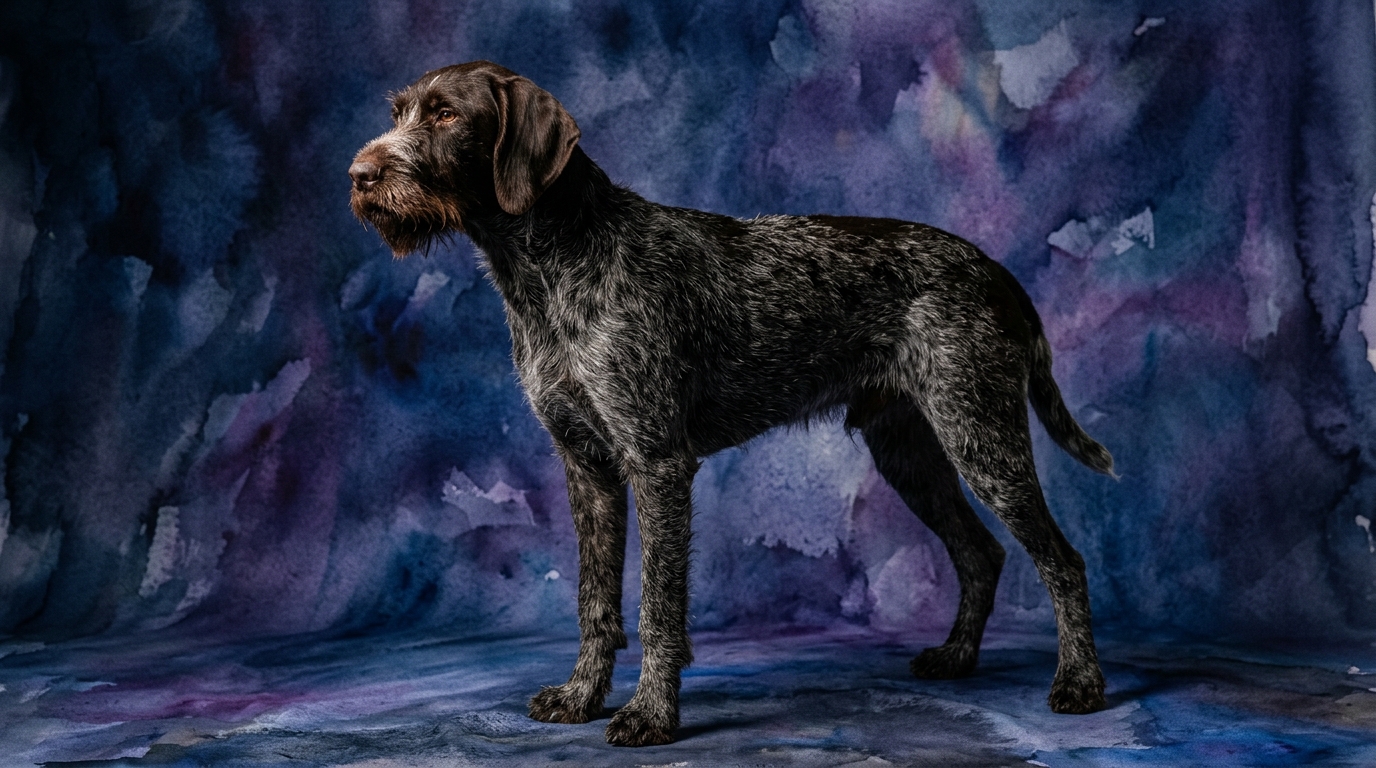
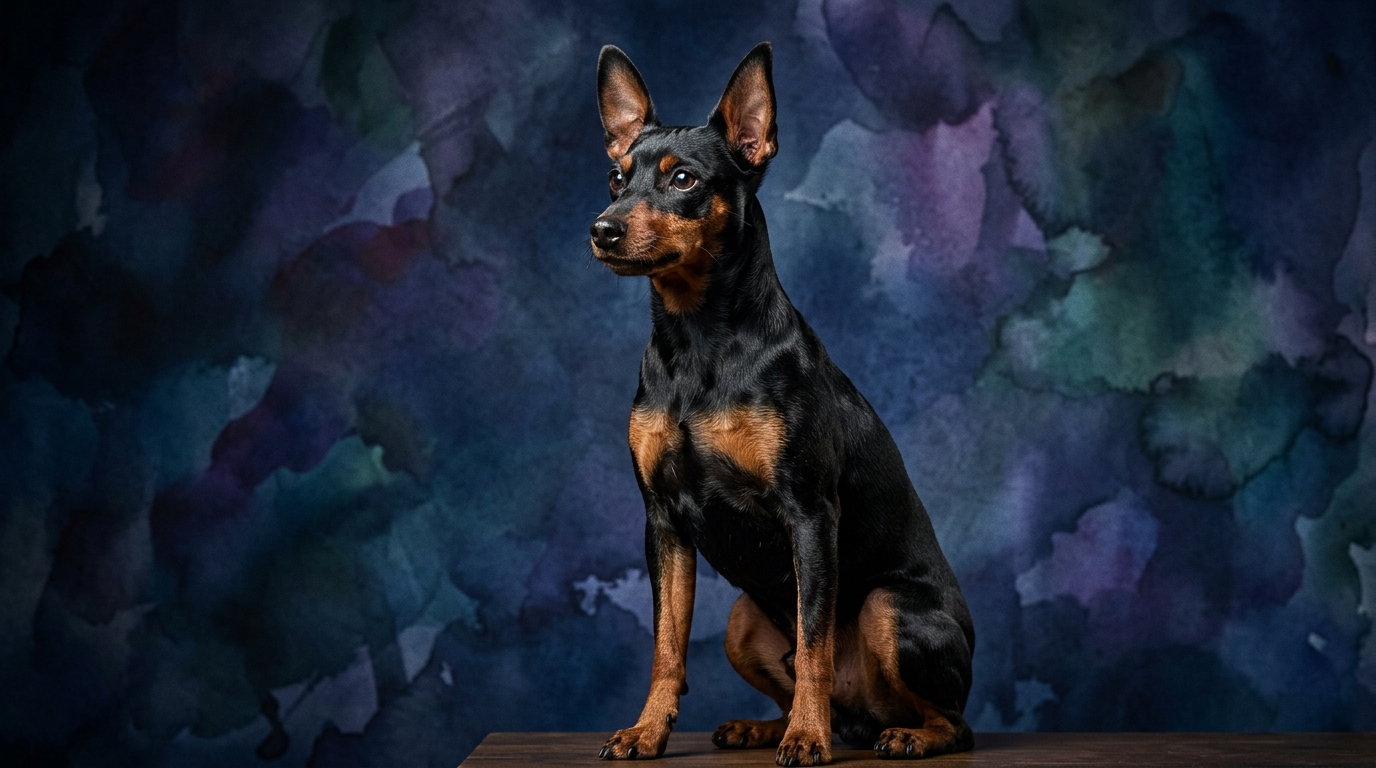
Side-by-Side Cognitive Profiles
The Cosmic Pet Pet IQ Lab employs a multi-dimensional framework to assess canine intelligence, moving beyond simple obedience to encompass a fuller spectrum of cognitive abilities. For the German Wirehaired Pointer (GWP), a breed ranked #28 by Stanley Coren, their profile reflects a working dog's mind: Problem Solving 4/5, Training Speed 4/5, Social Intelligence 3/5, Instinctive Drive 3/5, and Memory 4/5. This suggests a dog capable of complex task execution, quick learning, and effective recall.
In contrast, the Miniature Pinscher (Min Pin), a breed not featured on Coren's list, presents a different cognitive landscape: Problem Solving 3/5, Training Speed 3/5, Social Intelligence 3/5, Instinctive Drive 3/5, and Memory 3/5. While these scores are generally lower than the GWP's, they do not imply a lack of mental capacity, but rather a different prioritization of cognitive strengths aligned with their companion and vermin-control heritage rather than extensive fieldwork.
Where the German Wirehaired Pointer Excels Cognitively
The German Wirehaired Pointer’s cognitive advantages are deeply rooted in its heritage as a versatile hunting dog. Their Problem Solving score of 4/5 indicates a superior capacity for navigating intricate scenarios, such as tracking elusive game through varied terrain or figuring out how to retrieve fallen birds from challenging cover. This involves not just following a scent, but making independent decisions based on environmental cues.
With a Training Speed of 4/5 and Memory of 4/5, GWPs assimilate and retain multi-step commands and complex routines with remarkable efficiency. They excel at linking specific actions to desired outcomes, making them particularly adept at learning extensive sequences required for field trials or advanced obedience. Their working memory allows them to recall specific locations of scent trails or retrieve points over extended periods, a crucial skill for their original purpose. Their instinctive drive, while rated 3/5, is specifically channeled into focused hunting behaviors, allowing for sustained attention on a task.
Where the Miniature Pinscher Shines Cognitively
Despite generally lower scores, the Miniature Pinscher exhibits distinct cognitive strengths, particularly in areas relevant to domestic life. Their Problem Solving at 3/5 often manifests as cleverness in navigating household environments, such as figuring out how to access forbidden treats, manipulate owners for attention, or open a door latch. This isn't about complex fieldwork but about domestic resourcefulness and achieving personal goals within their immediate surroundings.
The Min Pin’s Social Intelligence, also 3/5, is often geared towards acute observation of human behavior and moods, allowing them to adapt their own actions to solicit desired responses, whether it's cuddles or play. Their instinctive drive, also 3/5, translates into a vigilant alertness, making them excellent, albeit sometimes vocal, guardians of their territory. This constant environmental scanning and quick reaction to novelty is a form of cognitive processing that prioritizes security and awareness within their domain.
Training Dynamics: GWP's Eagerness vs. Min Pin's Independence
When it comes to training, the German Wirehaired Pointer generally presents a more straightforward path for handlers. Their Training Speed of 4/5, coupled with a strong desire to work cooperatively, means they pick up new commands quickly and are motivated by a sense of purpose. GWPs thrive on having a job and responding to direction, making them highly responsive to consistent, engaging training methods that tap into their natural drives and problem-solving abilities. Their focus is often on the task at hand and pleasing their handler.
The Miniature Pinscher, with a Training Speed of 3/5, can be more challenging due to their independent and spirited nature. Often described as having a 'big dog' attitude in a small body, Min Pins require patience, consistency, and highly motivating rewards. They can be prone to stubbornness if they don't see the immediate benefit of a command, or if they find something more interesting. Training success with a Min Pin often hinges on making lessons fun, varied, and demonstrating clear advantages for the dog, appealing to their individualistic problem-solving rather than pure compliance.
Lifestyle Fit: Active Owners vs. Relaxed Companionship
The German Wirehaired Pointer is ideally suited for active owners who can provide substantial physical exercise and mental engagement. Their high Problem Solving, Training Speed, and Memory scores are best utilized in environments where they have opportunities for scent work, long hikes, structured training sessions, and perhaps even dog sports. A GWP left without sufficient outlets for its cognitive and physical energy can become bored and develop undesirable behaviors. They thrive when their minds are challenged with tasks that mimic their historical role.
The Miniature Pinscher, while energetic, is generally a better fit for owners seeking a dynamic companion who doesn't require the same intensity of outdoor activity. They adapt well to apartment living provided they receive daily walks and opportunities for play and mental stimulation through puzzle toys or short training bursts. Their cognitive strengths are often engaged through social interaction, guarding duties, and exploring their immediate environment. They appreciate a routine that includes both vigorous play and relaxed companionship, making them versatile for owners with varying levels of activity, as long as mental stimulation is present.
The Verdict: Choosing Your Canine Companion
The choice between a German Wirehaired Pointer and a Miniature Pinscher ultimately depends on an owner's lifestyle, training commitment, and expectations for a canine partner. Their distinct cognitive profiles guide them towards different types of companionship and activity.
Understanding these differences in their mental makeup ensures a harmonious match, where each dog's innate cognitive strengths are recognized, nurtured, and appreciated within their unique roles.
The Verdict
Choose the German Wirehaired Pointer if you are an active, experienced owner eager to engage in extensive training, outdoor adventures, and structured activities that tap into a dog's strong working drive and problem-solving capabilities.
Opt for the Miniature Pinscher if you desire a spirited, vigilant companion capable of adapting to varied living situations, and you appreciate a dog whose intelligence manifests in domestic cleverness and keen environmental awareness.
🧠 Find Your Pet's IQ Score
Our Pet IQ Lab assessment covers 25+ tests across 5 cognitive dimensions — personalized to your breed.
Take the Full IQ Test →Frequently Asked Questions
Is a German Wirehaired Pointer difficult to train?
No, German Wirehaired Pointers are generally not difficult to train due to their 4/5 Training Speed and eagerness to work. They respond well to consistent, positive reinforcement and thrive on having a job, making them receptive learners for various commands and complex tasks.
Do Miniature Pinschers need a lot of mental stimulation?
Yes, Miniature Pinschers benefit significantly from mental stimulation, despite their smaller size. While their Problem Solving is rated 3/5, they are clever and vigilant, requiring puzzle toys, short training sessions, and varied environments to keep their minds engaged and prevent boredom.
Which breed is better with children, GWP or Min Pin?
Neither breed has a specific cognitive advantage in being 'better' with children; this depends more on individual temperament and socialization. German Wirehaired Pointers can be patient but need exercise, while Miniature Pinschers are spirited and may prefer older, respectful children due to their independent nature and smaller size.