Side-by-Side Cognitive Profiles: Decoding Their Intellect
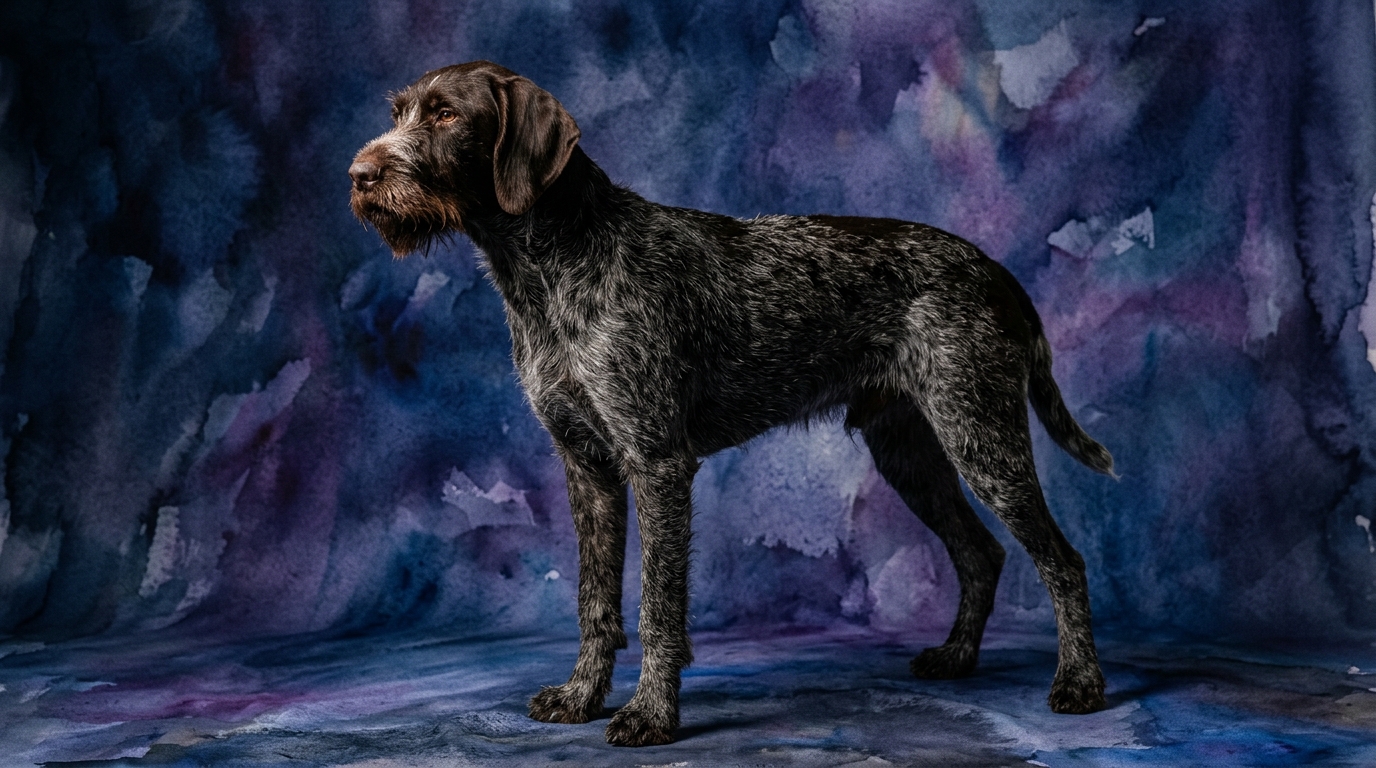
The Cosmic Pet Pet IQ Lab data reveals a striking similarity in the core cognitive scores for both the German Wirehaired Pointer (GWP) and the Norwegian Elkhound, yet their Coren ranks and breed groups hint at divergent applications of these strengths. The GWP, a Sporting dog ranking #28 on Coren's scale, demonstrates a Problem Solving score of 4/5, adept at navigating complex field scenarios, finding downed game, and understanding multi-step retrieval tasks. Its Training Speed of 4/5 indicates a quick grasp of new commands, especially when linked to a working partnership, while its Social Intelligence (3/5) shows an attunement to handler's cues, valuing collaboration. An Instinctive Drive of 3/5 powers its strong drive for pointing, flushing, and retrieving, often channeled productively, and its Memory of 4/5 ensures excellent recall of learned behaviors and the layout of hunting grounds.
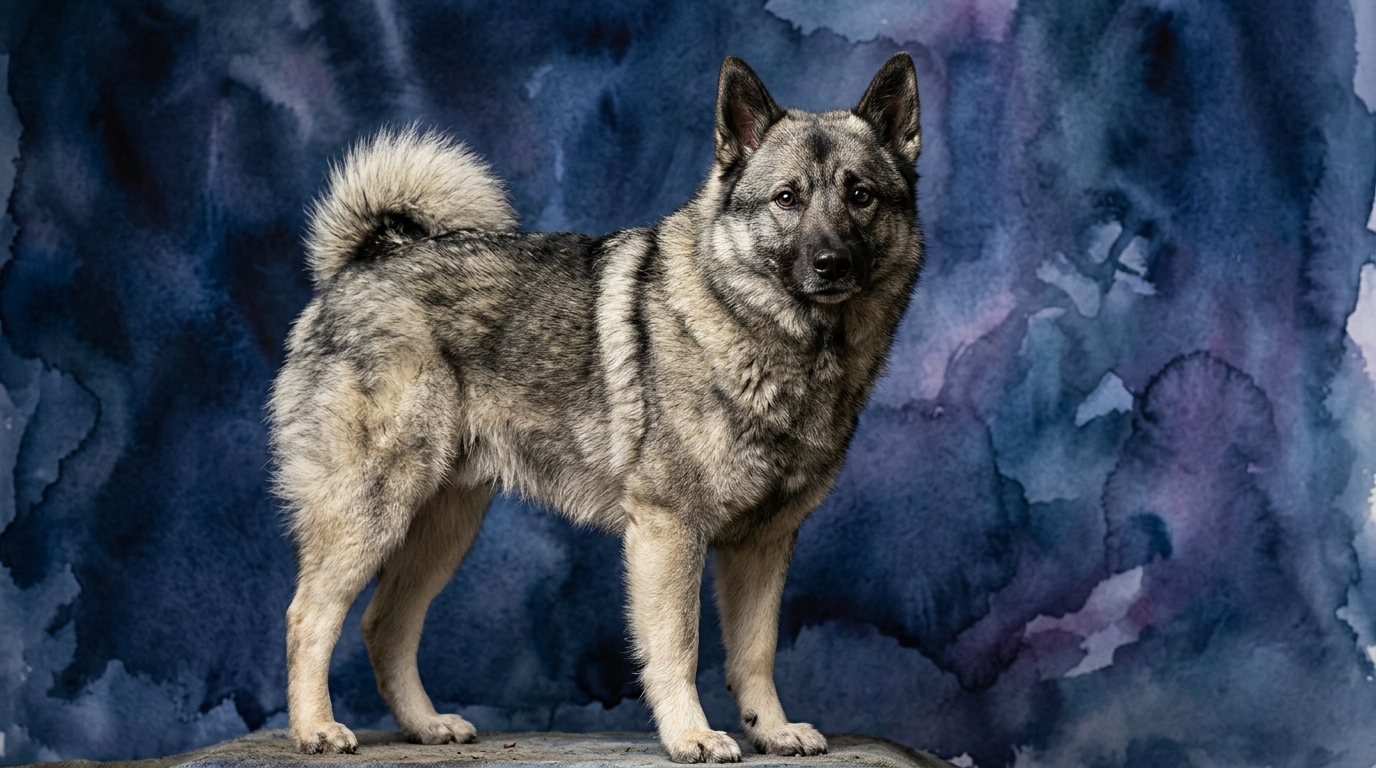
Conversely, the Norwegian Elkhound, a Hound dog with a Coren rank of #36, mirrors these cognitive scores across the board: Problem Solving 4/5, Training Speed 4/5, Social Intelligence 3/5, Instinctive Drive 3/5, and Memory 4/5. However, its Hound heritage dictates a different expression of these traits. Its Problem Solving excels at independent tracking, navigating challenging terrain to follow a scent, and strategizing to locate prey. The Elkhound's Training Speed signifies rapid learning when motivated by scent work or tasks engaging its natural curiosity, though it may require more compelling incentives than a GWP. Its Social Intelligence, while present, often accompanies a strong independent streak, allowing it to make decisions based on its own assessment. The Instinctive Drive fuels powerful scenting abilities and endurance for long pursuits, characterized by its baying vocalization, and its Memory retains complex scent trails and effective hunting strategies vividly.
Where the German Wirehaired Pointer Excels Cognitively
The German Wirehaired Pointer's cognitive strengths truly shine brightest in collaborative, handler-directed tasks, a hallmark of its Sporting group heritage. Its higher Coren rank of #28, compared to the Elkhound's #36, primarily reflects a greater degree of 'working and obedience intelligence' – the ability to consistently and accurately execute human commands. This manifests as a superior capacity to process and execute multi-step commands, maintaining focus on the handler even amidst environmental distractions. Their shared Problem Solving score of 4/5 is often applied to intricate retrieval scenarios, where they must assess obstacles, remember the precise location of downed game, and return it efficiently to hand. The GWP's Social Intelligence, rated at 3/5, is keenly tuned to human partnership, making them exceptionally responsive to subtle cues and eager to please in a working context. This isn't just about learning commands quickly; it's about consistently applying that learning in dynamic, goal-oriented situations as an integral part of a human-canine team.
Where the Norwegian Elkhound Excels Cognitively
The Norwegian Elkhound's intellect, while sharing identical individual cognitive scores, truly thrives in autonomous, instinct-driven pursuits, which is deeply rooted in its Hound group identity. Its slightly lower Coren rank of #36, compared to the GWP, reflects a greater inherent independence, which is in fact a significant cognitive asset in its traditional role as a big game hunter. Their Problem Solving ability, also rated 4/5, is acutely geared towards independent tracking: deciphering complex scent puzzles, navigating varied terrain alone for extended periods, and making strategic decisions to locate and hold game. The Elkhound's Memory (4/5) is exceptional for retaining intricate scent profiles and recalling complex routes, allowing them to pursue a trail with unwavering focus. The Elkhound's Instinctive Drive (3/5) is less about handler-directed precision and more about enduring, self-motivated pursuit, requiring immense cognitive stamina and a deep, intuitive understanding of its environment. This independence, often interpreted as stubbornness, is a hallmark of their self-reliant cognitive strength, enabling them to work effectively without constant human oversight.
Training Dynamics: GWP's Partnership vs. Elkhound's Persuasion
Both breeds share an impressive Training Speed score of 4/5, indicating rapid learning capabilities. However, the *approach* to training and the handler's strategy must differ significantly due to their inherent drives and social intelligence. The German Wirehaired Pointer, as a Sporting dog, generally thrives on partnership and purpose-driven tasks. They are often eager to please and find profound satisfaction in successful collaboration with their handler, making them highly receptive to positive reinforcement methods that build on this bond. Their inherent focus and biddability mean they can learn complex sequences of commands with fewer repetitions and maintain precision, excelling in obedience and advanced field work.
The Norwegian Elkhound, originating from the independent Hound group, possesses a more self-directed spirit. While they learn quickly, their motivation often stems from their own interests, particularly scent work or tasks that engage their powerful natural drives. Training an Elkhound requires creativity, absolute consistency, and a deep understanding of what truly motivates them. They may question the necessity of a command if it doesn't immediately align with their instincts or perceived utility, requiring a handler to be more persuasive and make training feel like a rewarding 'game' or puzzle rather than strict instruction. This isn't a deficiency in cognitive ability, but rather a difference in cognitive priorities and inherent motivations.
Activity Levels: Structured Engagement vs. Independent Exploration
Neither the German Wirehaired Pointer nor the Norwegian Elkhound are suitable companions for truly relaxed or sedentary owners; both breeds demand substantial mental and physical engagement to thrive. The GWP, with its Sporting background, thrives on structured activity that provides a clear purpose and involves handler interaction. They excel in dog sports like agility, obedience, and especially scent work or field trials, where their problem-solving and memory can be applied in a directed, collaborative manner. Owners who enjoy rigorous hiking, running, or cycling with a canine companion who is eager to follow commands and work alongside them will find a GWP an ideal partner. Their need for activity is often intrinsically intertwined with their desire for handler interaction and a tangible 'job' to do.
The Norwegian Elkhound also requires significant exercise, but their preference often leans towards independent exploration and activities that deeply engage their powerful scenting abilities. Long, meandering hikes, trail running where they can follow intriguing scents, or even urban tracking games where they are encouraged to independently solve scent puzzles are highly fulfilling. While they enjoy their human companions, their activity needs are less about performing for an owner and more about satisfying their innate drive to explore, track, and navigate their world autonomously. Owners who appreciate a dog with a strong sense of self, who can accompany them on long, often self-directed adventures where the dog is encouraged to follow its nose, will find the Elkhound a rewarding companion. Their activity is less about strict obedience and more about enduring, self-directed engagement with their environment.
The Verdict
Choose the German Wirehaired Pointer if you seek a highly biddable, collaborative canine partner for structured activities, dog sports, or hunting, valuing a strong working relationship and consistent handler focus.
Choose the Norwegian Elkhound if you appreciate an independent, resilient companion for long, exploratory adventures and scent-driven pursuits, understanding that their intellect thrives on autonomy and self-motivated problem-solving.
🧠 Find Your Pet's IQ Score
Our Pet IQ Lab assessment covers 25+ tests across 5 cognitive dimensions — personalized to your breed.
Take the Full IQ Test →Frequently Asked Questions
Are German Wirehaired Pointers easy to house train?
Yes, German Wirehaired Pointers generally respond well to consistent house training due to their eagerness to please and quick learning ability (Training Speed 4/5). Establishing a clear routine and using positive reinforcement will yield fast results.
Do Norwegian Elkhounds bark a lot?
Norwegian Elkhounds are known for their distinctive baying vocalization, traditionally used to alert hunters to game. While not necessarily 'barking' excessively in a typical sense, they can be quite vocal, especially when excited or tracking, which is an integral part of their instinctive drive (3/5).
Which breed is better with children?
Both breeds can be good with children when properly socialized and raised, demonstrating similar social intelligence (3/5). The GWP's desire for partnership might make them more inclined to participate in structured play, while the Elkhound's independent nature means they might be more tolerant than actively engaged with boisterous younger children, preferring older, respectful interactions.