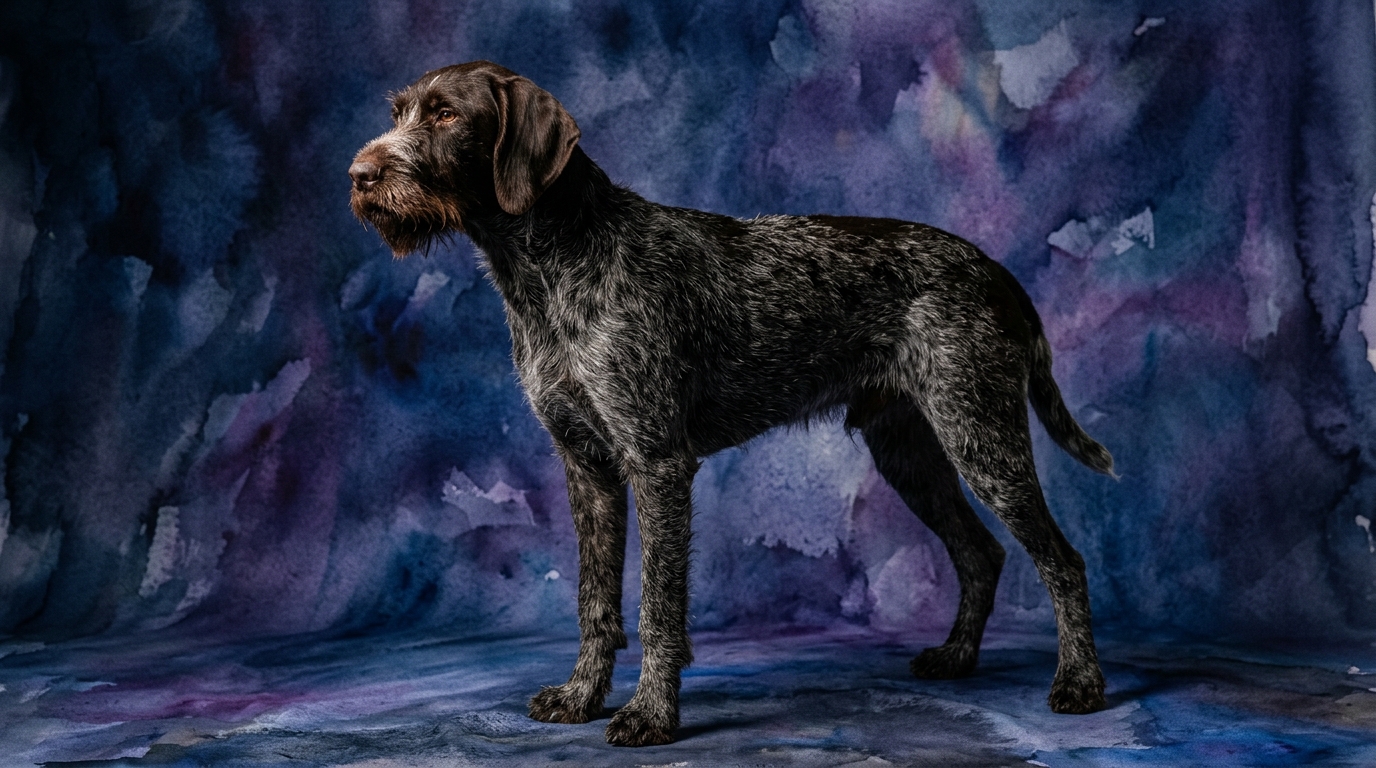
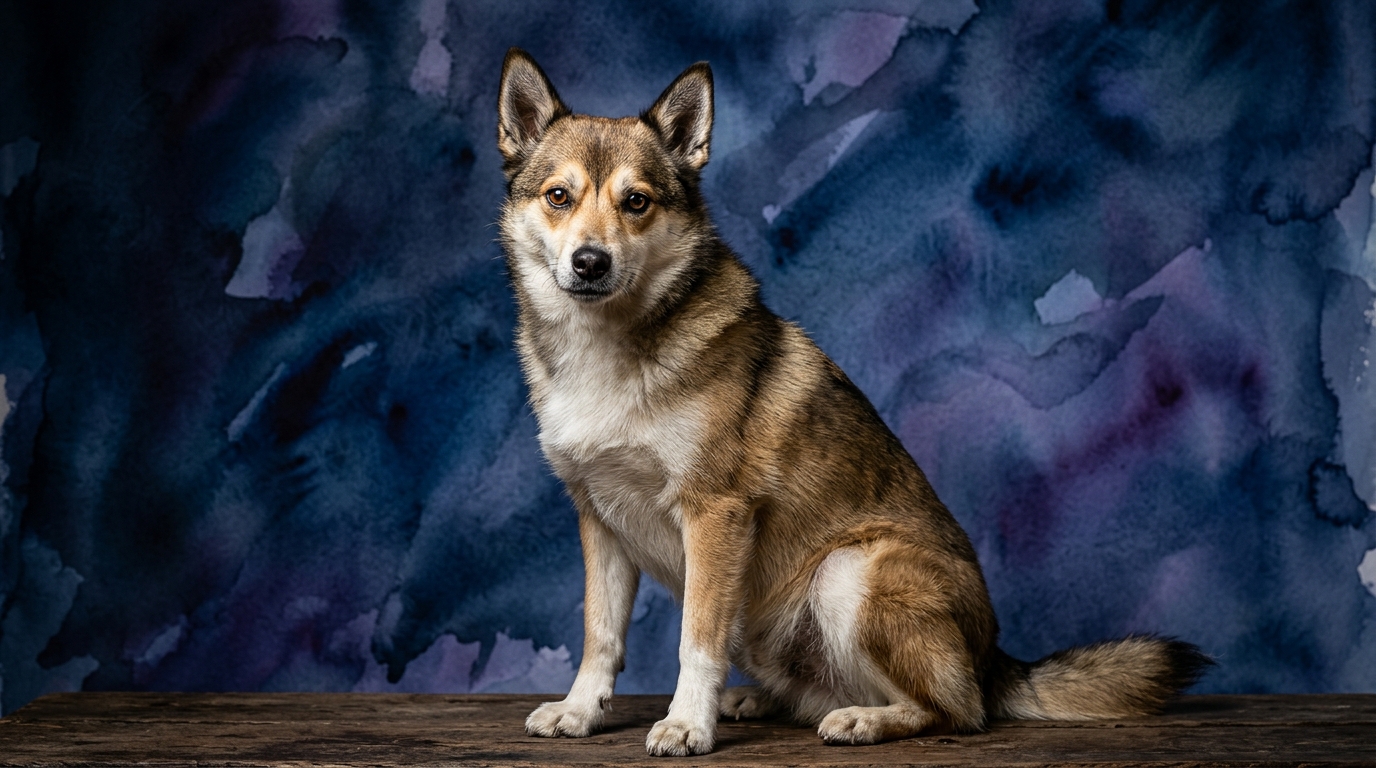
Side-by-Side IQ Profile: GWP vs. Lundehund
Our Cosmic Pet Pet IQ Lab data provides a granular look into the cognitive strengths of these two distinct breeds. The German Wirehaired Pointer (GWP), a Sporting group dog, is notably ranked #28 in Coren's intelligence scale, indicating a strong capacity for obedience and working intelligence. Conversely, the Norwegian Lundehund, a Non-Sporting breed, does not appear on Coren's list, suggesting a different, perhaps more independent, cognitive profile.
For the German Wirehaired Pointer, Problem Solving is rated at 4/5. This breed exhibits a robust capacity for logically navigating obstacles and strategizing to achieve goals, a trait honed by generations of demanding hunting work. Their Training Speed is also a strong 4/5, indicating a quick grasp of new commands and routines, eager to please their handler and fulfill their role. Social Intelligence stands at 3/5, reflecting a balanced ability to interact and respond to human cues and canine companions, without being overly dependent or excessively independent. Instinctive Drive is rated 3/5, a well-controlled yet present urge for their original purpose, allowing for focused work without being overwhelming in daily life. Memory, critical for complex tasks and repeated training, is a solid 4/5, enabling them to retain learned behaviors and recall past experiences effectively.
The Norwegian Lundehund presents a unique cognitive blueprint. Their Problem Solving is rated 3/5; while capable, their approach might be less direct or more physically inventive, reflecting their specialized history of navigating tight cliff crevices for puffin hunting. Training Speed is 3/5, suggesting they learn at a moderate pace, often requiring more patience and creative methods due to their independent streak. Social Intelligence is 3/5, similar to the GWP, meaning they can form bonds and understand social cues, but might do so with a distinct, often reserved, personality. Instinctive Drive also scores 3/5, geared towards their very specific historical tasks, which can manifest as independent exploration or a unique tenacity. Memory is 3/5, allowing them to remember routines and experiences, though perhaps not with the same precision or recall speed as breeds bred for extensive complex tasks.
Where the German Wirehaired Pointer Wins Cognitively
The German Wirehaired Pointer clearly demonstrates a cognitive edge in areas demanding focused cooperation and rapid learning. Their superior Problem Solving (4/5) means they are adept at figuring out how to retrieve game from challenging terrain or navigating complex scent trails, often employing a systematic approach. This contrasts with the Lundehund's more exploratory, less direct problem-solving style. The GWP's ability to quickly process environmental cues and formulate a plan of action makes them highly effective partners in tasks requiring immediate, logical responses.
Furthermore, the GWP’s higher Training Speed (4/5) and exceptional Memory (4/5) are significant advantages. These traits allow them to absorb and retain a wide array of commands and intricate routines with impressive efficiency. This makes them highly trainable for advanced obedience, field trials, or even complex service roles where consistent performance and reliable recall are paramount. Their cognitive architecture is geared towards understanding and executing human directives quickly and accurately, a hallmark of their Coren ranking and Sporting group designation. They thrive on the mental stimulation that comes from learning and performing tasks alongside their human companion, making them a breed that actively seeks engagement in structured activities.
Where the Norwegian Lundehund Wins Cognitively
While not excelling in conventional obedience metrics, the Norwegian Lundehund possesses a specialized cognitive brilliance that makes them uniquely adaptable to specific challenges. Their Problem Solving (3/5), though numerically lower, is underpinned by an extraordinary physical dexterity and tenacity, which are themselves forms of intelligence. They might not solve a puzzle box with a linear thought process, but they will explore every angle, use their flexible joints to their advantage, and persist until they find a solution, much like they would navigate a narrow cave to reach a puffin nest. This kind of 'body intelligence' and environmental adaptability is a distinct cognitive strength.
The Lundehund's Instinctive Drive (3/5) is highly specialized, driving them to explore and investigate their surroundings with a unique curiosity. This drive is less about working in tandem with a handler and more about independent discovery and resourcefulness. Their cognitive strengths are rooted in self-sufficiency and an ability to thrive in challenging, isolated environments. This breed’s social intelligence (3/5), while numerically matching the GWP, often manifests as a more reserved and discerning bond, valuing independence while still appreciating companionship. They 'win' in situations where a dog needs to think for itself and adapt physically to an unusual environment, rather than strictly adhering to human commands.
Which is Easier to Train and Why
Based on our IQ data, the German Wirehaired Pointer is generally easier to train. Their 4/5 rating in Training Speed directly indicates a quicker uptake of new commands and a more enthusiastic response to structured learning. This breed's strong memory (4/5) means once a command is learned, it is retained effectively, leading to more consistent performance. GWPs are bred to work closely with humans in the field, which translates into a natural inclination to cooperate and a desire to understand and fulfill their handler's expectations. Their problem-solving skills also aid in training, as they can often anticipate what is required of them and adapt their behavior accordingly.
The Norwegian Lundehund, with a Training Speed of 3/5, will typically require more patience and creative training approaches. Their history as independent hunters of puffins means they are less accustomed to, and perhaps less inclined towards, constant human direction. They possess a strong will and an investigative nature that can sometimes be perceived as stubbornness in a training context. While they are capable of learning, their learning process is often slower and requires a handler who understands their unique motivations and respects their independence. Positive reinforcement methods are crucial, focusing on making training a rewarding experience that taps into their natural curiosity rather than demanding strict obedience.
Which Suits Active Owners vs. Relaxed Owners
The German Wirehaired Pointer is unequivocally suited for active owners. Their strong instinctive drive (3/5), coupled with their problem-solving ability and training speed, means they thrive on consistent physical activity and mental engagement. These dogs require daily vigorous exercise, such as long runs, hikes, or participation in dog sports like agility, flyball, or advanced scent work. An owner who can provide outlets for their hunting instincts, whether through actual hunting or simulated field activities, will find the GWP to be a fulfilled and balanced companion. They are not content to be couch potatoes and will likely develop undesirable behaviors if their significant energy and cognitive needs are not met.
The Norwegian Lundehund, while not as intensely driven for handler-focused work as the GWP, still requires an owner who can provide consistent activity and mental stimulation, though perhaps of a different nature. Their unique history means they enjoy exploring and investigating their surroundings at their own pace. They are excellent companions for owners who enjoy hiking, exploring new trails, or engaging in activities that allow for independent sniffing and discovery. They are not necessarily a breed for relaxed owners who prefer minimal interaction, as their curious and tenacious nature demands attention and engagement. However, their activity needs might be more about varied exploration than relentless, high-intensity exertion, making them suitable for active owners who appreciate a dog with a distinctive, independent spirit.
The Verdict: When to Choose Each Breed
Ultimately, the choice between a German Wirehaired Pointer and a Norwegian Lundehund hinges on the owner's lifestyle, training philosophy, and appreciation for specific canine cognitive traits. Both breeds offer unique companionship, but their intellectual and behavioral needs diverge significantly.
The Verdict
Choose the German Wirehaired Pointer if you are an active, experienced owner seeking a highly trainable, cooperative companion for outdoor adventures, dog sports, or hunting, who thrives on mental challenges and consistent interaction. You should be prepared to provide significant daily exercise and engage in structured training to harness their impressive cognitive abilities.
Choose the Norwegian Lundehund if you are a patient, curious owner who appreciates a unique, independent dog with specialized physical and cognitive traits, enjoys varied outdoor exploration, and is willing to invest in creative, positive reinforcement training methods that respect their inherent self-sufficiency. They are best suited for those who admire a dog's resourcefulness and distinct personality over strict obedience.
🧠 Find Your Pet's IQ Score
Our Pet IQ Lab assessment covers 25+ tests across 5 cognitive dimensions — personalized to your breed.
Take the Full IQ Test →Frequently Asked Questions
Is the German Wirehaired Pointer suitable for first-time dog owners?
The German Wirehaired Pointer is best suited for experienced dog owners who understand the demands of a working breed. Their high energy, strong drive, and need for consistent training and mental stimulation can be challenging for those new to dog ownership. They thrive with an owner who can provide structure and activities that align with their cognitive and physical needs.
What unique physical traits influence the Norwegian Lundehund's intelligence?
The Norwegian Lundehund possesses several unique physical traits, including six toes on each paw, highly flexible joints, and the ability to tip their head back to touch their spine. These adaptations, developed for navigating tight spaces and steep cliffs, influence their problem-solving by encouraging physical agility and tenacity over purely logical deduction, making their intelligence manifest in their extraordinary bodily control and environmental adaptability.
How does Coren's ranking relate to the IQ scores provided?
Coren's ranking primarily assesses a breed's obedience and working intelligence, which aligns closely with our 'Training Speed' and aspects of 'Problem Solving' and 'Memory' related to human-directed tasks. Breeds like the German Wirehaired Pointer, with a high Coren rank, excel in these areas. The Norwegian Lundehund's absence from Coren's list doesn't imply a lack of intelligence, but rather that their cognitive strengths lie more in specialized, independent problem-solving and unique physical adaptations rather than conventional obedience.