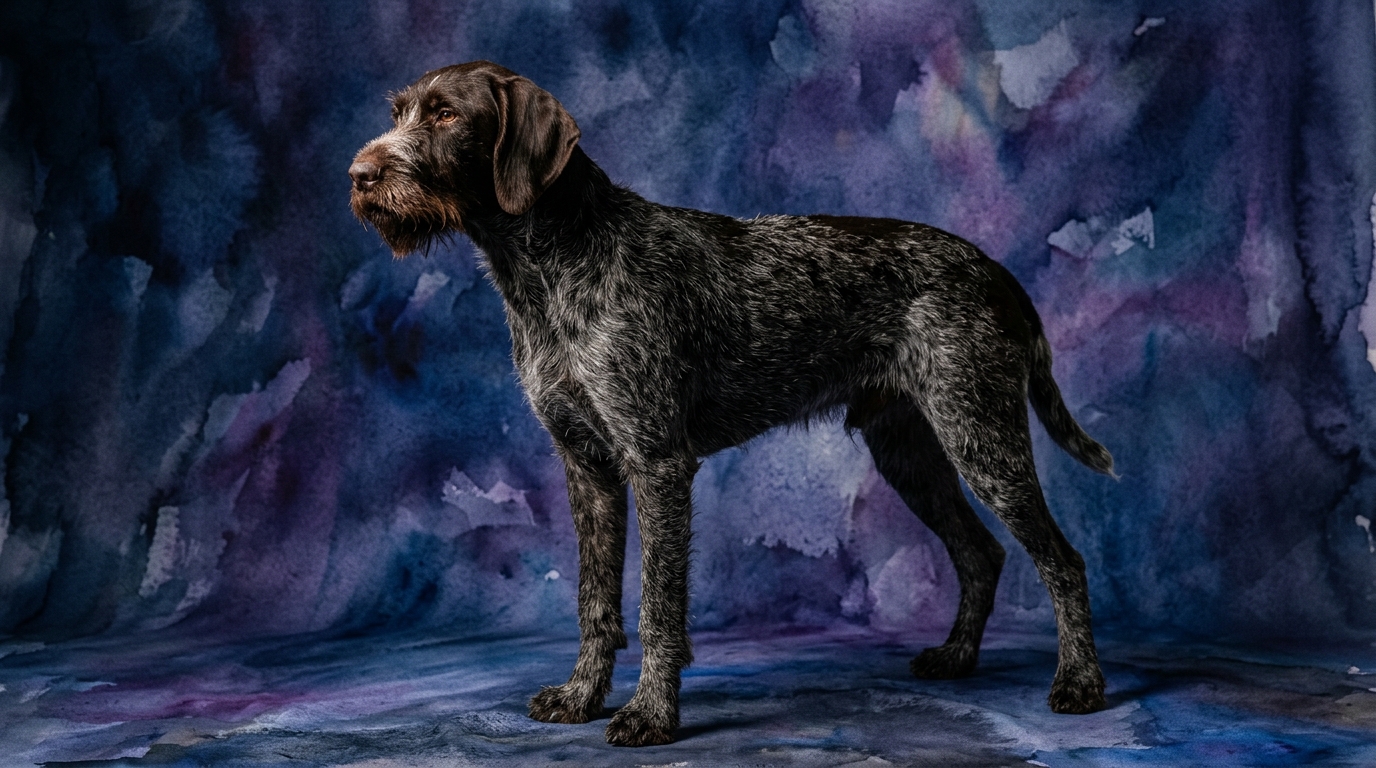
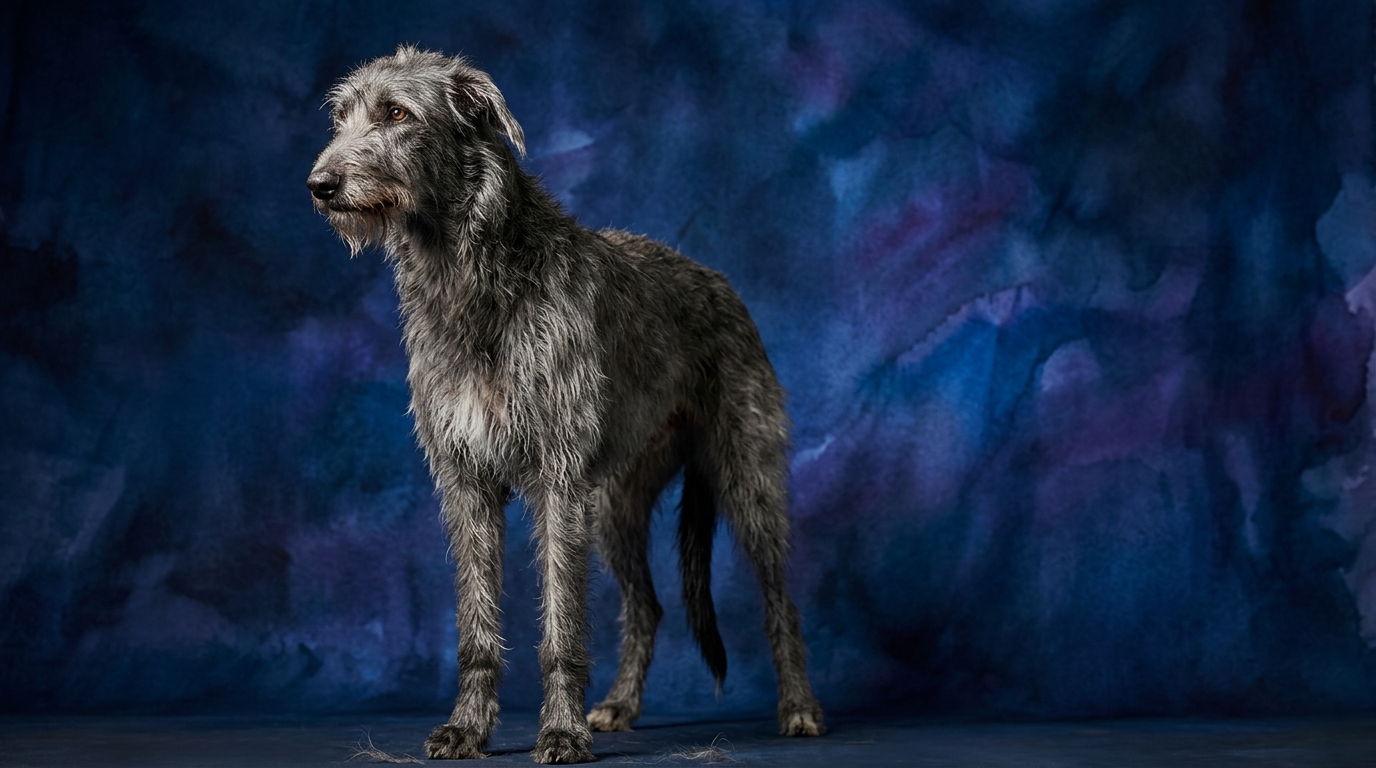
Side-by-Side IQ Profile: GWP vs. Scottish Deerhound
The Cosmic Pet Pet IQ Lab assesses canine intelligence across five key dimensions. For the German Wirehaired Pointer (GWP), a breed ranked #28 by Stanley Coren for working intelligence, its profile reveals robust cognitive capabilities: Problem Solving 4/5, Training Speed 4/5, Social Intelligence 3/5, Instinctive Drive 3/5, and Memory 4/5. This indicates a dog adept at understanding and executing complex tasks.
The Scottish Deerhound, while not featured on Coren's traditional ranking, presents a distinct cognitive blueprint: Problem Solving 3/5, Training Speed 3/5, Social Intelligence 3/5, Instinctive Drive 3/5, and Memory 3/5. This profile suggests a capable dog whose cognitive strengths lie in different areas, often reflecting its specialized historical role as a sighthound rather than a cooperative working dog.
Where the German Wirehaired Pointer Shines Cognitively
The German Wirehaired Pointer's cognitive profile demonstrates clear advantages in areas demanding active engagement and learning. Its Problem Solving score of 4/5 signifies a strong capacity to analyze situations and devise effective strategies, whether it’s navigating a complex scent trail or figuring out how to retrieve a hidden object. This breed enjoys mental challenges and actively works to understand its environment and objectives.
With a Training Speed score of 4/5, the GWP exhibits a remarkable aptitude for absorbing new commands and routines efficiently. This quick grasp of concepts, coupled with a desire to cooperate, means they often require fewer repetitions to master new skills compared to many other breeds. Their memory, also rated 4/5, reinforces this, allowing them to retain learned behaviors and intricate sequences over long periods, making them reliable partners in various activities.
The GWP's cognitive makeup is geared towards purpose-driven interaction, where their keen observational skills and ability to connect actions with outcomes allow them to excel in structured learning environments. Their capacity for sustained focus on a task, integrating sensory input with learned responses, underscores their effectiveness as a versatile working companion.
Where the Scottish Deerhound's Cognitive Profile Excels
While the Scottish Deerhound's raw scores might appear moderate, its cognitive profile is uniquely adapted to its historical function, demonstrating distinct strengths. Its Instinctive Drive, rated 3/5, is a specialized form of cognitive processing: the ability to process visual stimuli for explosive, independent pursuit. Their powerful sighthound instinct demands rapid, autonomous decision-making in the field, a specialized form of cognitive processing that is unparalleled for their historical role.
The Deerhound’s Problem Solving ability, also rated 3/5, is perfectly adapted for its ancestral tasks. Their cognitive strength here lies in making swift, independent judgments during a chase, navigating terrain and prey movement without constant human intervention, demonstrating a self-reliant form of practical intelligence. This isn't about solving human-devised puzzles, but about effective, real-time decision-making in a dynamic environment.
Furthermore, their Social Intelligence, rated 3/5, is characterized by a reserved yet perceptive understanding of human interaction. This allows for a deep, calm bond without constant need for overt engagement. This specific cognitive strength suits owners who appreciate a companion capable of quiet companionship and discerning affection, rather than a dog that constantly seeks attention or instruction.
Training Aptitude: Which Breed Offers Greater Ease?
When it comes to ease of training, the German Wirehaired Pointer generally presents a more straightforward experience. Its Training Speed of 4/5, combined with its cooperative nature, means GWPs tend to learn new commands and behaviors quickly and enthusiastically. They were selectively bred to work closely with humans, taking direction and integrating learned actions into their hunting tasks, which translates into a biddable and responsive student.
The Scottish Deerhound, with a Training Speed of 3/5, will learn, but often requires more patience and a nuanced approach. Their sighthound heritage instills a strong independent streak; they are accustomed to making their own decisions during a chase, which means they may prioritize their instincts over a handler's command if not consistently and engagingly reinforced. While capable of learning, their cognitive architecture leans towards autonomous action, demanding that training be interesting and rewarding to maintain their focus against their innate drives.
Matching Cognitive Needs to Owner Lifestyles
For active owners seeking a highly engaged and cooperative canine partner, the German Wirehaired Pointer is often an ideal match. Their high Problem Solving and Training Speed scores mean they thrive on consistent mental and physical engagement, requiring outlets for their keen intellect and physical prowess. Owners who can provide ample opportunities for structured activity, complex problem-solving games, and consistent training will find the GWP's cognitive needs are well met, preventing boredom and channeling their energy productively.
Conversely, the Scottish Deerhound’s cognitive profile aligns well with owners who appreciate a more relaxed indoor presence, balanced with specific opportunities for intense activity. While they possess an explosive burst of speed and a powerful chase instinct that requires safe, expansive spaces for running, their social intelligence and overall demeanor often allow for a calm, dignified presence within the home. They suit owners who value quiet companionship and can accommodate periodic, intense physical exercise rather than constant mental puzzles or structured work.
The Verdict: When to Choose Each Breed
The Verdict
Choose the German Wirehaired Pointer if you seek a highly engaged, cooperative partner for complex activities, thriving on mental challenges and consistent training.
Opt for the Scottish Deerhound if you appreciate a dignified, independent companion who offers quiet affection and enjoys expansive outdoor sprints balanced with serene indoor relaxation.
🧠 Find Your Pet's IQ Score
Our Pet IQ Lab assessment covers 25+ tests across 5 cognitive dimensions — personalized to your breed.
Take the Full IQ Test →Frequently Asked Questions
Does the Scottish Deerhound's moderate IQ scores mean it's less capable overall?
Not at all; traditional IQ metrics, like Coren's, primarily assess obedience and working intelligence. The Scottish Deerhound's cognitive strengths lie in independent decision-making, visual acuity for pursuit, and a calm, discerning social intelligence, which are not fully captured by those specific metrics.
Can a German Wirehaired Pointer adapt to a less active lifestyle?
A German Wirehaired Pointer requires significant mental and physical engagement to prevent boredom and destructive behaviors. While they can adapt to some extent, their cognitive needs for problem-solving and activity are fundamental to their well-being, making a truly 'relaxed' lifestyle challenging for them.
How does the instinctive drive differ between these two breeds?
The German Wirehaired Pointer's instinctive drive is geared towards cooperative hunting, focusing on pointing, flushing, and retrieving in partnership with a handler. The Scottish Deerhound's drive is primarily a sighthound's pursuit instinct, a powerful, autonomous urge to spot and chase anything that moves quickly over a distance, often independently.