Side-by-Side Cognitive Profile
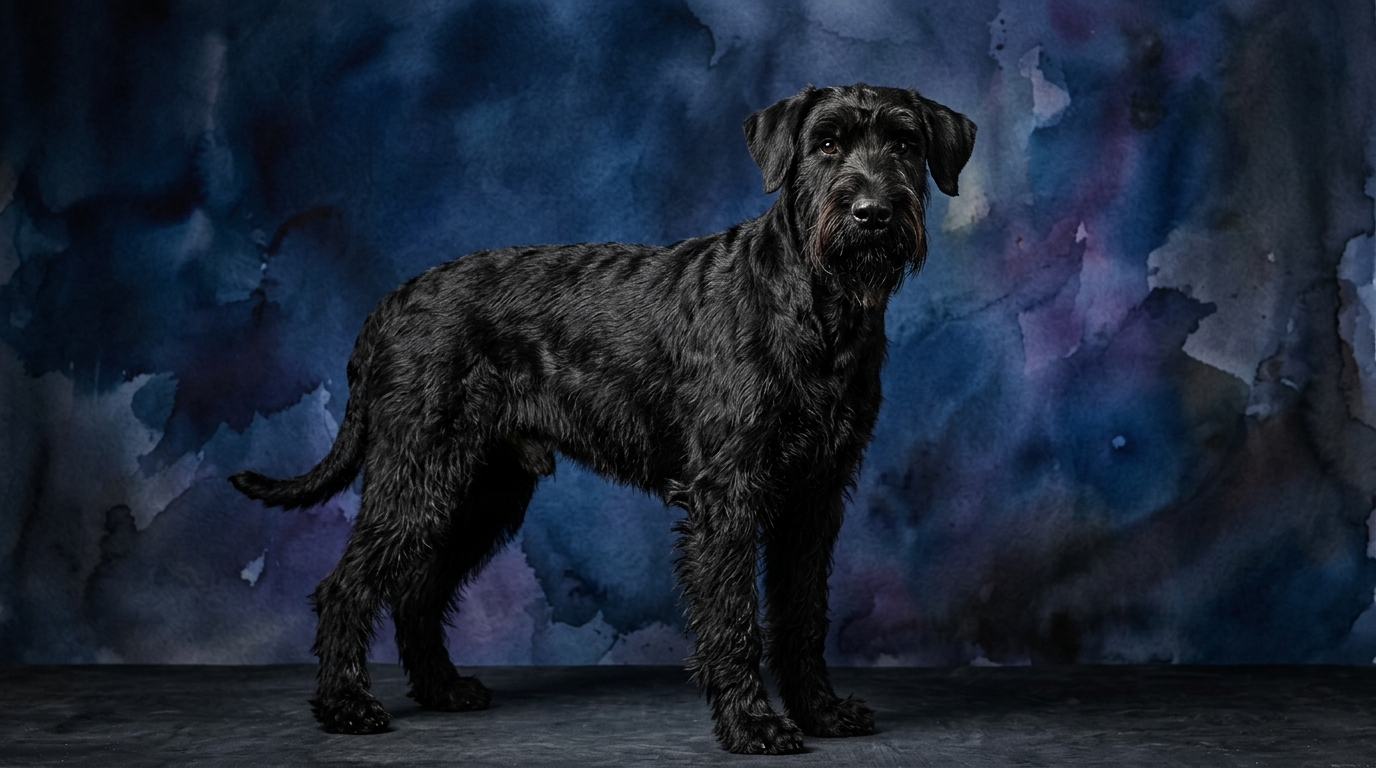
The Giant Schnauzer, with its history in cattle driving and guarding, exhibits a robust cognitive profile befitting a working breed. Its problem-solving ability scores a strong 4/5, suggesting a capacity for independent thought and strategic navigation of complex situations. Training speed also rates 4/5, indicating a quick grasp of new commands and routines, often eager to engage in structured learning. Social intelligence stands at 3/5, reflecting an ability to understand human cues and integrate into family dynamics, though perhaps with a characteristic self-assuredness. Instinctive drive, also 3/5, speaks to its inherent motivation for tasks, often expressed in its protective instincts and desire for a job. Finally, memory is a notable 4/5, allowing it to retain learned behaviors and recall past experiences with precision.
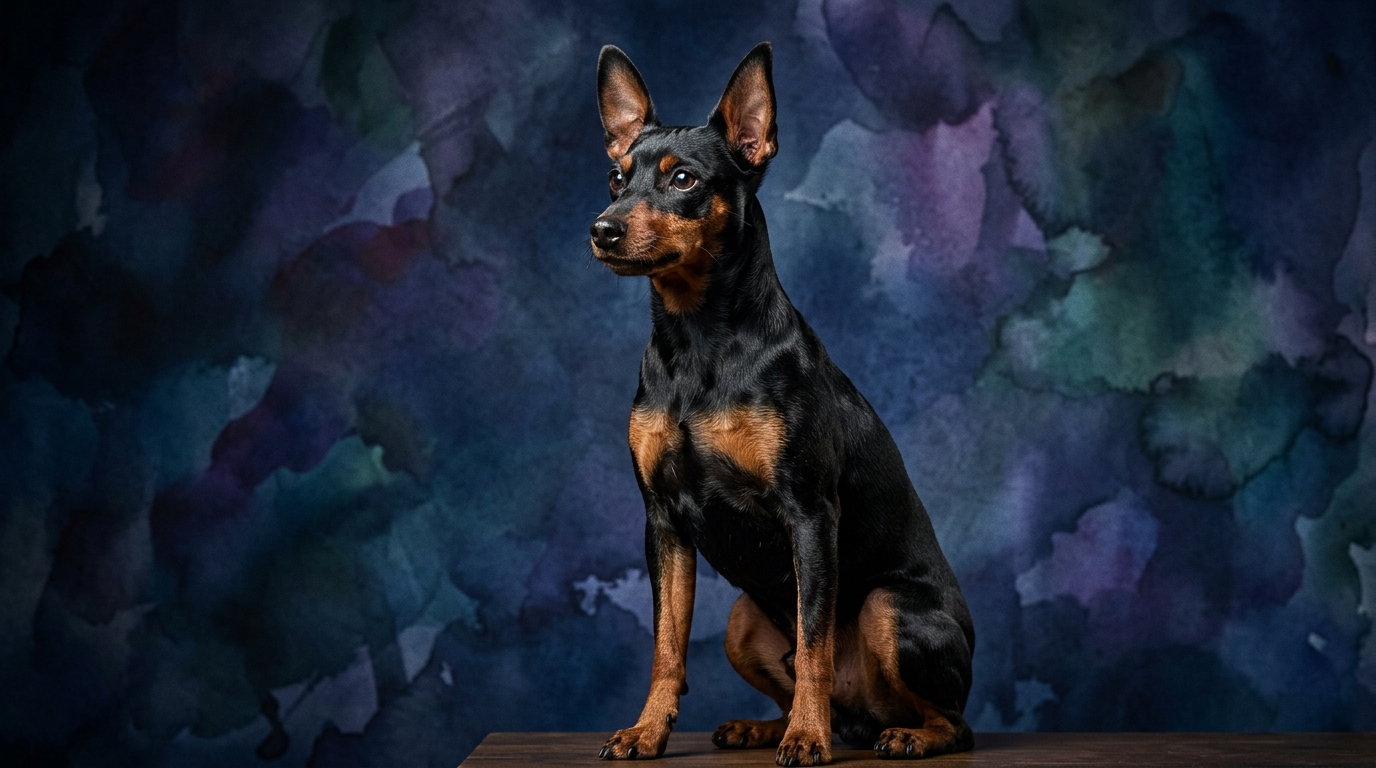
Despite its toy breed classification, the Miniature Pinscher possesses a cognitive makeup that belies its size, often displaying characteristics of a much larger dog. Across all five dimensions—problem-solving, training speed, social intelligence, instinctive drive, and memory—the Miniature Pinscher consistently scores 3/5. This suggests a capable, balanced intellect: it can solve moderate problems, learn at a steady pace, and interact socially with a degree of understanding. Its instinctive drive at 3/5 is particularly noteworthy for a toy breed, reflecting its “King of Toys” moniker and a persistent, sometimes tenacious, nature. Its memory at 3/5 ensures it retains learned information, though perhaps not with the same depth as the Giant Schnauzer.
Where the Giant Schnauzer Excels Cognitively
The Giant Schnauzer's cognitive strengths distinctly emerge in areas demanding higher processing and retention. With a problem-solving score of 4/5 compared to the Miniature Pinscher's 3/5, the Giant Schnauzer demonstrates a superior capacity for navigating novel challenges, such as independently figuring out complex puzzle toys or devising strategies to overcome unexpected obstacles during a walk. This aptitude for independent thought, rooted in its working heritage, allowed it to make sound decisions in the field. Its training speed, also a 4/5, indicates a quicker uptake of new commands and multi-step tasks, making it a more efficient learner in advanced obedience, protection work, or competitive dog sports. Furthermore, its 4/5 memory score means it solidifies learned behaviors and routines more effectively, allowing for greater reliability over time and a longer retention of intricate sequences or commands, even after periods of inactivity. This combination of superior problem-solving, rapid learning, and robust memory makes the Giant Schnauzer exceptionally capable for demanding cognitive tasks.
Where the Miniature Pinscher’s Cognitive Profile Shines
While the Miniature Pinscher’s individual scores are consistent at 3/5 across the board, its cognitive profile shines in areas where tenacity and a compact, self-assured nature are paramount. Its instinctive drive, also rated 3/5, is particularly impressive for a small breed; this isn't a cognitive "win" in scoring, but rather a functional advantage. This drive, combined with its compact size, means it tackles tasks with a focused intensity that can surprise owners. For instance, its persistent nature in pursuing a perceived "intruder" (like a squirrel) or its unwavering focus on a scent trail, despite its stature, showcases a strong internal motivation for its size. Its social intelligence, matching the Giant Schnauzer at 3/5, suggests an equivalent capacity for understanding human social cues and interacting within a family unit, often with a bold and sometimes demanding personality that requires clear boundaries. This parity in social understanding, despite the vast difference in physical presence, means it can be equally adept at forming strong, albeit sometimes bossy, bonds with its human companions. The Miniature Pinscher's cognitive consistency across all dimensions means it offers a predictable and functionally robust intelligence for its size and traditional role as a spirited companion and vigilant watch-dog.
Training Aptitude: Giant Schnauzer vs. Miniature Pinscher
When evaluating ease of training, the Giant Schnauzer generally holds an advantage due to its higher scores in both training speed (4/5) and problem-solving (4/5) compared to the Miniature Pinscher's consistent 3/5. The Giant Schnauzer's quicker uptake means it processes and internalizes new commands more rapidly, often requiring fewer repetitions to master a task. This efficiency is further bolstered by its superior problem-solving ability, allowing it to adapt to variations in training exercises and generalize learned behaviors to new situations more readily. For instance, teaching complex agility sequences or intricate obedience routines would likely progress faster with a Giant Schnauzer. In contrast, the Miniature Pinscher, while capable of learning, may require more patience and consistent reinforcement to achieve the same level of mastery. Its 3/5 training speed suggests a steady but not exceptionally quick learning pace. Furthermore, while both breeds possess a 3/5 instinctive drive, the Miniature Pinscher's drive can sometimes manifest as stubbornness or a highly independent streak, requiring a particularly engaging and firm training approach to maintain focus. The Giant Schnauzer, with its working background, often possesses a stronger desire to collaborate and please its handler, which contributes to a smoother training experience for those prepared for its mental engagement.
Lifestyle Suitability: Active vs. Relaxed Owners
For owners leading a highly active lifestyle, the Giant Schnauzer is often the more suitable choice. Its robust cognitive profile, especially its 4/5 problem-solving and 3/5 instinctive drive, translates into a significant need for mental and physical engagement. These dogs thrive on having a "job," whether it's advanced obedience, protection work, agility, or simply long, challenging hikes. Their substantial memory (4/5) and training speed (4/5) mean they excel in structured activities that demand consistent learning and recall. A Giant Schnauzer left without sufficient mental stimulation can become bored and potentially destructive, channeling its cognitive energy into less desirable behaviors. Conversely, for individuals seeking a companion that fits into a more relaxed, yet still engaging, lifestyle, the Miniature Pinscher presents a compelling option. While it shares a 3/5 instinctive drive and social intelligence, its overall lower cognitive scores (3/5 across the board) mean its mental and physical exercise requirements are typically less demanding than its larger counterpart. It still benefits from regular walks, playtime, and basic training to keep its mind engaged, but it generally won't require the same intensity or complexity of tasks as the Giant Schnauzer. Its alert nature, combined with its manageable size, makes it an excellent, spirited companion for owners who appreciate a dog with personality without needing a partner for extreme sports.
The Verdict
Opt for the Giant Schnauzer if you are an experienced owner prepared to engage a highly capable working dog with demanding cognitive needs, thriving on complex training and purposeful activity. This breed excels with consistent mental stimulation and a clear leadership.
Select the Miniature Pinscher if you seek a spirited, compact companion whose consistent cognitive abilities suit a more moderately active household and who will thrive with clear boundaries and regular, engaging interaction. It offers a robust personality in a smaller package.
🧠 Find Your Pet's IQ Score
Our Pet IQ Lab assessment covers 25+ tests across 5 cognitive dimensions — personalized to your breed.
Take the Full IQ Test →Frequently Asked Questions
Does the Miniature Pinscher's unranked Coren status mean it is less capable than the Giant Schnauzer?
Not necessarily. Coren's ranking primarily assesses "working and obedience intelligence," focusing on trainability and command following. While the Miniature Pinscher isn't ranked, its consistent 3/5 IQ scores indicate a capable and balanced intellect, just with a different emphasis than a traditional working breed.
How does social intelligence differ between these two breeds, given they both score 3/5?
A 3/5 social intelligence score for both suggests an equivalent capacity to understand human cues and interact within a family. However, their expression might differ: the Giant Schnauzer's social interactions may be more self-assured and protective, while the Miniature Pinscher's can be bold and tenacious, reflecting its "King of Toys" personality.
Can a Miniature Pinscher perform complex tasks, even with lower problem-solving scores?
Yes, a Miniature Pinscher can certainly learn and perform complex tasks, though it might require more repetition and patience than a Giant Schnauzer. Its 3/5 problem-solving means it can figure things out, and its 3/5 memory ensures retention, making it capable with dedicated training.