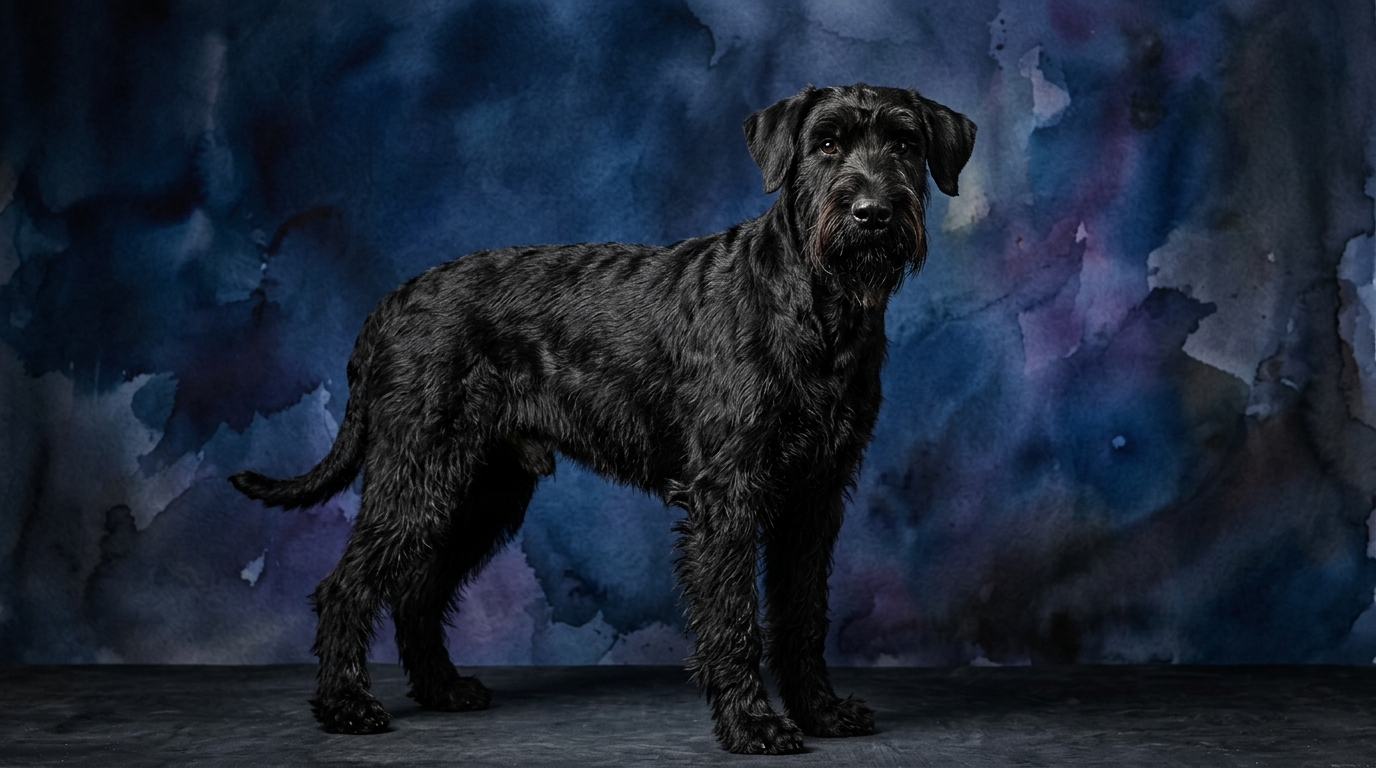
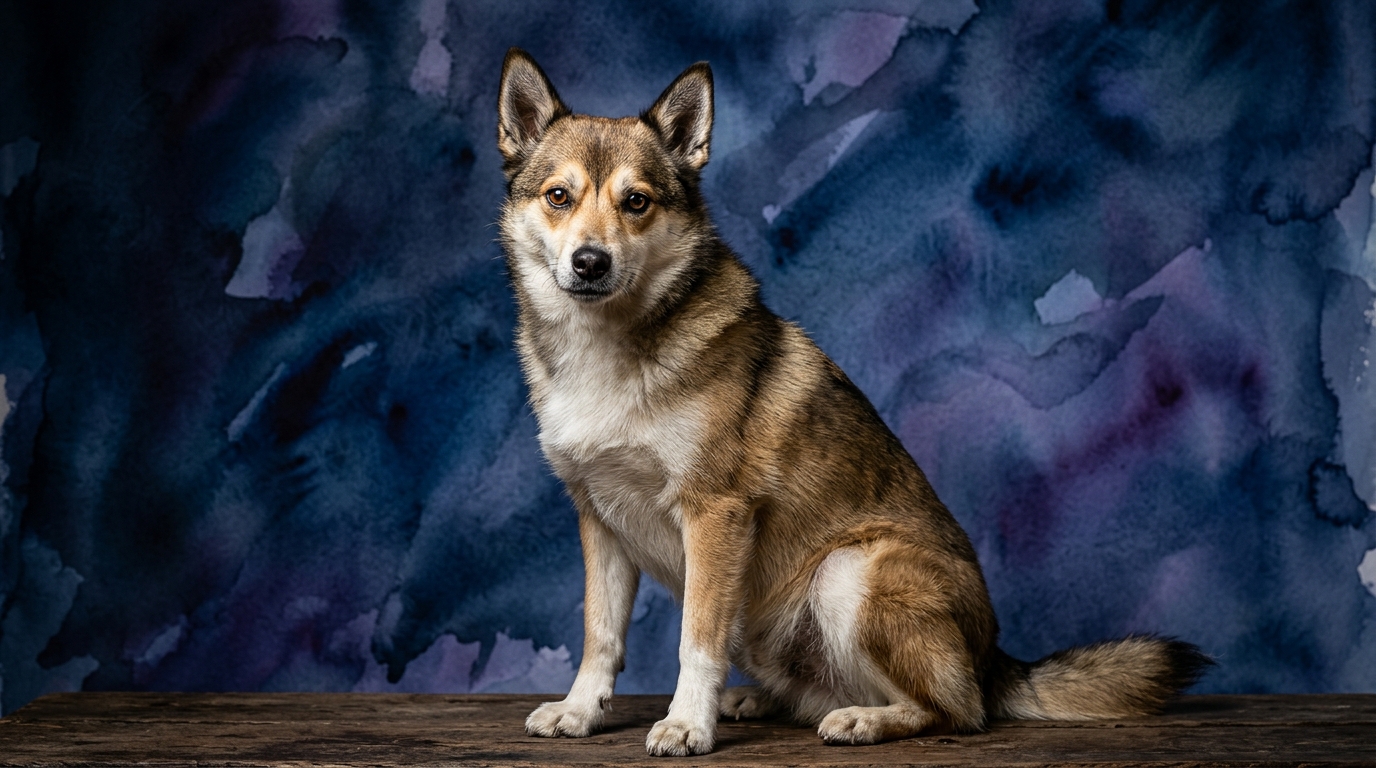
Side-by-Side Cognitive Profiles: Giant Schnauzer vs. Norwegian Lundehund
The Cosmic Pet Pet IQ Lab employs five distinct dimensions to evaluate canine intelligence, offering a nuanced view beyond simple labels. These dimensions — Problem Solving, Training Speed, Social Intelligence, Instinctive Drive, and Memory — help us understand the unique cognitive landscapes of different breeds. Comparing the Giant Schnauzer, a powerful member of the Working Group, with the Norwegian Lundehund, a specialized Non-Sporting breed, reveals how their evolutionary paths and historical roles have shaped their minds.
The **Giant Schnauzer**, Coren-ranked at #28, presents a robust cognitive profile. They score an impressive 4/5 in Problem Solving, indicating a strong capacity for independent thought and adapting to complex tasks. Their Training Speed also stands at 4/5, reflecting a quick grasp of new commands and routines. In Social Intelligence, they achieve a 3/5, suggesting a functional understanding of human cues with a degree of focused independence. Their Instinctive Drive is rated 3/5, a moderate level that aligns with their working heritage, and their Memory is excellent at 4/5, allowing for substantial retention of learned behaviors and experiences.
In contrast, the **Norwegian Lundehund**, while not Coren-ranked, possesses a balanced and specialized intelligence. Across all five dimensions — Problem Solving, Training Speed, Social Intelligence, Instinctive Drive, and Memory — they consistently score 3/5. This doesn't imply a lack of mental capacity, but rather a different distribution of cognitive strengths. Their 3/5 in Problem Solving suggests they are capable of navigating challenges, perhaps through persistent exploration rather than broad abstract reasoning. A 3/5 in Training Speed indicates they learn at a steady pace, requiring consistency. Their Social Intelligence at 3/5 means they understand their human companions but often maintain a unique, independent demeanor. An Instinctive Drive of 3/5 highlights a purposeful, focused drive, historically linked to their extraordinary hunting methods, and their Memory at 3/5 ensures they retain important information with consistent reinforcement.
Where the Giant Schnauzer Shines Cognitively
The Giant Schnauzer's cognitive strengths are particularly evident in its higher scores for Problem Solving, Training Speed, and Memory. Their 4/5 in Problem Solving signifies a remarkable aptitude for navigating complex environments and figuring out solutions to novel challenges. This could manifest as quickly understanding how to open a childproof gate, independently strategizing to retrieve a toy from an inaccessible spot, or excelling in advanced puzzle toys. Their working breed heritage instilled a need for self-reliance and intelligent decision-making, making them adept at processing new information and applying learned concepts.
Furthermore, their 4/5 in Training Speed makes them exceptionally receptive to instruction. They often grasp new commands and routines with remarkable efficiency, requiring fewer repetitions than many other breeds. This quick uptake allows owners to progress rapidly through obedience levels and explore more intricate dog sports such as agility, competitive obedience, or even protection work. This isn't just about rote memorization, but an active engagement with the learning process.
Complementing their rapid learning is a 4/5 Memory score. Giant Schnauzers exhibit excellent recall for a vast repertoire of commands, routines, and past experiences. This strong memory allows them to build upon previous learning effectively, making them reliable partners in structured environments and capable of retaining complex sequences of behaviors over time. Their ability to remember intricate patterns and commands contributes significantly to their reputation as a capable and dependable working dog.
Unpacking the Norwegian Lundehund's Unique Cognitive Strengths
While the Norwegian Lundehund's scores are consistently 3/5, this reflects a highly specialized and functional intelligence rather than a deficit. Their Problem Solving and Instinctive Drive, both at 3/5, are deeply intertwined with their historical role as puffin hunters. These dogs were bred to navigate treacherous, narrow rock crevices and cliffs, often independently, to retrieve birds. This required a unique form of problem-solving: spatial reasoning to squeeze through tight spots, agility to climb, and persistent focus to locate prey in challenging terrain. Their intelligence isn't about broad abstract reasoning, but a highly specific, effective aptitude for their ancient task. Their specialized anatomy – six toes on each foot, highly flexible neck and shoulder joints, and the ability to close their ear canals – are physical manifestations of this unique, specialized problem-solving intelligence.
Their Social Intelligence at 3/5, while not the highest, indicates a functional capacity for understanding human cues. Lundehunds are often described as devoted and affectionate with their families, forming strong bonds despite their independent hunting background. This suggests they are capable of nuanced social interaction, even if they might display a more reserved or self-sufficient demeanor compared to breeds specifically developed for close human collaboration. Their social bonds are deep, if not always overtly demonstrative.
The 3/5 scores in Training Speed and Memory also speak to their capabilities. They are trainable, but their history of independent work means they can be self-willed and require patience. Their memory is sufficient for retaining routines and commands, but complex, multi-step tasks might require more consistent reinforcement than for a Giant Schnauzer. Owners need to understand that a Lundehund's 'stubbornness' is often a manifestation of their innate independence and ancient drive to make their own decisions in the field, rather than a lack of cognitive ability.
Trainability: Giant Schnauzer's Eagerness vs. Lundehund's Independence
When it comes to trainability, the Giant Schnauzer and Norwegian Lundehund present distinct approaches shaped by their cognitive profiles. The Giant Schnauzer, with its 4/5 Training Speed and 4/5 Memory, is generally considered a highly trainable breed. They possess a natural eagerness to learn and respond well to consistent, structured training methods. Their working background means they thrive on having a 'job' and mental engagement, which makes them highly receptive to commands and complex tasks. They quickly understand what is expected of them and retain that information, allowing for rapid progress in obedience, dog sports, and specialized roles. Positive reinforcement combined with clear expectations makes them eager participants in training sessions, often enjoying the challenge.
The Norwegian Lundehund, scoring 3/5 in Training Speed and Memory, is certainly trainable, but their approach requires a different understanding from their owners. Their history as independent hunters, navigating challenging terrains alone, fostered a strong sense of self-reliance. This can manifest as what some perceive as 'stubbornness' or a lack of eagerness to please, when in reality, it's an ingrained independence. Training a Lundehund demands patience, creativity, and consistent positive reinforcement to make learning a rewarding experience for them. They respond best to methods that engage their curiosity and natural problem-solving instincts, rather than purely repetitive drills. Owners should be prepared to adapt training to the Lundehund's unique motivations, understanding that their cognitive process involves more independent thought rather than immediate compliance.
Lifestyle Compatibility: Active Engagement vs. Curious Companionship
Choosing between these breeds also means aligning with their inherent cognitive and behavioral predispositions. The Giant Schnauzer, with its high Problem Solving, Training Speed, and Memory scores, is an excellent match for active owners who are prepared to provide consistent mental and physical challenges. These dogs thrive in environments where they have a 'job' to do, whether it's advanced obedience, agility, tracking, or even protection sports. They require regular, vigorous exercise and mental stimulation to prevent boredom, which can lead to undesirable behaviors. Owners who enjoy structured activities and can dedicate time to ongoing training and enrichment will find a highly rewarding and capable partner in a Giant Schnauzer, whose cognitive prowess allows for deep engagement.
The Norwegian Lundehund, characterized by its balanced 3/5 scores across all cognitive dimensions and unique historical role, suits owners who appreciate a curious, independent, and charming companion. While active, their exercise needs often lean towards exploration and investigation rather than intense, structured sports. They enjoy long walks where they can sniff and explore, engaging their inherent instincts. Owners need patience and a sense of humor to navigate their unique quirks and independent streak. They thrive with individuals who understand their historical self-reliance and are willing to provide mental enrichment through varied experiences and positive, relationship-based training. A Lundehund isn't necessarily a 'relaxed' dog, but their engagement style is less about strict adherence to commands and more about a shared journey of discovery.
The Verdict
For owners seeking a highly trainable, mentally agile partner eager for complex tasks and structured activities, the Giant Schnauzer offers a robust cognitive challenge and rewarding partnership.
Choose the Norwegian Lundehund if you're drawn to a unique, independent-minded companion who thrives on exploration and patient, positive reinforcement, offering a distinct and charming partnership.
🧠 Find Your Pet's IQ Score
Our Pet IQ Lab assessment covers 25+ tests across 5 cognitive dimensions — personalized to your breed.
Take the Full IQ Test →Frequently Asked Questions
Are Giant Schnauzers good family dogs?
Yes, with proper socialization and consistent training, Giant Schnauzers can be devoted and protective family members. Their social intelligence of 3/5 means they form strong bonds but benefit from early exposure to various people and situations to ensure they are well-adjusted.
Do Norwegian Lundehunds have any unique physical traits related to their intelligence?
Absolutely; their specialized hunting intelligence for puffins is mirrored physically. They possess six toes on each foot, highly flexible joints in their neck and shoulders, and can even fold their ears, all adaptations for navigating narrow rock crevices and demonstrating their unique problem-solving capabilities.
Which breed requires more mental stimulation?
Both breeds benefit from mental stimulation, but the Giant Schnauzer, with its higher problem-solving and memory scores, typically demands more structured and complex mental challenges to prevent boredom and destructive behaviors. The Lundehund's stimulation often comes from exploring and investigating its environment, requiring a different kind of engagement.