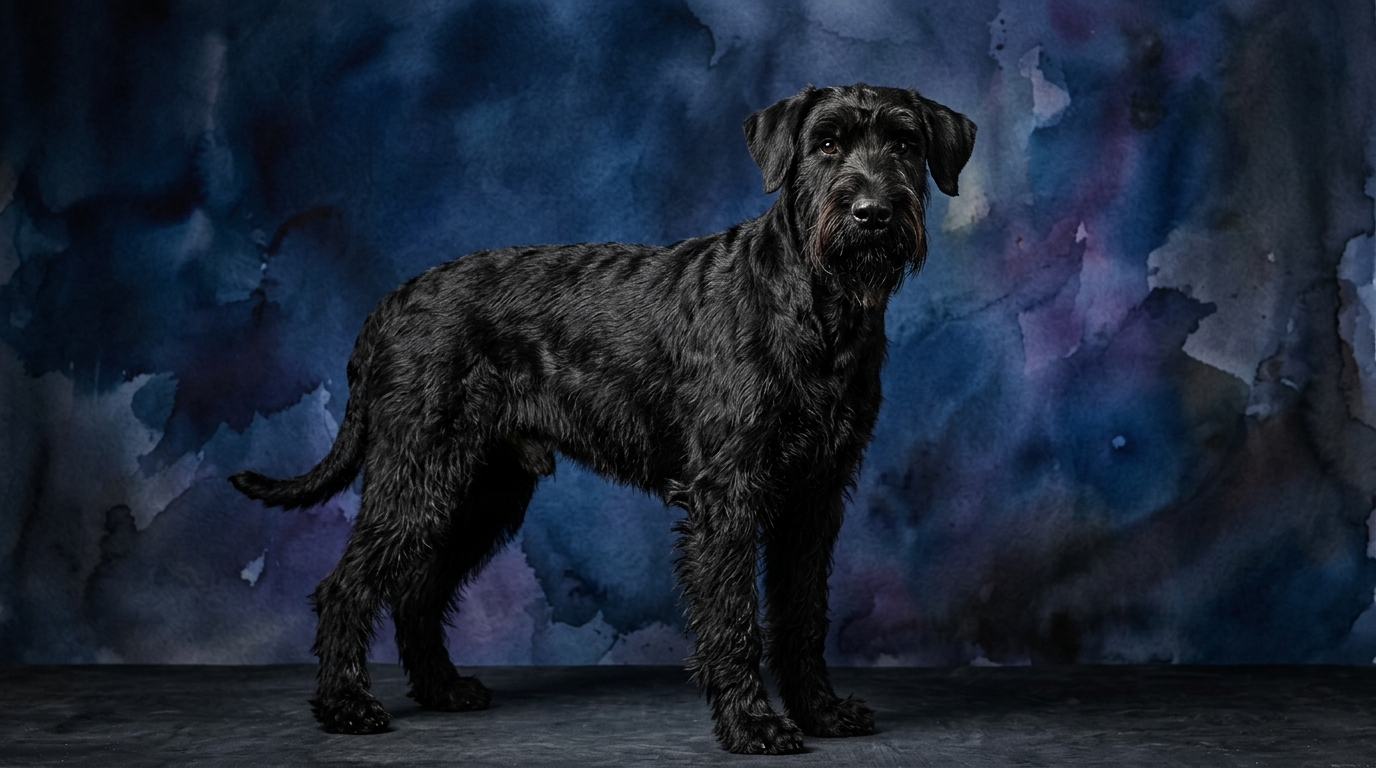
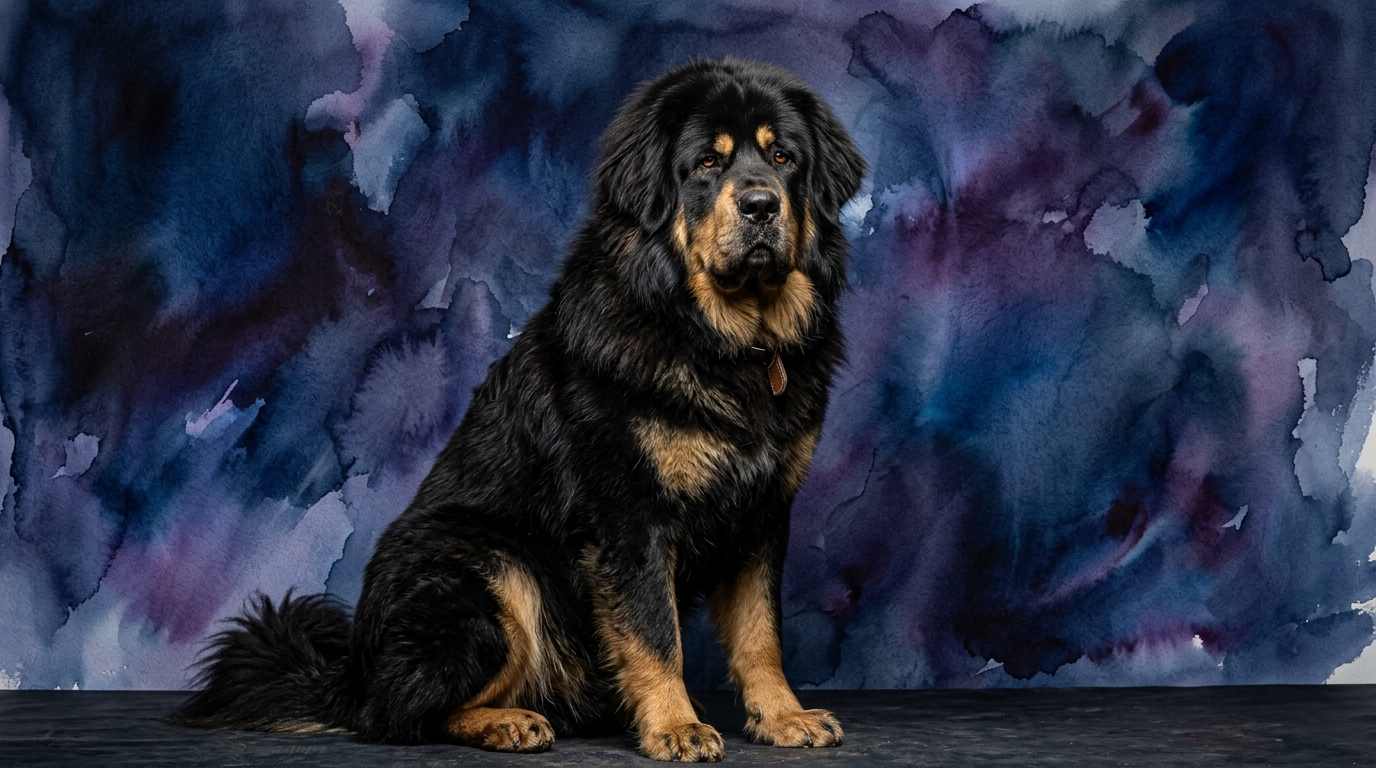
Side-by-Side IQ Profile: Giant Schnauzer vs. Tibetan Mastiff
The Cosmic Pet Pet IQ Lab categorizes canine intelligence across five key dimensions, providing a nuanced view beyond simple obedience. For the Giant Schnauzer, a breed from the Working group with a Coren ranking of #28, we observe a robust cognitive landscape: Problem Solving at 4/5, Training Speed at 4/5, Social Intelligence at 3/5, Instinctive Drive at 3/5, and Memory at 4/5. This profile paints a picture of a dog that grasps new concepts quickly and retains information effectively.
In contrast, the Tibetan Mastiff, also a member of the Working group but without a Coren ranking, presents a more uniformly balanced profile: Problem Solving at 3/5, Training Speed at 3/5, Social Intelligence at 3/5, Instinctive Drive at 3/5, and Memory at 3/5. This consistency across dimensions suggests a steady, self-reliant cognitive approach, perfectly suited to its ancient role as a territorial guardian.
Breaking down the Giant Schnauzer's scores, its 4/5 in Problem Solving indicates an aptitude for navigating complex situations, figuring out puzzles, or adapting strategies to achieve goals. Its Training Speed of 4/5 means it picks up new commands and routines with efficiency, often requiring fewer repetitions. A Memory score of 4/5 reinforces this, suggesting it recalls learned behaviors and experiences over extended periods. Social Intelligence at 3/5 denotes a capacity to understand human cues and interact appropriately, though perhaps not with the overt people-pleasing eagerness of some other breeds. Its Instinctive Drive at 3/5 points to a moderate but present drive for its working heritage, whether that's guarding or performing tasks.
The Tibetan Mastiff's consistent 3/5 scores across the board reveal a different kind of cognitive strength. Its Problem Solving at 3/5 reflects a capacity for independent judgment, assessing environmental changes or potential threats without constant human direction. Training Speed at 3/5 means it learns, but often at its own pace and with a strong sense of purpose rather than a desire to merely comply. Social Intelligence at 3/5 highlights its ability to distinguish between family members and strangers, a critical aspect of its guarding role, rather than seeking broad social engagement. Instinctive Drive at 3/5 underscores its innate protective nature and territorial awareness, which is a cornerstone of its existence. Its Memory at 3/5 ensures it remembers routines, boundaries, and who belongs, but perhaps without the rapid recall for complex, multi-step commands.
Where the Giant Schnauzer Excels Cognitively
The Giant Schnauzer's cognitive strengths distinctly shine in areas demanding rapid assimilation of information and flexible application of learned behaviors. With a Problem Solving score of 4/5, these dogs demonstrate a robust capacity for navigating novel challenges, whether it's figuring out how to open a complex crate latch or strategizing during an agility course. This cognitive flexibility means they are less likely to get stuck on a single approach and can adapt their methods when initial attempts fail.
Their Training Speed of 4/5 is a significant advantage, translating into a breed that can master a wide array of commands and complex sequences with relative ease and fewer repetitions. This makes them particularly adept for roles requiring precision and quick learning, such as advanced obedience, protection work, or competitive dog sports. Coupled with a Memory score of 4/5, the Giant Schnauzer not only learns quickly but also retains that knowledge reliably, allowing them to build an extensive repertoire of skills over their lifetime and recall them even after long periods of inactivity.
Where the Tibetan Mastiff's Cognition Stands Out
While the Tibetan Mastiff's scores may be lower in direct comparison to the Giant Schnauzer in some dimensions, its cognitive profile is profoundly purpose-built for independent, territorial guardianship. Its Problem Solving at 3/5, rather than indicating a deficit, speaks to a capacity for self-reliant decision-making in its domain. A Tibetan Mastiff is tasked with assessing its environment for threats, discerning intentions, and acting independently, often without direct human instruction. This involves a different kind of problem-solving—one focused on situational awareness and autonomous judgment over rapid, obedience-driven responses.
The Tibetan Mastiff's steady 3/5 in Social Intelligence and Instinctive Drive highlights its refined ability to differentiate between family, trusted associates, and potential intruders. This isn't about eager human interaction, but about a deep, selective discernment crucial for its guarding role. Its memory at 3/5 ensures it retains critical information about its territory and the individuals within it, forming a reliable internal map of who belongs and where boundaries lie, which is fundamental to its consistent protective nature. Its overall balanced cognitive profile supports a dog that is self-sufficient, observant, and capable of making sound, independent judgments in its designated role.
Training Dynamics: Giant Schnauzer vs. Tibetan Mastiff
When it comes to training, the differences between these two breeds become particularly pronounced, largely due to their disparate scores in Training Speed and the nature of their instinctive drives. The Giant Schnauzer, with its 4/5 Training Speed and 4/5 Memory, is generally considered more amenable to traditional obedience training. They grasp commands quickly, enjoy the mental engagement, and are often eager to please their handler, making them responsive to positive reinforcement methods. Their higher Problem Solving score also means they can generalize learned behaviors to new environments and situations more readily.
The Tibetan Mastiff, scoring 3/5 in Training Speed and 3/5 in Memory, will learn, but often on its own terms and at a slower, more deliberate pace. They possess a strong independent streak and a formidable guarding instinct (3/5 Instinctive Drive) that can sometimes be perceived as stubbornness. Their training requires immense patience, consistency, and a deep understanding of their guardian mentality. They are not typically driven by a desire for constant human approval but by their own assessment of a situation's utility or threat. This means a Tibetan Mastiff might learn a command but choose not to execute it if it doesn't align with its perceived purpose or if it feels a more pressing instinctual duty.
Matching Breeds to Owner Lifestyles
Considering their distinct cognitive profiles, the Giant Schnauzer and Tibetan Mastiff appeal to very different owner lifestyles. The Giant Schnauzer, with its high Problem Solving, Training Speed, and Memory, thrives with active, engaged owners who are prepared to provide consistent mental stimulation and physical activity. They excel in structured environments where they can learn new tasks, participate in dog sports like agility or obedience, or engage in meaningful 'jobs' like protection work or advanced trick training. An owner who enjoys a partnership in learning and exploration will find the Giant Schnauzer a rewarding companion, as their cognitive abilities demand an outlet to prevent boredom and potential behavioral issues.
In contrast, the Tibetan Mastiff, with its balanced yet independent cognitive makeup, is better suited for owners who appreciate a more self-reliant canine presence and can provide a secure, expansive environment. These are not dogs that demand constant interaction or intricate training routines. Their cognitive strengths lie in their ability to observe, assess, and guard independently. Owners must be calm, consistent leaders who understand and respect the breed's territorial nature and inherent self-sufficiency. They are less about 'doing' and more about 'being' a formidable, watchful presence, making them suitable for owners who value a steady, protective companion over an intensely collaborative one, provided they can manage their strong guarding instincts responsibly.
The Verdict
Choose the Giant Schnauzer if you desire a highly trainable, versatile companion eager for mental challenges and collaborative activities like dog sports or advanced obedience. Their quick learning and robust memory make them ideal for owners seeking an active partnership.
Opt for the Tibetan Mastiff if you are an experienced owner who values an independent, watchful guardian with a steady, self-reliant cognitive style, and can provide a secure environment respecting their territorial instincts.
🧠 Find Your Pet's IQ Score
Our Pet IQ Lab assessment covers 25+ tests across 5 cognitive dimensions — personalized to your breed.
Take the Full IQ Test →Frequently Asked Questions
Is the Giant Schnauzer better for first-time dog owners?
The Giant Schnauzer's higher training speed and problem-solving make them more manageable for dedicated first-time owners willing to commit to consistent training and mental stimulation. Their eagerness to learn can simplify the training process significantly compared to more independent breeds.
How does the Tibetan Mastiff's independence affect daily life?
A Tibetan Mastiff's independence means they are less likely to seek constant human direction and will often make their own judgments, particularly regarding their territory. This requires an owner to be a strong, consistent leader who understands their guarding instincts and provides a secure, well-fenced environment.
Do both breeds require a lot of exercise?
Both breeds are from the Working group, but their exercise needs differ. The Giant Schnauzer requires regular, engaging exercise that includes mental challenges to satisfy its active mind. The Tibetan Mastiff needs moderate, consistent exercise, often in a secure yard, but its primary 'work' is often watchful guarding rather than intense physical activity.