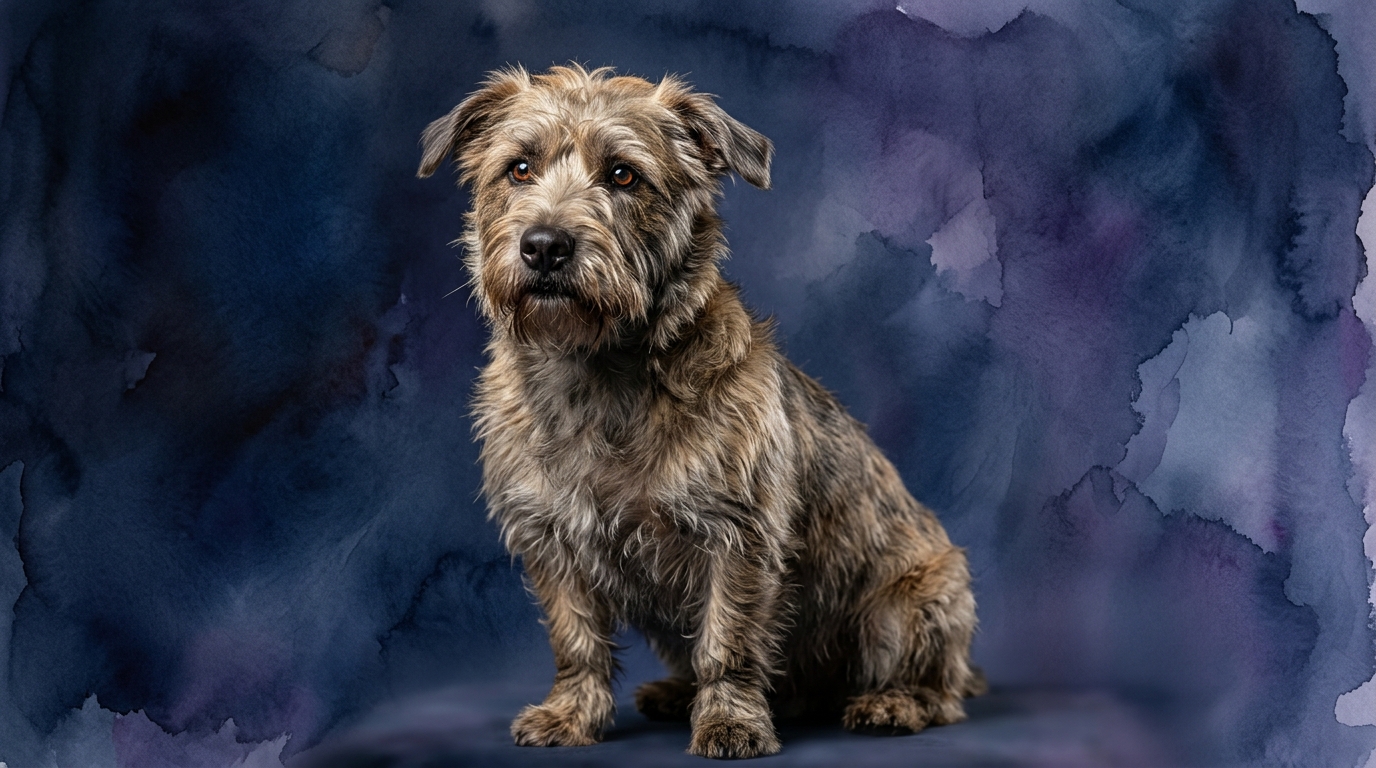
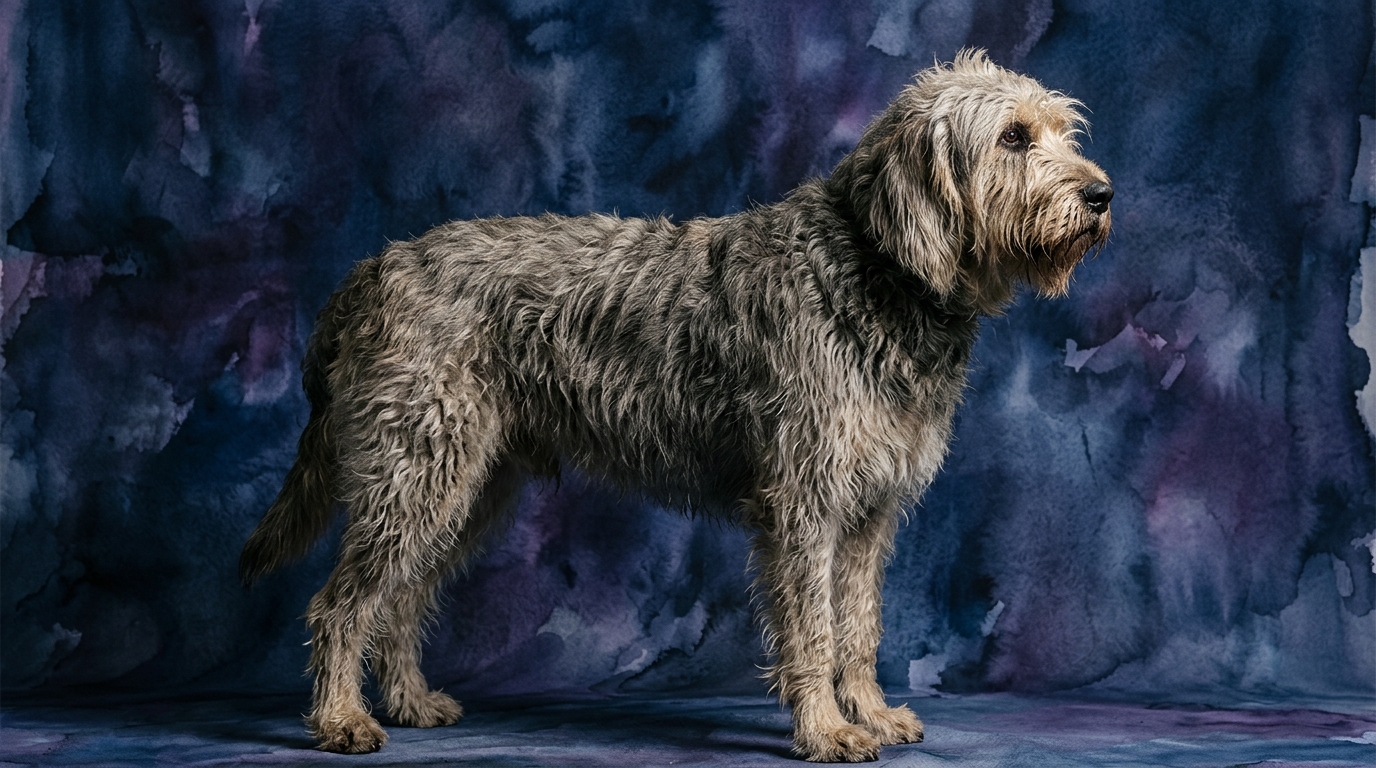
Side-by-side IQ profile
The Cosmic Pet Pet IQ Lab rates both the Glen of Imaal Terrier and the Otterhound with a consistent 3/5 across all five cognitive dimensions, suggesting a balanced set of intellectual tools for each breed. For the Glen of Imaal Terrier, Problem Solving at 3/5 indicates an ability to independently navigate confined spaces and pursue vermin with persistence. Its Training Speed at 3/5 reflects a capacity to learn, though its independent spirit requires consistent, engaging methods. Social Intelligence at 3/5 points to deep bonds with family, while Instinctive Drive (3/5) is strongly geared towards digging and chasing. Memory at 3/5 reflects its capability to recall routines and specific "target" locations.
The Otterhound, also rated 3/5 across the board, applies its cognitive abilities through the lens of a scent hound. Its Problem Solving at 3/5 manifests in exceptional ability to decipher intricate scent trails across varied terrain, requiring sustained focus. Training Speed at 3/5 indicates learning capacity, but its strong scent drive is a significant distraction, demanding patience and high-value rewards. Social Intelligence at 3/5 reflects its pack-hunting history, forming affectionate bonds. Its Instinctive Drive (3/5) is overwhelmingly dominated by unparalleled scenting prowess. Memory at 3/5 is adept at recalling complex scent patterns and geographical pathways.
Where Glen of Imaal Terrier wins cognitively
Despite identical scores, the Glen of Imaal Terrier subtly excels in problem-solving scenarios demanding independent, close-quarters decision-making and singular focus. Its terrier heritage means it thrives on tasks requiring tenacity and ingenuity within constrained environments, like navigating a burrow or extracting a specific item from a tight space. This breed's Problem Solving (3/5) leans towards individualistic, self-reliant action where sustained focus on a tangible target is paramount, distinct from the collaborative, wide-ranging tracking of a hound. The Glen's memory, also 3/5, is arguably more adept at recalling precise object locations or intricate puzzle solutions that lead to a direct, immediate reward, reflecting its historical need to remember exact hiding spots for vermin.
Where Otterhound wins cognitively
The Otterhound's cognitive strengths, though numerically identical to the Glen's, shine brightest in expansive, scent-driven tasks that demand sustained mental engagement and vast environmental awareness. Its Problem Solving (3/5) is superior when deciphering complex olfactory puzzles, such as disentangling multiple scent trails or following faint odors across varied terrain for extended periods. This requires not just persistence, but an intricate understanding of air currents and ground conditions, a form of cognitive mapping unique to scent hounds. The Otterhound's Instinctive Drive (3/5) is undeniably more specialized and potent in its application of scenting ability; its entire being is geared towards this powerful sensory input, making it unparalleled in any task requiring a nose-driven approach. Its Memory (3/5) is exceptionally tuned to recall specific scent signatures and associated geographical pathways, allowing it to retrace steps with remarkable accuracy.
Which is easier to train and why
Neither the Glen of Imaal Terrier nor the Otterhound are conventionally "easy" to train due to their strong, ingrained instinctive drives and independent streaks, reflected in their 3/5 Training Speed scores. The Glen of Imaal Terrier, despite affection, possesses classic terrier stubbornness. Its problem-solving often involves independent solutions over human direction, making obedience training challenging. It requires a patient, consistent trainer using positive reinforcement, understanding its prey drive, and making training a rewarding game to engage its ingenuity.
The Otterhound presents different hurdles. Its overwhelming Instinctive Drive for scent makes all other stimuli secondary once a compelling smell is detected, rendering recall particularly difficult outdoors. While its 3/5 Social Intelligence implies cooperativeness, its pack mentality often prioritizes its nose over human instruction. Training an Otterhound demands immense patience, creativity, and leveraging its scent drive as a motivator. Early socialization and consistent, positive reinforcement with high-value, scent-related rewards are crucial.
Which suits active owners vs relaxed owners
The choice largely hinges on defining "active," as both breeds require significant engagement. A Glen of Imaal Terrier, while not needing endless runs, thrives with owners active in providing mental stimulation and structured physical activity. Its 3/5 Instinctive Drive means it enjoys designated digging, puzzle toys, scent games, and brisk walks. A "relaxed" owner for a Glen might enjoy quiet evenings but must commit to daily interactive play and training sessions that engage its problem-solving mind; they are not passive companions.
The Otterhound, conversely, demands a truly active owner who enjoys long, vigorous outdoor adventures. Its profound 3/5 Instinctive Drive for scent work necessitates extensive daily exercise allowing it to explore and track, like long hikes or scent work trials. An Otterhound lacking sufficient physical and mental stimulation will likely become bored and potentially destructive, using its problem-solving skills to create its own entertainment. For a "relaxed" owner, the Otterhound's need for sustained activity and olfactory engagement makes it a poor fit.
The verdict — when to choose each
The Verdict
Choose the Glen of Imaal Terrier if you appreciate a tenacious, independent spirit in a compact package, prepared for a dog whose problem-solving is geared towards individual tasks and who thrives on interactive play and mental puzzles within a manageable exercise routine.
Opt for the Otterhound if you lead a genuinely outdoorsy lifestyle, relish long adventures exploring varied terrain, and are eager to embrace and channel an unparalleled scent drive, understanding that its cognitive strengths lie in tracking and sustained olfactory engagement.
🧠 Find Your Pet's IQ Score
Our Pet IQ Lab assessment covers 25+ tests across 5 cognitive dimensions — personalized to your breed.
Take the Full IQ Test →Frequently Asked Questions
Are Glen of Imaal Terriers suitable for first-time dog owners?
While affectionate, Glen of Imaal Terriers possess a strong, independent terrier temperament and a robust prey drive (3/5 Instinctive Drive) that requires consistent, experienced handling and training. They are best suited for owners who understand terrier traits and can provide firm, positive guidance.
How much exercise does an Otterhound need daily?
Otterhounds require substantial daily exercise, typically an hour or more of vigorous activity that allows them to engage their powerful scent drive (3/5 Instinctive Drive), such as long walks, hikes, or off-leash exploration in secure areas. Their problem-solving skills are often applied to tracking, making mental and physical stimulation crucial.
Do both breeds get along well with children and other pets?
Both breeds, with their 3/5 Social Intelligence, can be good with children and other pets if properly socialized from a young age. Glen of Imaal Terriers bond well with family but their prey drive (3/5 Instinctive Drive) means supervision with small, non-canine pets is essential; Otterhounds are generally good-natured but their boisterousness and strong scent drive require mindful introductions and management, especially around smaller animals.