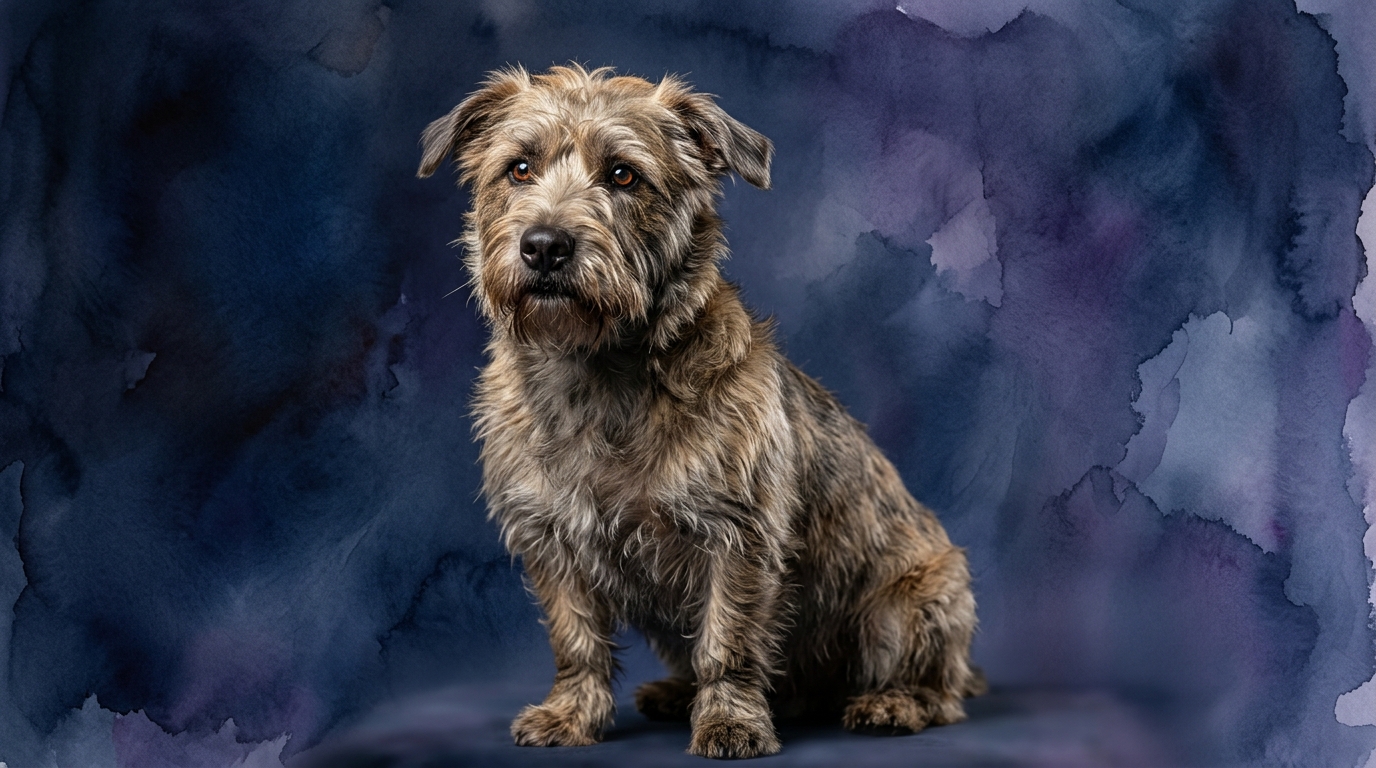
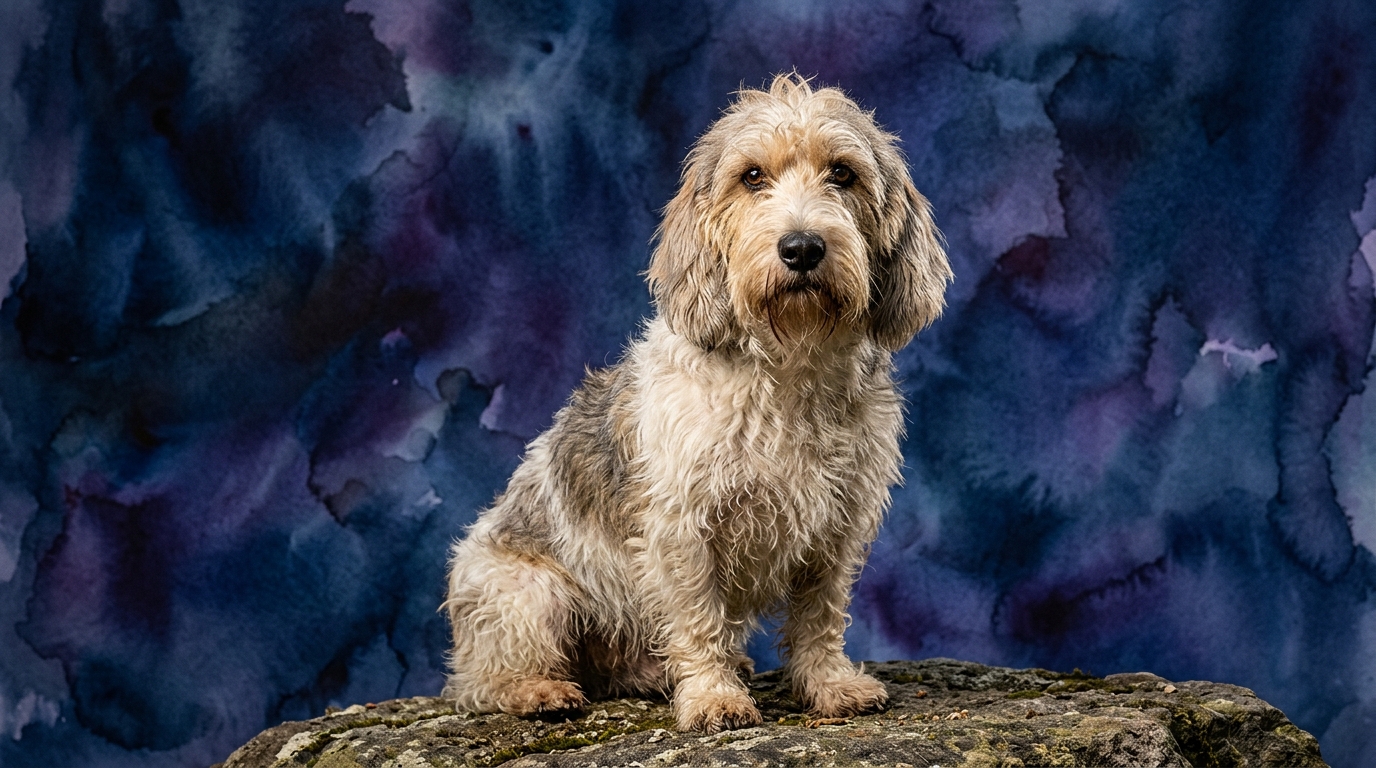
Side-by-Side IQ Profile: Unpacking the 3/5 Scores
At The Cosmic Pet Pet IQ Lab, both the Glen of Imaal Terrier and the Petit Basset Griffon Vendéen register a consistent 3 out of 5 across all five cognitive dimensions. While these identical numerical scores might suggest similar internal workings, delving into their breed-specific manifestations reveals distinct differences shaped by their foundational purposes and inherent temperaments.
For the **Glen of Imaal Terrier**:
**Problem Solving (3/5):** This breed exhibits a methodical approach to obstacles, often relying on its independent nature to assess situations. They aren't prone to frantic attempts but rather a determined, sometimes stubborn, persistence, particularly when a task aligns with their terrier instincts, such as finding a hidden toy or navigating a complex digging project.
**Training Speed (3/5):** Glens are capable learners, absorbing commands and routines at a moderate pace. However, their independent spirit means they often require compelling motivation and consistent, positive reinforcement to willingly engage. They might process a command quickly but choose to execute it only when convinced it's worthwhile.
**Social Intelligence (3/5):** Glens display a discerning social awareness. They observe their human companions closely, picking up on subtle cues and emotional states. While not overtly demonstrative with strangers, they form deep bonds with their family, understanding household dynamics and individual preferences with quiet perceptiveness.
**Instinctive Drive (3/5):** Their instincts are robust and purposeful. This score reflects a strong innate drive for digging, chasing small prey, and guarding their territory. These drives are not overwhelming or chaotic but are focused and tenacious, a testament to their badger-hunting heritage.
**Memory (3/5):** A Glen's memory is reliable for routines, learned commands, and significant experiences. They will remember where a favorite treat is stored or a familiar walking route. While they might not retain every single detail of a fleeting interaction, core learning and important associations stick firmly.
For the **Petit Basset Griffon Vendéen (PBGV)**:
**Problem Solving (3/5):** PBGVs excel in problem-solving related to their primary sense: scent. This manifests as an intricate ability to follow complex scent trails, navigate varied terrains to locate a source, or creatively overcome physical barriers in pursuit of an interesting smell. Their solutions are often physical and instinct-driven rather than abstract.
**Training Speed (3/5):** PBGVs learn new behaviors at a moderate pace, but their training speed is significantly influenced by environmental distractions. A captivating scent can instantly override a command, making consistent attention a challenge. They learn best through fun, engaging methods that compete with their strong sensory world.
**Social Intelligence (3/5):** These are inherently social dogs, thriving on interaction with their human 'pack' and other canines. Their social intelligence shines in group dynamics, where they adeptly read play signals and engage in boisterous, friendly interactions. They readily seek out companionship and express their needs clearly within a social context.
**Instinctive Drive (3/5):** The PBGV's instinctive drive is powerfully centered around scenting and tracking. This 3/5 score indicates an unwavering focus on exploring the world through their nose, a drive that can make them oblivious to their surroundings or human commands when a compelling scent is present. Their vocalizations are also a strong instinctive expression.
**Memory (3/5):** PBGVs possess a strong memory for scent profiles and the geography associated with them. They will remember intricate routes taken on walks and the locations of intriguing smells. While they remember commands, their recall can be selectively applied when their powerful nose takes precedence, making consistent obedience a training focus rather than a memory deficit.
Where the Glen of Imaal Terrier Wins Cognitively
The Glen of Imaal Terrier’s cognitive strengths often lie in its focused independence and internal motivation. While both breeds score 3/5 in problem-solving, the Glen's approach is typically more deliberate and less influenced by external sensory overload. It can maintain focus on a task, such as dismantling a puzzle toy or figuring out how to access a forbidden area, with a quiet determination that the scent-driven PBGV might struggle to replicate amidst competing olfactory stimuli. Its social intelligence, while less outwardly effusive, allows for a deeper, more nuanced understanding of individual human cues, potentially making it more attuned to subtle emotional shifts within its immediate family unit. This allows it to adapt its behavior based on a careful reading of its owner’s mood, a trait that can be a distinct cognitive advantage in a home environment.
Where the Petit Basset Griffon Vendéen Wins Cognitively
The PBGV's cognitive wins are deeply rooted in its hound heritage, particularly its extraordinary olfactory intelligence and social adaptability. While both breeds have a 3/5 instinctive drive, the PBGV's specialization in scent work gives it a unique cognitive edge in navigating complex environments purely by smell. This isn't just about following a trail; it involves sophisticated spatial memory for scents, the ability to discriminate between multiple odors, and the persistence to track over long distances. Furthermore, its social intelligence, rated 3/5, manifests as a strong capacity for group interaction and pack dynamics. PBGVs are adept at engaging with and understanding other dogs, displaying a boisterous yet often harmonious approach to canine social structures that can be less pronounced in the more solitary-minded Glen. This makes them exceptionally good at collaborative play and understanding the unspoken language of a multi-dog household.
Which is Easier to Train and Why
Neither the Glen of Imaal Terrier nor the Petit Basset Griffon Vendéen can be described as "easy" to train in the conventional sense, both scoring 3/5 in training speed, yet their challenges stem from different behavioral roots. The Glen's independent, terrier nature means it often requires convincing to comply. It's not that they don't understand commands; rather, they might question the necessity or prefer their own agenda. Training a Glen demands patience, consistency, and a strong understanding of positive reinforcement, appealing to their desire for a reward or a satisfying outcome. They excel when they feel they are collaborating rather than simply obeying, which can be a slow process.
The PBGV, on the other hand, presents a training challenge rooted in its powerful instinctive drive and sensory world. When a compelling scent is present, the PBGV's focus can be entirely diverted, leading to what owners often call "selective hearing." Their exuberance and vocal nature also require management. Training a PBGV means constantly competing with its nose and its desire to explore every interesting smell. Recall training, in particular, is a lifelong endeavor, as the allure of a new scent can easily overpower a command. While they are eager to please their pack, their primary motivation is often the thrill of the chase or the exploration of a scent. Owners must make training engaging and highly rewarding, often incorporating scent games to satisfy their natural instincts. In essence, while the Glen requires you to win its cooperation, the PBGV requires you to capture and hold its attention against a barrage of sensory input.
Which Suits Active Owners vs. Relaxed Owners
The **Glen of Imaal Terrier** typically suits owners who appreciate a dog with a moderate activity level but a high need for mental engagement. While they enjoy brisk walks and outdoor exploration, they are not endurance athletes. A relaxed owner who enjoys quiet evenings but is committed to providing puzzle toys, training sessions, and opportunities for digging (in a designated spot!) would find a Glen a good fit. Their independent nature means they can be content with their own company for periods, but they thrive on quality interaction and mental stimulation rather than constant physical exertion. They are generally quieter indoors, making them suitable for those who prefer a less boisterous companion, provided their cognitive and physical needs are met with structured activities.
The **Petit Basset Griffon Vendéen**, conversely, is unequivocally a breed for active owners. Their strong instinctive drive and boundless energy demand significant daily exercise – long walks, hikes, or vigorous play sessions are essential to keep them mentally and physically satisfied. A relaxed owner would quickly find themselves overwhelmed by a PBGV's need to explore, run, and vocalize. They are boisterous, often vocal, and thrive in environments where they can engage their senses fully. Owners who enjoy outdoor activities, have a securely fenced yard, and are prepared for a dog that will enthusiastically participate in family life, often with a lot of noise and energy, will find the PBGV a joyful and engaging companion. Their need for activity isn't just physical; it's deeply ingrained in their cognitive makeup, requiring constant sensory input and opportunities to use their exceptional nose.
The Verdict: When to Choose Each
The Verdict
Choose the Glen of Imaal Terrier if you appreciate a quieter, independent companion who offers deep loyalty and enjoys mental challenges more than constant physical activity, and you are prepared for a dog that sometimes prefers to do things its own way.
Opt for the Petit Basset Griffon Vendéen if you lead an active lifestyle, enjoy outdoor adventures, and seek a boisterous, scent-driven companion whose exuberance and vocalizations bring joy and energy to your home.
🧠 Find Your Pet's IQ Score
Our Pet IQ Lab assessment covers 25+ tests across 5 cognitive dimensions — personalized to your breed.
Take the Full IQ Test →Frequently Asked Questions
Are Glen of Imaal Terriers good for first-time dog owners?
Glen of Imaal Terriers can be suitable for first-time owners who are committed to consistent training and understanding their independent, sometimes stubborn, nature. Their moderate exercise needs are manageable, but their mental stimulation requirements are important to address.
Do Petit Basset Griffon Vendéens bark a lot?
Yes, PBGVs are known for being quite vocal, using a variety of barks, howls, and baying to express themselves, particularly when on a scent trail or when excited. This is a core part of their hound heritage and requires management in shared living spaces.
What kind of exercise do these breeds need?
The Glen of Imaal Terrier needs daily brisk walks and mental games, but isn't an endurance dog. The Petit Basset Griffon Vendéen requires significant daily vigorous exercise, including long walks, hikes, or secure off-leash running to satisfy its strong hunting instincts.