Side-by-Side Cognitive Profiles
The Cosmic Pet Pet IQ Lab employs a five-dimensional framework to assess canine intelligence, moving beyond single scores to offer a nuanced understanding of how different breeds think and learn. We examine problem-solving, training speed, social intelligence, instinctive drive, and memory, providing a comprehensive look at what makes each breed unique.
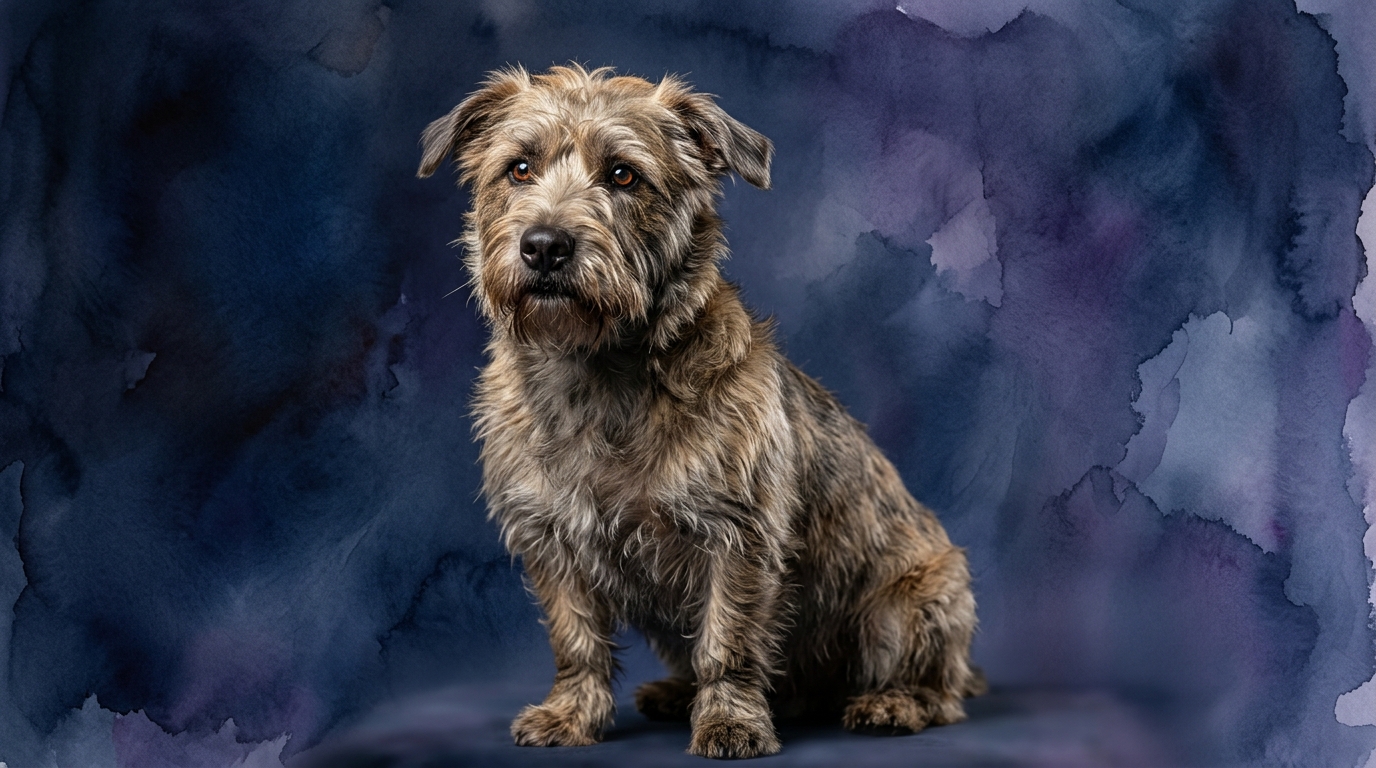
The Glen of Imaal Terrier, a robust terrier, displays a consistent 3/5 across all five cognitive dimensions. Their problem-solving is practical and tenacious; they are capable of figuring out solutions, especially when it involves a physical challenge or a goal like digging. Their training speed, while solid, requires patience and consistency, reflecting a thoughtful, independent approach to learning. Social intelligence at 3/5 suggests they read cues adequately but possess a discerning nature. A 3/5 instinctive drive points to a moderate, focused working terrier spirit, often directed at scent and quarry. Lastly, their memory at 3/5 indicates they retain information and routines reliably, though perhaps not with the instantaneous recall of some breeds.
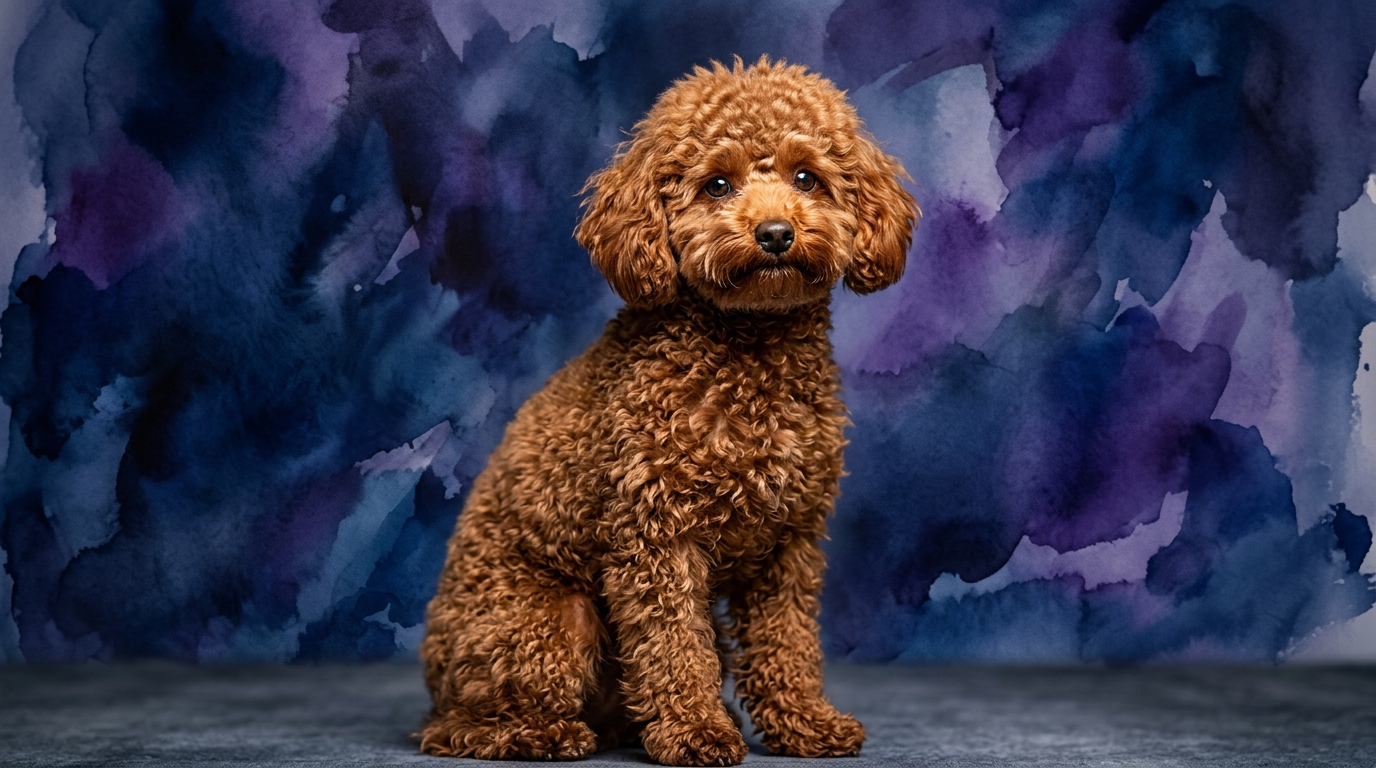
In contrast, the Toy Poodle, a breed with historical recognition for its mental acuity, shows a markedly different profile. They achieve an impressive 5/5 in problem-solving, demonstrating a remarkable capacity for abstract thought, strategy, and novel solutions. Their training speed is also 5/5, indicating rapid comprehension and eagerness to learn complex tasks. Memory, too, is a standout at 5/5, allowing them to recall extensive repertoires of commands and experiences over long durations. Their social intelligence and instinctive drive are both rated 3/5. This means they are generally adaptable and can interpret human cues effectively, but their instinctive drive, while present for activities like retrieving, is moderate compared to dedicated working breeds.
Where the Glen of Imaal Terrier Cognitively Shines
While the Toy Poodle excels in areas often associated with traditional 'intelligence,' the Glen of Imaal Terrier's cognitive strengths lie in its tenacious independence and practical application of its faculties. Its 3/5 problem-solving score translates into a determined effort to overcome physical obstacles or achieve a specific, tangible goal. For instance, a Glen might spend considerable time strategizing how to get to a perceived 'prey' scent under a bush, demonstrating a focused, persistent form of cognitive engagement that prioritizes self-directed action over human instruction. This isn't about abstract puzzle-solving but about real-world, often physical, task completion.
Furthermore, the Glen's 3/5 social intelligence, while not as overtly demonstrative as some breeds, fosters a deep, discerning bond. They are not easily swayed or overly eager to please everyone, requiring a nuanced understanding from their human companions. This discerning nature suggests a cognitive process that carefully evaluates interactions, leading to meaningful, if selective, relationships. Their moderate instinctive drive means they can channel their energy into specific tasks with a focused intensity, such as scent work or exploring varied terrains, showcasing a mental resilience and engagement that is uniquely terrier in its application.
Where the Toy Poodle Cognitively Excels
The Toy Poodle's cognitive profile highlights a breed built for rapid learning and complex mental engagement. Their 5/5 problem-solving score indicates an exceptional ability to grasp intricate concepts, solve multi-step puzzles, and adapt quickly to new scenarios. They don't just react; they strategize, often anticipating next steps or finding creative solutions to challenges presented in training or daily life. This capacity for abstract reasoning allows them to excel in areas like advanced obedience, trick training, and even competitive dog sports where intricate sequences and rapid decision-making are paramount.
Crucially, their 5/5 training speed and 5/5 memory work in tandem, allowing them to acquire new commands and behaviors with remarkable alacrity and retain them over extended periods. A Toy Poodle can quickly learn a new trick after just a few repetitions and reliably perform it weeks later. Their social intelligence, rated at 3/5, combined with their eagerness to engage with their human companions, further enhances their trainability. They are typically receptive to cues and enjoy the mental stimulation that comes from learning, making them highly responsive partners in a wide array of activities.
Ease of Training: Poodle's Pace vs. Terrier's Tenacity
When it comes to ease of training, the Toy Poodle holds a distinct advantage, primarily due to its 5/5 training speed and 5/5 memory. They absorb new information quickly, understand complex sequences, and are often intrinsically motivated by the mental engagement of learning. This means fewer repetitions are needed for command acquisition, and behaviors are retained reliably. Their adaptability and general willingness to please also contribute to a smoother training experience, making them ideal candidates for intricate obedience routines, agility, or even service work.
The Glen of Imaal Terrier, with its 3/5 training speed and 3/5 memory, presents a different training journey. While capable of learning, they require more patience, consistency, and creative motivation. Their independent terrier spirit means they are less inclined to blindly follow commands if they deem a task uninteresting or if their instinctive drives are more compelling. Training a Glen often involves convincing them that cooperation is their idea, or that the reward is truly worth their effort. Their problem-solving (3/5) leans towards practical, self-directed solutions rather than abstract obedience, necessitating trainers who understand and appreciate their tenacious nature.
Matching Canine Cognition to Owner Lifestyles
Understanding which breed suits an 'active' versus 'relaxed' owner requires defining these terms beyond just physical exercise. It encompasses mental engagement, consistency in training, and an appreciation for a dog's inherent drives.
The Toy Poodle is an excellent match for owners who are 'active' in providing consistent mental stimulation and structured learning opportunities. This doesn't necessarily mean daily marathons; rather, it implies owners who enjoy teaching tricks, participating in dog sports like agility or rally obedience, or regularly engaging in puzzle toys and training sessions. Their high problem-solving and training speed make them thrive on intellectual challenges. For a 'relaxed' owner who still provides consistent mental enrichment through daily training and varied walks, the Toy Poodle can be a highly adaptable and rewarding companion.
The Glen of Imaal Terrier, on the other hand, suits owners who appreciate and can channel a dog's instinctive drives and independent thought. These owners might be 'active' in providing outlets for digging, scent work, and robust walks through varied terrain, or engaging in earthdog trials. They need an owner who can be patient and consistent, understanding that the Glen learns at its own pace and makes its own decisions. A truly 'relaxed' owner who offers minimal mental engagement or lacks consistency might find the Glen's independent nature and moderate instinctive drive challenging to manage, as their cognitive strengths are best expressed through purposeful, often self-directed, activities.
The Verdict
Choose the Glen of Imaal Terrier if you appreciate an independent, tenacious thinker who enjoys practical, instinct-driven tasks and forms a discerning, deep bond on its own terms.
Opt for the Toy Poodle if you seek a highly adaptable, quick-witted companion who thrives on learning, complex mental challenges, and consistent, positive training interactions.
🧠 Find Your Pet's IQ Score
Our Pet IQ Lab assessment covers 25+ tests across 5 cognitive dimensions — personalized to your breed.
Take the Full IQ Test →Frequently Asked Questions
Do Toy Poodles need a lot of physical exercise?
While Toy Poodles benefit from regular walks and playtime, their primary requirement is often mental stimulation. Their high problem-solving and training speed scores mean they thrive on activities like training sessions, puzzle toys, and learning new tricks, which are crucial for their overall well-being.
Are Glen of Imaal Terriers good with children?
With a social intelligence score of 3/5, Glen of Imaal Terriers can be good with children, especially respectful, older ones who understand their independent nature. Early socialization and consistent supervision are key to fostering positive interactions and ensuring a harmonious household.
Can a Glen of Imaal Terrier be trained for complex tasks?
Yes, Glens are capable of learning complex tasks due to their solid problem-solving (3/5) and memory (3/5). However, their 3/5 training speed and independent drive mean these tasks require more patience, consistency, and innovative motivation from the trainer compared to a Toy Poodle.