Side-by-Side Cognitive Profile: Great Dane vs. Bichon Frisé
The Cosmic Pet Pet IQ Lab employs five key dimensions to evaluate canine cognition, offering a granular view beyond simple rankings. While the Great Dane ranks #48 and the Bichon Frisé #45 on the Coren scale, a closer look reveals where their strengths and approaches diverge and align.
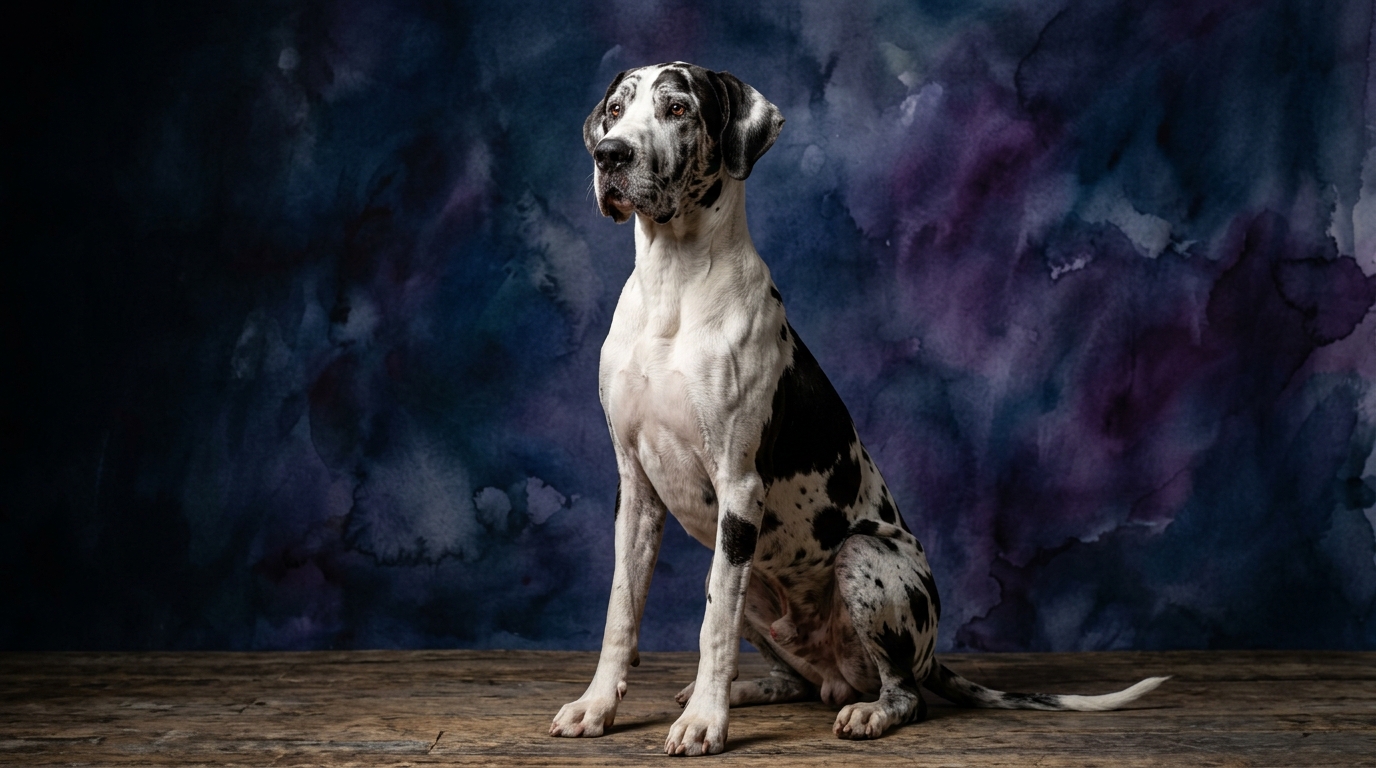
Great Dane (Working Group, Coren Rank #48): In Problem Solving, the Great Dane scores 3 out of 5, indicating a moderate ability to navigate novel situations or puzzles. They often rely on learned patterns rather than spontaneous innovation, showing thoughtfulness in their approach to new challenges. Their Training Speed also stands at 3 out of 5, meaning they learn new commands and routines at a steady pace, benefiting from consistent repetition and positive reinforcement to solidify understanding. Social Intelligence is a notable strength at 4 out of 5; these gentle giants possess a strong capacity to interpret human cues, forming deep emotional bonds and often displaying a sensitive awareness of their owner's moods and intentions. Instinctive Drive is rated 3 out of 5, reflecting moderate inherent urges often manifesting as a natural vigilance or protective inclination towards their family and home environment. Finally, their Memory is 3 out of 5, indicating they retain commands and routines moderately well, with regular practice keeping their skills sharp.
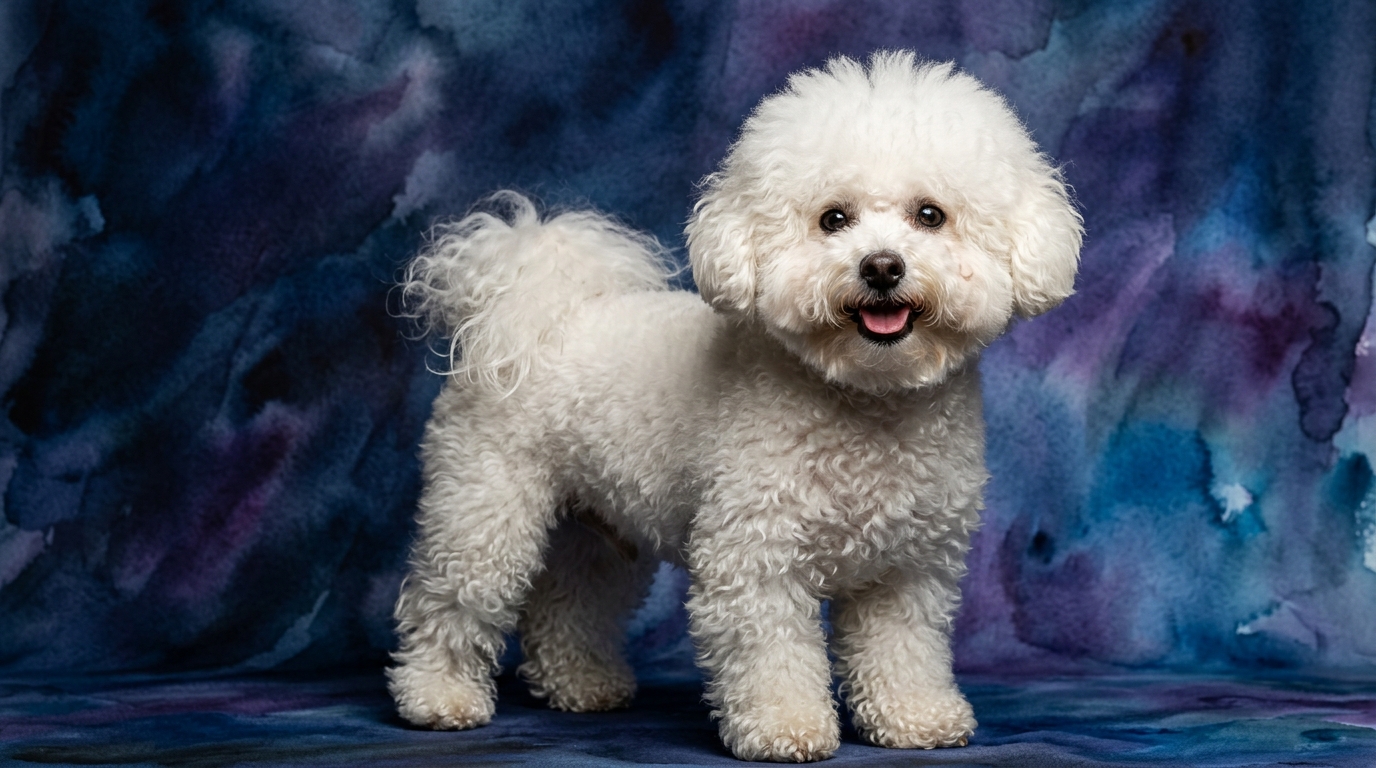
Bichon Frisé (Non-Sporting Group, Coren Rank #45): The Bichon Frisé mirrors the Great Dane in Problem Solving with a score of 3 out of 5. They exhibit a moderate ability to process new challenges, often seeking human guidance when faced with complex scenarios rather than independent experimentation. Their Training Speed also aligns at 3 out of 5, learning new behaviors at a comparable pace, thriving on engaging, positive training methods that maintain their focus. Where the Bichon truly shines is in Social Intelligence, earning an exceptional 5 out of 5. This score signifies an unparalleled capacity to read and respond to human emotions, demonstrating an extraordinary ability to adapt their behavior to social contexts and forge intense, reciprocal bonds. Their Instinctive Drive is lower at 2 out of 5, reflecting fewer inherent urges for tasks typically associated with working breeds, with their primary drive centered on companionship and social interaction. Like the Great Dane, their Memory is 3 out of 5, retaining learned information and past experiences with moderate proficiency, excelling when memory tasks are tied to social reward.
Where the Great Dane Shows Cognitive Strengths
The Great Dane's cognitive profile reveals distinct strengths, particularly in areas influenced by their working heritage and physical presence. Their Instinctive Drive, rated 3 out of 5 compared to the Bichon's 2 out of 5, translates into a more pronounced awareness of their surroundings and a natural inclination towards vigilance. This isn't about aggression, but rather an inherent sense of responsibility for their family and territory, making them attuned to environmental changes or potential threats. Owners might observe them acting as subtle guardians, alerting to unfamiliar sounds or sights with a deep, resonant bark.
While both breeds share a Problem Solving score of 3/5, the Great Dane's sheer size and historical role often mean their cognitive application of this skill can manifest differently. Their larger physical world requires them to process spatial relationships on a grander scale. This might give them an edge in understanding and navigating complex outdoor environments, assessing physical barriers, or maneuvering their substantial bodies through varied terrains. Their thoughtful approach, combined with their physical capabilities, allows them to solve problems related to their environment in a physically impactful way, such as carefully navigating tight spaces or understanding the mechanics of a gate latch.
Where the Bichon Frisé Shows Cognitive Strengths
The Bichon Frisé’s exceptional Social Intelligence, scoring a perfect 5 out of 5, is their most significant cognitive advantage. This dimension represents an extraordinary capacity to interpret human emotions, body language, and vocal tones. Bichons are masters at adapting their behavior to social contexts, whether it's comforting a distressed owner, engaging playfully with children, or politely greeting guests. This superior social acumen allows them to form incredibly strong, intuitive bonds, often anticipating an owner's needs or moods with uncanny accuracy, making them deeply responsive and empathetic companions.
Their lower Instinctive Drive (2/5) further enhances their social cognitive strengths. With fewer innate urges pulling their attention towards guarding, hunting, or other independent tasks, Bichons can dedicate more cognitive resources to human interaction. This intense focus on their human companions allows them to be exceptionally attentive to social cues, making them highly adaptable in various social settings. They can quickly assess new people or environments, using their social intelligence to integrate seamlessly into diverse family dynamics or unfamiliar situations with remarkable ease and charm.
Which is Easier to Train and Why
Both the Great Dane and Bichon Frisé share a Training Speed score of 3 out of 5, suggesting they learn new commands at a similar pace. However, the *experience* of training and the *approach* required can differ significantly due to their other cognitive dimensions. The Bichon Frisé often feels easier to train for typical companion tasks due to their unparalleled social intelligence.
A Bichon's 5/5 Social Intelligence means they are intensely motivated by human interaction, praise, and the desire to please their owners. They thrive on positive reinforcement and will actively seek to understand and comply with commands to maintain that cherished connection. Their lower instinctive drive also means fewer internal distractions from innate urges, allowing them to focus more intently on the trainer's instructions and the social reward. This makes them highly biddable and responsive to relationship-based training, often appearing to grasp concepts quickly because of their eagerness to engage and cooperate.
Great Danes, with their 4/5 Social Intelligence, also respond very well to bond-based training and positive reinforcement. Their challenge, however, lies in channeling their moderate instinctive drive and managing their substantial physical presence during training. While they are sensitive and eager to please, their size means that any lapse in training or consistency can have greater physical consequences. Training a Great Dane requires consistent, firm, yet gentle guidance to leverage their protective instincts positively and ensure they are well-mannered giants. Their thoughtful problem-solving approach means they will learn, but trainers must be patient and clear, understanding that their learning is steady rather than spontaneous.
Matching Canine Cognition to Owner Lifestyles
When considering which breed aligns with an owner's lifestyle, their cognitive profiles offer clear guidance. For active owners who enjoy structured outdoor activities and have ample space, the Great Dane is an excellent fit. Despite their often-relaxed demeanor indoors, Great Danes are large dogs with a moderate instinctive drive (3/5) that benefits from regular, purposeful activity. They thrive on long walks, exploring new environments, or even participating in some low-impact dog sports that engage both their body and mind. Their social intelligence (4/5) means they bond deeply with their active companions, becoming loyal partners in adventure, provided their exercise needs are consistently met.
Conversely, for more relaxed owners who prefer a less physically demanding pet and enjoy consistent, intimate social bonding, the Bichon Frisé is an ideal companion. Their lower instinctive drive (2/5) and smaller size mean their exercise requirements are easily satisfied with shorter walks and indoor play. Their superior social intelligence (5/5) makes them content and thriving in environments where close human interaction is paramount. They excel as devoted lap companions, finding immense satisfaction in being near their owners, offering constant affection and adapting seamlessly to a quieter, more home-centric lifestyle. Their cognitive makeup prioritizes social engagement, making them perfect for owners whose primary goal is a highly interactive and emotionally responsive companion.
The Verdict
Choose the Great Dane if you seek a gentle giant with a protective instinct, capable of deep loyalty and thriving with consistent, structured physical and mental engagement within a spacious environment.
Opt for the Bichon Frisé if you desire a highly social, adaptable, and affectionate companion for a more relaxed lifestyle, one who thrives on constant human interaction and indoor comfort, excelling in emotional responsiveness.
🧠 Find Your Pet's IQ Score
Our Pet IQ Lab assessment covers 25+ tests across 5 cognitive dimensions — personalized to your breed.
Take the Full IQ Test →Frequently Asked Questions
Do Great Danes or Bichon Frisés learn commands faster?
Both Great Danes and Bichon Frisés have a Training Speed score of 3/5, indicating they learn new commands at a similar, moderate pace. The Bichon Frisé might appear to learn faster in companion settings due to their intense desire for social reward.
Which breed is better at understanding human emotions?
The Bichon Frisé excels in understanding human emotions, scoring 5/5 in Social Intelligence, compared to the Great Dane's 4/5. This means Bichons are exceptionally adept at interpreting subtle human cues and adapting their behavior accordingly.
Are Great Danes or Bichon Frisés more independent?
Great Danes, with an Instinctive Drive of 3/5, tend to exhibit a more pronounced sense of independence and protective vigilance compared to Bichon Frisés, whose 2/5 Instinctive Drive makes them more focused on companionship and less on independent tasks.