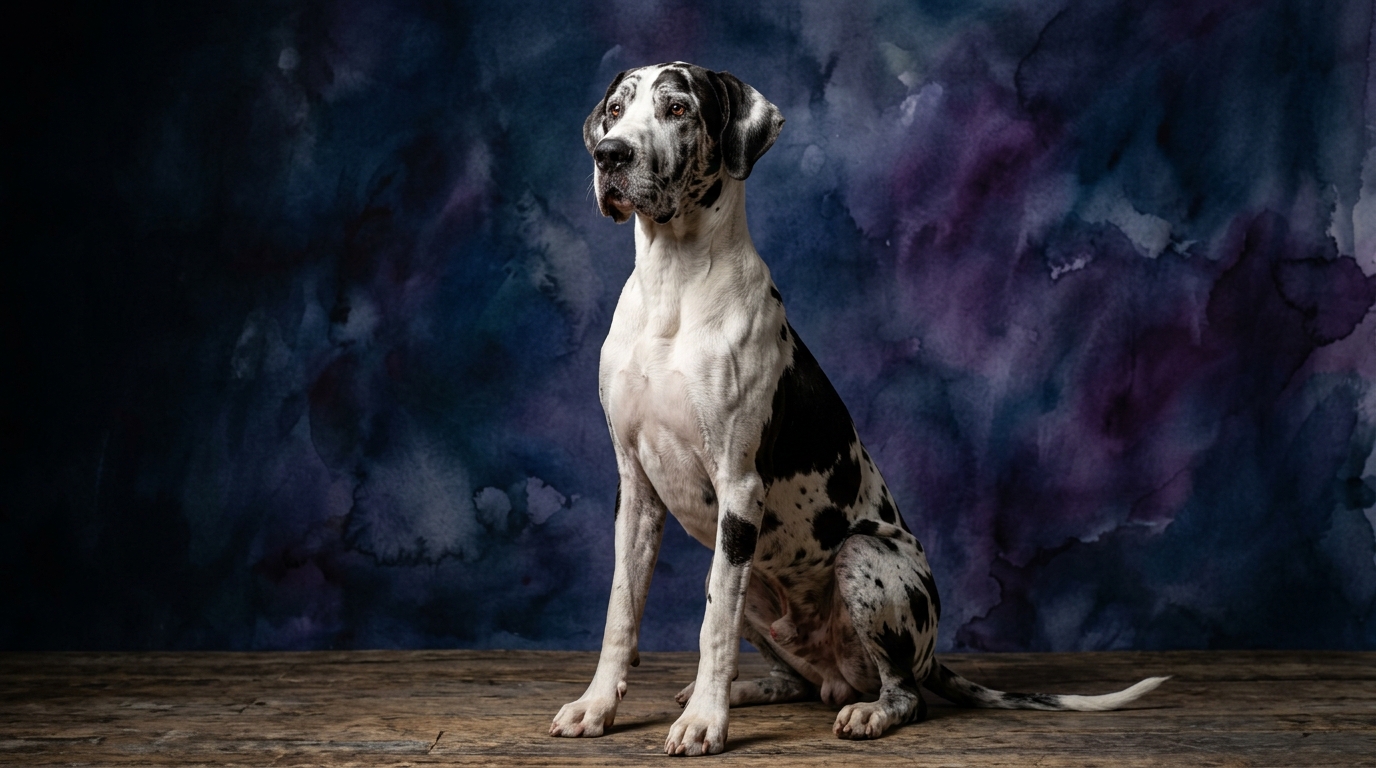
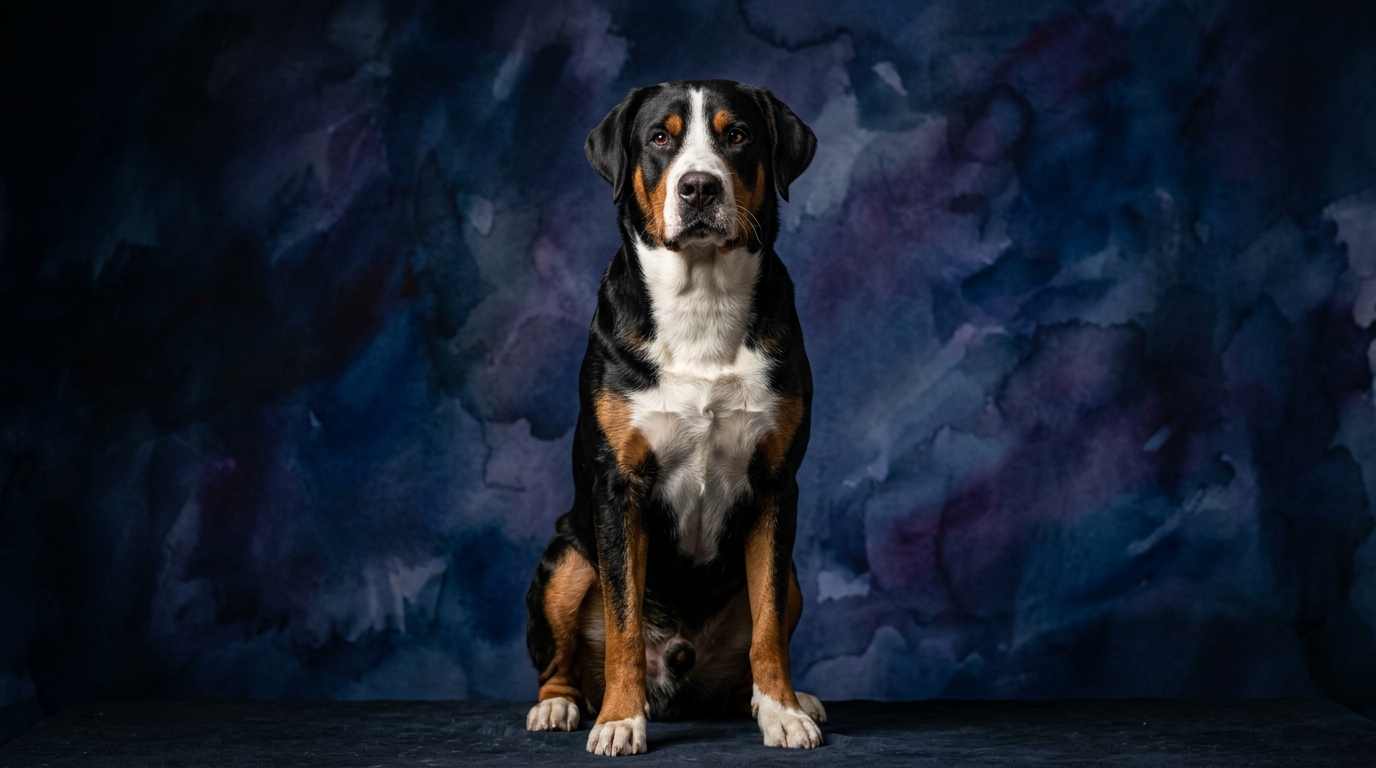
Side-by-Side IQ Profile: Great Dane vs. Greater Swiss Mountain Dog
At The Cosmic Pet Pet IQ Lab, we evaluate canine intelligence across five key dimensions. Let's delve into the specific cognitive profiles of these two majestic breeds.
Great Dane IQ Profile:
Problem Solving (3/5): Great Danes demonstrate a functional ability to navigate straightforward challenges, such as figuring out how to open a treat-dispensing toy or finding a dropped item. More intricate puzzles requiring multiple steps might exceed their typical engagement threshold, but they are certainly capable of learning through repetition and observation of their environment.
Training Speed (3/5): These gentle giants learn at a steady, average pace. They respond well to consistent, positive reinforcement methods, absorbing commands reliably over time rather than with immediate, lightning-fast comprehension. Patience, clear communication, and a positive training environment are key to their educational journey.
Social Intelligence (4/5): A defining characteristic of the Great Dane is their profound social attunement. They often exhibit a deep understanding of human emotions and social cues, forming exceptionally strong, almost empathetic bonds with their families. This high level of social awareness makes them incredibly responsive to their human companions' moods and intentions, often seeking to comfort or engage.
Instinctive Drive (3/5): Their instinctive drives are moderate, often manifesting as a protective loyalty towards their family and home rather than a strong prey drive or intense herding impulse. While they possess innate dog behaviors, these are typically well-balanced and manageable within a family environment, making them adaptable companions.
Memory (3/5): Great Danes possess a reliable, average memory, allowing them to retain learned commands, routines, and experiences effectively. They will remember past associations, especially those tied to positive or negative reinforcement, but they do not exhibit extraordinary recall without consistent practice and reinforcement.
Greater Swiss Mountain Dog IQ Profile:
Problem Solving (3/5): Greater Swiss Mountain Dogs approach problem-solving with a practical, robust mindset. They are capable of assessing and resolving common challenges, like navigating obstacles in their path or understanding complex routines, with a solid, albeit not exceptional, intellectual capacity. Their solutions often reflect a grounded, common-sense approach to their environment.
Training Speed (3/5): Similar to the Great Dane, Swissys learn at a consistent, average speed. They thrive on clear, firm, and fair training methods, gradually integrating new commands and behaviors into their repertoire. Repetition and positive reinforcement are effective, building a foundation of reliable obedience over time, though they may take their time to process.
Social Intelligence (3/5): Swissys display a solid, but more reserved, level of social intelligence compared to the Dane. They are devoted to their families and interact well, but might be less overtly expressive or attuned to every subtle human emotional shift. They form strong bonds but retain a degree of independence in their social interactions, observing rather than always participating.
Instinctive Drive (3/5): Their instinctive drives are moderate and often rooted in their historical working roles as farm dogs, encompassing guarding, drafting, and sometimes herding. This manifests as a strong sense of territory and a natural inclination to be watchful and purposeful, without an overly intense or difficult-to-manage prey drive.
Memory (3/5): Greater Swiss Mountain Dogs hold onto information with an average recall ability. They remember their training, routines, and family members consistently. Like most breeds, regular reinforcement helps solidify their memory for commands and expected behaviors, ensuring they retain what they've learned.
Where the Great Dane Wins Cognitively
The Great Dane's standout cognitive advantage clearly lies in its exceptional social intelligence, scoring a 4 out of 5. This heightened capacity for understanding human social cues and emotions translates into a deeper, more intuitive connection with their families, often making them seem uncannily perceptive. A Great Dane is frequently described as highly empathetic, capable of picking up on subtle changes in mood, tone of voice, or even body language, and responding with comforting presence, a gentle nudge, or playful distraction. This advanced social radar means they are remarkably attuned to their owner's intentions during training, making them highly responsive to praise, social approval, and even a disapproving glance as potent motivators. They tend to seek out human companionship and validation, thriving on interaction and reciprocal communication, which reinforces their social learning. This cognitive strength makes them remarkably sensitive and perceptive companions, often seeming to anticipate their family's needs or reactions, fostering an incredibly close bond that relies heavily on mutual understanding beyond mere commands. Their capacity for social learning is particularly refined, allowing them to mimic behaviors or adjust their actions based on human feedback with a nuanced grasp of social dynamics, making them excellent therapy dogs or family confidantes.
Where the Greater Swiss Mountain Dog Wins Cognitively
While the Great Dane excels in social nuance, the Greater Swiss Mountain Dog holds a distinct cognitive advantage in its robust, practical application of its moderate instinctive drive (3/5) and problem-solving (3/5). Their historical role as versatile farm dogs, tasked with drafting, guarding livestock, and general farm work, has honed an intelligence that prioritizes steadfastness, resilience, and independent action. A Swissy's problem-solving, while scoring the same as a Dane's, often manifests as a more durable and self-reliant approach. For instance, they might be more inclined to methodically figure out how to navigate a physical barrier to reach a desired location or manage a perceived environmental change without immediate human direction, relying on their own judgment forged from generations of purposeful work. Their 3/5 social intelligence, while lower than the Dane's, can be seen as a strength in situations requiring a degree of independence; they are deeply devoted but not overly reliant on constant human validation or attention, which can reduce tendencies towards separation anxiety or over-dependence. This breed's cognitive strength lies in its grounded, resilient intellect, allowing them to remain focused on a task or maintain vigilance with a calm, purposeful determination, reflecting an intrinsic understanding of their environment and their 'job.' They are less likely to be swayed by emotional appeals and more by a clear, consistent understanding of a task or boundary, making them reliable workers.
Which is Easier to Train and Why
When considering trainability, both breeds share a 3/5 score for training speed, indicating they learn new commands at an average pace. However, the Great Dane's superior social intelligence (4/5) often gives it a perceived edge in the training process. Great Danes are typically more eager to please and more attuned to their handler's emotional state and body language. This means they are often highly motivated by social praise and connection, making them more responsive to positive reinforcement techniques that leverage their desire for companionship and approval. They are quick to understand what their human wants and are generally cooperative, making training sessions feel like a collaborative effort. In contrast, the Greater Swiss Mountain Dog, with a social intelligence score of 3/5, can be a bit more independent in its thinking. While equally capable of learning, a Swissy might require a more consistent, direct, and perhaps firmer approach, as they might be less swayed by purely social rewards and more by tangible incentives or a clear understanding of the task's purpose. They can exhibit a stubborn streak if they don't perceive the value in a command, necessitating patient and persistent training that establishes clear expectations and leadership. Therefore, while both require consistency, the Great Dane's inherent desire for connection often makes the training journey feel smoother and more collaborative, while the Swissy demands a clear, purposeful methodology.
Which Suits Active Owners vs. Relaxed Owners
The choice between these two magnificent breeds also hinges on an owner's lifestyle and activity level, though both require substantial engagement. The Great Dane, despite its imposing size, can be surprisingly suited to more relaxed owners, provided they can offer ample companionship and moderate exercise. Their high social intelligence means they thrive on being an integral part of family life, often content to lounge near their humans indoors, becoming affectionate 'velcro dogs.' While they need daily walks and opportunities to stretch their long legs, they typically aren't high-octane athletes demanding constant strenuous activity. Their exercise needs are more about consistency and quality time outdoors than intensity, making them ideal for owners who enjoy leisurely strolls and cozy evenings at home, valuing a calm, gentle presence.
Conversely, the Greater Swiss Mountain Dog, with its robust build and heritage as a working farm dog, generally requires a more active and structured lifestyle. Their instinctive drive (3/5) for purpose and physical engagement means they excel with owners who can provide consistent, vigorous exercise, mental challenges, and potentially a 'job' to do, even if it's just carrying a backpack on hikes or engaging in structured obedience. They are well-suited for active individuals or families who enjoy outdoor adventures, whether it's long walks, hiking, or even dog sports like carting or weight pulling. Without adequate physical and mental stimulation, a Swissy might become bored or destructive, making them a better match for owners committed to an active, engaging routine that fulfills their working instincts.
The Verdict
Select a Great Dane if you prioritize a deeply empathetic, socially attuned companion who thrives on close family interaction and requires consistent, but not intensely strenuous, daily activity.
Opt for a Greater Swiss Mountain Dog if you seek a robust, self-reliant companion for an active lifestyle, valuing a dog with a practical intellect and a natural inclination for purposeful work.
🧠 Find Your Pet's IQ Score
Our Pet IQ Lab assessment covers 25+ tests across 5 cognitive dimensions — personalized to your breed.
Take the Full IQ Test →Frequently Asked Questions
Is one breed significantly harder to train than the other?
Both breeds learn at an average pace (3/5 training speed), but the Great Dane's higher social intelligence can make training feel smoother due to their eagerness to please and respond to social cues. The Swissy may require more direct motivation and consistency, as they can be more independent in their learning approach.
Do Great Danes and Greater Swiss Mountain Dogs have similar exercise needs?
While both are large and require daily exercise, their intensity differs. Great Danes generally need moderate, consistent activity and thrive on companionship, whereas Greater Swiss Mountain Dogs typically require more vigorous, structured exercise and mental stimulation due to their working heritage and robust build.
How do their social intelligence differences impact family life?
The Great Dane's higher social intelligence means they are often more empathetic and attuned to family emotions, seeking closer physical and emotional connection and often acting as a comforting presence. The Greater Swiss Mountain Dog is devoted but more reserved, maintaining a degree of independence while still forming strong family bonds, and may not be as overtly expressive of their affection.