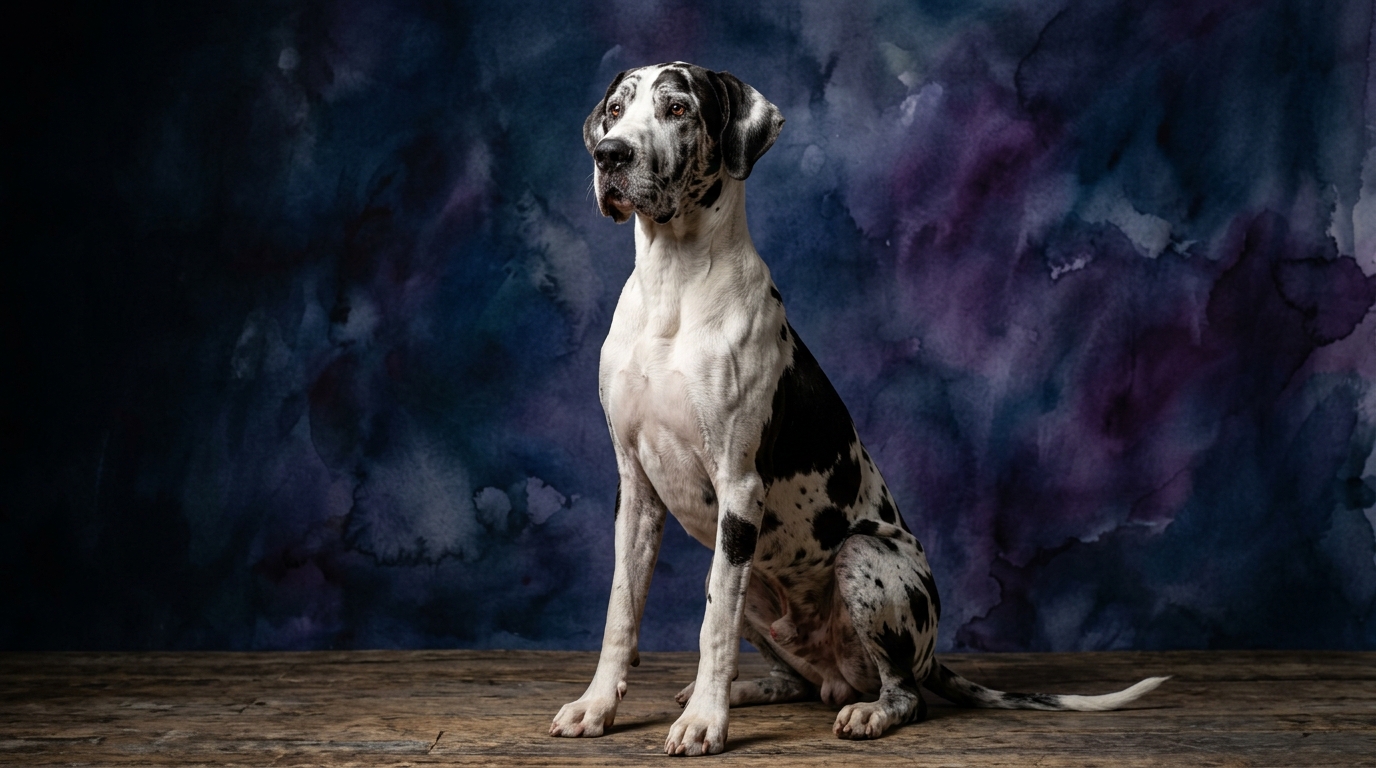
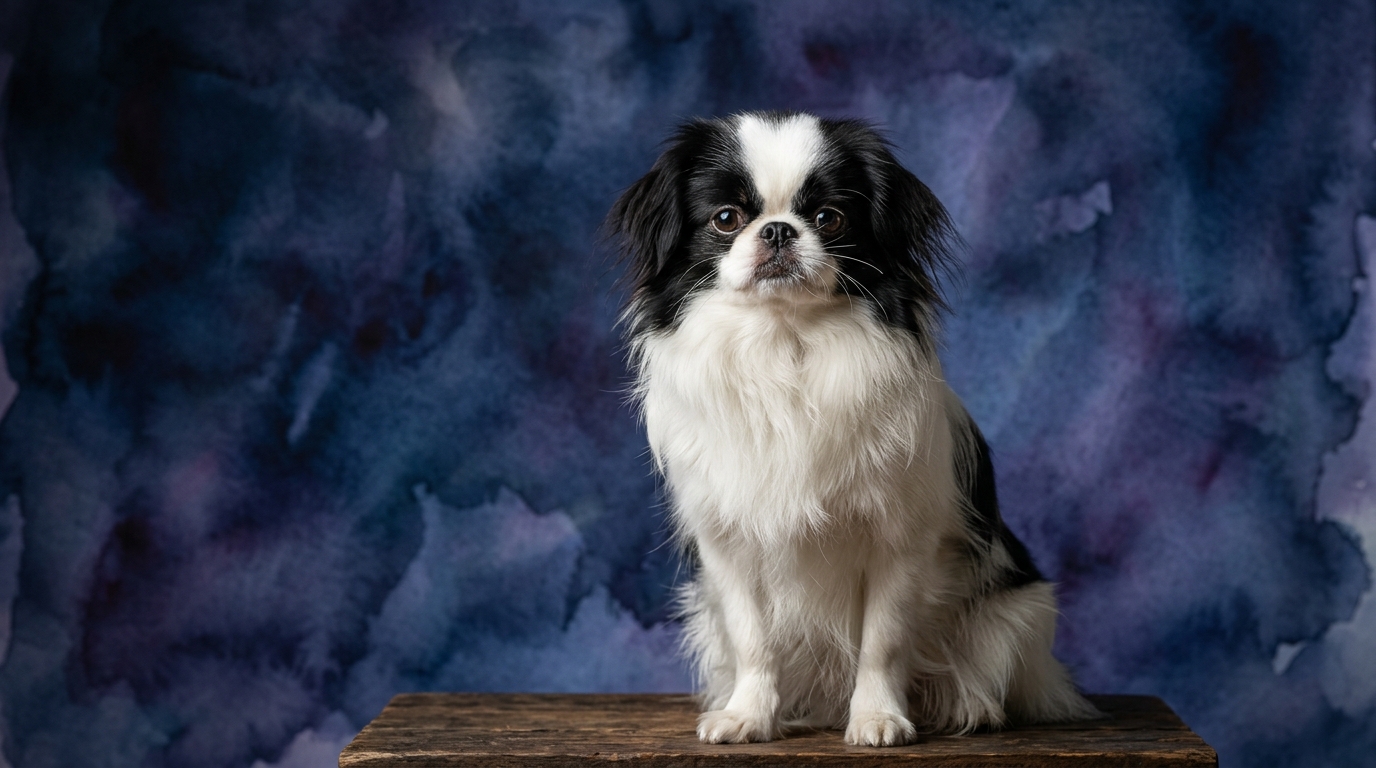
Side-by-Side Cognitive Profiles: Great Dane vs. Japanese Chin
At The Cosmic Pet Pet IQ Lab, we evaluate canine intelligence across five key dimensions, offering a detailed look into what makes each breed's mind unique. Understanding these profiles helps us appreciate the specific strengths and tendencies of our companions.
The Great Dane, a majestic dog with a Coren ranking of #48, presents a balanced and socially adept cognitive profile. Their Problem Solving score is 3/5, indicating a moderate ability to navigate novel situations or figure out how to access desired items. They can learn to open simple latches or understand multi-step commands, but complex, abstract challenges might require more repetition or guidance, as their solutions are often direct rather than intricate.
Their Training Speed is rated 3/5, meaning Great Danes absorb new commands and routines at a steady pace. They are generally cooperative and eager to please, which aids in their learning; however, they aren't the fastest to generalize learned behaviors to new contexts without consistent reinforcement. Consistency is paramount for solidifying their understanding and ensuring long-term retention.
Social Intelligence is a strong suit for the Great Dane, earning them a 4/5. They possess a keen awareness of human emotions and social cues, often displaying empathy and a profound desire for close companionship. They readily integrate into family dynamics, understanding hierarchies and social expectations within their human pack, and their interactions are typically gentle and considerate.
With an Instinctive Drive score of 3/5, modern Great Danes exhibit a moderate level of ancestral impulses. This might manifest as a desire to patrol their territory, a moderate prey drive, or an inclination to lean into their human companions. These drives are generally manageable and not overwhelming, allowing them to be adaptable household members.
Finally, their Memory is rated 3/5, indicating a solid recall for learned commands, routines, and experiences. Great Danes remember people, places, and past events with reliability, making them consistent companions once trained. Their long-term memory is generally good, allowing them to retain skills even after periods of inactivity.
The Japanese Chin, a charming Toy breed not formally Coren-ranked, possesses a distinct and equally fascinating cognitive makeup, often reflecting its historical role as a companion. Their Problem Solving score is 3/5, similar to the Great Dane. They display a moderate aptitude for figuring out how to get attention, manipulate objects to their advantage (like pushing a toy under furniture to retrieve it), or navigate a household environment efficiently. Their solutions are often clever and geared towards comfort or interaction.
Their Training Speed is also rated 3/5. Japanese Chins are intelligent and capable of understanding commands, but their independent streak means they might require more motivation or a different approach than a breed with a stronger 'eager to please' drive. They learn best with positive reinforcement and patience, thriving on positive, engaging sessions.
The Japanese Chin's Social Intelligence is 3/5, showcasing a unique expression of this trait. They are highly attuned to their chosen human's mood and often form very strong, singular bonds. They can be discerning with strangers, carefully assessing new individuals before offering affection, demonstrating a nuanced understanding of social boundaries and personal space.
Their Instinctive Drive scores 3/5, with impulses often manifesting as a desire for comfort, a playful chase instinct with small toys, or a natural inclination to be near their human. They maintain a balance between independent exploration and seeking companionship, reflecting their historical role as cherished lapdogs.
The Japanese Chin's Memory is rated 3/5. They demonstrate a good recall for routines, people, and boundaries. They remember where their favorite napping spots are, who provides treats, and which behaviors elicit desired responses, contributing to their consistent and often charming personalities within the home.
Where the Great Dane Excels Cognitively
The Great Dane's standout cognitive advantage lies unequivocally in its superior social intelligence, scoring a 4/5 compared to the Japanese Chin's 3/5. This higher rating signifies a more profound capacity for understanding complex human social structures and emotional nuances. Great Danes often display an almost uncanny ability to read a room, sensing tension, joy, or sadness, and responding with appropriate comfort or gentle interaction.
Their empathetic nature means they are often more inclined to seek out and offer solace, making them exceptional emotional support animals or family companions who seamlessly integrate into varied social dynamics. This advanced social awareness translates into a more intuitive understanding of household rules and a greater desire to maintain harmony within their human 'pack,' often making them more responsive to indirect cues and subtle shifts in human behavior, fostering a deeply connected relationship.
Where the Japanese Chin Holds a Unique Cognitive Edge
While many of their core IQ scores align, the Japanese Chin exhibits a cognitive advantage in its refined, independent application of its intelligence, particularly in environmental adaptability and self-sufficiency. Its 3/5 problem-solving and social intelligence scores, though numerically similar to the Dane's in some areas, manifest differently, reflecting its distinct heritage.
Chins excel at subtly manipulating their immediate environment for comfort or attention, demonstrating a cleverness in finding sunny spots, cozy hideaways, or unique ways to solicit interaction without being overly demanding. Their social intelligence, while not as broadly empathetic as the Dane's, is acutely focused on discerning individual preferences and boundaries, allowing them to form deep, specific bonds without constant oversight. This translates into a breed that can thrive in smaller spaces, entertain itself gracefully, and require less overt management, making its cognitive profile a unique advantage for owners seeking a more self-contained and discerning companion.
Training Dynamics: Effort vs. Eagerness
Both the Great Dane and the Japanese Chin share a 3/5 rating for training speed, suggesting they absorb new commands at a similar moderate pace. However, the *experience* of training each breed can differ significantly due to their other cognitive traits and inherent behavioral tendencies. The Great Dane's higher social intelligence (4/5) and innate desire to please its human companions often make training feel more straightforward and cooperative.
They are generally more motivated by praise and the approval of their owner, translating into a greater willingness to comply and work alongside their trainer. Their gentle disposition means they respond well to positive reinforcement and consistent, calm guidance, often eager to perform tasks that strengthen their bond and reinforce their place within the family unit.
In contrast, the Japanese Chin, with its 3/5 social intelligence and more independent, sometimes cat-like demeanor, might present a different training dynamic. While equally capable of learning, their motivation often stems more from personal comfort, play, or specific food rewards rather than solely human approval. They can be charmingly stubborn or selective, requiring a trainer to be more creative and patient, understanding that a Chin might weigh the 'reward' against the 'effort' more meticulously.
Training a Chin often involves making it a game and ensuring the dog feels it's *their* idea or benefits them directly, rather than relying solely on their desire to please. Therefore, while the raw learning speed is similar, the Great Dane's inherent social eagerness often makes the training process *perceptually* easier for the average owner who values overt cooperation.
Matching Canine Cognition to Owner Lifestyle
The cognitive profiles and physical attributes of these two breeds offer clear distinctions for owner lifestyles. The Great Dane, despite its 'gentle giant' reputation, is a large dog with a working breed lineage (though now primarily a companion). Its moderate instinctive drive (3/5) and significant physical presence mean it benefits greatly from owners who can provide consistent, structured activity, even if not high-intensity.
Owners who enjoy regular, long walks, light hiking, or engaging in calm but mentally stimulating activities like scent work or obedience training will find a Great Dane a rewarding companion. Their social intelligence thrives on being an active, integrated member of a family, making them suitable for owners who enjoy frequent interaction and have the space to accommodate a large, affectionate animal, valuing their constant, gentle presence.
Conversely, the Japanese Chin, with its toy breed status and more independent social intelligence (3/5), is an ideal match for relaxed owners or those with less expansive living arrangements. While they appreciate short, leisurely strolls and playful indoor games, their exercise requirements are modest. Their cognitive strengths lie in their ability to entertain themselves and form deep, discerning bonds without needing constant physical output or external stimulation.
Owners who cherish quiet companionship, enjoy cuddling on the couch, and appreciate a dog that is content to observe and interact on its own terms will find the Japanese Chin's temperament and cognitive makeup perfectly suited to their lifestyle. They are also excellent for individuals seeking a portable companion for travel or those in urban environments where space is at a premium.
The Verdict
Choose a Great Dane if you seek a large, empathetic companion eager to integrate into a family's social dynamics and thrive with consistent, gentle training and moderate activity.
Opt for a Japanese Chin if you prefer a self-sufficient, discerning companion for a relaxed lifestyle, valuing nuanced interaction and requiring less physical space or strenuous exercise.
🧠 Find Your Pet's IQ Score
Our Pet IQ Lab assessment covers 25+ tests across 5 cognitive dimensions — personalized to your breed.
Take the Full IQ Test →Frequently Asked Questions
Do Great Danes or Japanese Chins suffer from separation anxiety more often?
Great Danes, with their higher social intelligence and strong bond-forming capacity, can be more prone to separation anxiety if not properly socialized and trained for alone time. Japanese Chins, while affectionate, often exhibit more independence, making them generally less susceptible, though individual personalities vary.
Are Japanese Chins difficult to housetrain due to their size?
Japanese Chins are not inherently more difficult to housetrain due to their size, but their smaller bladders mean they need more frequent potty breaks. Consistency and positive reinforcement are crucial, and owners often find success with designated indoor potty areas or very regular outdoor trips to ensure success.
How do their problem-solving skills apply to daily life?
Both breeds, with a 3/5 problem-solving score, can figure out common household challenges with moderate effort. A Great Dane might learn to open a cupboard for treats, while a Japanese Chin might devise a clever way to get onto a high couch or signal its desire for attention using subtle, specific cues.