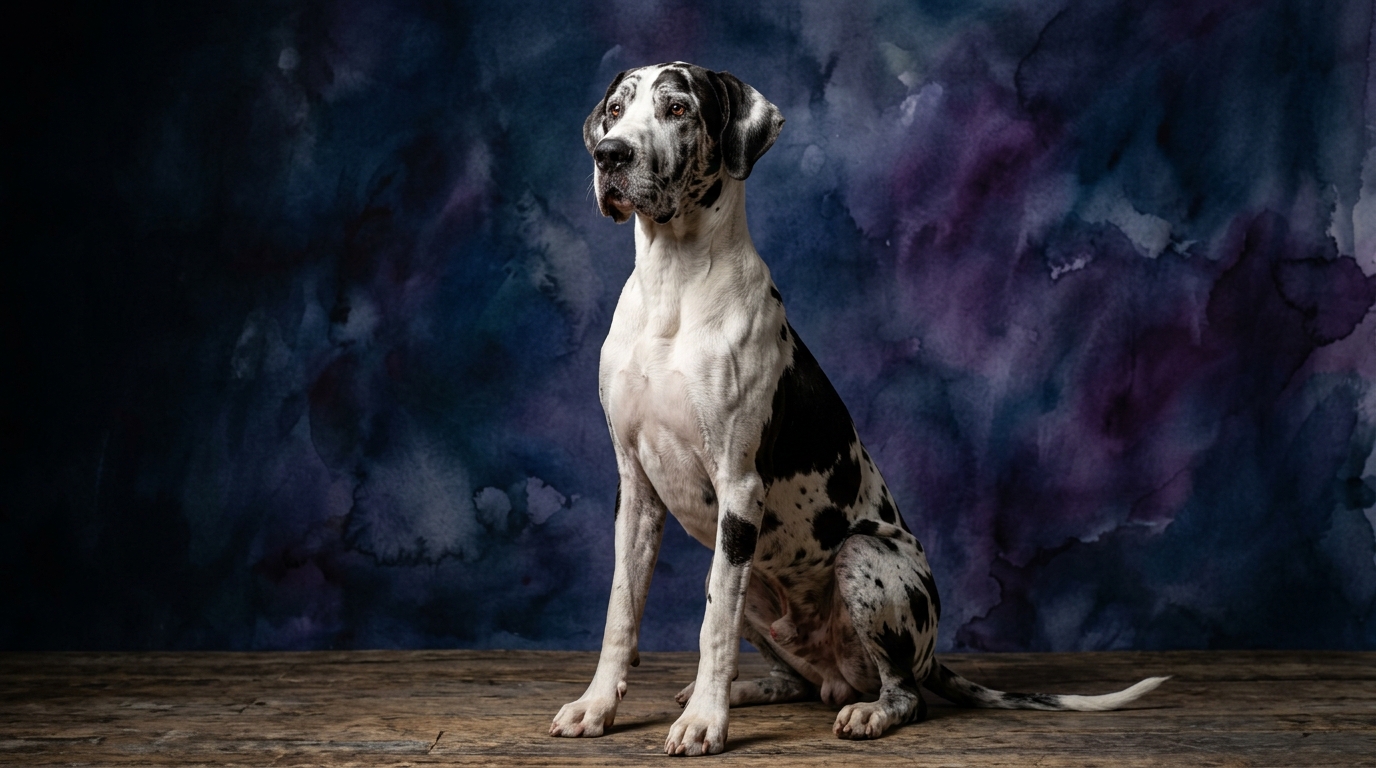
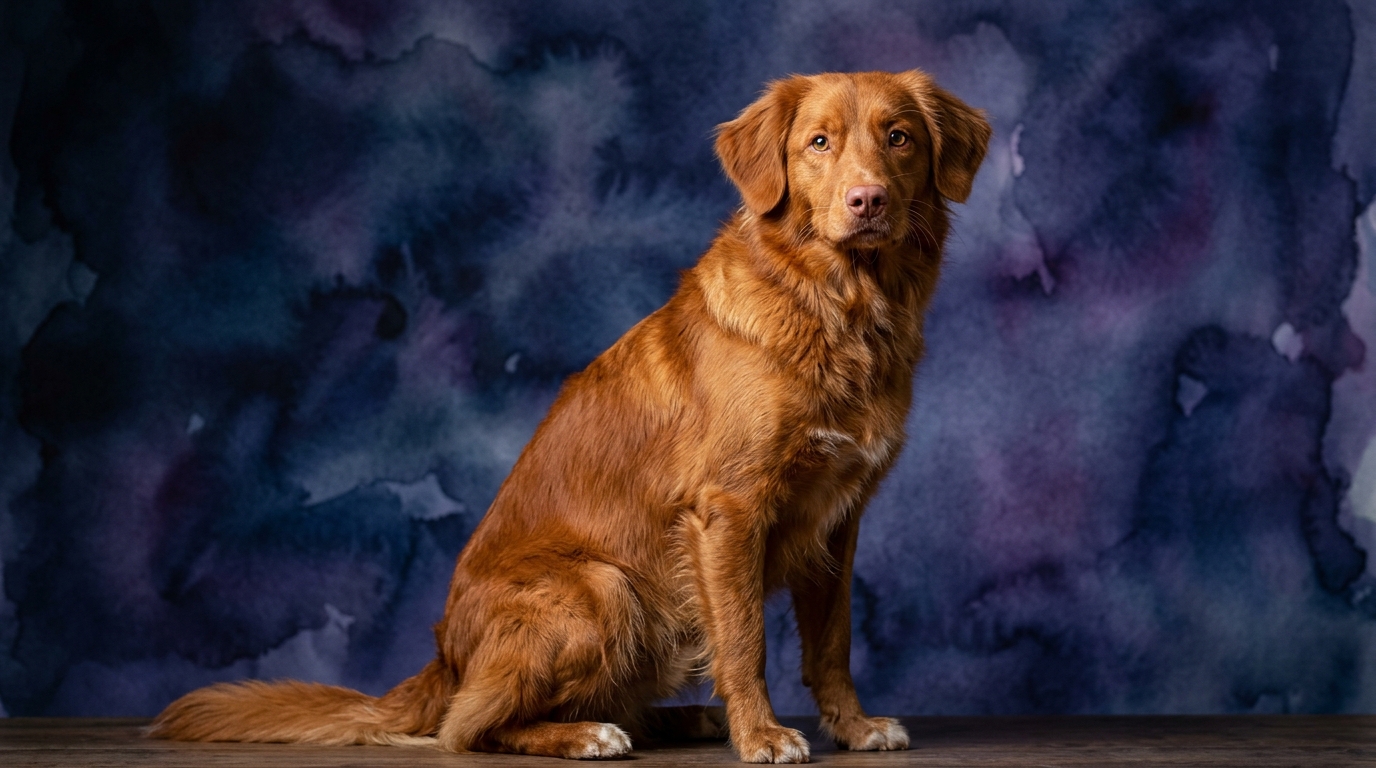
Side-by-Side IQ Profile: Great Dane vs. Nova Scotia Duck Tolling Retriever
**Great Dane (Working Group, Coren Rank #48)**
**Problem Solving (3/5)**: Great Danes approach novel situations with a calm, considered demeanor, often leveraging their physical presence. They methodically assess obstacles rather than using rapid trial-and-error, demonstrating a steady, thoughtful approach to challenges.
**Training Speed (3/5)**: Generally receptive, Great Danes absorb commands at a moderate pace. Their willingness to please and calm disposition assist learning, though consistency is vital. They retain information well once established, making them steady, reliable learners.
**Social Intelligence (4/5)**: This is their peak strength. Great Danes possess exceptional capacity to read human emotions and social cues, forming deep, empathetic bonds. They are highly attuned to family moods, acting as gentle, comforting companions with profound interpersonal understanding.
**Instinctive Drive (3/5)**: While historically hunters, modern Great Danes exhibit moderate instinctive drives. They have a natural family protectiveness but generally manageable prey drive. Their "work" often translates more to watchful companionship than intense task-orientation.
**Memory (3/5)**: Great Danes show solid memory for commands, routines, and past experiences. They reliably recall learned behaviors, contributing to their reputation as consistent and dependable companions. Once a lesson is absorbed, it tends to persist.
**Nova Scotia Duck Tolling Retriever (Sporting Group, Not Coren-Ranked)**
**Problem Solving (3/5)**: Tollers display a practical, goal-oriented approach to challenges, often using observation and persistent effort. They excel when solutions lead to desired outcomes like retrieving, focusing on effective, often physical, manipulation of their environment.
**Training Speed (3/5)**: Eager and enthusiastic, Tollers generally learn at a steady pace, driven by their desire to work with handlers. While high energy can distract, they master tasks with consistent, engaging instruction, thriving on active participation.
**Social Intelligence (3/5)**: Tollers are friendly and bond strongly with their families, attentive to handlers and responsive to social cues. While not as profoundly empathetic as Great Danes, they understand and react appropriately to social dynamics.
**Instinctive Drive (3/5)**: True to heritage, Tollers possess a pronounced, specialized drive for retrieving, chasing, and luring waterfowl. This intense drive is central to their being, influencing play, focus, and overall engagement, providing a strong basis for task-oriented activity.
**Memory (3/5)**: Tollers exhibit reliable memory for learned behaviors and routines, crucial for field work and dog sports. They recall complex sequences and commands, allowing for consistent performance in intricate tasks.
Where the Great Dane Wins Cognitively
The Great Dane's standout cognitive strength lies in their **Social Intelligence (4/5)**, surpassing the Toller's 3/5 in this dimension. This means Great Danes possess a superior ability to interpret subtle human gestures, vocal inflections, and emotional states. They are profoundly empathetic, capable of sensing distress or joy in family members and responding with appropriate comfort or shared enthusiasm. This deep social attunement makes them exceptional emotional support animals and truly integrated family members, understanding the nuances of household dynamics with a sensitivity that few breeds match.
Where the Nova Scotia Duck Tolling Retriever Wins Cognitively
While both breeds score identically across many cognitive dimensions, the Nova Scotia Duck Tolling Retriever's **Instinctive Drive (3/5)**, when viewed through the lens of its specific purpose, provides a unique cognitive advantage. Unlike the Great Dane's more generalized drive, the Toller's drive is highly specialized and intensely focused on retrieving and luring. This amplifies their problem-solving and training speed within tasks related to their natural instincts. They excel at figuring out how to retrieve an object from a difficult spot or maintaining focus on a task that simulates their historical role, demonstrating a persistent and ingenious application of their cognitive abilities to specific, goal-oriented challenges.
Which is Easier to Train and Why
Both the Great Dane and the Nova Scotia Duck Tolling Retriever are rated with a **Training Speed of 3/5**, suggesting neither is inherently "easier" to train in terms of raw learning capacity. However, practical experience reveals differences in *how* they are best trained. The Great Dane's calmer temperament and higher social intelligence often make them more compliant and eager to please their human, particularly in basic obedience. Their lower instinctive drive means fewer distractions in a typical home environment, leading to a steady, if not rapid, learning curve. Conversely, the Toller's high energy and pronounced instinctive drive, while making them enthusiastic participants in training, also mean they require more consistent engagement and channels for their drive. A Toller might learn quickly when highly motivated by a retrieve game, but could be more easily distracted by environmental stimuli than a Great Dane during a quiet indoor training session. Therefore, for a novice owner focusing on general household manners, the Great Dane might present a slightly less challenging training experience due to their inherent placidity, while the Toller thrives with an owner who can harness their focused energy and integrate training into stimulating activities.
Which Suits Active Owners vs. Relaxed Owners
The choice between a Great Dane and a Nova Scotia Duck Tolling Retriever largely hinges on an owner's lifestyle. The Great Dane, despite its imposing size, is often described as a 'gentle giant' and can be surprisingly content with moderate exercise. While daily walks and occasional playtime are essential, they are generally well-suited for more relaxed owners who appreciate a calm, affectionate companion content to lounge indoors for significant periods. Their lower overall energy output and higher social intelligence make them excellent companions for quiet evenings. The Nova Scotia Duck Tolling Retriever, however, is unequivocally a breed for active owners. Bred for demanding work in the field, they possess boundless energy, a keen desire for mental stimulation, and a need for vigorous daily exercise. Owners who enjoy hiking, running, dog sports, or frequent trips to the park will find a Toller to be an enthusiastic and tireless partner. A relaxed owner may quickly find themselves overwhelmed by a Toller's unmet exercise and mental engagement requirements, which can manifest as undesirable behaviors.
The Verdict
Choose a Great Dane if you seek a deeply empathetic, calm, and socially attuned companion who will integrate seamlessly into a relaxed household, offering quiet loyalty and a gentle presence.
Choose a Nova Scotia Duck Tolling Retriever if you lead an active lifestyle and desire a highly driven, energetic partner eager to participate in vigorous outdoor activities and mentally stimulating tasks.
🧠 Find Your Pet's IQ Score
Our Pet IQ Lab assessment covers 25+ tests across 5 cognitive dimensions — personalized to your breed.
Take the Full IQ Test →Frequently Asked Questions
Is the Great Dane truly "gentle" despite its size?
Absolutely. Great Danes are renowned for their gentle and patient temperament, especially with children and other pets, earning them the nickname "gentle giants." Their high social intelligence contributes to their kind and understanding nature, making them excellent family companions.
Do Nova Scotia Duck Tolling Retrievers require a lot of grooming?
Tollers have a medium-length double coat that requires moderate grooming to keep it healthy and free of mats. Regular brushing, typically a few times a week, is usually sufficient to manage shedding and maintain their coat's condition.
How much exercise does a Great Dane need daily?
While large, Great Danes require moderate exercise, typically 30-60 minutes of daily activity, such as walks or supervised playtime in a secure yard. They are prone to joint issues, so intense, high-impact exercise should be avoided, especially during their growth phases.