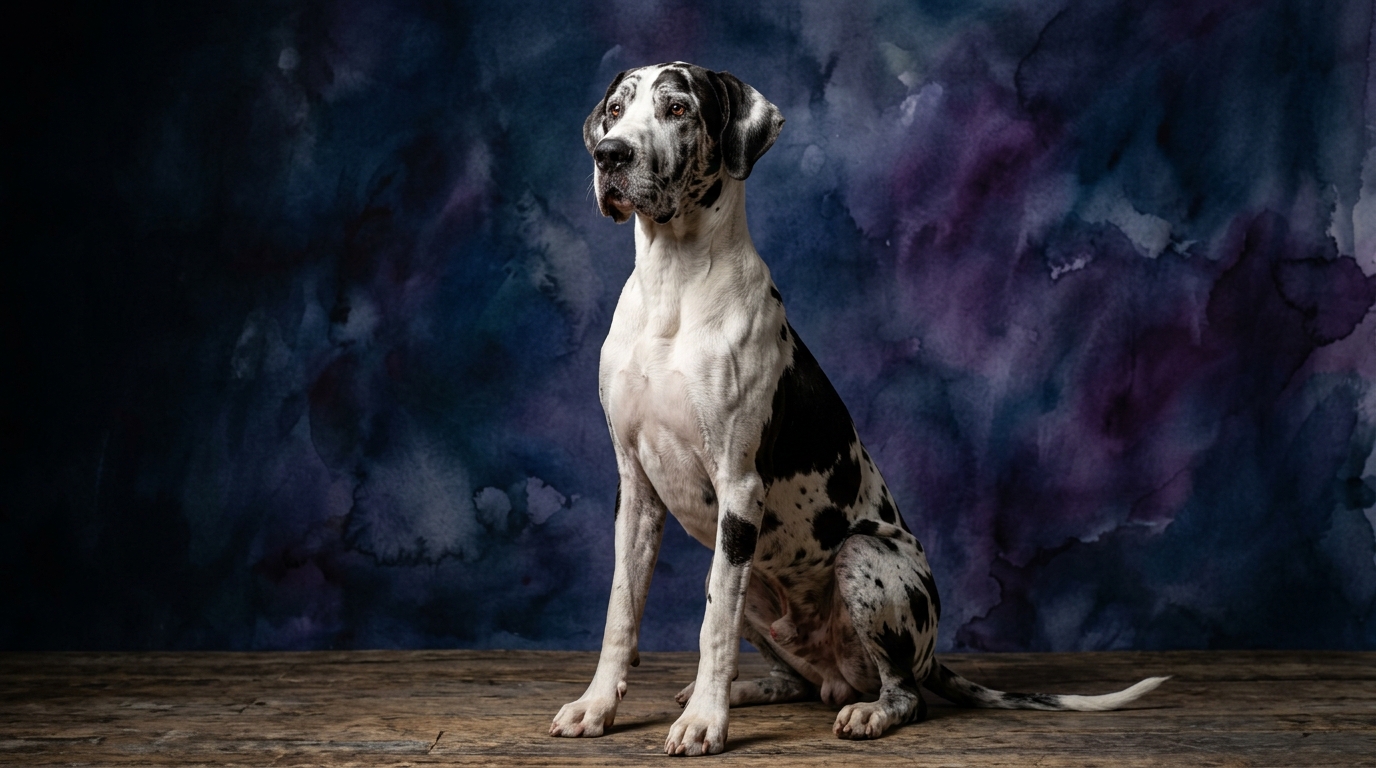
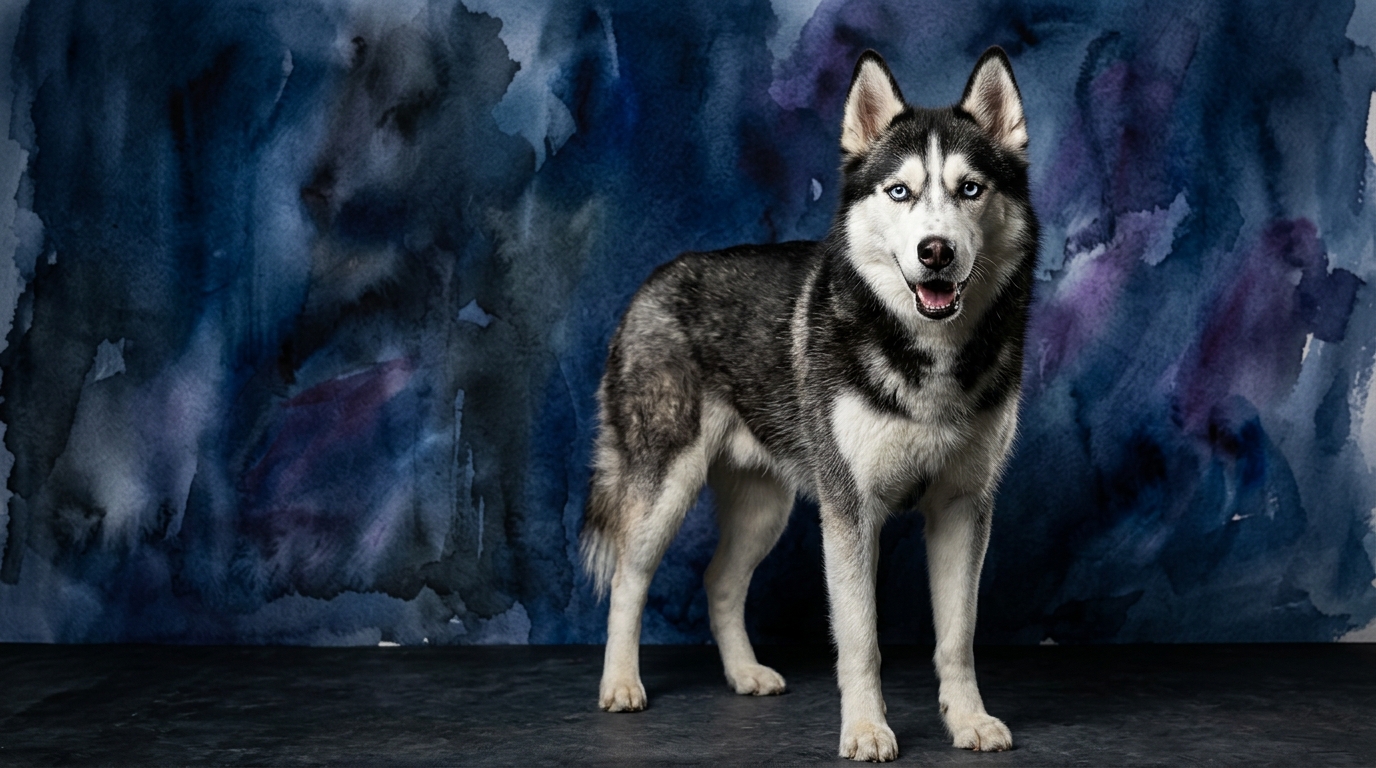
Side-by-Side IQ Profile: Great Dane vs. Siberian Husky
**Great Dane IQ Profile: The Empathetic Guardian**
**Problem Solving (3/5):** Great Danes exhibit a moderate, practical approach to problem-solving. They are capable of understanding and navigating routine challenges, such as figuring out how to open a familiar door or retrieving a dropped toy, but they typically aren't driven to innovate complex solutions independently. Their cognitive process leans more towards following established patterns and human guidance rather than devising novel strategies for intricate puzzles. They excel when tasks are presented clearly and methodically.
**Training Speed (3/5):** These majestic dogs possess a respectable training speed, readily absorbing new commands and concepts with consistent, positive reinforcement. Their willingness to cooperate and their attentive nature make them responsive pupils, especially when training is engaging and rewards-based. While they might not pick up every cue on the first try, their dedication to pleasing their human companions significantly aids in establishing reliable obedience over time.
**Social Intelligence (4/5):** This is where the Great Dane truly distinguishes itself. Their social intelligence is exceptionally high, allowing them to keenly perceive and respond to human emotions and intentions. They form deep, intuitive bonds with their families, often acting as empathetic barometers of household moods. This profound understanding extends to other animals, fostering a tolerant and often nurturing demeanor within a multi-pet environment. They are masters of subtle social cues.
**Instinctive Drive (3/5):** Great Danes possess a moderate instinctive drive. While their heritage includes guarding and hunting, these drives are generally subdued in modern companions. Their primary motivation shifts towards companionship and comfort. They enjoy exploration and play but are not typically consumed by an incessant need for intense physical exertion or a powerful prey drive, making them more adaptable to a variety of home environments.
**Memory (3/5):** Great Danes exhibit a solid, functional memory for learned commands, established routines, and the individuals and places they encounter regularly. They reliably recall past positive and negative experiences, which contributes to their consistent behavior and their ability to form lasting relationships. Their memory serves to reinforce their role as dependable family members.
**Siberian Husky IQ Profile: The Resourceful Independent**
**Problem Solving (4/5):** Siberian Huskies demonstrate a superior aptitude for problem-solving, particularly when it involves achieving their own objectives. They are renowned for their ingenuity in figuring out how to open latches, scale fences, or access forbidden treats, often displaying a cunning independence. Their cognitive approach is driven by curiosity and a desire to overcome obstacles, making them adept at navigating their environment on their own terms, sometimes to the exasperation of their owners.
**Training Speed (2/5):** Training a Siberian Husky demands significant patience, creativity, and unwavering consistency. While capable of learning commands, their independent spirit and strong self-will mean they are less motivated by the desire to please and more by what personally benefits them. They can quickly become bored with repetitive drills, requiring handlers to make training sessions engaging, varied, and to consistently reinforce desired behaviors to overcome their selective hearing.
**Social Intelligence (3/5):** Huskies possess a good level of social intelligence, understanding pack dynamics and interacting effectively with both humans and other dogs. They appreciate companionship and enjoy being part of a group, but their social interactions are often characterized by a more independent and less overtly empathetic stance. They are generally friendly but might not display the same emotional depth or need for constant human validation as some other breeds.
**Instinctive Drive (5/5):** This breed is defined by an exceptionally high instinctive drive, deeply rooted in their history as endurance sled dogs. Their innate desire to run, pull, and explore vast distances is a powerful, persistent force. This manifests as a strong prey drive, an insatiable wanderlust, and an urge for constant motion and mental stimulation. This drive is not merely a preference; it is a fundamental, non-negotiable aspect of their cognitive and physical being.
**Memory (4/5):** Huskies possess an impressive and practical memory, particularly for routes, geographical layouts, and past experiences that led to success (or failure). They can recall complex escape routes, the location of hidden resources, or the precise path of a favorite trail with remarkable accuracy. This strong memory contributes significantly to their resourcefulness and their ability to learn from their environment, sometimes for mischievous purposes.
Where Great Dane Wins Cognitively: The Heart of the Home
The Great Dane's cognitive prowess particularly shines in its **social intelligence (4/5)**, a distinct advantage over the Siberian Husky's (3/5). This manifests as an extraordinary capacity to interpret subtle human cues, understand emotional nuances, and form profoundly empathetic bonds with their families. A Great Dane often displays an almost uncanny ability to gauge a person's mood, offering comfort during distress or respectfully providing space when needed. Their social understanding extends beyond humans, enabling them to integrate with remarkable gentleness and tolerance into diverse multi-pet households. This superior cognitive function makes them exceptionally intuitive and emotionally supportive companions, excelling in creating a harmonious and understanding domestic environment. Their moderate instinctive drive (3/5) also means they are generally less driven by external stimuli, allowing them to focus more intently on social interactions within their immediate circle.
Where Siberian Husky Wins Cognitively: The Ingenious Explorer
The Siberian Husky demonstrates clear cognitive superiority in both **problem-solving (4/5)** and **instinctive drive (5/5)**, surpassing the Great Dane (3/5 for both). Their problem-solving abilities are often directed towards achieving self-determined goals, such as devising clever strategies to open gates, navigate complex environments, or access tempting items. This isn't about following commands, but about an innate, resourceful drive to overcome obstacles. This keen intellect is powerfully amplified by an unparalleled instinctive drive for sustained physical activity, exploration, and the work of pulling, deeply ingrained from their sled dog heritage. Their superior memory (4/5 compared to the Great Dane's 3/5) further bolsters these traits, allowing them to recall intricate routes, successful escape tactics, or the precise location of interesting scents, making them formidable in self-directed pursuits and environmental mastery.
Which is Easier to Train and Why: A Question of Motivation
When evaluating ease of training, the **Great Dane (Training Speed 3/5)** typically presents a more straightforward experience than the **Siberian Husky (Training Speed 2/5)**. The Great Dane's moderate training speed is significantly bolstered by its higher social intelligence and an inherent desire to please its human companions. They are generally more attentive, focused on their handler, and less prone to independent decision-making during training sessions. Their cognitive profile suggests they are more inclined to internalize instructions, especially when delivered with consistent positive reinforcement, and apply them reliably. They thrive on clear communication and the bond formed through cooperative learning.
Conversely, the Siberian Husky's lower training speed is often a direct consequence of its exceptionally high instinctive drive and independent problem-solving skills. Huskies frequently perceive training requests as optional suggestions rather than absolute commands, particularly if those requests conflict with their powerful innate urges to run, explore, or chase. Their intelligence is keenly channeled into figuring out how to achieve *their* goals, which may not always align with an owner's training objectives. This often results in a dog that understands what is being asked but consciously chooses whether or not to comply based on its own assessment of the situation. Overcoming this requires immense patience, creative motivation (often leveraging their love for running or exploring as rewards), and unwavering consistency from their handler. Their strong memory also means they remember if a command was inconsistently enforced previously, potentially exploiting those lapses in future interactions.
Which Suits Active Owners vs. Relaxed Owners: Matching Lifestyles
For a **relaxed owner** seeking a stately, serene presence, the **Great Dane** is often the more suitable choice. While these gentle giants require regular, moderate exercise to maintain their health and joint integrity, their instinctive drive (3/5) is not overwhelming. Their higher social intelligence (4/5) means they are generally content to spend significant time lounging comfortably with their family, valuing close companionship over relentless activity. They appreciate structured walks, some playtime, and mental engagement through puzzles, but they are not typically driven by an incessant, high-octane need for exertion. Their cognitive makeup aligns well with a lifestyle that balances activity with ample downtime and deep, affectionate interaction.
**Active owners** who thrive on outdoor adventures, endurance activities, and rigorous routines will find the **Siberian Husky** to be an ideal and exhilarating match. Their exceptionally high instinctive drive (5/5) and strong memory (4/5) demand consistent, challenging physical and mental engagement. Huskies require extensive daily exercise, often excelling in activities like long-distance running, hiking, skijoring, or other pulling sports, to satisfy their powerful innate urges. An owner who can creatively channel their superior problem-solving skills into constructive activities and provide abundant outlets for their formidable drive will forge a deeply rewarding partnership. However, any insufficient provision of physical and mental stimulation will likely result in a bored, potentially destructive, and certainly clever escape artist, reflecting their innate drive to find engagement independently.
The Verdict
Choose a Great Dane if you prioritize a deeply empathetic, socially attuned companion who integrates smoothly into family life and offers a calmer, more predictable presence.
Opt for a Siberian Husky if you lead an active lifestyle, appreciate an independent, clever dog, and are prepared to channel their powerful drives into consistent, engaging challenges.
🧠 Find Your Pet's IQ Score
Our Pet IQ Lab assessment covers 25+ tests across 5 cognitive dimensions — personalized to your breed.
Take the Full IQ Test →Frequently Asked Questions
Are Great Danes easy to live with for first-time dog owners?
Great Danes can be a good fit for first-time owners due to their social intelligence and eagerness to please, making them generally responsive to consistent training and clear communication, despite their large size.
Do Siberian Huskies ever calm down or become less independent?
While an adult Siberian Husky may mellow slightly with age and consistent training, their high instinctive drive and independent problem-solving traits are fundamental to their nature and require ongoing management and appropriate outlets throughout their lives.
Which breed is better with children?
The Great Dane's higher social intelligence and gentle disposition often make them a more naturally tolerant and patient choice for families with children, whereas the Husky's strong prey drive and independent nature require more careful supervision around very young children.