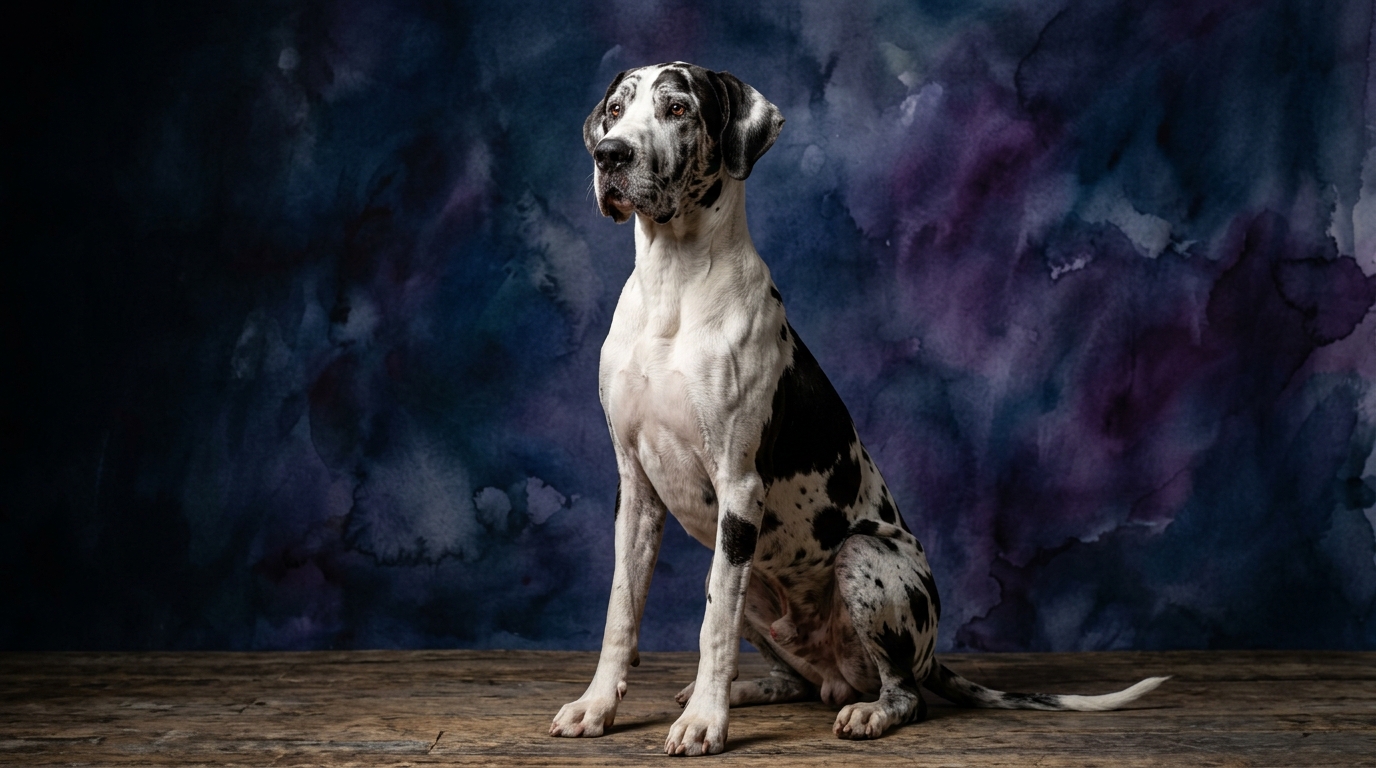
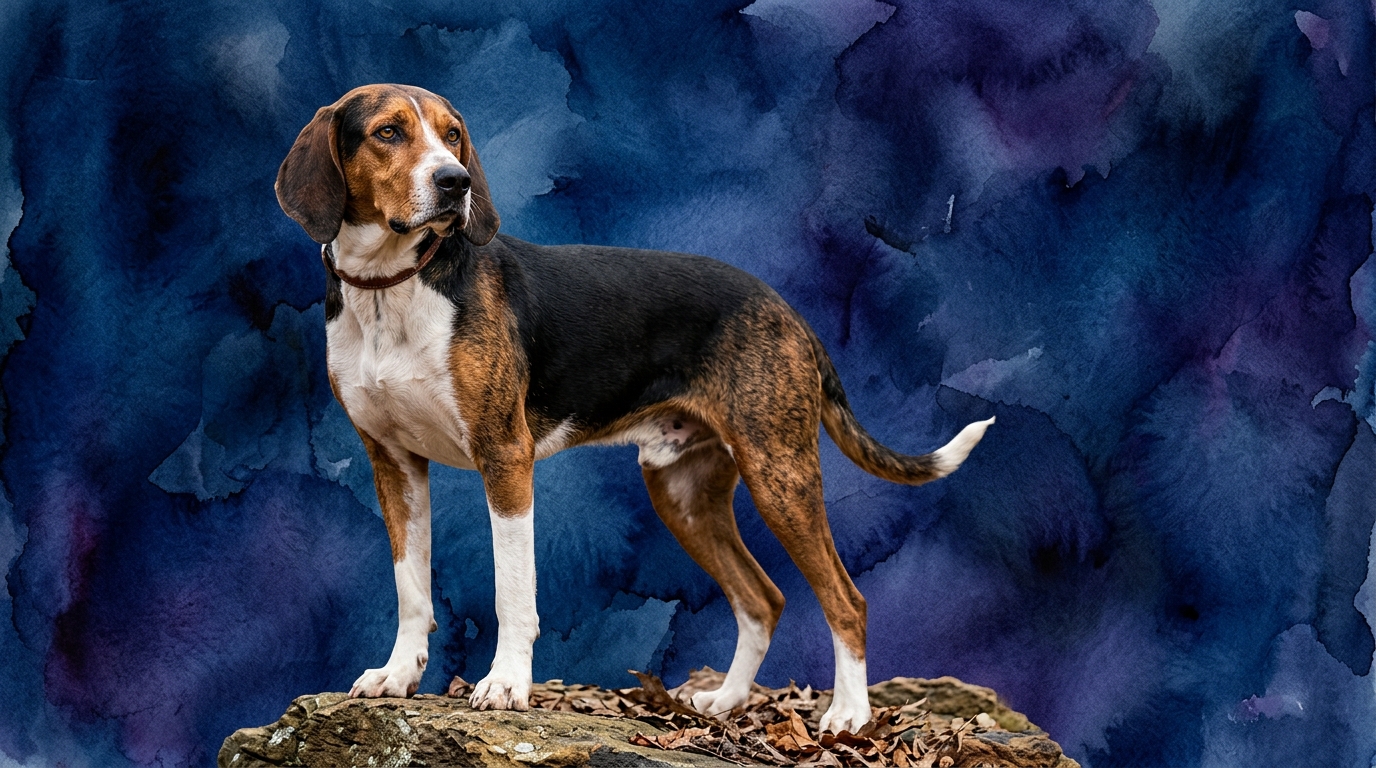
Side-by-Side Cognitive Profile: Great Dane vs. Treeing Walker Coonhound
To truly understand the mental makeup of these two distinct breeds, The Cosmic Pet Pet IQ Lab employs a five-dimensional cognitive assessment. For the Great Dane, a member of the Working group, we observe a Problem Solving score of 3/5, indicating an ability to navigate moderately complex challenges, though they may not independently strategize intricate solutions. Their Training Speed is also 3/5, suggesting they absorb new commands at an average rate, benefiting from consistent, positive reinforcement. Where Great Danes truly shine is in Social Intelligence, scoring an impressive 4/5; they are deeply attuned to human emotions and social cues, thriving on companionship and interaction. Their Instinctive Drive is 3/5, manifesting as a moderate prey drive and guardian instincts, often tempered by their strong bond with their family. Finally, their Memory rating of 3/5 means they generally retain learned behaviors and experiences reliably over time. This breed holds a Coren rank of #48, reflecting a solid capacity for working and adaptive intelligence.
The Treeing Walker Coonhound, a quintessential member of the Hound group, presents a different cognitive blueprint. Across all five dimensions, this breed consistently scores 3/5. Their Problem Solving ability, while rated 3/5, is often specialized towards scent-related tasks, demonstrating cleverness within their domain but perhaps less aptitude for abstract puzzles. Training Speed at 3/5 suggests they are capable of learning, but their independent nature and powerful instinctive drives require patient, creative, and highly motivating training approaches. Social Intelligence also stands at 3/5; while friendly and sociable, their focus can often be more externally oriented towards interesting scents and the environment rather than solely on human interaction. Their Instinctive Drive, a robust 3/5, is particularly pronounced in their relentless pursuit of scent trails, a defining characteristic of the breed. Memory, at 3/5, is effective for recalling scent patterns and hunting routines. It's important to note that the Treeing Walker Coonhound is not Coren-ranked, which isn't an indicator of lesser intelligence, but rather reflects that the Coren ranking system often prioritizes adaptive and obedience intelligence metrics that may not fully capture the specialized, independent cognitive strengths of many hound breeds.
Where the Great Dane Shows Cognitive Strengths
The Great Dane's primary cognitive advantage lies in its superior Social Intelligence, rated at 4/5 compared to the Coonhound's 3/5. This dimension signifies a profound ability to understand and respond to human emotions, intentions, and social cues. A Great Dane often demonstrates an almost intuitive grasp of its owner's mood, offering comfort or seeking interaction appropriately. This heightened social awareness translates into a companion who is deeply integrated into family life, often acting as a gentle, empathetic presence. Their desire to please, stemming from this social acumen, makes them highly cooperative in domestic settings and more inclined to follow human direction in non-task-specific scenarios. This isn't just about obedience; it's about a sophisticated understanding of the human-animal bond and an eagerness to participate harmoniously within the family unit. Their Working group background further supports this, as many working breeds excel in partnership roles that require a deep cognitive connection with their handler.
Where the Treeing Walker Coonhound Excels Cognitively
While the Treeing Walker Coonhound scores 3/5 in Instinctive Drive, mirroring the Great Dane, the *nature* of this drive represents a unique cognitive strength for the Coonhound. This breed possesses an extraordinary and highly specialized olfactory intelligence, allowing them to follow complex, faint, and often aged scent trails with unwavering focus and persistence. Their problem-solving in this context is remarkable: they can discriminate between myriad scents, ignore distractions, and reconstruct a path purely from olfactory information, sometimes over vast distances and varied terrain. This isn't general problem-solving, but a highly evolved, domain-specific cognitive skill that requires immense mental stamina, concentration, and the ability to process sensory data in an incredibly sophisticated way. Their memory, also rated 3/5, is particularly adept at recalling these intricate scent patterns and the successful strategies used to pursue them. For tasks requiring independent, persistent, and highly specialized sensory processing, the Treeing Walker Coonhound demonstrates a unique and powerful form of intelligence.
Training Aptitude: Great Dane vs. Treeing Walker Coonhound
When considering ease of training, the Great Dane often presents a more straightforward experience for the average owner, largely due to its higher Social Intelligence. Their inherent desire to connect with and please their human companions acts as a powerful motivator. A Great Dane typically responds well to positive reinforcement, valuing praise and attention as much as, if not more than, treats. Their moderate instinctive drive means they are generally less likely to become singularly focused on external stimuli, making it easier to maintain their attention during training sessions. While their Training Speed is 3/5, consistent and gentle methods yield reliable results, as they are genuinely cooperative partners seeking to understand and fulfill expectations. Their cognitive makeup makes them receptive to a wide range of commands and behaviors, from basic obedience to more complex tricks, provided the training is engaging and builds on their social bond.
The Treeing Walker Coonhound, conversely, can present a more significant training challenge due to its strong, independent Instinctive Drive. While equally capable of learning (Training Speed 3/5), their primary motivation often stems from their powerful nose and the thrill of the chase. Once a Coonhound catches a compelling scent, their focus can narrow intensely, making it difficult to redirect their attention to human-initiated commands. This isn't defiance, but rather a profound prioritization of their innate drive. Training a Treeing Walker Coonhound requires exceptional patience, creativity, and consistency. Owners often find success by incorporating scent work into training or by ensuring that exercises are highly engaging and reward-based, making the human's 'game' more enticing than the environment's distractions. Understanding that their 'problem-solving' is often geared towards independent tracking, rather than human-centric tasks, is key to successful training. They learn best when their natural instincts are leveraged, not suppressed, requiring a different pedagogical approach.
Matching Breeds to Lifestyles: Active vs. Relaxed Owners
For owners with a more relaxed lifestyle, the Great Dane often proves to be a surprisingly fitting companion. Despite their immense size, Great Danes are frequently described as 'gentle giants' who enjoy lounging with their families. While they certainly require regular exercise to maintain their health and well-being—daily walks and opportunities to stretch their long legs are essential—they are not typically hyperactive dogs demanding constant strenuous activity. Their high Social Intelligence means they thrive on human presence and are content to be near their people, whether on a hike or curled up on the couch. For a relaxed owner who can provide consistent, moderate exercise and abundant social interaction, a Great Dane offers a calm, affectionate, and deeply bonded companion. They adapt well to various living situations, provided they have enough space and their fundamental needs for companionship and activity are met.
The Treeing Walker Coonhound, on the other hand, is unequivocally suited for active owners or families who embrace an outdoor-oriented lifestyle. Their strong Instinctive Drive, particularly their powerful scenting ability and endurance, means they possess significant energy levels and a deep need for mental and physical stimulation. A Coonhound thrives when given ample opportunities to engage its nose and body, whether through long, vigorous walks, hikes, secure off-leash running, or structured scent work and tracking games. An owner who cannot provide a consistent outlet for these drives risks a bored, frustrated Coonhound, which may manifest in undesirable behaviors such as excessive vocalization, destructive chewing, or attempting to escape. Their independent nature also means they appreciate having a 'job' or an engaging activity. For the active owner who appreciates a tenacious, independent partner for outdoor adventures and can provide consistent mental and physical challenges, the Treeing Walker Coonhound will flourish and demonstrate its impressive endurance and focused drive.
The Verdict
If you prioritize a socially astute companion who integrates deeply into family life, offering gentle presence and responding readily to human cues, the Great Dane is an excellent choice.
Opt for the Treeing Walker Coonhound if you are an active individual or family seeking a tenacious, independent partner for outdoor adventures and scent-driven activities, appreciating their focused drive.
🧠 Find Your Pet's IQ Score
Our Pet IQ Lab assessment covers 25+ tests across 5 cognitive dimensions — personalized to your breed.
Take the Full IQ Test →Frequently Asked Questions
Is a Great Dane's size indicative of its cognitive capacity?
Not directly. While their imposing size might imply a slower, more deliberate nature, their cognitive abilities, such as their high social intelligence, are distinct from physical attributes. Their Coren ranking reflects a general working intelligence, not just physical prowess or speed.
Why isn't the Treeing Walker Coonhound Coren-ranked?
The Coren ranking primarily assesses adaptive and working/obedience intelligence, often favoring breeds that excel at human-directed tasks. Hound breeds, with their specialized, independent hunting intelligence, are often not included or ranked lower in these specific metrics, not due to a lack of intelligence, but a difference in cognitive focus and motivation.
Do both breeds require significant mental stimulation?
Absolutely. While their methods might differ, both breeds benefit immensely from mental engagement. Great Danes thrive on social interaction and gentle puzzle toys, whereas Treeing Walker Coonhounds need outlets for their powerful scent drive, such as tracking games or structured scent work, to prevent boredom and destructive behaviors.