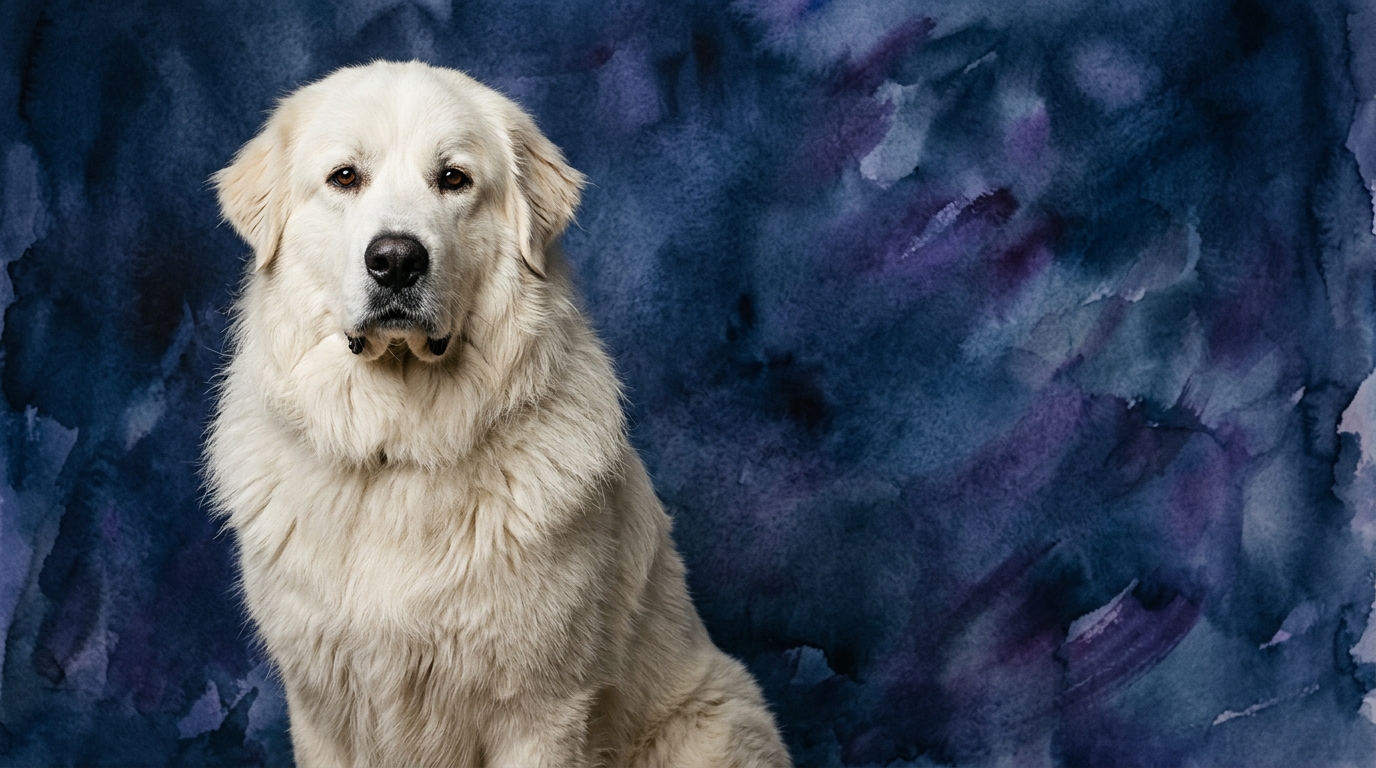
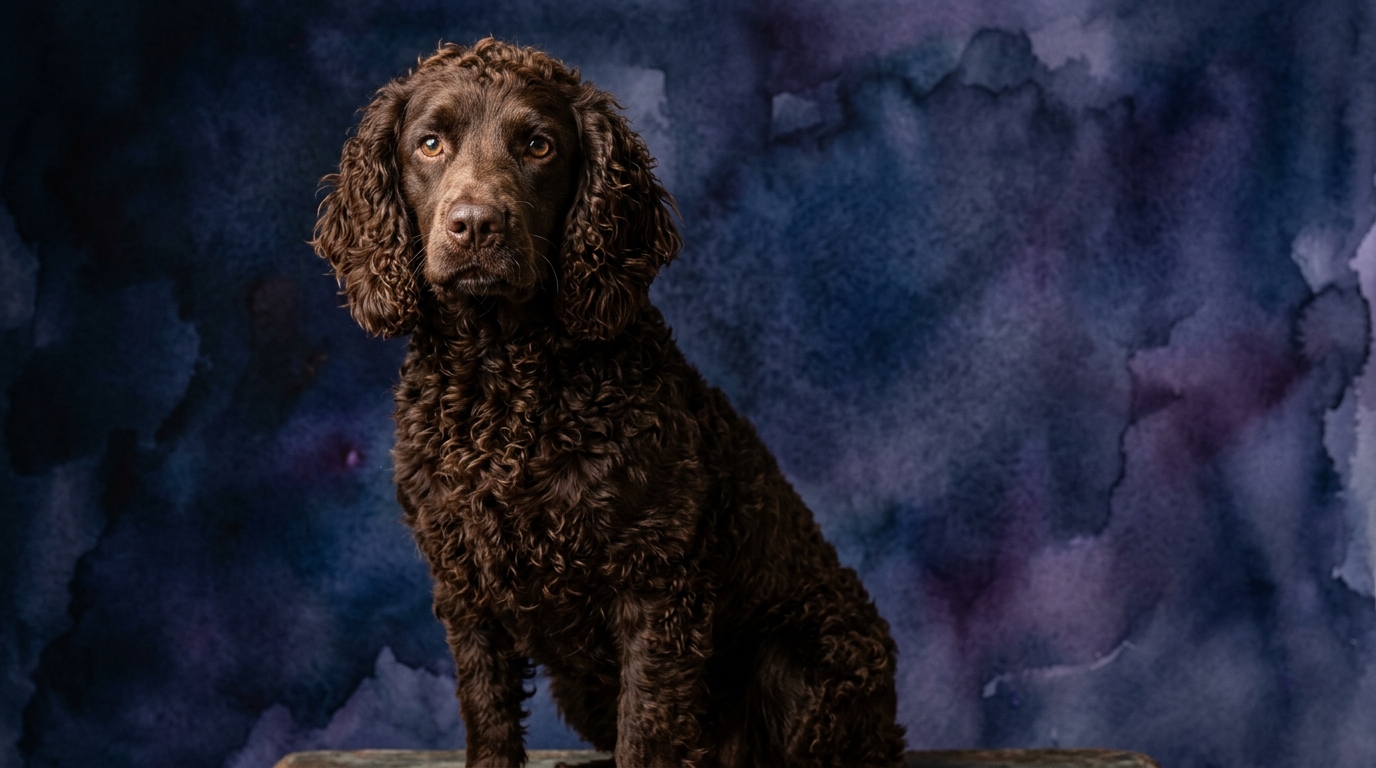
Side-by-Side Cognitive Profiles: Pyrenees vs. Water Spaniel
The Great Pyrenees, ranked #64 by Coren, presents a unique cognitive blueprint, shaped by centuries of independent guardianship. Their Problem Solving score of 3/5 reflects an ability to make autonomous decisions, particularly in assessing and neutralizing threats without direct human intervention. Training Speed, also at 3/5, indicates they learn at a deliberate pace, often weighing commands against their own perceived utility rather than eager compliance. Social Intelligence, rated 3/5, manifests as a deep, protective bond with their family or flock, often expressed through quiet vigilance rather than constant interaction. Their Instinctive Drive, a 3/5, is powerfully geared towards territorial defense and protection, an unwavering internal compass. Memory, at 3/5, allows them to retain routines and information relevant to their duties, but perhaps not complex sequences for abstract tasks.
In contrast, the American Water Spaniel, holding a higher Coren rank of #44, exhibits a cognitive profile tailored for cooperative work. Their Problem Solving, also 3/5, is focused on practical, task-oriented challenges, such as navigating terrain to retrieve or figuring out how to access objects during work. Training Speed, rated 3/5, indicates a readiness to learn, often driven by a desire to please and participate in structured activities. Social Intelligence, at 3/5, allows them to be adaptable and responsive companions, engaging readily with their human partners. Their Instinctive Drive, a 3/5, is strongly rooted in their retrieving heritage – a keen desire to hunt, swim, and bring back items. Where they truly stand out is their Memory, scoring 4/5, which enables them to quickly grasp and retain sequences of commands, retrieve locations, and learned behaviors, making them highly reliable partners in complex, multi-step tasks.
Where the Great Pyrenees' Mind Shines Brightest
The Great Pyrenees excels in domains demanding autonomous decision-making and a broad, watchful perspective. Their 3/5 problem-solving score doesn't signify a quick-witted puzzle solver, but rather a profound capacity to independently assess and respond to environmental threats. This breed processes complex scenarios—like a shifting predator threat or a vulnerable flock member—and acts decisively without needing human instruction, a trait honed over centuries of solitary guardianship. Their cognitive strength lies in their self-sufficiency and the quiet, observant processing of their surroundings, leading to measured, effective responses.
Their instinctive drive, also rated 3/5, is a powerful internal compass that prioritizes protection above all else. This drive manifests as an unwavering vigilance and a deep-seated commitment to their charges, whether livestock or family. While their social intelligence is 3/5, it's a specific kind of social cognition focused on the welfare of their "flock," rather than a desire for constant human interaction or complex social games. The Pyrenees' mind is a fortress of calm observation, adept at discerning subtle changes and responding with deliberate, often formidable, protective action.
The American Water Spaniel's Cognitive Edge
The American Water Spaniel's cognitive strengths lean towards cooperative work and efficient information processing, particularly evident in their superior memory score of 4/5. This enhanced memory allows them to quickly recall learned commands, retrieve locations, and complex sequences of actions, making them highly effective in tasks requiring consistent execution over time. Their problem-solving at 3/5 is geared towards practical, immediate challenges within a task, like navigating dense cover or finding a downed bird, rather than abstract conceptualization.
Their higher Coren rank (#44 vs #64) generally suggests a greater aptitude for understanding and executing human commands, reflecting a mind eager for direction and structured activity. The AWS's 3/5 instinctive drive is channelled into their retrieving and water work, providing a strong internal motivation for task completion and endurance. This drive, combined with their superior memory and social intelligence (3/5), allows them to form a highly communicative and effective partnership with their handler, consistently delivering on expectations in dynamic environments.
Training Dynamics: Which Breed Learns More Readily?
When it comes to traditional obedience training, the American Water Spaniel generally presents a more straightforward experience. Their higher Coren rank and superior memory (4/5) mean they are typically quicker to grasp and retain new commands and routines. They are bred to work closely with humans, often displaying a strong desire to please, which translates into an eagerness to participate in training sessions and respond to cues. Their instinctive drive, focused on retrieving and working alongside a handler, makes them highly receptive to positive reinforcement methods that incorporate these natural tendencies, making them relatively easier to motivate and guide through learning.
The Great Pyrenees, while capable of learning (Training Speed 3/5), approaches training with a different mindset. Their deep-seated independence, a crucial trait for a guardian breed, means they are not inherently driven by a desire to "please" in the conventional sense. They will learn commands, but often weigh them against their own assessment of the situation, sometimes appearing stubborn. Training a Pyrenees requires immense patience, consistency, and an understanding that their responses might be slower or more deliberate. They are less likely to perform repetitive tasks simply for the sake of it, preferring to engage when they perceive a practical purpose, often related to their protective instincts. Their training needs to be framed in a way that respects their autonomous nature, focusing on building trust and clear communication rather than strict compliance.
Active vs. Relaxed Lifestyles: Matching Canine Minds to Owners
For active owners seeking a canine partner for sports, outdoor adventures, or structured work, the American Water Spaniel is often the more suitable choice. Their strong instinctive drive for retrieving and swimming, coupled with their readiness for training and excellent memory, makes them ideal for activities like dock diving, agility, or hunting. They thrive on having a "job" and require consistent physical and mental stimulation to prevent boredom and channel their abundant energy productively. Owners who enjoy teaching complex sequences and engaging in regular, vigorous exercise will find the AWS a highly rewarding and responsive companion, eager to participate in every adventure.
The Great Pyrenees, with its more measured pace and independent nature, aligns better with relaxed owners who appreciate a calm, watchful presence. While they require regular exercise, it's often more about patrolling their territory or enjoying leisurely walks rather than high-intensity, structured activities. Their 3/5 social intelligence means they form deep bonds but are not constantly seeking interactive play; they are content to observe and be near their family. Owners who understand and respect their independent decision-making and are prepared for a dog that sometimes prioritizes its own assessment over immediate human commands will find a loyal, steadfast companion in a Pyrenees. They are not typically suited for competitive obedience or fast-paced dog sports, preferring a role as a quiet, vigilant protector.
The Verdict
Choose a Great Pyrenees if you seek an independent, watchful guardian with a calm demeanor, valuing self-sufficiency and a loyal, protective presence over eager obedience.
Opt for an American Water Spaniel if you desire an active, task-oriented partner eager to engage in structured activities, appreciating their quick learning, strong memory, and cooperative spirit.
🧠 Find Your Pet's IQ Score
Our Pet IQ Lab assessment covers 25+ tests across 5 cognitive dimensions — personalized to your breed.
Take the Full IQ Test →Frequently Asked Questions
Is the Great Pyrenees difficult to train?
Not inherently difficult, but their strong independence and guardian instincts mean they often prioritize their own assessment, requiring patient, consistent training methods focused on building trust rather than strict compliance for effective communication.
What kind of mental stimulation does an American Water Spaniel need?
They thrive on tasks that engage their retrieving drive and memory, such as complex fetch games, scent work, puzzle toys, and learning new multi-step commands, to keep their active minds satisfied and prevent boredom.
Do Great Pyrenees need a lot of exercise?
While not high-energy sprinters, Great Pyrenees need consistent, moderate exercise like long walks or patrolling a secure yard to maintain their physical and mental well-being, aligning with their role as watchful guardians rather than intense athletes.