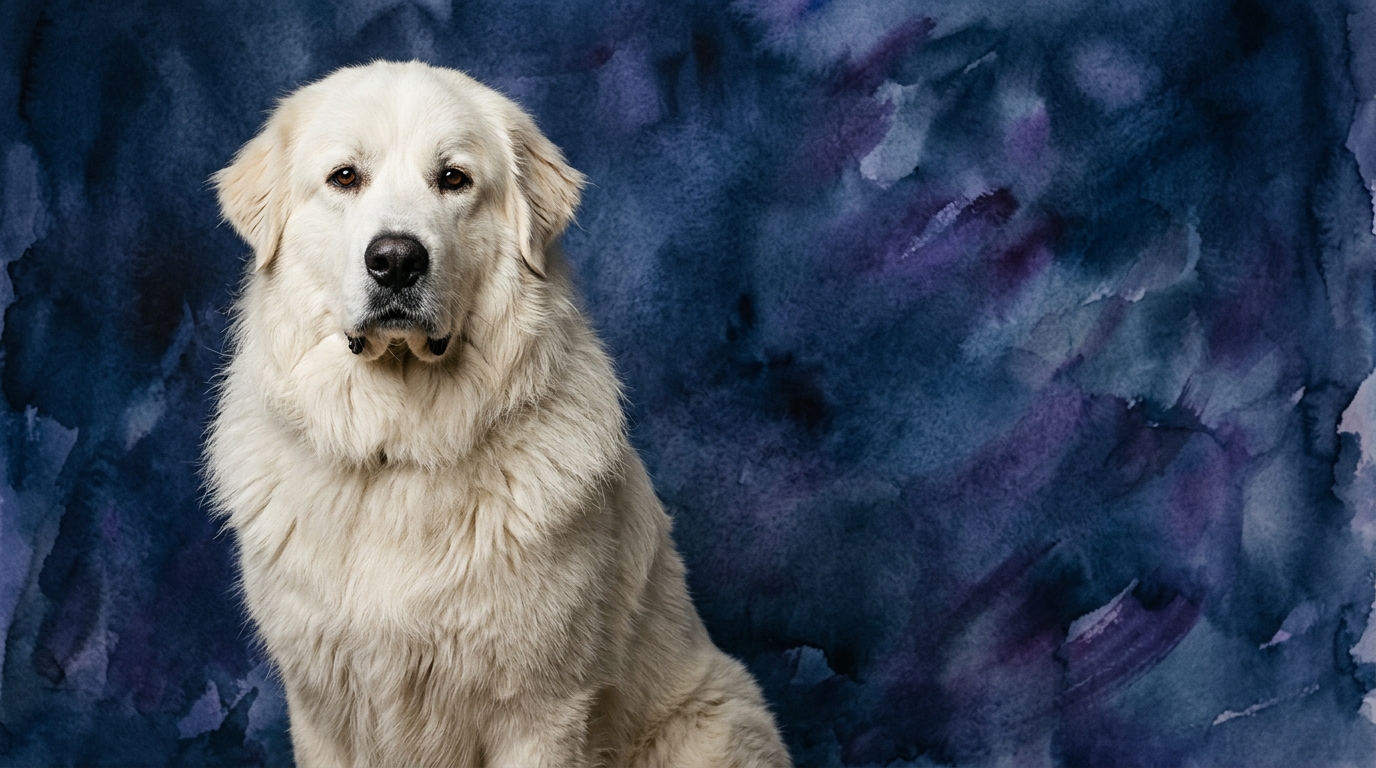
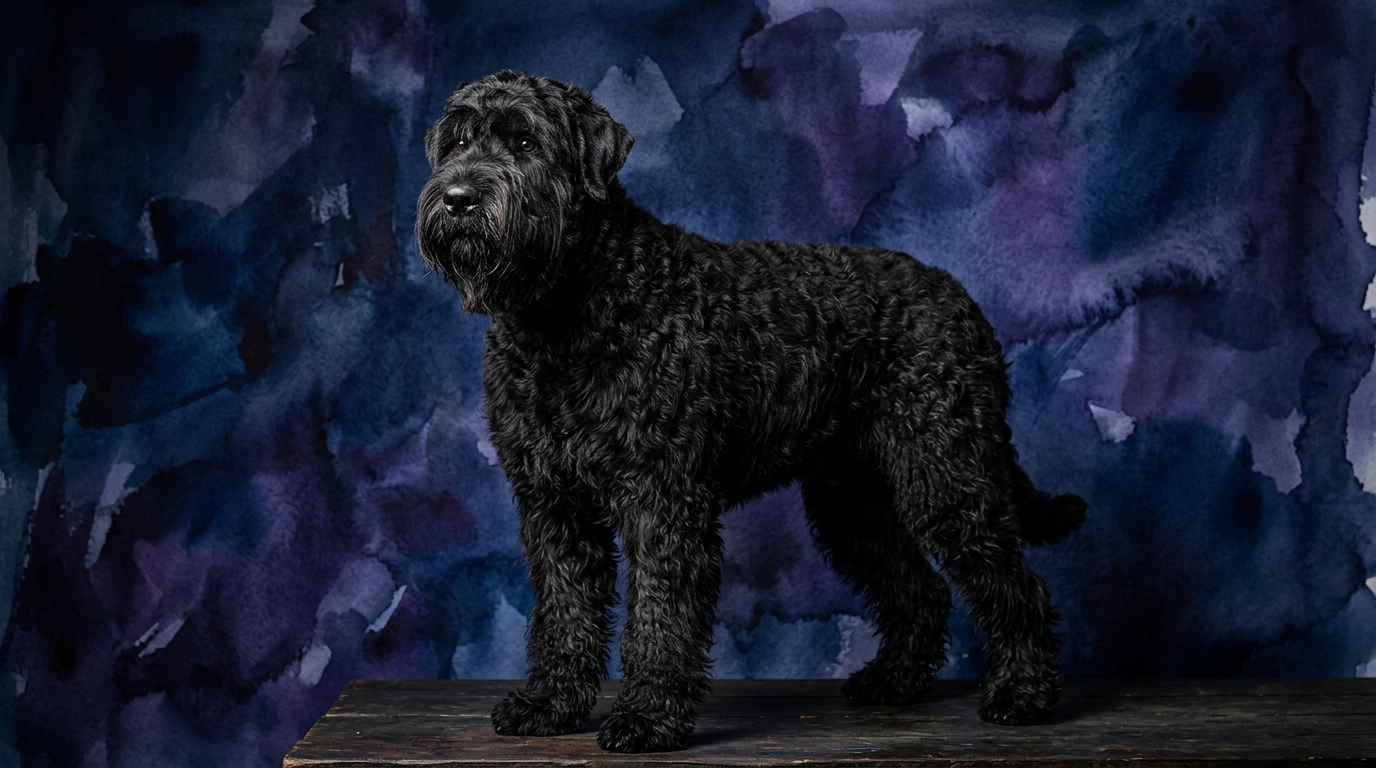
Side-by-Side IQ Profile: Great Pyrenees vs. Black Russian Terrier
At The Cosmic Pet Pet IQ Lab, we evaluate canine intelligence across five critical dimensions. For both the Great Pyrenees and the Black Russian Terrier, our assessments reveal a consistent score of 3 out of 5 in each category, suggesting a solid, functional intellect rather than a capacity for abstract thought or immediate obedience. Understanding what a '3/5' means in the context of each breed's unique heritage is crucial to appreciating their cognitive landscape.
For the **Great Pyrenees**, a 'Problem Solving' score of 3/5 reflects its historical role as an independent livestock guardian. This breed excels at assessing environmental threats and devising strategies to protect its flock without direct human command, often relying on observation and learned patterns rather than seeking owner input for every decision. Its 'Training Speed' at 3/5 indicates that while capable of learning, the Pyrenees processes information at its own pace and prioritizes tasks based on its strong guardian instincts, sometimes appearing stubborn to a trainer expecting immediate compliance. 'Social Intelligence' at 3/5 means the Pyrenees understands family dynamics and human emotional states, yet maintains a certain aloofness with strangers, prioritizing its protective duties. Its 'Instinctive Drive' of 3/5 is overwhelmingly geared towards guarding, patrolling, and deterring perceived threats through presence and vocalization. Finally, a 'Memory' score of 3/5 ensures it retains important information about its territory, routines, and who belongs, crucial for its long-term guardian responsibilities.
The **Black Russian Terrier**, also scoring 3/5 across the board, interprets these dimensions through a different lens, shaped by its military development as a protection dog. Its 'Problem Solving' at 3/5 manifests as a discerning ability to evaluate threats and respond decisively within a structured environment, often in collaboration with its handler. This breed can analyze situations quickly and adapt its protective actions. 'Training Speed' at 3/5 suggests a capable learner who can absorb commands and routines, but its strong will and independent streak mean it requires consistent, firm, and fair handling to ensure compliance and prevent self-directed decisions. 'Social Intelligence' at 3/5 highlights its deep bond with its family and its ability to read their intentions, while remaining reserved and watchful around outsiders, always alert to potential threats. The 'Instinctive Drive' of 3/5 is powerfully directed towards protection, territoriality, and a strong work ethic, seeking purpose and engagement. Its 'Memory' score of 3/5 supports its capacity to recall extensive training, recognize individuals, and remember past experiences, which is vital for its protective and working roles.
Where the Great Pyrenees Wins Cognitively
The Great Pyrenees' cognitive strengths shine brightest in autonomous decision-making within its domain. Its Coren rank of #64 places it in a category of working obedience, suggesting a good capacity for learning but often with a strong independent streak. This breed's intellect is specifically honed for solitary, self-directed guardianship, a task demanding consistent vigilance without constant human oversight. A Pyrenees excels at assessing ambient threats—be it a fox near the chickens or an unfamiliar car on the driveway—and reacting appropriately, often through barking or physical presence, rather than waiting for a command. Its problem-solving capabilities are less about intricate puzzle-solving and more about practical, environmental threat assessment and deterrent strategies.
This breed's ability to operate effectively in harsh weather conditions, making sound judgments for hours or days without human interaction, underscores a unique form of cognitive resilience. The Pyrenees' memory allows it to map its territory, identify patterns in its environment, and recall past encounters, all contributing to its effectiveness as a long-term guardian. Its social intelligence is finely tuned to its family and livestock, allowing it to differentiate between familiar and unfamiliar, friend and foe, with a steadfast loyalty that informs its protective actions. This independence, while sometimes perceived as stubbornness in training contexts, is a cognitive advantage in its traditional role, allowing it to make life-or-death decisions on its own.
Where the Black Russian Terrier Wins Cognitively
The Black Russian Terrier's cognitive prowess is centered on its capacity for focused, handler-oriented work and sophisticated protection tasks. While not Coren-ranked, its development specifically for military and police work suggests an intellect geared towards complex training, obedience, and the ability to operate under pressure. This breed's problem-solving, though also rated 3/5, often involves analyzing situations and executing precise, learned responses rather than purely independent action. They can discern subtle cues from their handlers and react with precision and power, making them adept at advanced obedience, tracking, and personal protection scenarios.
The BRT's training speed, despite being 3/5, is often coupled with an intense desire to work and please its primary handler, which can translate into faster acquisition of complex commands than a more independent breed. Its social intelligence is particularly strong within its family unit, making it exceptionally attuned to their safety and well-being, capable of reading non-verbal cues and anticipating needs, especially in protective situations. The BRT's memory is robust, allowing it to retain extensive training sequences and distinguish between a wide array of individuals and situations, which is vital for its role as a discerning guardian. This breed's instinctive drive, highly refined for protection, means it can apply its cognitive abilities to tasks requiring both physical strength and mental discernment, making it a powerful and versatile working companion.
Which is Easier to Train and Why
Despite both breeds having a 3/5 'Training Speed' score, the Black Russian Terrier typically proves easier to train for obedience and complex tasks than the Great Pyrenees, largely due to fundamental differences in their motivational drives and historical roles. The Great Pyrenees was bred to be an independent decision-maker, often working far from human supervision. This manifests as a thoughtful, often slow, approach to training; a Pyrenees will weigh a command against its own perceived priorities and instincts, particularly its inherent guarding nature. They can learn, but their compliance is often conditional on whether they deem the command logical or necessary in their framework of duties. Real behavioral differences include their tendency to patrol, bark at perceived threats, and be less inclined to perform repetitive tasks purely for human satisfaction. Training a Pyrenees requires immense patience, consistency, and an understanding that their primary loyalty is to their innate purpose, not necessarily immediate human instruction.
In contrast, the Black Russian Terrier, while possessing a strong will and intensity, was developed to work closely with a handler, seeking purpose and direction. Their 'Training Speed' of 3/5 is augmented by a strong desire to engage and please their chosen human, provided the handler establishes clear leadership and utilizes positive, consistent methods. BRTs thrive on structure and mental stimulation, often viewing training as a collaborative activity rather than an imposition. Their strong protective instincts mean they need early and extensive socialization and training to channel their drive appropriately, but once directed, they are capable of intricate obedience and specialized tasks. While they can be strong-willed, their inherent drive to work alongside a human makes them generally more responsive and adaptable to formal training regimens compared to the more self-reliant Pyrenees.
Which Suits Active Owners vs. Relaxed Owners
The Great Pyrenees, despite its imposing size and working dog classification, is surprisingly well-suited for owners who might be considered 'relaxed' in terms of high-intensity physical activity, but 'active' in terms of managing an independent, large-breed dog. A Pyrenees needs daily walks and space to patrol, but isn't typically a high-energy running or agility partner. Their 'active' aspect comes from their constant vigilance; they are always observing, listening, and assessing their environment, which is mentally demanding for them and requires an owner who understands their need for purpose. They are content to guard a property, often resting but always alert, and require an owner who appreciates their calm demeanor but is prepared for their vocal nature and strong protective instincts.
The Black Russian Terrier, on the other hand, is unequivocally suited for 'active' owners who can provide consistent mental and physical stimulation. This breed thrives on having a job and requires daily rigorous exercise, structured training sessions, and opportunities for mental engagement. Their cognitive profile, particularly their strong instinctive drive and desire for purpose, means they will become bored and potentially destructive without adequate outlets. Owners must be prepared to be 'active' participants in their dog's life, dedicating time to advanced obedience, dog sports, or other mentally stimulating activities. A BRT is not a dog for a purely 'relaxed' owner; they need a handler who is committed to channeling their intensity and intelligence into productive activities, ensuring both their physical and mental well-being.
The Verdict
Choose the Great Pyrenees if you seek an independent, steadfast guardian for property or livestock, valuing calm vigilance over high-energy companionship and possessing patience for a self-directed mind.
Opt for the Black Russian Terrier if you are an experienced, active owner seeking a powerful, intelligent working partner for protection or advanced obedience, prepared to commit to consistent training and mental engagement.
🧠 Find Your Pet's IQ Score
Our Pet IQ Lab assessment covers 25+ tests across 5 cognitive dimensions — personalized to your breed.
Take the Full IQ Test →Frequently Asked Questions
Do Great Pyrenees and Black Russian Terriers have similar cognitive needs despite identical IQ scores?
While both breeds score 3/5 across our IQ dimensions, their cognitive needs diverge significantly due to their historical roles. The Pyrenees needs space and purpose for independent guarding, while the BRT requires consistent training and mental stimulation from a handler to channel its working drive.
Which breed is better for a first-time dog owner?
Neither breed is ideal for a first-time dog owner due to their size, strength, and strong guardian instincts. However, the Great Pyrenees' independence might be slightly less demanding in terms of constant activity than the intense, handler-focused Black Russian Terrier, which requires experienced guidance.
How do their social intelligence scores of 3/5 manifest differently?
For the Great Pyrenees, 3/5 social intelligence means deep family loyalty but wariness of strangers, prioritizing protection. The Black Russian Terrier's 3/5 score translates to an intense bond with its family and keen awareness of their needs, coupled with a highly discerning and protective stance towards outsiders.