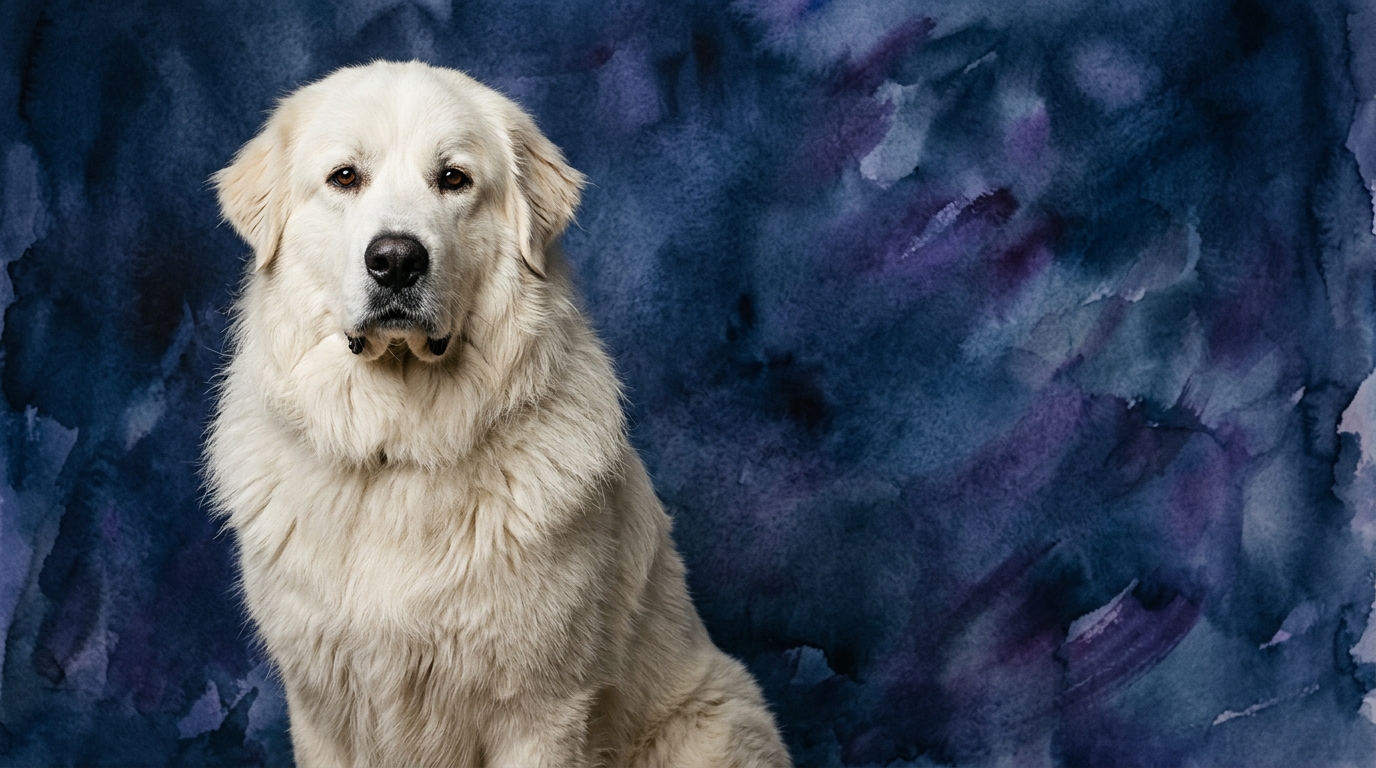
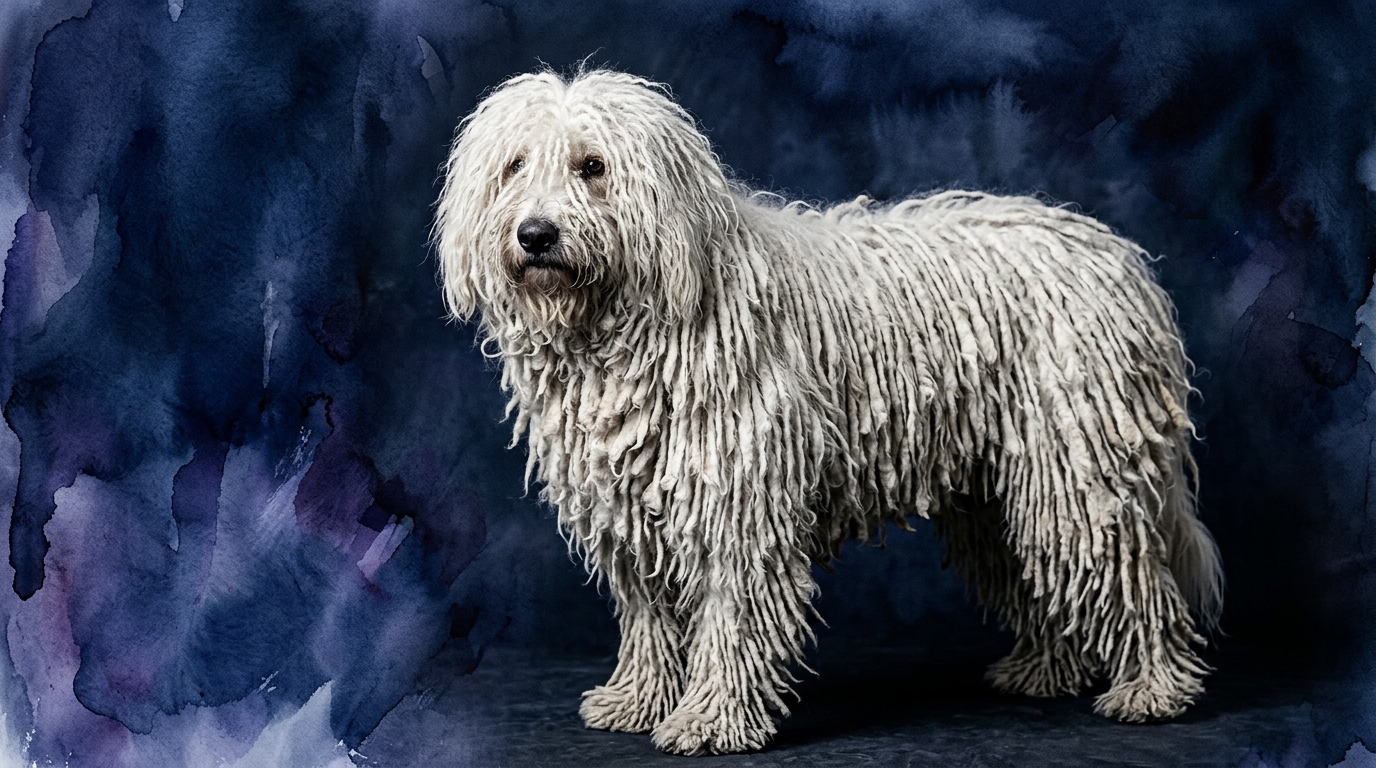
Side-by-Side Cognitive Profile: Great Pyrenees vs. Komondor
The Cosmic Pet Pet IQ Lab evaluates canine cognition across five core dimensions, providing a granular view into how breeds process information and interact with their world. For both the Great Pyrenees (Coren rank #64) and the Komondor (Coren rank #67), these scores stand at 3/5 across the board, indicating a balanced yet distinct cognitive blueprint shaped by their ancient roles as independent livestock guardians.
For the Great Pyrenees, a Problem Solving score of 3/5 reflects their capacity for subtle, often non-confrontational strategies. They excel at assessing threats and choosing deterrence over direct engagement, using their imposing size and deep bark to ward off intruders. Their Training Speed, also 3/5, means they learn commands at a moderate pace, but their independent nature often leads them to evaluate the utility of a request before compliance, which can be misconstrued as stubbornness. Their Social Intelligence at 3/5 signifies deep bonds with their family and charges, displaying gentle patience and empathy, though they remain reserved with strangers. The Instinctive Drive of 3/5 is centered on vigilant protection, patrolling perimeters with an innate understanding of their guardian role. Finally, their Memory, rated 3/5, ensures they retain past experiences, successful strategies, and social connections, contributing to consistent behavior.
The Komondor also registers a Problem Solving score of 3/5, but their approach leans towards decisive action. Bred to confront formidable predators directly, they assess situations with intense focus, often making swift, self-directed judgments to protect their flock. Their Training Speed of 3/5 indicates a moderate learning curve, yet their strong will and historical role as solitary guardians mean they value their own decision-making, requiring consistent, clear guidance from an owner. In Social Intelligence, a 3/5 rating means they form fiercely loyal bonds with their immediate family and flock, but typically maintain an aloof, suspicious demeanor towards outsiders. Their Instinctive Drive, also 3/5, manifests as profound territorial vigilance and an unwavering commitment to confront threats. A Memory score of 3/5 ensures they vividly recall their territory, routines, and individuals, influencing their protective responses and attachments.
While identical numerical scores might suggest parity, the qualitative interpretation of these scores reveals breed-specific nuances. Both breeds are built for independence, but the flavor of that independence — whether it’s a calm, watchful discretion or a resolute, assertive vigilance — shapes their cognitive landscape and interaction with the world.
Where the Great Pyrenees Wins Cognitively
The Great Pyrenees exhibits a subtle cognitive advantage in its nuanced approach to problem-solving. While both breeds score 3/5, the Pyrenees often demonstrates a preference for de-escalation, using its presence and warning signals to resolve potential conflicts without direct confrontation. This requires a sophisticated assessment of risk and a graduated response, suggesting a cognitive framework that prioritizes peace within its domain, making them particularly adept at managing diverse, non-predator threats in a family setting.
Furthermore, the Pyrenees' social intelligence, while reserved, might be considered slightly more adaptable in integrating into a broader family dynamic beyond pure livestock guarding. Their gentle nature and patience with children and smaller animals within their perceived 'flock' suggest a cognitive flexibility in extending their protective empathy to various, often non-traditional, charges. This allows for a slightly wider range of social interactions within their trusted circle, compared to the Komondor's more singularly focused guardian role.
Where the Komondor Wins Cognitively
The Komondor's cognitive strength shines in its unwavering decisiveness and intensity of instinctive drive. While also scoring 3/5 in problem-solving, the Komondor's historical role of confronting serious predators has forged a mind that is quick to act and resolute in its defense. When a threat is clearly identified, their cognitive processing prioritizes immediate, direct action, displaying an unyielding commitment to their protective duty. This makes them exceptionally effective in high-stakes, unambiguous danger scenarios.
Their instinctive drive, also rated 3/5, manifests with a laser-like focus that can be a cognitive advantage in pure guardian roles. Once a Komondor perceives a threat to its charge, its vigilance and commitment are singular, demonstrating an impressive cognitive ability to maintain intense focus on its primary task, often to the exclusion of distractions. This concentrated, tenacious dedication to protecting its flock is a hallmark of the Komondor's cognitive make-up, making them formidable and unwavering protectors.
Which is Easier to Train and Why
Neither the Great Pyrenees nor the Komondor is considered 'easy' to train in the traditional sense, due to their shared independent cognitive framework, both scoring 3/5 for Training Speed. Their roles as independent decision-makers on the pasture mean they are not bred for rote obedience but rather for autonomous judgment. This independence is a cognitive strength for their guarding duties but presents a unique challenge for owners accustomed to more biddable breeds.
The Great Pyrenees' training journey often requires patience and understanding of their intrinsic motivations. They learn commands, but their compliance is often filtered through their own assessment of whether the request is logical or necessary from their perspective. They respond best to positive reinforcement, clear communication, and an owner who respects their thoughtful, sometimes deliberate, nature. An owner must accept that a Pyrenees may choose to 'think' about a command rather than instantly execute it, especially if it conflicts with their perceived guardian responsibilities.
The Komondor, with its strong will and deep-seated self-reliance, also demands a dedicated training approach. Their historical imperative to make critical decisions alone means they may view human commands as suggestions if they conflict with their perceived duty. Training a Komondor requires an owner who can establish consistent, firm, but fair leadership from puppyhood. While they possess a robust memory for routines and expectations, channeling their formidable drive into desired behaviors requires unwavering commitment and a deep respect for their independent mind. In essence, while both require dedication, the Pyrenees might be slightly more amenable to gentle persuasion, whereas the Komondor often demands a more structured and assertive, yet always fair, approach to guide their strong will.
Which Suits Active Owners vs. Relaxed Owners
When considering an owner's lifestyle, both breeds present distinct requirements, despite their shared guardian heritage. The Great Pyrenees, while not a high-energy breed in terms of intense physical exercise, thrives with an owner who is 'active' in providing a secure environment and understanding their need for a purposeful, watchful role. They enjoy calm companionship and moderate exercise, such as long, deliberate patrols around a yard. A relaxed owner who appreciates a gentle giant and can accommodate their patrolling instincts and occasional barking, without expecting a dog for high-intensity sports, would find a good match.
The Komondor, on the other hand, suits an owner who is 'active' in a more mentally demanding sense. Their strong will and singular guarding instinct require an owner who is prepared to be consistently active in training, socialization, and leadership. They need purpose and clear boundaries to channel their powerful drive. While their physical exercise needs are moderate, their mental engagement requirements are significant. An owner who is proactive, firm, and capable of providing consistent direction, preventing boredom, and managing their protective tendencies will thrive with a Komondor. A truly 'relaxed' owner who is not prepared for this level of mental engagement and leadership might find the Komondor's independence challenging to manage.
The Verdict: When to Choose Each Guardian
The Verdict
Choose the Great Pyrenees if you seek a gentle, patient, yet independent guardian who prefers subtle deterrence and integrates calmly into a family setting, offering quiet companionship and a watchful presence.
Choose the Komondor if you are prepared for a resolute, highly independent, and intensely protective guardian with a strong will, thriving on clear leadership and a defined purpose to defend its charge with unwavering conviction.
🧠 Find Your Pet's IQ Score
Our Pet IQ Lab assessment covers 25+ tests across 5 cognitive dimensions — personalized to your breed.
Take the Full IQ Test →Frequently Asked Questions
Are Great Pyrenees and Komondors stubborn?
Both breeds, scoring 3/5 in Training Speed, possess a strong independent streak rather than true stubbornness. They are bred to make autonomous decisions, so they often assess commands based on their own judgment, which can be perceived as resistance if an owner expects instant, unquestioning obedience.
Do these breeds get along with other pets?
Great Pyrenees generally integrate well with other animals they consider part of their 'flock' if properly introduced and socialized, displaying gentle patience. Komondors can also coexist, but their social circle is typically smaller and their acceptance of other pets is more directly tied to their protective instinct, often viewing them as part of their charge to be defended.
What kind of owner is best for these independent guardians?
Owners best suited for these breeds are patient, consistent, and understand the deep-seated independence of livestock guardians. They provide secure environments, commit to early and ongoing socialization, and are prepared to guide a thoughtful, self-reliant companion rather than demand absolute obedience, respecting their cognitive aptitude for autonomous decision-making.