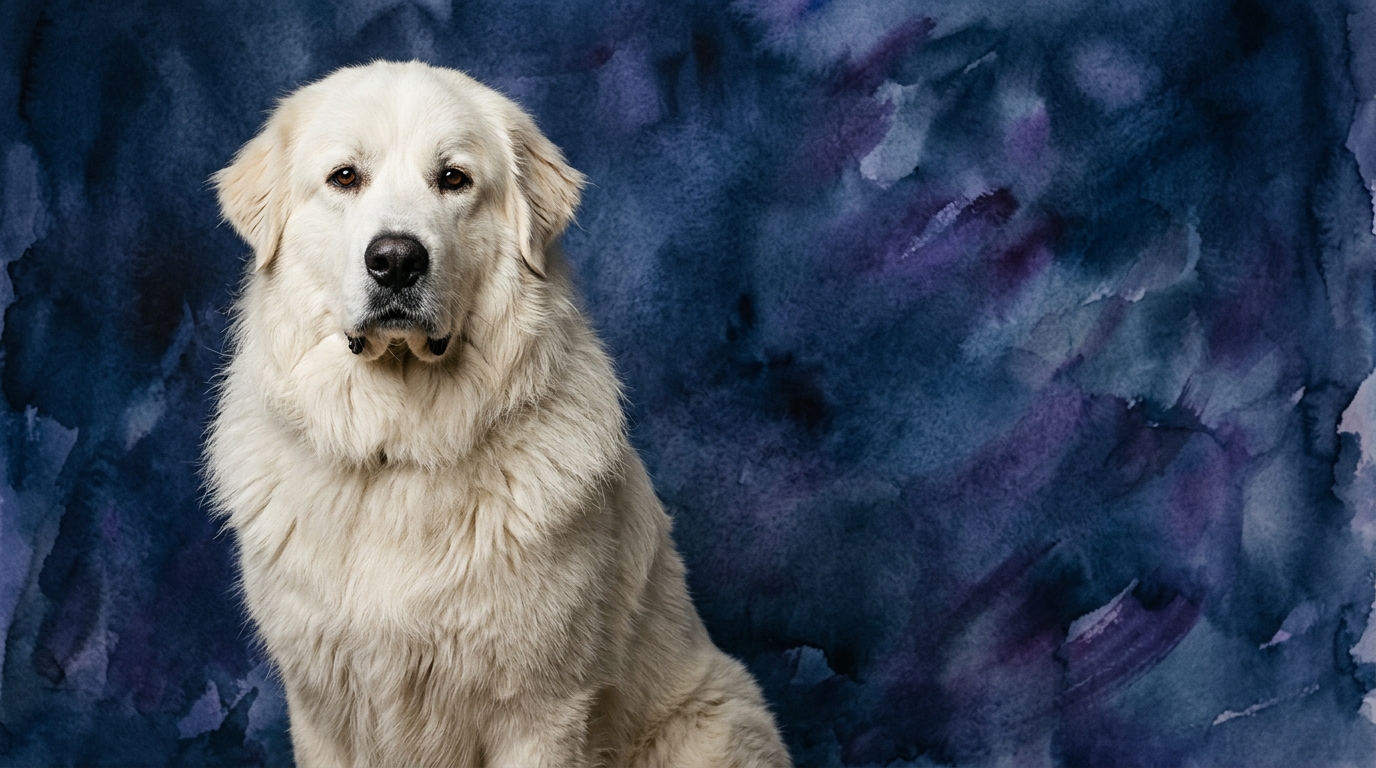

Side-by-Side IQ Profile: Unpacking Identical Scores
The Cosmic Pet Pet IQ Lab assigns both the Great Pyrenees and the Rat Terrier a consistent 3 out of 5 across all five measured cognitive dimensions: problem-solving, training speed, social intelligence, instinctive drive, and memory. For the Great Pyrenees, this 3/5 in problem-solving often manifests in their historical role of independent livestock guardianship, where they must assess threats and make decisions without direct human command, such as strategically positioning themselves to deter predators or guiding a flock away from danger. Their training speed at 3/5 reflects a thoughtful, sometimes deliberate approach to learning, prioritizing their own judgment over immediate compliance, which stems from centuries of autonomous work. Social intelligence at 3/5 means they are adept at understanding complex group dynamics, be it within their flock or family, displaying a calm, watchful demeanor. Their instinctive drive, also 3/5, is strongly rooted in protection, a deep-seated urge to guard their charges. Finally, a 3/5 memory allows them to recall routines, safe territories, and past threats, crucial for their vigilance.
Conversely, the Rat Terrier's identical 3/5 scores translate into a very different expression of intellect, shaped by their history as tenacious vermin hunters. Their problem-solving at 3/5 is often quick and tactical, focused on strategizing how to flush out or corner prey in confined spaces or complex environments, requiring rapid assessment and action. A 3/5 training speed for a Rat Terrier reflects their capacity to learn commands efficiently when motivated, though their independent, tenacious spirit can sometimes make focus a challenge. Social intelligence at 3/5 means they can read human cues and interact effectively within their family unit, often forming strong, playful bonds, but may exhibit wariness towards strangers. Their instinctive drive, also 3/5, is powerfully geared towards prey drive, a relentless pursuit and engagement with small animals. Their 3/5 memory serves them well in remembering hunting routes, the location of burrows, and specific training commands, aiding their effectiveness in their working role.
Where the Great Pyrenees Excels Cognitively
Despite sharing the same numerical IQ ratings, the Great Pyrenees' cognitive strengths shine in specific contexts, particularly those requiring independent judgment and broad environmental awareness. Their 3/5 problem-solving ability, while not necessarily faster than a Rat Terrier's, is characterized by a remarkable capacity for autonomous decision-making in the absence of human direction. This isn't about solving puzzles for treats, but about evaluating environmental cues, assessing potential threats to their charges, and responding appropriately without panic or overreaction. For example, a Pyrenees might independently decide to move a flock to higher ground during a storm or to subtly interpose themselves between a perceived threat and their family, demonstrating a nuanced application of their problem-solving skills.
Furthermore, their 3/5 social intelligence, combined with their instinctive drive for guardianship, allows them to excel in understanding and managing complex social structures, whether it's the hierarchy within a flock of sheep or the dynamics of a human family. They possess a patient, watchful discernment, noticing subtle shifts in behavior or environment that might indicate a need for their intervention. This deep-seated understanding of their role and environment, alongside a memory that retains patterns of safety and danger, empowers them to be incredibly reliable and self-sufficient protectors, a cognitive advantage rooted deeply in their breed's purpose.
Where the Rat Terrier Excels Cognitively
The Rat Terrier's identical 3/5 IQ scores translate into cognitive strengths that are agile, focused, and intensely driven, perfectly suited for their historical role. Their 3/5 problem-solving excels in scenarios demanding quick, decisive action and adaptability in dynamic environments. Unlike the Pyrenees' deliberate assessment, a Rat Terrier's problem-solving might involve rapidly navigating an obstacle course to reach a target, figuring out how to bypass a barrier to pursue a scent, or devising a strategy to corner a small, fast-moving animal. This is a practical, hands-on intelligence geared towards immediate results in high-energy situations.
Their 3/5 instinctive drive, specifically for prey, is a potent cognitive engine. This isn't merely a physical urge; it's a mental focus that allows them to concentrate intensely on a task, blocking out distractions. When a Rat Terrier's prey drive is engaged, their memory and problem-solving work in concert to achieve their objective with remarkable tenacity. Their social intelligence, while perhaps not expressed in the same grand, protective sweep as a Pyrenees, allows for incredibly strong, responsive bonds with their human companions, making them highly attuned to their owner's moods and intentions, particularly when these align with an engaging activity or game. Their cognitive profile is optimized for energetic engagement and focused task completion.
Which Is Easier to Train and Why
Despite both breeds having a 3/5 training speed, the *ease* of training can differ significantly due to their inherent temperaments and motivations. The Rat Terrier, with its eager-to-please nature when properly motivated and its desire for engagement, often appears easier to train in traditional obedience settings. They respond well to positive reinforcement, especially when training incorporates elements of play, agility, or scent work that tap into their natural drive. Their smaller size and quick physical responses also make them agile learners in activities like rally or obedience trials, where precision and speed are valued. Their focus, when directed, can be intense, allowing them to pick up new commands and cues with relative efficiency.
The Great Pyrenees, while capable of learning at a 3/5 speed, presents a different training challenge. Their independence, a cornerstone of their guardianship role, means they are not inherently motivated by strict obedience for obedience's sake. A Pyrenees will learn, but they will often weigh the command against their own judgment of the situation, sometimes choosing their perceived 'best' course of action over immediate compliance. Training a Pyrenees requires immense patience, consistency, and an understanding that their willingness to perform often hinges on a strong, respectful bond and a clear purpose. They are not difficult to train because they lack intelligence; rather, their cognitive framework prioritizes autonomous decision-making, which can be perceived as stubbornness in a traditional training context. Therefore, for an owner seeking a highly compliant, responsive companion, the Rat Terrier will generally feel 'easier' to train.
Which Suits Active Owners vs. Relaxed Owners
The choice between a Great Pyrenees and a Rat Terrier significantly depends on an owner's lifestyle and activity levels. The Rat Terrier is an ideal companion for active owners who relish engaging in dog sports, long hikes, or structured play sessions. Their compact size belies their considerable energy reserves and need for mental stimulation. Owners who enjoy activities like agility, flyball, or advanced trick training will find a highly motivated and capable partner in a Rat Terrier. They thrive on having a 'job' and benefit immensely from consistent exercise that allows them to expend their physical and mental energy, making them less suited for purely relaxed, sedentary households where their innate drive might lead to boredom and destructive behaviors.
Conversely, the Great Pyrenees, while requiring regular exercise to maintain health, is better suited for owners who appreciate a more relaxed, watchful presence. Their exercise needs are moderate; they are not built for intense, prolonged bursts of activity like a Rat Terrier. They thrive in environments where they have ample space to patrol, a yard to observe, and a family to guard. Their calm, deliberate nature makes them excellent companions for owners who enjoy quiet evenings at home, gentle walks, and the comforting presence of a large, protective dog. They are not suited for apartment living without significant outdoor access and are best for owners who can provide a secure, spacious environment where their guardianship instincts can be fulfilled without constant, high-energy demands.
The Verdict
Choose the Great Pyrenees if you value an independent, calm, and protective companion with a strong sense of self-preservation and a natural aptitude for guarding, and you can provide ample space and a relaxed, patient approach to training.
Opt for the Rat Terrier if you seek an energetic, agile, and highly engaged partner for active pursuits, enjoy consistent, interactive training, and appreciate a compact dog with an intense focus and playful demeanor.
🧠 Find Your Pet's IQ Score
Our Pet IQ Lab assessment covers 25+ tests across 5 cognitive dimensions — personalized to your breed.
Take the Full IQ Test →Frequently Asked Questions
Do Great Pyrenees learn commands slowly because they are less intelligent?
Not at all. A Great Pyrenees' 3/5 training speed reflects their independent nature, prioritizing their own judgment over immediate compliance. They learn, but often evaluate the purpose of a command, requiring patience and consistent, positive reinforcement rather than rote obedience.
Are Rat Terriers good apartment dogs due to their smaller size?
While small, Rat Terriers possess significant energy and a strong drive that necessitates regular, engaging activity. Without sufficient mental and physical stimulation, an apartment can become confining, potentially leading to boredom-driven behaviors despite their size.
How does 'instinctive drive' differ between these breeds, given both are 3/5?
For the Great Pyrenees, their 3/5 instinctive drive is primarily geared towards guardianship and protection of their charges, manifesting as watchful vigilance. For the Rat Terrier, their 3/5 drive is intensely focused on prey pursuit and engagement, driving their tenacious hunting behaviors.