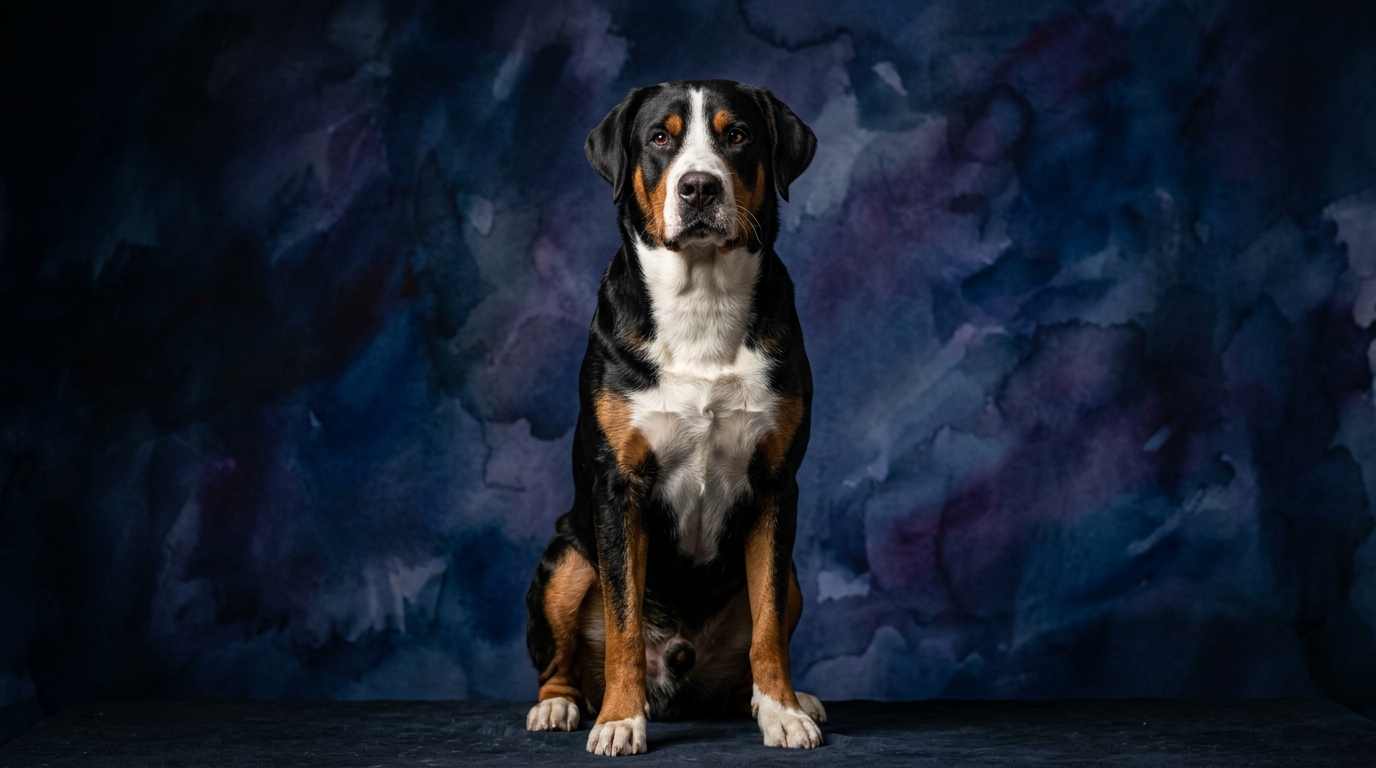
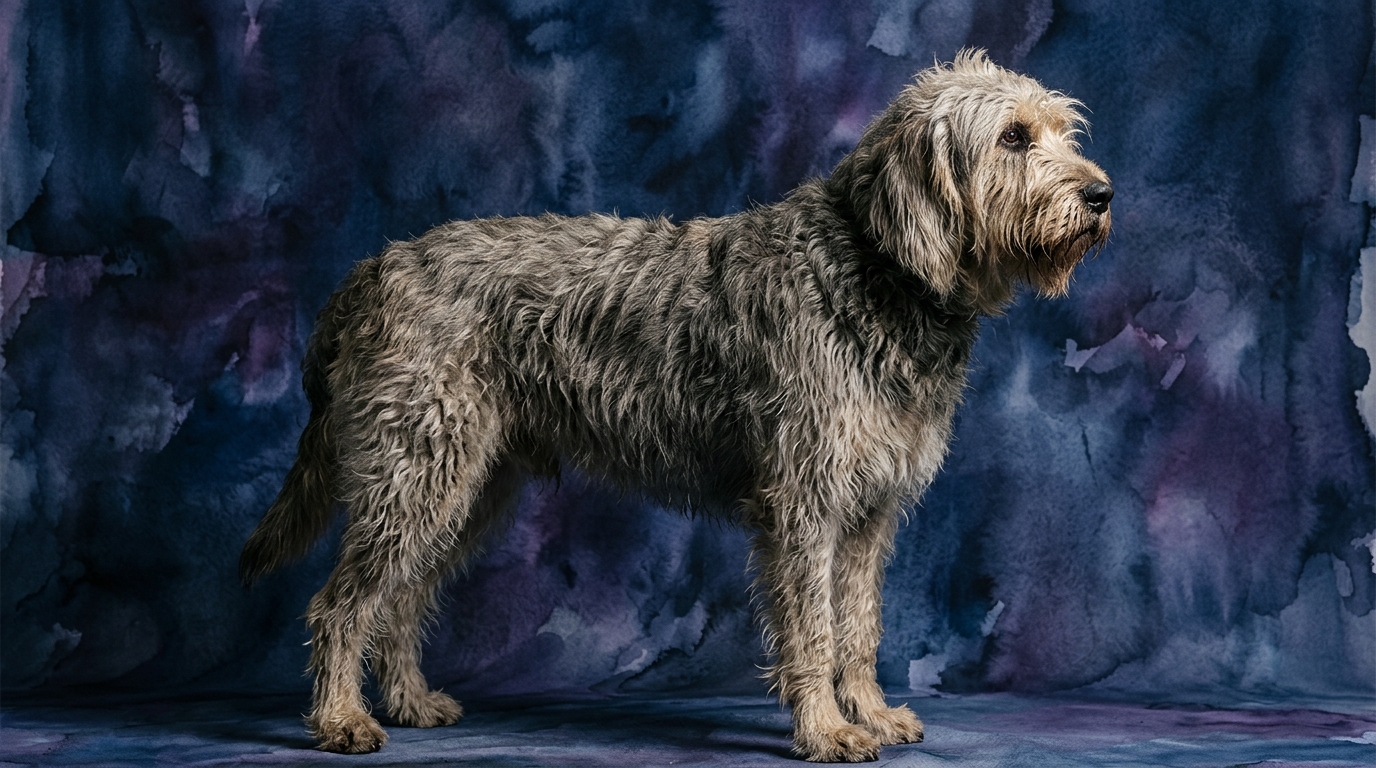
Side-by-Side IQ Profile: Unpacking Identical Scores
Both the Greater Swiss Mountain Dog (a Working breed) and the Otterhound (a Hound breed) register a consistent 3 out of 5 across all five cognitive dimensions in the Pet IQ Lab. This rating signifies a solid, capable level of cognitive function, but the *application* of these abilities differs profoundly due to their historical roles. Let's explore what '3/5' means for each breed.
For the Greater Swiss Mountain Dog, a 'Problem Solving' score of 3/5 translates into a practical, methodical approach to tasks. They are adept at figuring out physical challenges within their environment, like navigating gates or understanding household routines, often relying on observation and sequential thinking. Their 'Training Speed' at 3/5 indicates a willingness to learn and a good grasp of commands, benefiting from consistent, positive reinforcement that appeals to their desire for purpose. 'Social Intelligence' at 3/5 means they are generally responsive to human cues, understand family dynamics, and can adapt to various social situations, though they may show a reserved initial reaction to strangers. Their 'Instinctive Drive' of 3/5 encompasses a strong inherent desire to guard, herd, and be a useful member of their human pack, demonstrating a foundational work ethic. Finally, a 'Memory' score of 3/5 means they retain learned behaviors and recall specific people and places effectively, contributing to their reliability.
The Otterhound, despite identical numerical scores, expresses these traits through a distinctly different lens shaped by its hunting heritage. Its 'Problem Solving' at 3/5 is often directed towards tenacious pursuit and independent navigation, such as deciphering complex scent trails or finding creative ways to overcome obstacles in the pursuit of a smell. 'Training Speed' at 3/5 reflects their capacity to learn, but it's frequently mediated by their powerful independent streak; they can absorb information, but their compliance is often contingent on their own intrinsic motivations, especially scent. 'Social Intelligence' at 3/5 manifests as a generally boisterous and gregarious nature, enjoying interaction with both humans and other dogs, understanding pack dynamics but sometimes prioritizing an intriguing scent over human direction. Their 'Instinctive Drive' of 3/5 is overwhelmingly dominated by their potent nose and wanderlust, a persistent desire to follow a trail that can override other considerations. Their 'Memory' score of 3/5 means they possess excellent recall for scent pathways and significant locations, but this memory might compete with the immediate pull of a fresh scent when it comes to recalling a 'stay' command.
Where the Greater Swiss Mountain Dog Wins Cognitively
The Greater Swiss Mountain Dog, with its Working group lineage, tends to excel in cognitive scenarios that involve direct human partnership and structured problem-solving. While both breeds score 3/5 in problem-solving, the Swissy's expression leans towards understanding and executing multi-step commands or figuring out how to manipulate objects to achieve a human-directed goal, like opening a door or retrieving a specific item. Their cognitive strength lies in their methodical approach and their inherent desire to contribute to the family unit.
Their social intelligence, also rated 3/5, often manifests as a more attuned responsiveness to subtle human emotional cues and a greater inclination to seek human approval during tasks. This makes them particularly adept at roles requiring close collaboration, such as therapy work or competitive obedience, where understanding and anticipating handler intent is paramount. The Swissy's memory, combined with its biddable nature, solidifies its advantage in retaining complex sequences of commands and routines, making them dependable partners in structured environments.
Where the Otterhound Wins Cognitively
The Otterhound's cognitive strengths, though numerically identical to the Swissy, shine brightest in environments that demand independent thought, perseverance, and a deep engagement with the sensory world, particularly scent. Their 3/5 problem-solving ability is unparalleled when it comes to navigating complex, varied terrain, or meticulously following a faint scent trail, often for extended periods without direct human intervention. This cognitive tenacity, driven by their instinctive drive, allows them to 'solve' environmental puzzles that would overwhelm many other breeds.
Their social intelligence, while friendly, is less about eager-to-please compliance and more about robust, adaptable interaction within a group, be it human or canine. They understand social dynamics but are less likely to be deterred from their primary sensory mission by a human's emotional state. The Otterhound's memory, especially for scent patterns and geographical layouts encountered during a 'hunt,' is a cognitive asset that allows them to retrace steps or remember promising areas, making them superior in activities like scent work or tracking where their powerful nose dictates their 'thinking.'
Which is Easier to Train and Why
When considering ease of training, the Greater Swiss Mountain Dog generally presents a more straightforward experience for the average owner, despite both breeds scoring 3/5 in training speed. The Swissy's working heritage instills a fundamental desire to please its handler and a willingness to engage in cooperative tasks. They respond well to clear, consistent commands and positive reinforcement, often showing a gratifying eagerness to learn and repeat behaviors that earn them praise or rewards. Their focus is more readily directed towards their human companion, making structured training sessions more productive.
The Otterhound, while certainly capable of learning (hence the 3/5 training speed), often requires a different training approach and a higher degree of patience. Their profound instinctive drive, specifically their powerful scenting ability, frequently serves as a significant distraction. An Otterhound's nose will often take precedence over a handler's command, especially in an stimulating outdoor environment. Training an Otterhound effectively means understanding and working with their inherent independence and scent-driven nature, often incorporating scent games into training to make it intrinsically rewarding for them. While they learn, their compliance can be less immediate and their attention more challenging to maintain compared to a Swissy, making them generally less 'easy' for novice trainers.
Which Suits Active Owners vs. Relaxed Owners
For owners seeking a robust, active companion who enjoys structured activities and outdoor adventures, the Greater Swiss Mountain Dog is an excellent match. Their 3/5 instinctive drive, combined with their history as working dogs, means they thrive on having a 'job,' whether it's hiking, carting, or participating in dog sports. They require consistent physical exercise to keep their large bodies healthy and mental stimulation to engage their problem-solving minds. A relaxed owner who cannot provide this level of engagement may find a Swissy becomes restless or destructive.
The Otterhound, while also requiring significant activity, caters to a different kind of active owner—one who appreciates independent exploration and is prepared for a dog whose activity is often dictated by its nose. Their 3/5 instinctive drive for scent work means they need long, meandering walks where they can follow interesting smells, or opportunities for tracking and scent games. They are not typically suited for highly structured, repetitive exercise like jogging alongside a bike for miles, as their attention will be constantly drawn to their surroundings. A relaxed owner might struggle with the Otterhound's need for extensive, often self-directed, outdoor exploration and their potential for vocalization and wanderlust when under-stimulated.
The Verdict: When to Choose Each Breed
The Verdict
Choose the Greater Swiss Mountain Dog if you seek a highly trainable, devoted companion for structured activities, family life, and a partner eager to engage in collaborative tasks and outdoor adventures. They thrive with consistent guidance and a clear purpose within their human family.
Opt for the Otterhound if you are an adventurous owner who appreciates independent thinkers, possesses a deep understanding of hound behavior, and can provide ample opportunities for scent-driven exploration and boisterous companionship.
🧠 Find Your Pet's IQ Score
Our Pet IQ Lab assessment covers 25+ tests across 5 cognitive dimensions — personalized to your breed.
Take the Full IQ Test →Frequently Asked Questions
Do Greater Swiss Mountain Dogs need a lot of mental stimulation?
Yes, Greater Swiss Mountain Dogs, with their working heritage and 3/5 problem-solving score, benefit greatly from mental challenges. Activities like puzzle toys, obedience training, and learning new tricks help keep their minds engaged and prevent boredom, which can lead to undesirable behaviors.
Is an Otterhound a good choice for first-time dog owners?
While Otterhounds are generally good-natured, their strong independent streak and powerful scent drive can be challenging for first-time dog owners. Their 3/5 training speed and instinctive drive mean they require patient, consistent training and a deep understanding of hound motivations, often benefiting from experienced handlers.
Which breed is better with children?
Both breeds generally exhibit a 3/5 social intelligence score and can be good with children, but their approaches differ. The Greater Swiss Mountain Dog tends to be more watchful and protective, while the Otterhound is typically more boisterous and playful. Supervision is always recommended with any dog and children.