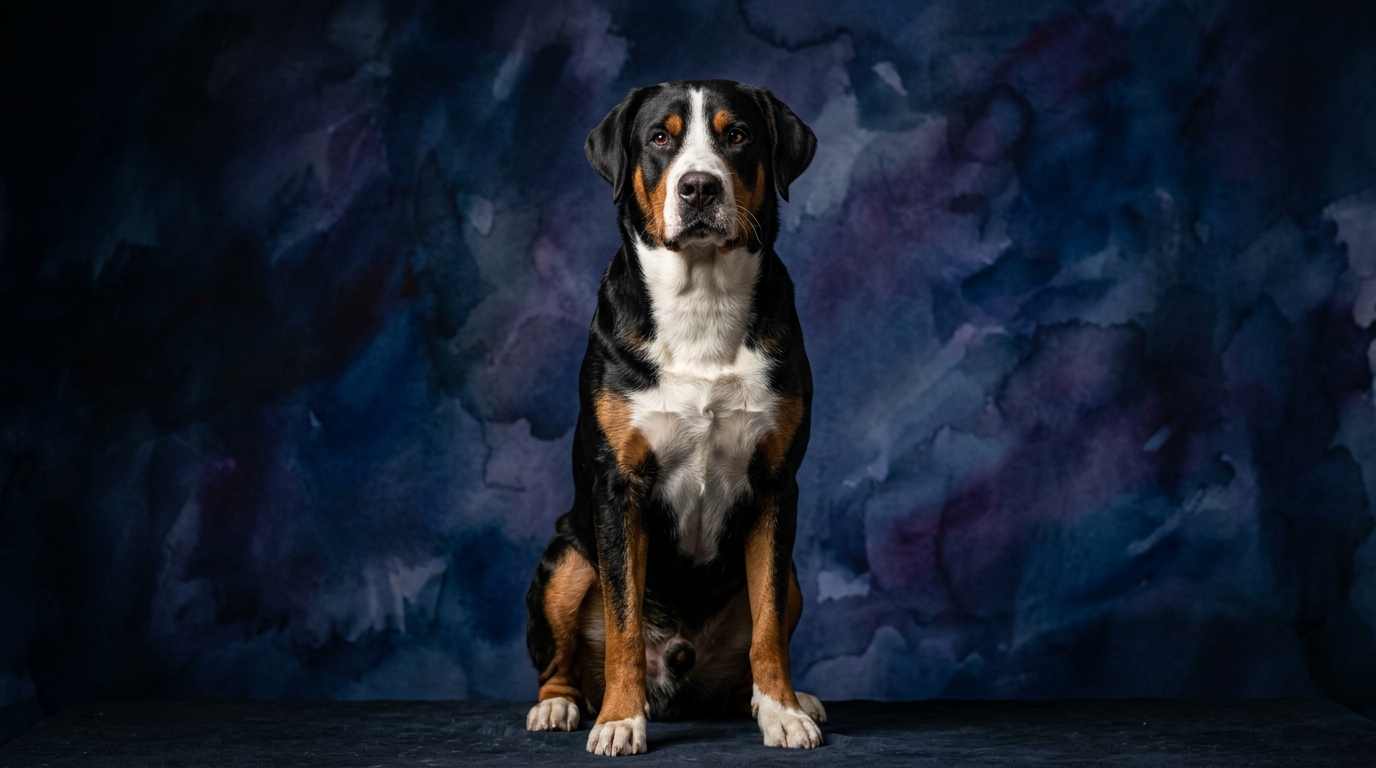
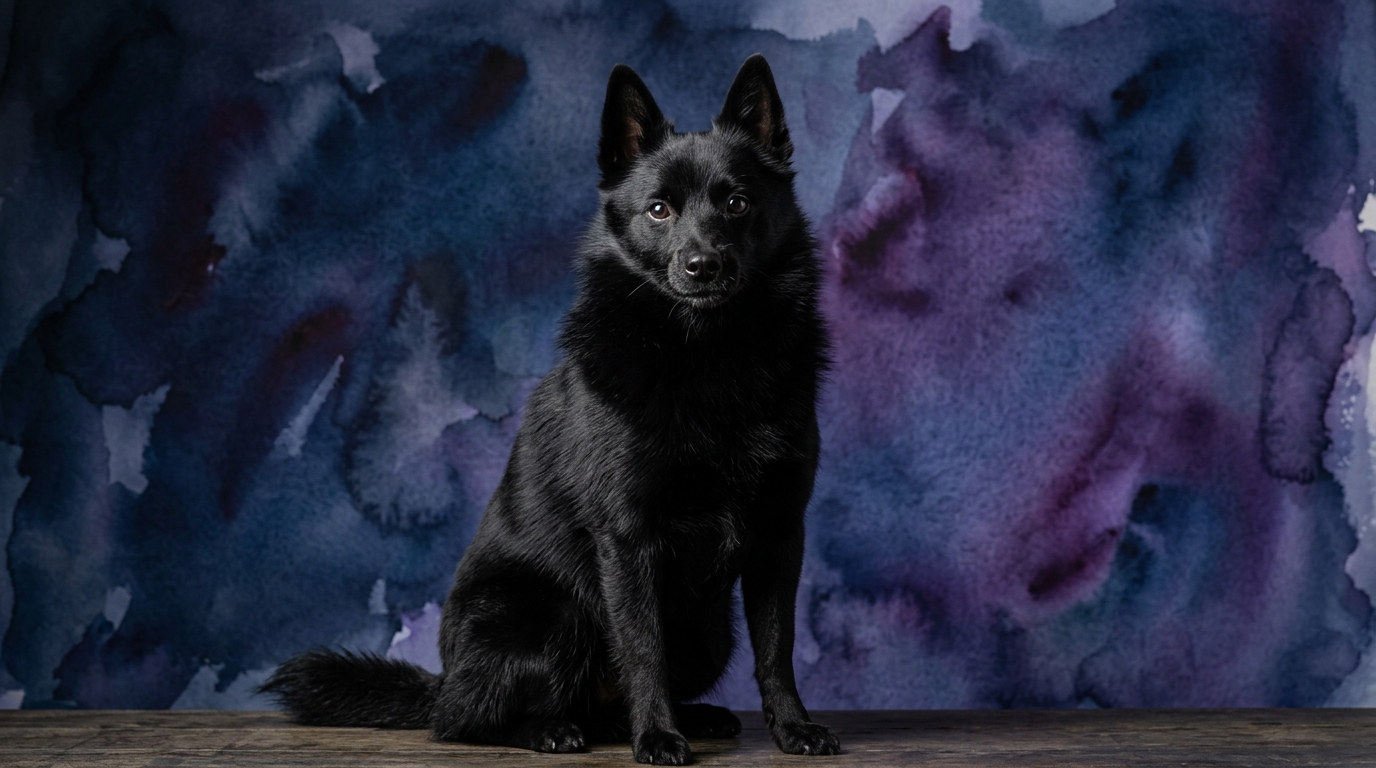
Side-by-Side IQ Profile
The Cosmic Pet Pet IQ Lab employs a comprehensive five-dimensional framework to assess canine intelligence, offering a nuanced understanding beyond simple obedience. Let's examine how the Greater Swiss Mountain Dog and the Schipperke stack up across these cognitive facets.
For the **Greater Swiss Mountain Dog** (Working Group, Not Coren-ranked): Problem Solving (3/5), Training Speed (3/5), Social Intelligence (3/5), Instinctive Drive (3/5), Memory (3/5). This breed approaches novel challenges with a steady, methodical demeanor, often relying on learned patterns rather than innovative leaps. They can work through complex tasks but may require more guidance to connect the dots independently. Greater Swiss Mountain Dogs learn new commands at a moderate pace, thriving on consistency and positive reinforcement, absorbing information effectively over time. Their social awareness is balanced, allowing them to read human cues and interact appropriately within their family unit, forming strong bonds. Rooted in their working heritage, their drive manifests as a desire to be useful, often in tasks involving protection or companionship, but is not overwhelming. They possess a good capacity for remembering commands, routines, and experiences, which aids in stable behavior and reinforces learned actions over time.
For the **Schipperke** (Non-Sporting Group, Coren Rank #15): Problem Solving (5/5), Training Speed (5/5), Social Intelligence (3/5), Instinctive Drive (3/5), Memory (5/5). The Schipperke demonstrates exceptional aptitude for figuring things out, often devising clever solutions to reach goals or overcome obstacles. Their curious and independent nature fuels a persistent drive to explore and manipulate their environment. These dogs are quick studies, grasping new concepts and commands with impressive speed and precision; their eagerness to learn and sharp focus make them highly receptive to training. Schipperkes possess a moderate level of social intelligence, allowing them to understand human intentions and interact effectively, being alert to their surroundings and often forming deep bonds with their primary caregivers. Their instincts are primarily geared towards vigilance and companionship, reflecting their historical role as watchdogs, present but manageable. With an excellent memory, Schipperkes retain information about their environment, learned behaviors, and past interactions for extended periods, supporting advanced training potential and adaptation to complex routines.
Where Greater Swiss Mountain Dog Wins Cognitively
While the Schipperke shines in several cognitive areas, the Greater Swiss Mountain Dog offers a particular intellectual steadiness that can be a distinct advantage in certain contexts. Their balanced problem-solving (3/5) and instinctive drive (3/5) combine to create a dog that is less prone to impulsive, independent actions when faced with a challenge. Instead of quickly devising a novel, potentially mischievous solution, a Greater Swiss might methodically work through a known process or wait for guidance. This measured approach can be beneficial in situations requiring calm deliberation rather than rapid, creative improvisation. For instance, in a task involving heavy lifting or steady pulling, their cognitive profile supports a consistent, predictable effort over spontaneous diversions. Their moderate social intelligence (3/5) also means they are attentive to their human partners without being overly reactive or prone to independent decision-making based on fleeting environmental stimuli, which can be a win for tasks requiring focused cooperation over individual initiative. This breed's consistency means fewer surprises and a more predictable response to familiar situations, a cognitive trait valued in roles requiring unwavering reliability.
Where Schipperke Wins Cognitively
The Schipperke’s cognitive strengths are undeniably impressive, particularly in problem-solving (5/5), training speed (5/5), and memory (5/5). This combination makes them exceptionally adept at quickly understanding complex commands and retaining them, often requiring fewer repetitions than many other breeds. Their superior problem-solving ability means they are masters at navigating intricate environments or figuring out how to access desired objects, often displaying a cunning and resourceful approach. For an owner interested in advanced obedience, agility, or even complex trick training, the Schipperke’s rapid learning and retention are paramount. Their excellent memory ensures that once a concept is learned, it is not easily forgotten, allowing for a wide repertoire of behaviors. This mental agility also contributes to their effectiveness as alert watchdogs, as they can quickly process and react to changes in their environment, remembering past encounters and anticipating future ones with remarkable accuracy. They exhibit a keen observational capacity, making them astute companions who notice every detail and often act upon their observations with remarkable precision.
Which is Easier to Train and Why
Based on The Cosmic Pet Pet IQ Lab data, the Schipperke is demonstrably easier to train, primarily due to its perfect scores in Training Speed (5/5) and Memory (5/5). These scores indicate an inherent capacity for rapid learning and excellent retention of commands and routines. A Schipperke will typically grasp new concepts quickly, often needing only a few repetitions to understand what is expected. Their sharp memory ensures that once learned, behaviors are solidified and easily recalled, making maintenance training more efficient and allowing for a broader behavioral repertoire. This stands in contrast to the Greater Swiss Mountain Dog, which has a moderate Training Speed (3/5) and Memory (3/5). While the Greater Swiss is certainly trainable and willing to please, they will likely require more consistent repetition and patience to achieve the same level of proficiency in new tasks. The Schipperke's quicker uptake and stronger recall mean that an owner can progress through training stages more rapidly and introduce a wider variety of complex behaviors with greater ease. This difference isn't about willingness, but about the innate cognitive efficiency in acquiring and storing information, making the Schipperke a more responsive student.
Which Suits Active Owners vs. Relaxed Owners
The choice between these two breeds regarding owner activity levels hinges on their cognitive and physical energy profiles. The Schipperke, with its sharp mind and quick learning, thrives with owners who can provide consistent mental stimulation and engagement. While not necessarily requiring endless physical exertion, their intelligence and problem-solving drive mean they need activities that challenge their minds, such as puzzle toys, advanced training, or interactive games. An owner who enjoys teaching new tricks, participating in dog sports, or simply engaging in regular, stimulating play sessions would find the Schipperke a rewarding companion. Their quick wit demands an owner who appreciates and can channel that mental energy into productive outlets, preventing boredom and potential mischief. Conversely, the Greater Swiss Mountain Dog is a better fit for owners who appreciate a more relaxed, yet still active, companionship. While they benefit from regular exercise to maintain their physical condition, their cognitive profile (3/5 across most dimensions) suggests they are less demanding in terms of constant mental challenges. They enjoy being part of family activities, whether it's a leisurely hike or simply lounging nearby, and their steady temperament makes them content with a more predictable routine, appealing to those who prefer a calm, dependable presence without constant intellectual engagement. They are happy with a routine that includes moderate activity and plenty of family time, rather than intense cognitive workouts.
The Verdict
Choose the Greater Swiss Mountain Dog if you seek a steadfast, predictable companion who thrives on consistent routines and offers a calm, reliable presence, valuing a steady, cooperative partner over a quick, independent problem-solver.
Opt for the Schipperke if you desire a sharp-witted, agile companion eager for mental challenges and quick to learn, making them ideal for owners who enjoy advanced training and interactive, mentally stimulating activities.
🧠 Find Your Pet's IQ Score
Our Pet IQ Lab assessment covers 25+ tests across 5 cognitive dimensions — personalized to your breed.
Take the Full IQ Test →Frequently Asked Questions
Is the Greater Swiss Mountain Dog difficult to train?
No, the Greater Swiss Mountain Dog is not difficult to train, but they learn at a moderate pace (3/5 training speed). They respond well to consistent, positive reinforcement and patience, building a solid understanding of commands over time. Their willingness to please helps them become well-behaved companions.
Do Schipperkes require a lot of mental stimulation?
Yes, Schipperkes benefit greatly from significant mental stimulation due to their high problem-solving (5/5) and memory (5/5) abilities. They enjoy learning new commands, puzzle toys, and interactive games, which helps prevent boredom and channel their sharp intellect constructively.
How do their social intelligences compare?
Both breeds have a moderate social intelligence score of 3/5, meaning they are adept at understanding human cues and interacting appropriately within their family. The Greater Swiss tends to be more overtly affable, while the Schipperke is often more discerning, forming strong bonds with their immediate family while being more reserved with strangers.