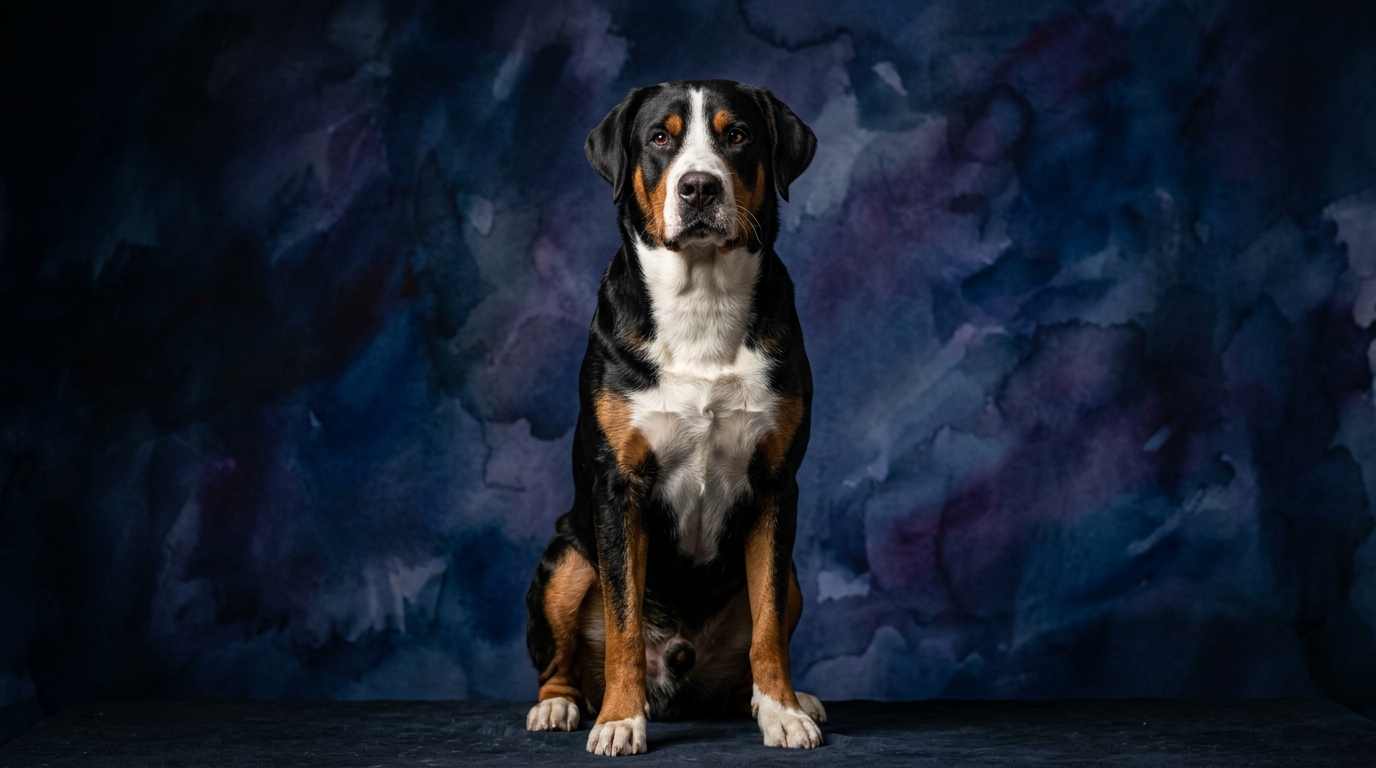
Side-by-Side IQ Profile: Greater Swiss Mountain Dog
**Problem Solving (3/5):** GSMDs tackle challenges with a practical, methodical approach, excelling at tasks requiring strength and steady execution like moving livestock or pulling carts. Their problem-solving involves efficient, reliable performance of multi-step duties and adapting to environmental changes within their working context.
**Training Speed (3/5):** Exhibiting moderate training speed, GSMDs grasp new commands with consistent, positive reinforcement. Their working background fosters cooperation and a desire to please, aiding their learning. Once understood, they perform tasks with impressive consistency, making them reliable partners.
**Social Intelligence (3/5):** Their social intelligence presents as a keen awareness of human family dynamics and a measured approach to strangers. They often judge character well, understanding cues and boundaries, integrating effectively into family life as watchful protectors discerning between friend and perceived threat.
**Instinctive Drive (3/5):** Rooted in their farm dog heritage, the GSMD's instinctive drive includes territory protection, moderate prey drive, and a strong desire for companionship. Their drive channels into vigilance, loyalty, and readiness for physical work, rather than independent hunting.
**Memory (3/5):** GSMDs possess a solid memory for commands, routines, and experiences. They reliably recall training cues and remember specific people or places, contributing to their dependability in performing complex tasks and maintaining consistent behavior.
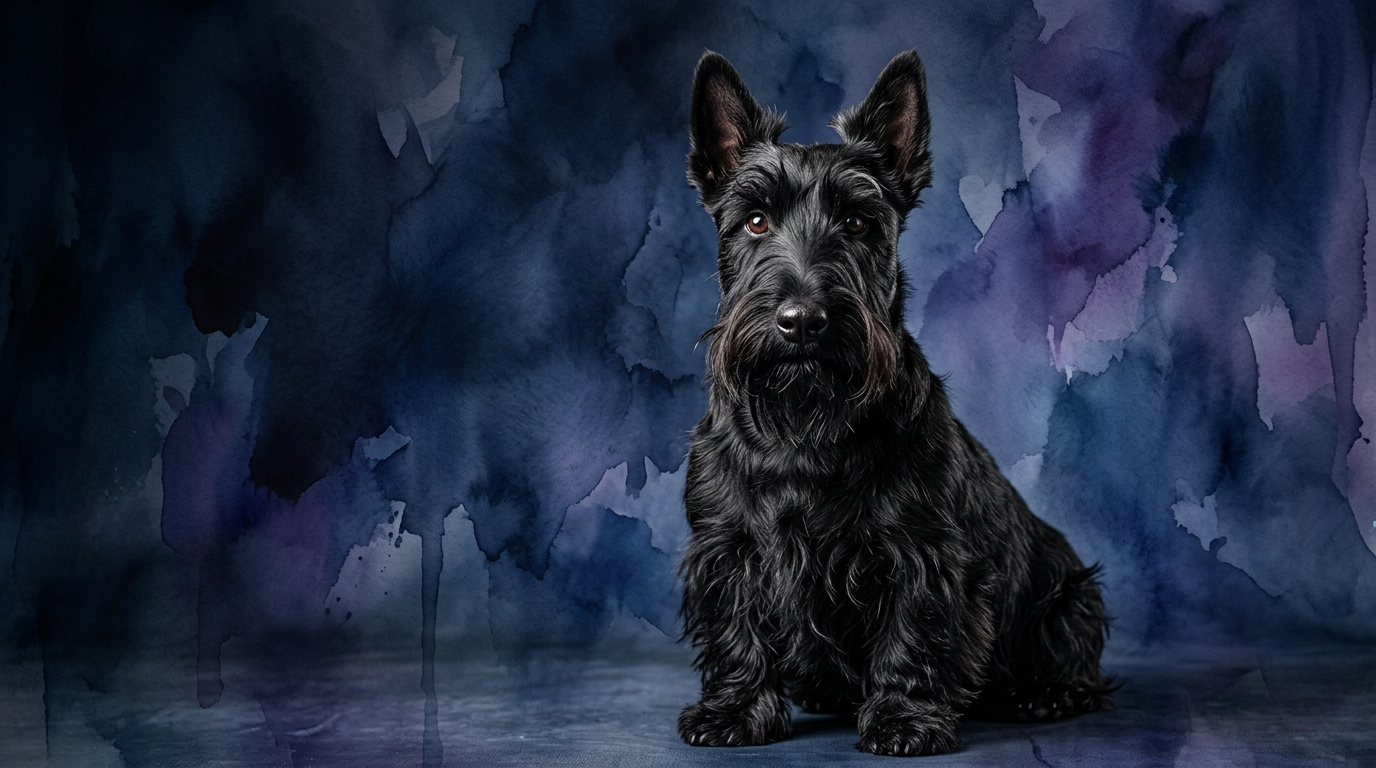
Side-by-Side IQ Profile: Scottish Terrier
**Problem Solving (3/5):** For Scotties, 3/5 in problem-solving means independent, resourceful thinking, especially to achieve their own goals. Bred to hunt vermin, they exhibit cunning to navigate spaces and outsmart prey, persisting until a solution is found, often self-directed with determination.
**Training Speed (3/5):** Scotties learn quickly when motivated, but their compliance can fluctuate due to terrier tenacity. They understand commands readily but might obey only if incentives are worthwhile or align with their agenda. Consistency and engaging methods are crucial for harnessing their learning.
**Social Intelligence (3/5):** Scotties display social intelligence through discernment and strong bonds with chosen people, often reserved with strangers. Their understanding of inner-circle dynamics is acute, adept at manipulating owners with charm and persistence to get what they want.
**Instinctive Drive (3/5):** The Scottie’s drive is shaped by terrier heritage: a powerful prey drive, urge to dig, and fearless independence. They are driven by the chase and "rooting out" perceived pests, making their environment a constant source of mental stimulation.
**Memory (3/5):** Scotties have robust memory, especially for rewarding or challenging experiences. They recall training, boundaries, and past interactions, contributing to consistent personality traits and influencing future responses based on perceived slights or successes.
Where Greater Swiss Mountain Dog Wins Cognitively
The Greater Swiss Mountain Dog excels in areas demanding physical strength coupled with a cooperative disposition. Their cognitive strengths truly shine in scenarios requiring reliable adherence to multi-step commands and a steady demeanor under pressure. For instance, they demonstrate superior spatial reasoning when navigating complex terrain while pulling a cart, consistently applying learned routes. Their social intelligence, while rated similarly, leans towards a more public, protective awareness, enabling them to assess a wider range of social interactions and respond appropriately. This makes them particularly adept at roles requiring a blend of physical presence and discerning judgment.
Where Scottish Terrier Wins Cognitively
Conversely, the Scottish Terrier's cognitive advantages lie in their tenacious independence and problem-solving through sheer determination. While a GSMD methodically follows a path, a Scottie creatively finds shortcuts to achieve goals, especially for 'pests' or treats. Their observational skills are finely tuned for detecting subtle environmental changes, crucial for vermin-hunting. This translates to acute awareness and quick reactions to novel stimuli. Their memory is particularly sharp for self-discovered lessons, making them formidable strategists in their own focused world.
Which is Easier to Train and Why
Despite both breeds scoring 3/5 in training speed, the Greater Swiss Mountain Dog generally proves more straightforward to train for obedience and complex tasks. Their working dog lineage fosters a desire for partnership and natural inclination to follow direction. They respond well to clear, consistent instruction and positive reinforcement, showing deliberate effort to comply. Their inherent biddability means they are less likely to question a command, focusing on execution. The Scottish Terrier learns quickly, but their terrier independence means they often weigh commands against immediate desires, exhibiting selective hearing. Training a Scottie requires immense patience, creativity, and understanding their motivations. They thrive with reward-based, gamified training; forcing compliance often results in stubborn resistance. Thus, while both learn, the GSMD's temperament makes the training journey feel more cooperative, appealing to owners seeking a compliant companion.
Which Suits Active Owners vs. Relaxed Owners
For active owners seeking a canine partner for outdoor adventures and structured activities, the Greater Swiss Mountain Dog is a compelling choice. Their robust physique, endurance, and desire for purposeful work make them excellent companions for hiking, carting, or competitive obedience. They thrive when given a 'job' and require consistent physical exercise and mental engagement to prevent boredom. Their social intelligence also makes them adaptable to various social settings, provided they receive appropriate socialization. They are not content to be couch potatoes, needing regular, vigorous outings to satisfy their working dog heritage. Conversely, the Scottish Terrier can suit a more relaxed owner, provided 'relaxed' means mentally stimulating rather than constantly physically demanding. While they enjoy walks and playtime, their exercise needs are moderate compared to the GSMD. However, their active minds and strong instinctive drives demand significant mental enrichment. Owners must be prepared to manage terrier instincts, providing outlets for digging, 'hunting' (e.g., scent work), and engaging their problem-solving skills with puzzle toys. A relaxed owner for a Scottie appreciates their independent spirit and channels their mental energy through clever games and consistent boundaries, rather than demanding constant physical exertion.
The Verdict
Choose the Greater Swiss Mountain Dog if you seek a large, dependable partner for structured activities and a cooperative companion who thrives on purpose and partnership. They excel when given clear guidance and appreciate a consistent routine, offering robust loyalty and a watchful presence.
Opt for the Scottish Terrier if you appreciate a spirited, independent companion with a keen mind and a strong personality, and you are prepared for a rewarding challenge in channeling their tenacious terrier instincts. They thrive with owners who understand their self-directed nature and provide clever mental stimulation.
🧠 Find Your Pet's IQ Score
Our Pet IQ Lab assessment covers 25+ tests across 5 cognitive dimensions — personalized to your breed.
Take the Full IQ Test →Frequently Asked Questions
Do Greater Swiss Mountain Dogs shed a lot?
Greater Swiss Mountain Dogs have a double coat and shed moderately year-round, with heavier shedding periods seasonally. Regular brushing helps manage loose hair and keeps their coat healthy. Their shedding is a natural part of maintaining their robust coat.
Are Scottish Terriers good with children?
Scottish Terriers can be good with respectful, older children who understand how to interact with dogs, but their independent nature means they may not tolerate rough play. Early socialization and supervision are crucial for positive interactions within a family setting. They often bond closely with their immediate family.
What is the average lifespan of these breeds?
The Greater Swiss Mountain Dog typically lives for 8 to 11 years, while the Scottish Terrier generally has a longer lifespan, ranging from 11 to 13 years. These are averages, and individual health and care significantly influence longevity.