Side-by-Side Cognitive Profiles
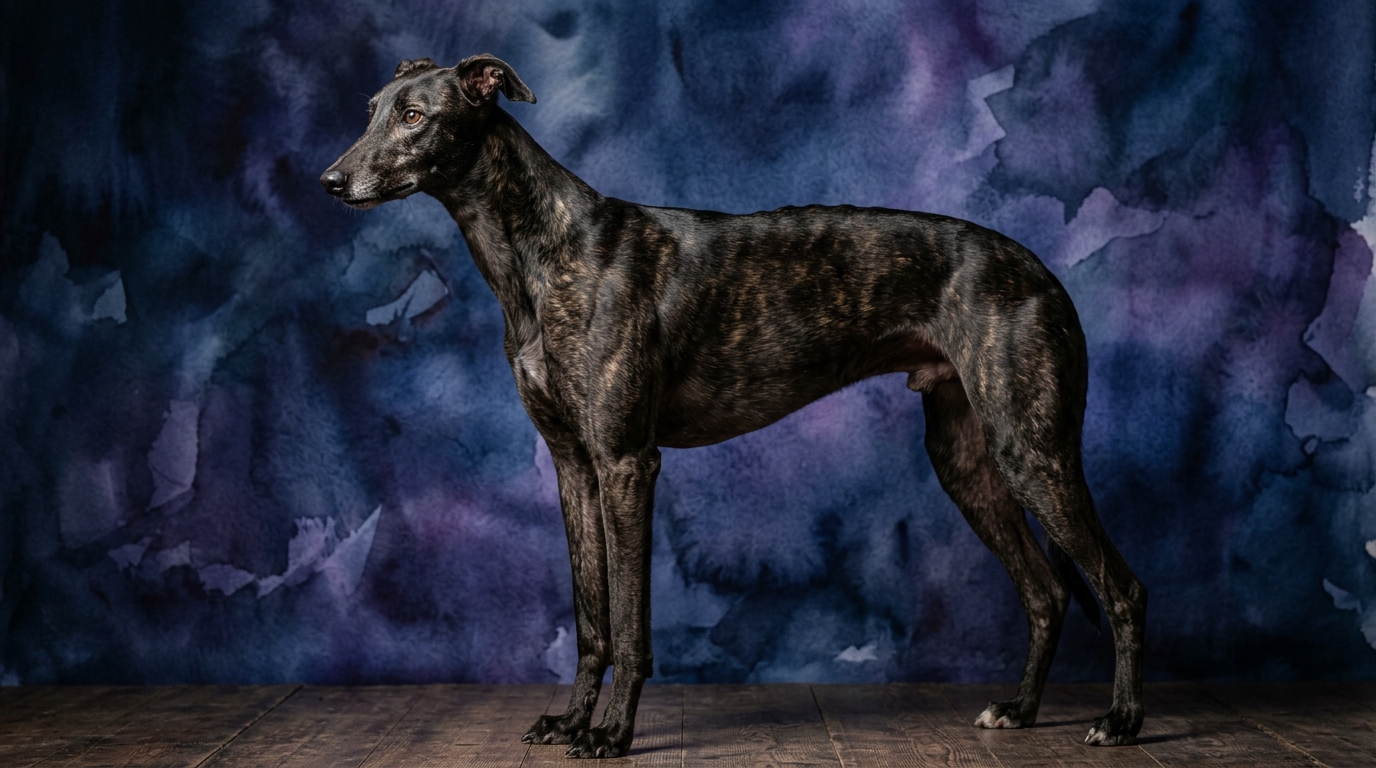
The Cosmic Pet Pet IQ Lab employs a five-dimensional framework to dissect canine intelligence, offering a nuanced view beyond simple obedience. For the Greyhound, a breed celebrated for its speed and sleek form, we see a cognitive makeup optimized for independent pursuit. Its Problem Solving score of 3/5 suggests a moderate capacity to navigate novel situations or overcome obstacles without direct instruction, often relying on instinctual responses rather than deliberate strategizing. Training Speed, at a 2/5, indicates that Greyhounds may take longer to form associations between commands and actions, often due to their independent nature and focus on environmental stimuli rather than human directives. Social Intelligence, rated 3/5, points to a moderate ability to interpret human cues and interact within a social structure, often being polite but not overly effusive. Where the Greyhound truly shines is in Instinctive Drive, achieving a perfect 5/5, reflecting an unparalleled innate urge to chase and capture, a core component of its sighthound heritage. Its Memory score of 3/5 suggests a reasonable ability to recall past experiences and learned behaviors, but perhaps not with the same depth or consistency as breeds with higher scores.
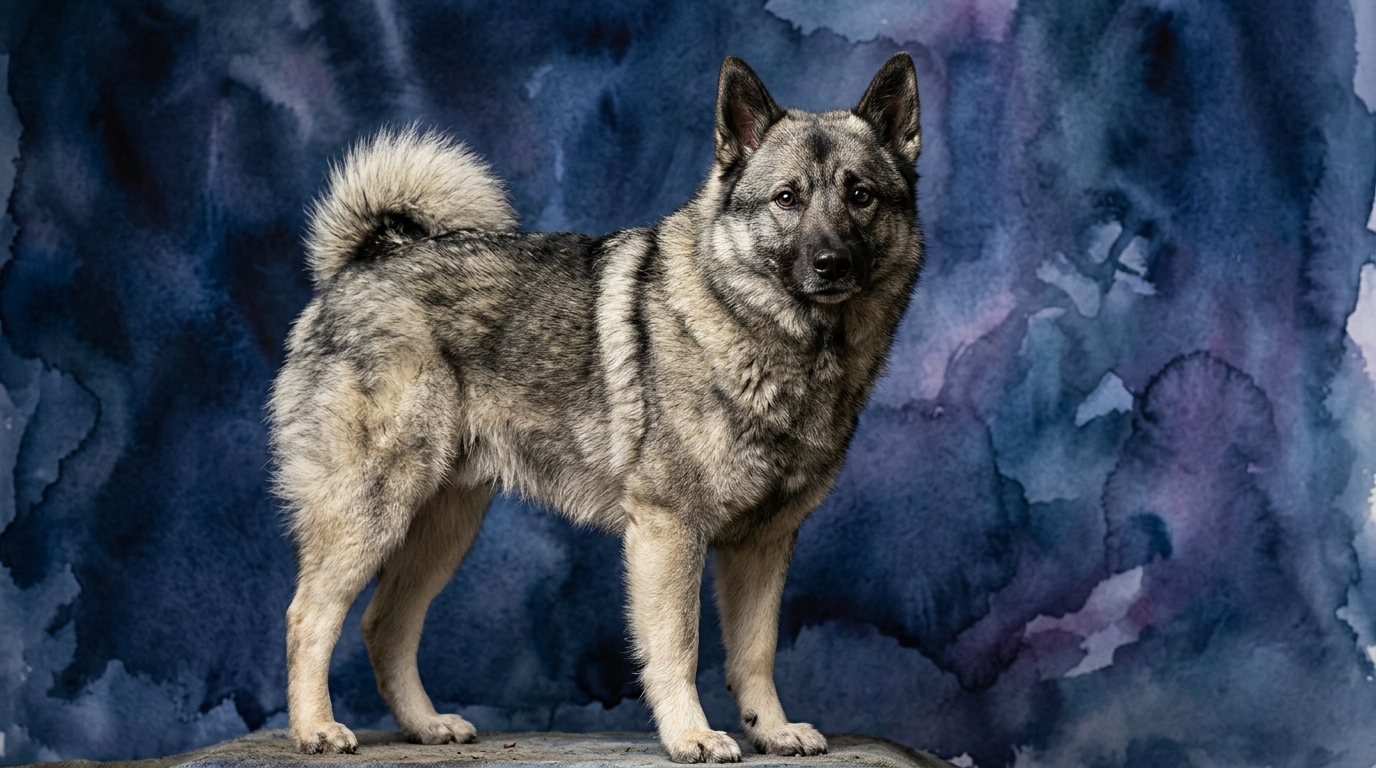
In contrast, the Norwegian Elkhound presents a different cognitive blueprint, reflecting its heritage as a hardy, multi-purpose hunter and guardian. Its Problem Solving score of 4/5 indicates a strong capacity for independent thought and strategic thinking, enabling it to figure out challenges and adapt to new scenarios effectively. The Elkhound's Training Speed, also 4/5, highlights its readiness and eagerness to learn new commands and routines, forming associations quickly and responding reliably to instruction. Social Intelligence, matching the Greyhound at 3/5, suggests a similar moderate ability to engage with humans and other animals, being observant and capable of forming strong bonds without being overly dependent. The Elkhound's Instinctive Drive, at 3/5, is present but more balanced than the Greyhound's, reflecting its role in tracking and baying game rather than pure pursuit, allowing for more modulated responses. Finally, its Memory score of 4/5 suggests a robust capacity for recall, enabling it to remember complex sequences, locations, and past interactions with considerable accuracy and retention.
Where the Greyhound's Mind Excels
The Greyhound's cognitive architecture is uniquely tailored for its primary historical role: the chase. Its exceptional Instinctive Drive, scoring a perfect 5/5, is the cornerstone of its mental prowess. This isn't merely an urge to run; it's a deeply ingrained cognitive program that prioritizes visual stimuli and rapid, decisive action. When a Greyhound spots something moving, its brain efficiently processes the target's trajectory, calculates the optimal interception path, and initiates a pursuit with breathtaking speed and focus. This drive manifests as an intense, singular focus during a chase, often overriding other learned behaviors or distractions. While its problem-solving is rated 3/5, within the context of pursuit, a Greyhound can exhibit remarkable situational awareness, adjusting its speed and direction to navigate terrain or bypass obstacles without hesitation, all in service of its innate drive to run down prey. This specialized cognitive strength means it can maintain incredible tunnel vision on a moving target, demonstrating a highly efficient, if narrow, form of intelligence. For activities like lure coursing, where this drive is channeled, the Greyhound's cognitive machinery is unparalleled, demonstrating quick, reactive decisions that are less about complex strategizing and more about instinctive, fluid execution.
Where the Norwegian Elkhound's Mind Excels
The Norwegian Elkhound's cognitive strengths lie in its versatility and adaptability, reflecting its history as a hunter that needed to track, bay, and sometimes guard. Its Problem Solving score of 4/5 indicates a canine capable of independently navigating complex situations, such as figuring out how to open a gate or locate a hidden treat through logical deduction rather than mere trial and error. This higher capacity for independent thought makes them adept at learning new tasks and adapting to varied environments. Coupled with a Training Speed of 4/5, the Elkhound demonstrates a keen willingness and ability to quickly grasp and retain new commands, making it a responsive partner in structured activities. This isn't just about rote memorization; it's about making connections between actions and consequences, and understanding human intent. Furthermore, its Memory, also scoring 4/5, means that once an Elkhound learns something, it tends to stick. This robust recall extends to remembering intricate routines, scent trails, or even specific locations, which would have been crucial for a hunting dog operating in challenging terrains. The Elkhound's intelligence is more about a balanced, multi-faceted approach to challenges, making it a capable companion for a wider array of cognitive tasks beyond pure physical exertion.
Trainability: Greyhound vs. Norwegian Elkhound
When it comes to trainability, the data points to a clear distinction between these two breeds. The Norwegian Elkhound, with a Training Speed of 4/5, generally proves to be a more straightforward and cooperative student. This higher score means Elkhounds typically form associations between commands and desired behaviors rapidly, often eager to engage with their human companions in structured learning. Their balanced Instinctive Drive (3/5) allows them to focus on human instructions without being overly distracted by environmental stimuli, making them receptive to consistent, positive reinforcement training methods. They respond well to varied tasks, from basic obedience to more complex scent work or agility, often thriving on the mental engagement that training provides.
The Greyhound, in contrast, scores a 2/5 in Training Speed, indicating a more independent approach to learning. This isn't a reflection of a lack of mental capacity, but rather a different prioritization of cognitive resources. Greyhounds are often less motivated by pleasing their human and more by their own inherent drives, particularly their powerful pursuit instinct (5/5). This means training sessions need to be short, engaging, and highly rewarding to capture their attention and sustain their interest. Their sighthound brain is wired for immediate visual response and independent action, which can make them less inclined to follow repetitive verbal commands if a more exciting visual stimulus presents itself. While they can certainly be trained to a high degree, it often requires more patience, creativity, and an understanding of their unique motivations, recognizing that their focus can quickly shift if something catches their eye. Their independent spirit means they excel when tasks align with their natural inclinations, but may find abstract obedience less compelling.
Suitability for Active vs. Relaxed Lifestyles
Choosing between a Greyhound and a Norwegian Elkhound based on lifestyle preferences requires understanding their unique blend of cognitive and physical needs. For active owners seeking a true partner in varied endeavors, the Norwegian Elkhound often presents a more suitable match. Its higher Problem Solving (4/5), Training Speed (4/5), and Memory (4/5) make it an excellent candidate for activities that demand mental engagement and physical stamina, such as long hikes, tracking, competitive obedience, or even agility. Elkhounds thrive on having a job to do and appreciate consistent mental stimulation, making them ideal for individuals who enjoy structured activities and problem-solving challenges alongside their canine companion. Their balanced instinctive drive means they can be relied upon in various environments, though their hunting heritage still necessitates appropriate outlets.
The Greyhound, while capable of incredible bursts of speed, often suits owners who appreciate an independent spirit and a more relaxed pace indoors. Despite their 5/5 Instinctive Drive for pursuit, Greyhounds are famously known as '45 mph couch potatoes,' content to lounge for much of the day after appropriate exercise. Their lower Training Speed and Problem Solving scores, relative to the Elkhound, suggest they are less demanding of constant, complex mental engagement. They excel with owners who can provide secure, fenced areas for exhilarating sprints but are otherwise happy with a calm, comfortable home environment. This breed is well-suited for individuals who value quiet companionship and a dog that can entertain itself after its exercise needs are met, rather than one constantly seeking a 'job' or complex mental tasks. Owners must, however, remain vigilant about their strong prey drive, ensuring secure environments to prevent unintended chases.
The Verdict
Choose the Greyhound if you appreciate an independent, pursuit-driven companion that is generally calm and quiet indoors but requires secure spaces for exhilarating sprints and visual stimulation.
Choose the Norwegian Elkhound if you seek a versatile, trainable, and mentally engaged partner for a variety of activities, including complex problem-solving, structured training, and outdoor adventures.
🧠 Find Your Pet's IQ Score
Our Pet IQ Lab assessment covers 25+ tests across 5 cognitive dimensions — personalized to your breed.
Take the Full IQ Test →Frequently Asked Questions
Are Greyhounds difficult to train?
Greyhounds are not inherently difficult, but their independent nature and strong prey drive (Instinctive Drive 5/5) mean they learn at a slower pace (Training Speed 2/5) compared to some breeds. They respond best to positive reinforcement, short, engaging sessions, and trainers who understand their sighthound motivations, focusing on consistency and making training fun.
Do Norwegian Elkhounds require a lot of mental stimulation?
Yes, Norwegian Elkhounds thrive on mental engagement due to their higher Problem Solving (4/5) and Memory (4/5) scores. They enjoy learning new tasks, participating in activities like tracking or obedience, and can become bored or destructive if their minds are not adequately challenged with puzzles, training, or consistent interaction.
Which breed is better for a first-time dog owner?
For a first-time owner, the Norwegian Elkhound might be an easier choice due to its higher Training Speed (4/5) and Problem Solving (4/5), making it generally more responsive and adaptable to learning new routines. Greyhounds, while gentle, require an owner who understands their unique independent temperament and intense prey drive.