Side-by-Side IQ Profile: Deconstructing Sighthound Minds
The Cosmic Pet Pet IQ Lab employs a five-dimensional framework to assess canine intelligence, providing a granular view of how different breeds process information and interact with their world. For the Greyhound, with a Coren ranking of #46, and the unranked Scottish Deerhound, this profile illuminates their innate cognitive leanings.
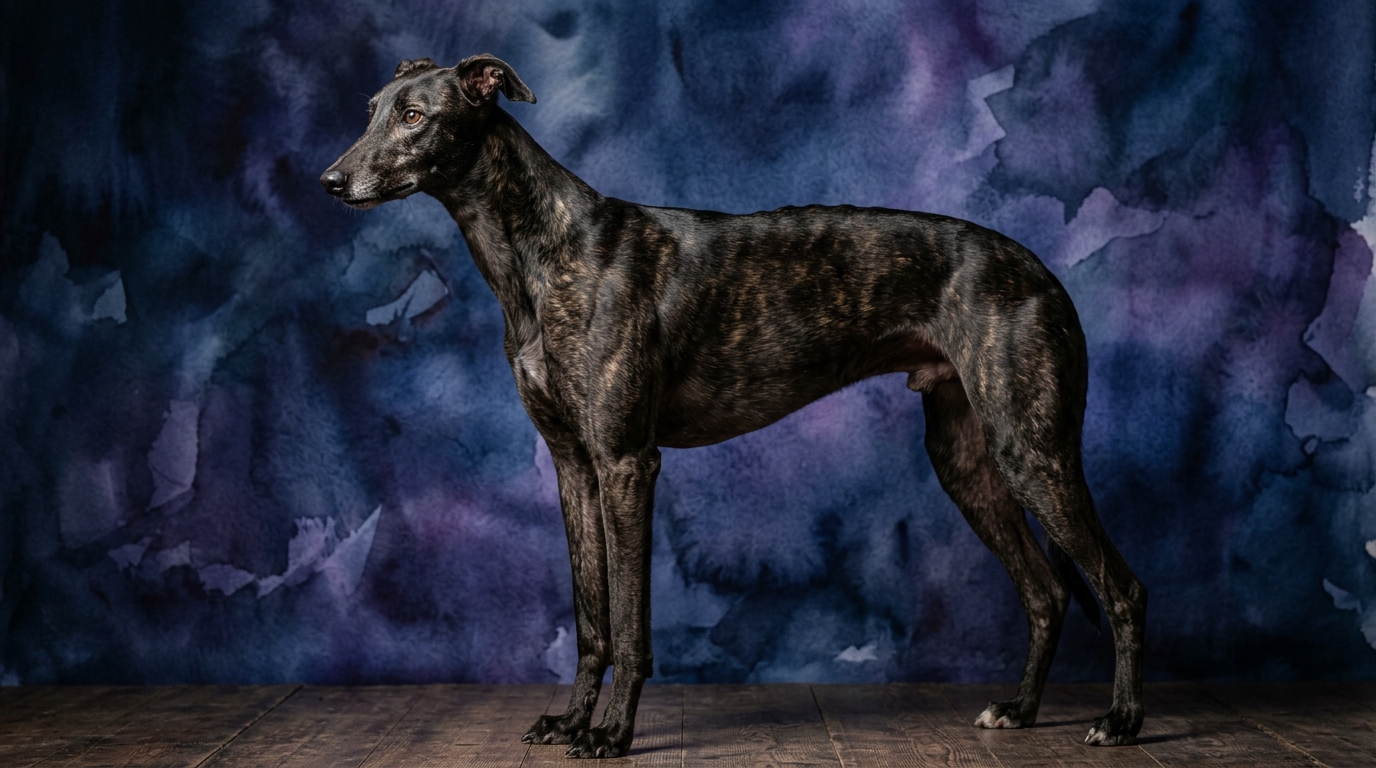
Greyhound (Coren Rank #46):
Problem Solving (3/5): Greyhounds demonstrate a functional level of problem-solving, capable of navigating familiar environments and learning routines. Their cognitive efforts are often directed towards efficiency in their immediate surroundings, such as finding the quickest path to a comfortable resting spot or figuring out how to access a favorite toy. This score suggests they can grasp simple puzzle toys but might not be inclined towards complex, multi-step challenges without significant motivation.
Training Speed (2/5): Their training speed indicates that Greyhounds require consistent, patient, and positive reinforcement-based approaches. They can learn commands, but the process often involves more repetition than breeds with higher training speed scores. This isn't a lack of ability, but rather a reflection of their independent sighthound nature, where compliance isn't always their primary motivator.
Social Intelligence (3/5): Greyhounds possess a moderate level of social intelligence, allowing them to understand human cues and form strong bonds with their family members. They are generally sensitive to their handler's mood and can adapt to household dynamics. While they might not be overtly demonstrative, they are adept at reading their immediate social environment and responding appropriately within their comfort zone.
Instinctive Drive (5/5): This is a defining cognitive trait for the Greyhound. Their instinctive drive is exceptionally high, primarily manifested as a powerful prey drive and an innate urge to chase anything that moves quickly. This profound instinct shapes much of their behavior, influencing their focus, reactions to environmental stimuli, and the need for secure containment when outdoors.
Memory (3/5): Greyhounds exhibit a solid memory for routines, commands, and familiar people or places. They can recall specific training cues and remember the layout of their home and daily schedule. This memory score supports their ability to integrate into family life and maintain learned behaviors over time, though complex sequences might require ongoing reinforcement.
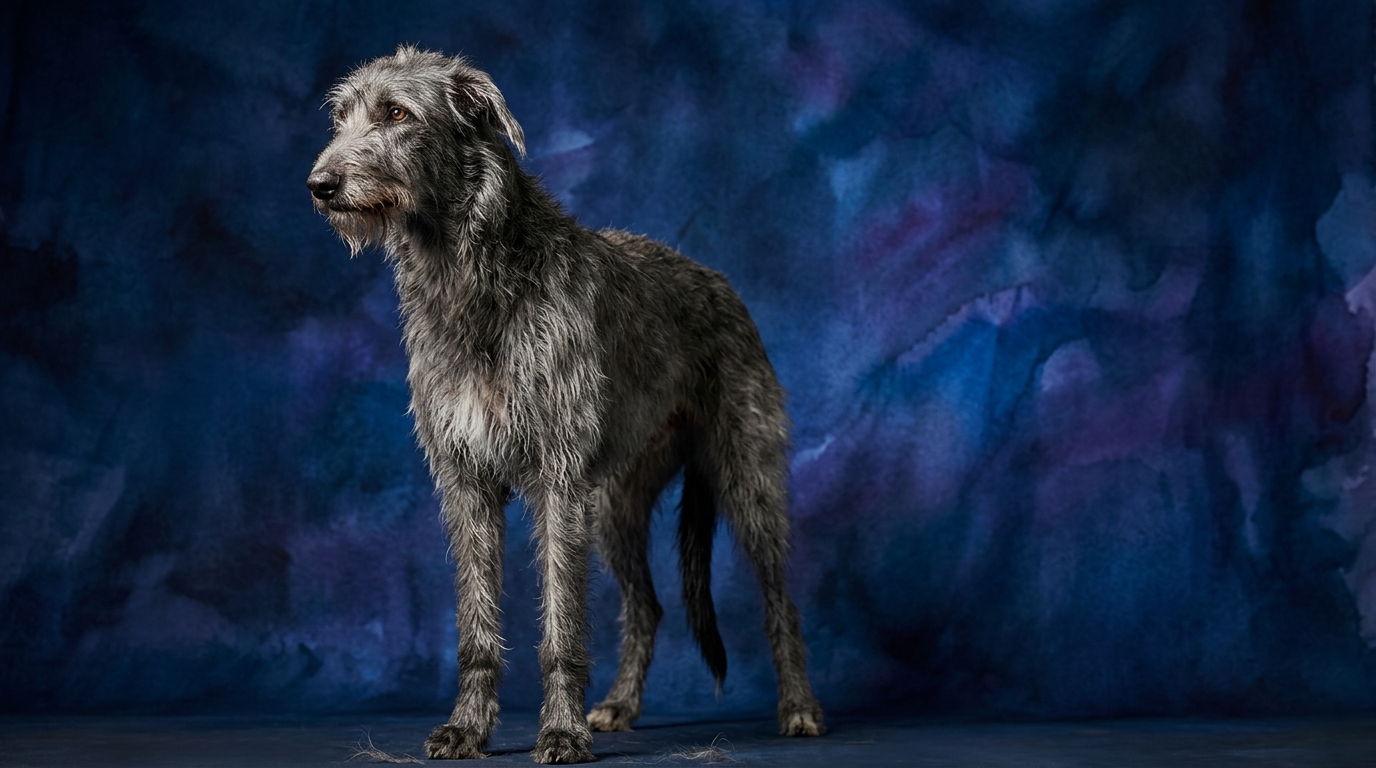
Scottish Deerhound (Not Coren-Ranked):
Problem Solving (3/5): Like Greyhounds, Scottish Deerhounds show a comparable capacity for problem-solving. They can navigate their surroundings, learn household rules, and engage with puzzle toys that aren't overly complicated. Their cognitive approach leans towards practical solutions within their immediate environment, often related to comfort or accessing desired resources.
Training Speed (3/5): The Scottish Deerhound's training speed is slightly higher than the Greyhound's, suggesting they might pick up new commands or routines with a bit less repetition. While still possessing an independent sighthound spirit, they may demonstrate a marginally greater willingness to cooperate in structured training sessions, making them a touch more responsive to early instruction.
Social Intelligence (3/5): Scottish Deerhounds also score a 3/5 in social intelligence, indicating a similar capacity to understand and respond to human and canine social cues. They form deep attachments and are generally attuned to the emotional states of their family. Their social interactions are often described as gentle and observant, reflecting their sensitive nature.
Instinctive Drive (3/5): While still a sighthound, the Scottish Deerhound's instinctive drive is rated at 3/5, notably lower than the Greyhound's. This means they possess a significant prey drive, particularly for small, fast-moving objects, but it might be less intense or all-consuming than their coursing cousins. This difference can impact their focus outdoors and their overall reactivity to stimuli.
Memory (3/5): Scottish Deerhounds share the same memory score as Greyhounds, demonstrating a reliable ability to remember commands, routines, and the identity of people and places. This consistent memory allows them to retain learned behaviors and adapt well to a stable home environment, building on past experiences effectively.
Where the Greyhound Cognitively Excels
The Greyhound's cognitive edge shines brightest in areas demanding intense, singular focus and rapid, instinctive execution. Their unparalleled instinctive drive (5/5) means they possess an exceptional mental capacity for pursuit and capture. This isn't just about speed; it's a finely tuned cognitive system that processes visual stimuli at an incredible rate, assessing trajectory, speed, and evasive maneuvers in real-time. While their problem-solving score is 3/5, within the context of their primary drive, they exhibit a specialized form of cognitive efficiency, making split-second decisions that optimize their chase. This intense focus, while sometimes challenging in training, represents a profound cognitive specialization for their historical role, allowing them to ignore distractions and commit fully to a perceived target. Their physical prowess is intrinsically linked to this mental framework, where the brain and body work in seamless, high-speed collaboration during the chase.
Where the Scottish Deerhound Cognitively Holds an Advantage
The Scottish Deerhound demonstrates a subtle yet significant cognitive advantage in its slightly higher training speed (3/5 compared to the Greyhound's 2/5). This indicates a marginally greater receptiveness to formal instruction and a potentially quicker grasp of new commands or concepts during structured sessions. While still independent in spirit, their cognitive processing for cooperative tasks might be a touch more efficient, requiring slightly less repetition to solidify a new behavior. Furthermore, their instinctive drive, while present, is rated lower (3/5). This isn't a deficit but a cognitive difference that allows for a broader scope of mental engagement beyond intense pursuit. It suggests they might be less singularly consumed by prey stimuli, potentially making them more adaptable to varied training environments and less prone to bolting at the sight of a distant squirrel, offering a slightly more balanced cognitive approach to their surroundings.
Training Dynamics: Which is Easier to Guide?
Based on their respective training speed scores, the Scottish Deerhound generally presents as marginally easier to train than the Greyhound. The Deerhound's 3/5 training speed suggests they may require slightly fewer repetitions to solidify new commands, potentially showing a greater willingness to engage in cooperative learning sessions. This doesn't imply a 'biddable' nature in the traditional sense, as both are sighthounds with inherent independence, but rather a subtle difference in their cognitive receptiveness to instruction. For instance, teaching a 'stay' command might see a Deerhound achieve reliability a bit quicker.
Conversely, the Greyhound's 2/5 training speed means handlers need to employ extra patience, very short training sessions, and highly motivating rewards. Their significant instinctive drive (5/5) also plays a crucial role; while Greyhounds can learn commands, their deep-seated urge to chase can override learned behaviors in distracting environments, making off-leash reliability a considerable challenge without extensive, careful conditioning in secure areas. The Deerhound's lower instinctive drive (3/5) might mean their attention is less likely to be completely hijacked by a distant moving object, offering a small but meaningful advantage in maintaining focus during outdoor training.
Matching Breeds to Lifestyles: Active vs. Relaxed Owners
When considering owner lifestyles, both breeds cater to specific energy dynamics, though 'active' and 'relaxed' need careful definition for sighthounds. The Greyhound, despite its racing past, often suits owners who appreciate a relaxed indoor companion but can provide intense bursts of exercise. Their 5/5 instinctive drive means they need secure, fenced areas for safe, vigorous sprints or engagement in activities like lure coursing. An 'active owner' for a Greyhound is one who prioritizes these specific, high-intensity exercise outlets, understanding that long, slow jogs are less fulfilling for them than short, fast runs. They are not endurance athletes but sprinters.
Conversely, the Scottish Deerhound, while still requiring regular exercise, often aligns with owners who enjoy longer, more moderate walks or hikes, combined with periods of relaxed companionship. Their 3/5 instinctive drive, while present, makes them potentially less prone to the explosive, all-consuming chase impulses of the Greyhound, allowing for a slightly more varied approach to outdoor activity. They are often content with a good stretch of the legs and then settling calmly indoors, making them suitable for 'relaxed owners' who still commit to daily, purposeful outdoor time but don't necessarily seek high-adrenaline activities.
The Verdict
Choose a Greyhound if you admire unparalleled athletic specialization and can provide a secure environment for their intense bursts of activity, appreciating a calm, affectionate companion indoors.
Opt for a Scottish Deerhound if you seek a gentle giant with a slightly more amenable training disposition and a balanced approach to exercise, content with moderate activity and serene companionship.
🧠 Find Your Pet's IQ Score
Our Pet IQ Lab assessment covers 25+ tests across 5 cognitive dimensions — personalized to your breed.
Take the Full IQ Test →Frequently Asked Questions
Are Greyhounds good with other pets?
Greyhounds possess a high instinctive drive (5/5), meaning they have a strong prey drive. While many can live peacefully with cats or smaller dogs after careful, supervised introductions, their instinct to chase can be powerful, requiring constant vigilance, especially with unfamiliar small animals.
Do Scottish Deerhounds require a lot of grooming?
Scottish Deerhounds have a harsh, wiry coat that requires weekly brushing to remove loose hair and prevent matting, along with occasional hand-stripping a few times a year. This grooming routine helps maintain the coat's texture and cleanliness, making them a moderate-maintenance breed.
How much exercise does a Scottish Deerhound need daily?
Scottish Deerhounds, with their 3/5 instinctive drive, thrive on regular, moderate exercise. This typically includes a brisk walk or jog for 30-60 minutes daily, ideally combined with opportunities for a good run in a safely enclosed area to satisfy their sighthound instincts.