Side-by-Side IQ Profile: Precision in Cognition
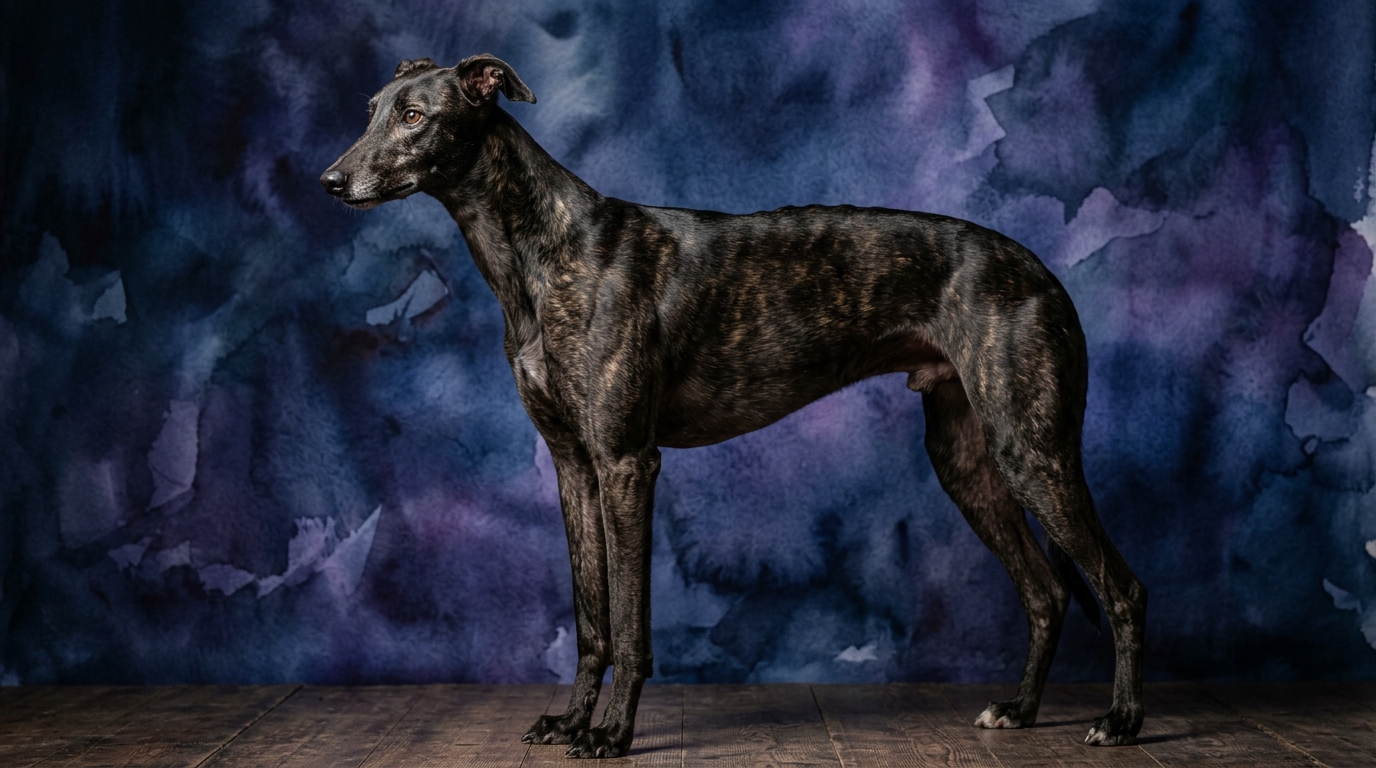
The Cosmic Pet Pet IQ Lab assesses five key dimensions of intelligence, providing a granular view of each breed's mental architecture. For the Greyhound, a breed recognized by Coren at rank #46, their profile reveals a Problem Solving score of 3/5, indicating an average capacity to navigate novel situations or overcome obstacles. Their Training Speed stands at 2/5, suggesting a need for more repetition and patience during learning sessions. Social Intelligence is rated 3/5, implying a moderate ability to interpret human cues and interact appropriately within social structures. A standout feature is their Instinctive Drive at a remarkable 5/5, highlighting an exceptionally strong, innate urge often associated with their sighthound heritage. Finally, their Memory is scored 3/5, reflecting an average retention of learned behaviors and experiences.
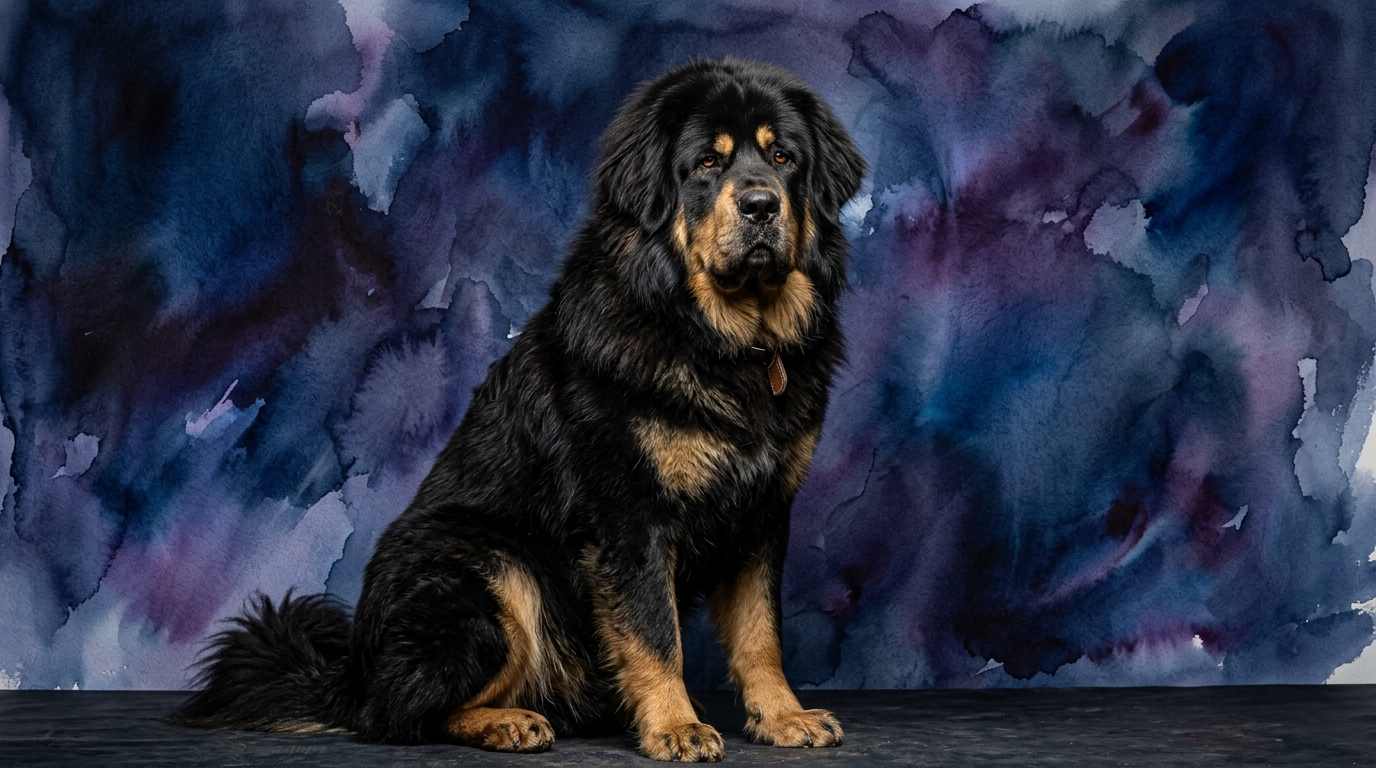
In contrast, the Tibetan Mastiff, a breed currently not Coren-ranked, presents a unique cognitive blueprint. Their Problem Solving ability matches the Greyhound at 3/5, demonstrating similar capacities for independent thought and resolution of moderate challenges. Notably, their Training Speed is slightly higher at 3/5, suggesting they may grasp commands with a bit less repetition than their sighthound counterpart. Their Social Intelligence also aligns at 3/5, indicating a comparable aptitude for understanding social dynamics. The Tibetan Mastiff's Instinctive Drive is 3/5, a moderate level that speaks to their historical role as a guardian rather than a hunter, focusing on territorial watchfulness. Like the Greyhound, their Memory is also rated 3/5, signifying a standard ability to recall past lessons and interactions.
Where the Greyhound's Mind Excels
The Greyhound's primary cognitive advantage lies in its unparalleled Instinctive Drive, rated a perfect 5/5. This isn't merely a physical attribute; it's a deeply ingrained mental framework that prioritizes visual tracking and pursuit. For tasks requiring explosive bursts of focus and speed in response to a moving target, no other breed can match the Greyhound's mental and physical synchronization. Their cognitive processes are finely tuned to detect, analyze, and react to motion with incredible efficiency, making them masters of lure coursing or competitive racing where this drive is channeled.
While their Training Speed is 2/5, this doesn't diminish their specialized cognitive prowess. Instead, it suggests that their mental energy is overwhelmingly directed towards their inherent drive. When training aligns with this powerful instinct, such as teaching them to chase a specific lure on command, Greyhounds can exhibit profound engagement and mastery. Their moderate Problem Solving and Memory scores (both 3/5) mean they can learn the rules of these specialized 'games' and apply them consistently, making them formidable competitors in their chosen athletic domains.
Where the Tibetan Mastiff's Intellect Shines
The Tibetan Mastiff's cognitive strengths lean towards a more independent and adaptable learning style, reflected in their Training Speed of 3/5, which surpasses the Greyhound. This indicates a slightly quicker uptake of new commands and concepts in a general training setting. While not ranking highest, this moderate pace allows them to process information more readily for diverse tasks beyond a single, intense drive. Their Problem Solving, also at 3/5, combined with this improved training speed, suggests a practical intelligence geared towards assessing situations and making decisions, particularly relevant to their historical role.
Their Instinctive Drive, rated 3/5, is a significant differentiator. Unlike the Greyhound's chase-centric focus, the Tibetan Mastiff's drive is geared towards observation, assessment, and protective action. This means their cognitive resources are more evenly distributed, allowing them to process environmental cues for potential threats and make independent judgments. This balanced drive, combined with their problem-solving ability, makes them adept at discerning friend from foe and understanding the nuances of their territory, relying on a thoughtful, rather than purely reactive, cognitive approach.
Training Dynamics: Greyhound's Patience vs. Tibetan Mastiff's Purpose
When it comes to ease of training, the Tibetan Mastiff generally holds an edge due to its 3/5 Training Speed compared to the Greyhound's 2/5. This means a Tibetan Mastiff might require fewer repetitions to grasp basic obedience commands like 'sit' or 'stay.' However, their independent nature, stemming from centuries of solitary guarding, means they often weigh commands against their own perceived purpose. They are not inherently eager to please in the same way some other breeds are, requiring an owner who can establish clear, consistent leadership and make training feel purposeful, rather than just rote learning.
The Greyhound, with its 2/5 Training Speed, demands considerable patience and consistency. Their strong Instinctive Drive (5/5) means that if a squirrel darts across the path, their innate chase response will often override any learned command, especially in early training. This isn't a lack of ability, but a prioritization of instinct. Successful training with a Greyhound involves understanding this drive, using positive reinforcement heavily, and making training sessions short, fun, and highly rewarding to compete with their natural inclinations. Leash training and recall are critical and require dedicated effort to manage their powerful prey drive in real-world scenarios.
Matching Minds to Lifestyles: Active Pursuit vs. Relaxed Vigilance
For active owners, the Greyhound, despite its '45 mph couch potato' reputation, offers a unique partnership. Their intense Instinctive Drive (5/5) thrives when given appropriate outlets, such as regular opportunities to run at full speed in a secure, fenced area or participate in organized lure coursing events. Owners who enjoy these specialized activities will find the Greyhound an immensely rewarding companion, celebrating their incredible athleticism and the brief, explosive mental focus it demands. Beyond these bursts, their relatively low energy indoors makes them suitable for owners who appreciate a calm presence in the home, provided their physical and instinctive needs are met.
The Tibetan Mastiff, on the other hand, suits owners who appreciate a more relaxed, yet deeply watchful, companion. While they don't require intense cardio, their cognitive needs revolve around territory management and independent decision-making. Owners must be prepared for consistent, early socialization to ensure their natural guardian instincts (Instinctive Drive 3/5) are channeled appropriately. They are best for individuals who understand the nuances of a guardian breed, are prepared for a dog that thinks for itself, and can provide a secure environment where their watchful nature is an asset, not a liability. Their moderate energy levels are better suited for owners who prioritize mental engagement and consistent leadership over high-impact physical activities.
The Verdict
Choose the Greyhound if you are captivated by specialized athleticism, appreciate a calm indoor presence after dedicated exercise, and are prepared to patiently work with a strong chase instinct.
Opt for the Tibetan Mastiff if you seek a devoted, independent guardian, are committed to consistent training and socialization, and value a watchful, self-assured companion.
🧠 Find Your Pet's IQ Score
Our Pet IQ Lab assessment covers 25+ tests across 5 cognitive dimensions — personalized to your breed.
Take the Full IQ Test →Frequently Asked Questions
Are Greyhounds difficult to train because of their low training speed score?
Greyhounds aren't 'difficult' in the sense of being unable to learn, but their 2/5 Training Speed means they require more repetition and patience. Their powerful 5/5 Instinctive Drive also means training must be highly rewarding and consistent to compete with their natural desire to chase, especially in distracting environments.
Does the Tibetan Mastiff's moderate instinctive drive mean they are not good guardians?
No, a moderate 3/5 Instinctive Drive for the Tibetan Mastiff means their guarding instinct is present but not overwhelming or purely reactive like a prey drive. It indicates a thoughtful, watchful nature where they assess situations and make independent decisions to protect their territory and family, rather than acting solely on raw instinct.
Which breed is better for first-time dog owners?
Neither breed is typically recommended for first-time dog owners without extensive research and commitment. Both have unique needs: Greyhounds require managing a potent prey drive and patient training, while Tibetan Mastiffs demand confident leadership and dedicated socialization to manage their guardian instincts and independent nature effectively.