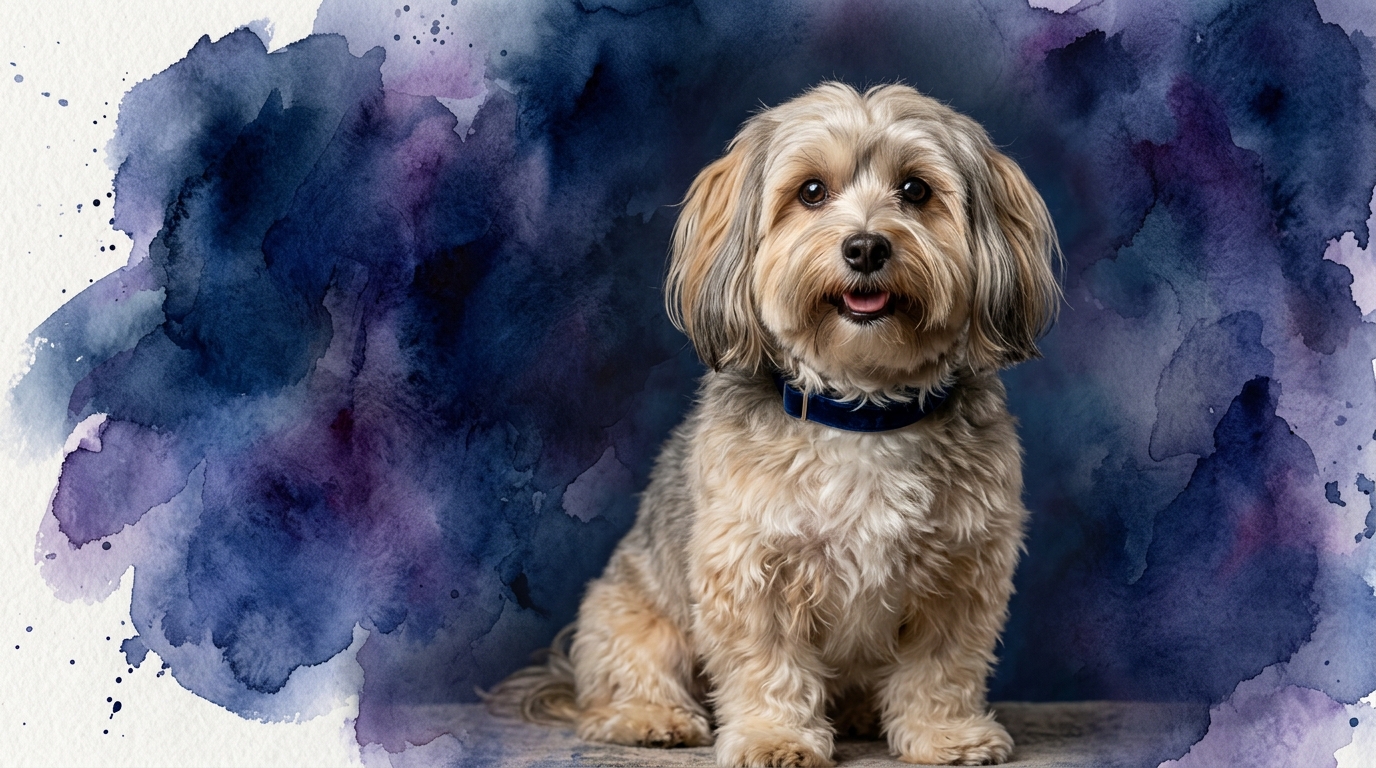
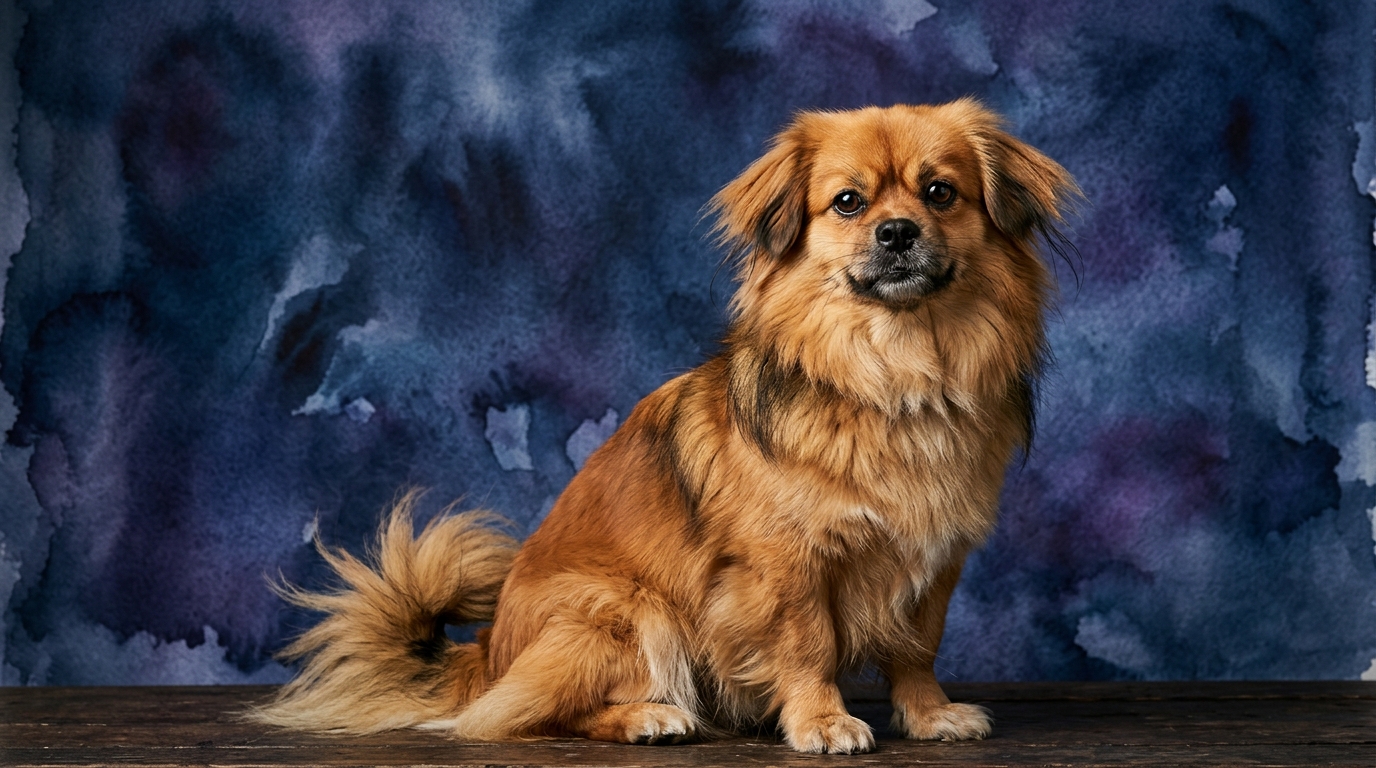
Side-by-Side Cognitive Profiles: Havanese vs. Tibetan Spaniel
The Cosmic Pet Pet IQ Lab employs a five-dimensional framework to assess canine intelligence, offering a nuanced view beyond simplistic 'smart' labels. For the Havanese, we observe a Problem Solving score of 3/5, indicating an average capacity for navigating novel challenges and figuring out puzzles. Their Training Speed also stands at 3/5, suggesting they learn new commands and routines at a moderate pace, neither exceptionally quick nor particularly slow. Where the Havanese truly shines is in Social Intelligence, earning a perfect 5/5; this reflects an extraordinary ability to read human emotions, intentions, and social cues, fostering deep empathetic bonds. Their Instinctive Drive is lower at 2/5, meaning they possess less innate motivation for tasks like hunting, herding, or guarding. Finally, their Memory is rated 3/5, allowing them to retain learned behaviors and past experiences adequately.
Turning to the Tibetan Spaniel, their Problem Solving ability mirrors the Havanese at 3/5, indicating a similar aptitude for independent thought when faced with new situations. Their Training Speed is also consistent at 3/5, suggesting a learning pace comparable to their Havanese counterparts. However, a key difference emerges in Social Intelligence, where the Tibetan Spaniel scores 3/5. While capable of forming bonds and understanding human communication, this score implies a more independent nature, less intensely focused on human emotional states compared to the Havanese. Their Instinctive Drive is slightly higher at 3/5, hinting at a bit more self-sufficiency or innate awareness. Like the Havanese, their Memory is assessed at 3/5, denoting a reliable ability to recall past events and training.
Where the Havanese Wins Cognitively
The most pronounced cognitive advantage for the Havanese lies in their exceptional Social Intelligence, scoring a full 5/5 compared to the Tibetan Spaniel’s 3/5. This isn't merely about being friendly; it signifies a profound capacity to perceive and respond to human emotions and social dynamics. A Havanese with this level of social acumen is often remarkably attuned to their owner's mood, offering comfort when sad or engaging playfully when spirits are high. They excel at reading subtle body language and vocal inflections, making them incredibly responsive and intuitive companions. This heightened social awareness makes them prime candidates for roles requiring deep human connection, such as therapy work, where their ability to offer emotional support is paramount.
Furthermore, the Havanese's lower Instinctive Drive (2/5 vs. 3/5 for the Tibbie) often translates to less independent exploration or a reduced tendency for self-directed activities that might conflict with human plans. While both breeds are companion animals, the Havanese is generally more content to be a direct participant in human activities, often preferring close physical proximity and interaction over patrolling a yard or observing from a distance. This lower drive, combined with their high social intelligence, creates a dog that is often perceived as more 'eager to please' and inherently cooperative, as their primary motivation is often connection with their human family.
Where the Tibetan Spaniel Wins Cognitively
The Tibetan Spaniel's cognitive strengths manifest in a slightly different balance of traits, particularly their higher Instinctive Drive (3/5 compared to the Havanese’s 2/5) and a more moderate Social Intelligence (3/5). This combination suggests a dog with a greater sense of self-possession and independence. While still affectionate, a Tibetan Spaniel might not exhibit the same level of emotional intensity or constant need for interaction as a Havanese. Their slightly elevated drive can manifest as a keen observational nature, often taking a perch to survey their surroundings, a remnant of their historical role as watchdogs in monasteries. This makes them excellent little alarm systems, quick to notice and alert their family to anything unusual.
This moderate social intelligence coupled with a slightly higher drive means the Tibetan Spaniel often possesses a charmingly independent streak. They enjoy their human's company but are often content to entertain themselves or simply relax nearby without demanding constant engagement. This self-sufficiency can be a cognitive win for owners who appreciate a dog that is present and loving, yet capable of enjoying quiet time. They are engaged with their environment and can make their own fun, rather than solely relying on human interaction for stimulation, offering a loyal companionship that is less emotionally intense but equally profound in its own way.
Training Dynamics: Havanese vs. Tibetan Spaniel
Both the Havanese and Tibetan Spaniel share a Training Speed score of 3/5, suggesting they both learn at a moderate pace. However, the practical experience of training them can differ significantly due to their other cognitive traits. The Havanese, with its exceptional 5/5 Social Intelligence, often appears easier to train because of its intense desire to please and its acute sensitivity to owner cues. They are highly motivated by social praise and connection, quickly picking up on what makes their human happy. This means they are often more forgiving of handler errors and more responsive to subtle guidance, making training feel like a collaborative dance.
In contrast, the Tibetan Spaniel’s 3/5 Social Intelligence and 3/5 Instinctive Drive mean they might approach training with a bit more of an independent mindset. They will learn, but they might require more consistent, clear instruction and a stronger emphasis on positive reinforcement with tangible rewards, such as treats. Their independence can sometimes be interpreted as stubbornness, but it's more accurately a reflection of their self-reliant nature. Owners might need to work harder to maintain their focus, making training sessions engaging and varied. While both breeds respond well to positive methods, the Havanese might respond more readily to emotional encouragement, whereas the Tibbie might need a clearer 'what's in it for me?'.
Matching Owners: Active vs. Relaxed Lifestyles
For owners seeking an exceptionally interactive and emotionally attuned companion, the Havanese is often an ideal fit. Their 5/5 Social Intelligence means they thrive in environments where they are central to family life, involved in daily activities, and receive ample social engagement. They are adaptable to both active owners who enjoy dog sports like agility or obedience, where their responsiveness is a huge asset, and relaxed owners who desire a constant, empathetic presence. Their low 2/5 Instinctive Drive means they are less prone to chasing wildlife or exhibiting strong guarding behaviors, making them generally easier to integrate into diverse household settings without complex behavioral management related to innate drives.
The Tibetan Spaniel, with its 3/5 Social Intelligence and 3/5 Instinctive Drive, often suits owners who appreciate a loyal companion but also value a degree of independence in their pet. They are wonderful for relaxed owners who enjoy companionship without the intense, constant demand for interaction. Tibbies are content to curl up on the couch but also enjoy a brisk walk and exploring their immediate environment. Their slightly higher drive can mean they enjoy a bit more self-directed play or observation. They are an excellent choice for individuals or families looking for an alert, charming, and affectionate dog that offers a balanced blend of companionship and self-sufficiency, not requiring constant emotional validation or participation in every single human activity.
The Verdict
Choose the Havanese if you prioritize an exceptionally empathetic, highly interactive, and emotionally responsive companion who thrives on deep social connection and partnership in all aspects of life.
Opt for the Tibetan Spaniel if you desire a loyal, charming, and somewhat more independent companion, a keen observer who offers affection and presence without demanding constant attention or intense emotional validation.
🧠 Find Your Pet's IQ Score
Our Pet IQ Lab assessment covers 25+ tests across 5 cognitive dimensions — personalized to your breed.
Take the Full IQ Test →Frequently Asked Questions
Are Havanese good for first-time dog owners?
Yes, Havanese are generally excellent for first-time dog owners due to their high social intelligence and eagerness to please. Their adaptability and responsiveness make them relatively straightforward to train and integrate into a new home, though consistent positive reinforcement is still key for any new dog owner.
Do Tibetan Spaniels bark a lot?
Tibetan Spaniels, with their slightly higher instinctive drive and history as watchdogs, can be quite vocal, especially when alerting their family to perceived intruders or unusual sounds. While not typically excessive, consistent training from a young age can help manage their alerting barks.
Which breed is better with children?
Both breeds can be good with children, but the Havanese's superior social intelligence might make them more naturally attuned to a child's temperament and less likely to be overwhelmed by energetic play. Always supervise interactions and teach children appropriate ways to engage with any dog to ensure a positive relationship.