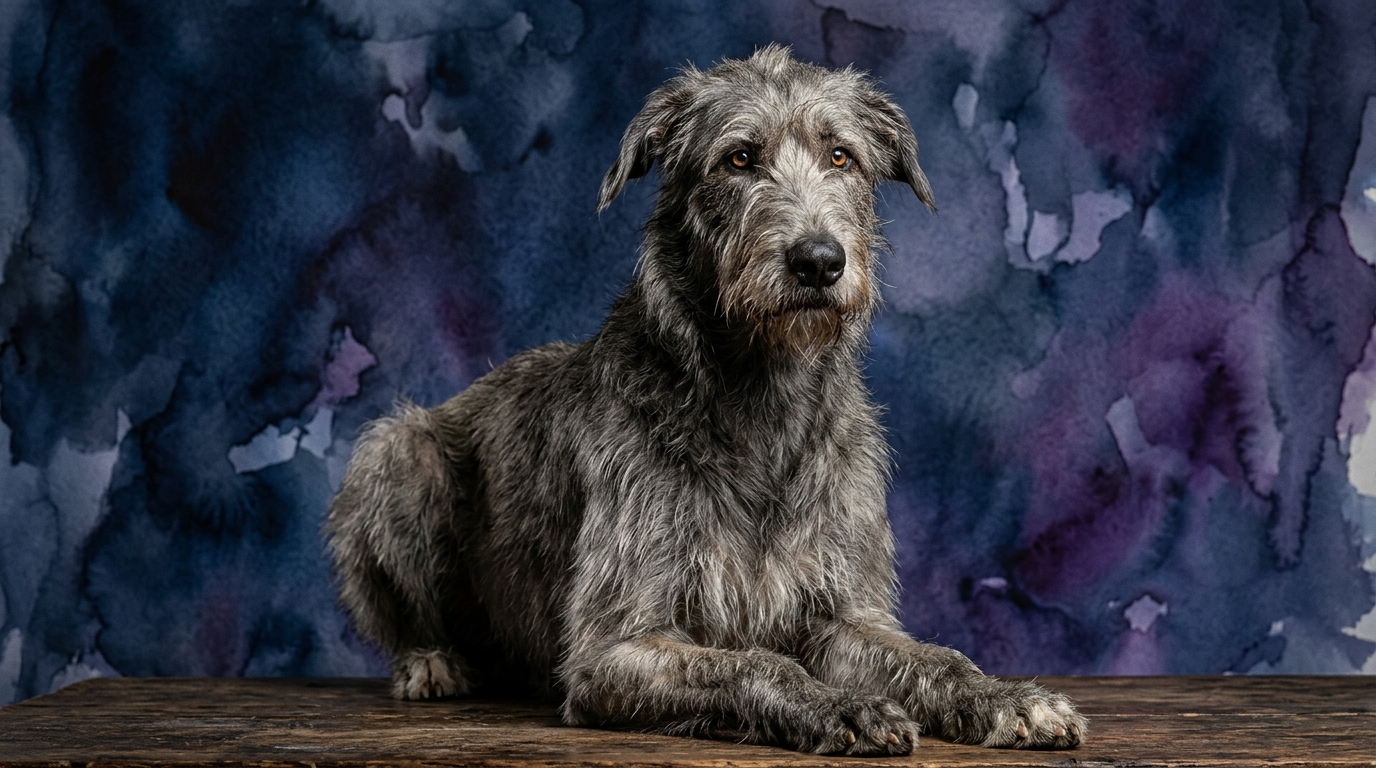
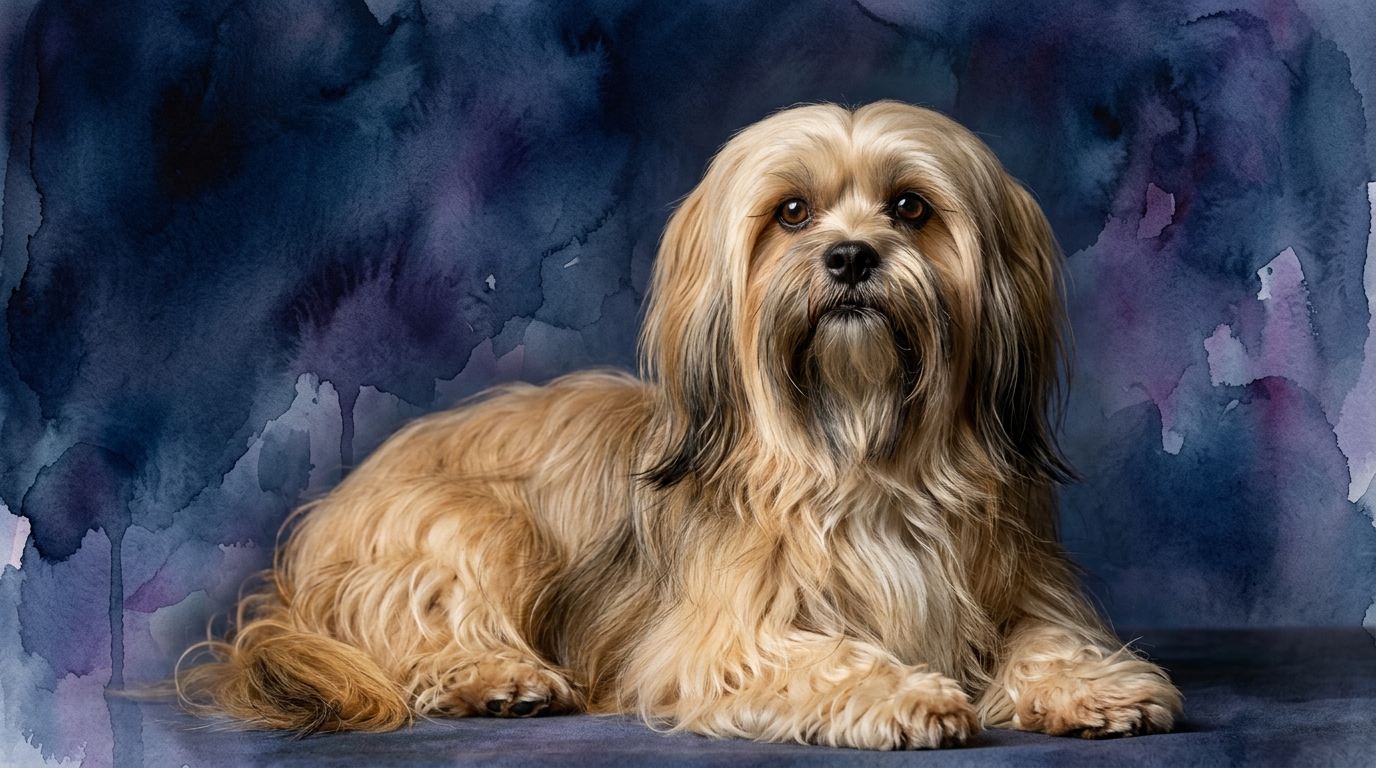
The Cosmic Pet IQ Lab: Side-by-Side Cognitive Profiles
At The Cosmic Pet IQ Lab, both the Irish Wolfhound and the Lhasa Apso register a consistent 3 out of 5 across all five key cognitive dimensions, indicating capable, yet not exceptionally rapid, learning and adaptive abilities. For the Irish Wolfhound, a breed historically tasked with independent hunting and protection, their Problem Solving score of 3/5 reflects an aptitude for navigating large terrains and making swift decisions in pursuit, rather than intricate puzzle manipulation. Their Training Speed of 3/5 suggests they are trainable with patience and motivation, but their sighthound independence means they often need a compelling reason to comply. Social Intelligence at 3/5 points to an awareness of human emotions and social cues, yet they maintain a dignified reserve rather than an overt eagerness to please. An Instinctive Drive of 3/5 highlights their inherent sighthound prey drive, which, while present, requires focused channeling. Finally, a Memory score of 3/5 indicates they retain commands and routines effectively, but might not excel at recalling infrequently practiced tasks with pinpoint accuracy.
The Lhasa Apso, bred for centuries as a sentinel and companion in Tibetan monasteries, also scores 3/5 across the board. Their Problem Solving at 3/5 manifests in their cleverness at manipulating their environment to their advantage, such as finding the most comfortable spot or getting attention, rather than complex abstract thought. A Training Speed of 3/5 is influenced by their independent and often discerning nature; they are capable of learning, but their strong will means they decide if and when to perform. Social Intelligence at 3/5 means they are highly attuned to their family's dynamics and moods, often forming deep bonds, but can be reserved or suspicious with strangers, reflecting their guardian heritage. Their Instinctive Drive of 3/5 is primarily expressed through their vigilant territoriality and alert barking, rather than a strong prey drive. A Memory score of 3/5 indicates they remember routines, boundaries, and who belongs to their inner circle, contributing to their reliability as household guardians.
Where the Irish Wolfhound Cognitively Excels
Despite identical numerical scores, the Irish Wolfhound's cognitive strengths lean towards tasks demanding large-scale spatial awareness and independent judgment, reflecting their heritage as a hunter of large game. Their Problem Solving, while rated 3/5, is particularly effective in open environments where they must track by sight, assess distances, and make quick decisions about pursuit or navigation without constant human input. This translates to an ability to learn and adapt to expansive properties or complex outdoor trails, where their impressive physical prowess works in concert with their mental mapping.
Their Instinctive Drive, also 3/5, provides an advantage in activities that tap into their innate sighthound mechanics, such as lure coursing or simply patrolling a large yard. This drive, when appropriately channeled, allows them to focus intensely on a moving target or a perceived 'intruder' at a distance, demonstrating a specific type of cognitive engagement that leverages their visual acuity and physical capabilities. They are adept at recognizing patterns in movement and reacting with a calculated, powerful response, making them capable partners in specific, physically demanding tasks.
Where the Lhasa Apso Cognitively Shines
The Lhasa Apso's cognitive advantages, while also scoring 3/5, are finely tuned for a domestic, sentinel role within a smaller sphere. Their Problem Solving, at 3/5, manifests as an acute ability to understand and manipulate household dynamics to achieve their goals, whether it's securing a prime spot on the sofa or signaling a need for attention. They are masters of observing subtle human cues and learning which actions yield desired results within their immediate environment, showcasing a practical, home-centric intelligence.
Their Social Intelligence, also 3/5, allows them to excel in understanding the intricate social fabric of a family. They are highly attuned to changes in mood, routine, or the arrival of unfamiliar individuals, processing these nuances with a keen observational capacity. This makes them excellent, albeit sometimes discerning, companions who can anticipate their owner's needs or react to perceived threats with remarkable consistency. Their Instinctive Drive, while 3/5, is primarily expressed as a vigilant territoriality and a sophisticated ability to differentiate between welcomed guests and potential intruders, relying on keen hearing and a discerning judgment of intent.
Training Dynamics: Independence vs. Compliance
Given that both breeds score 3/5 in Training Speed, neither the Irish Wolfhound nor the Lhasa Apso is inherently 'easy' to train in the traditional sense of eager-to-please breeds. For the Irish Wolfhound, their sighthound legacy means they possess a strong independent streak. They can learn commands and routines, but their compliance is often contingent on their assessment of the situation and their personal motivation. Distractions, especially those engaging their strong prey drive, can easily divert their focus. Training requires immense patience, consistent positive reinforcement, and understanding that a Wolfhound will often weigh your request against their own instincts.
The Lhasa Apso’s 3/5 Training Speed is influenced by their ancient role as independent guardians. They are perfectly capable of learning, but they are also known for their discerning, sometimes stubborn, nature. A Lhasa Apso often believes they know best, and will only comply if they see value in the command or if it aligns with their own desires. Early socialization and consistent, reward-based training are crucial to building a strong relationship and mitigating their independent tendencies. Neither breed responds well to harsh methods; instead, they thrive with clear communication, respect, and positive motivation tailored to their unique personalities.
Suitability for Active vs. Relaxed Owners
The Irish Wolfhound, despite their occasional couch-potato tendencies, is best suited for owners who can provide significant space and regular, moderate activity. Their large size necessitates a secure, spacious yard for stretching their long legs, and they benefit from daily walks or opportunities to trot. While they aren't hyperactive, they require mental stimulation through varied environments and engagement that taps into their sighthound instincts, such as exploring new trails or participating in lure coursing. An owner who appreciates their majestic presence and is prepared for their physical needs, without demanding constant high-energy output, will find them a rewarding companion.
The Lhasa Apso, while adaptable to smaller living spaces, is far from a sedentary lapdog. Their alert and watchful nature means they require mental engagement and regular, though less strenuous, physical activity. Daily walks are important not just for exercise but for mental stimulation and sniffing opportunities. Owners who understand their need for a 'job' – even if that job is simply alerting to perceived threats or supervising household activities – and who can provide consistent training and enrichment will find them engaging. They suit owners who appreciate a vigilant, independent companion and are prepared to manage their strong will with consistent guidance, rather than those seeking an entirely passive pet.
The Verdict
Choose an Irish Wolfhound if you have ample space, value a dignified yet affectionate companion, and are prepared for consistent, patient training to guide their independent nature.
Opt for a Lhasa Apso if you desire a vigilant, independent companion, are prepared for their discerning personality, and can provide consistent mental stimulation in a home environment.
🧠 Find Your Pet's IQ Score
Our Pet IQ Lab assessment covers 25+ tests across 5 cognitive dimensions — personalized to your breed.
Take the Full IQ Test →Frequently Asked Questions
Do Irish Wolfhounds respond well to obedience training?
Irish Wolfhounds can learn obedience commands, but their sighthound independence means training requires patience, consistency, and positive reinforcement. They need a compelling reason to comply and may be easily distracted by their instincts in certain environments.
Are Lhasa Apsos difficult to house train?
Lhasa Apsos can be successful with house training, but their independent nature often means they require very consistent routines and positive reinforcement from a young age. Early and thorough training is key to establishing good habits.
Which breed is better for a first-time dog owner?
Neither breed is typically recommended for first-time dog owners due to their independent natures and specific training requirements. Both benefit from owners experienced in positive reinforcement and understanding breed-specific traits.