
Side-by-Side Cognitive Profile: Japanese Chin
For the Japanese Chin, problem-solving at a 3/5 level often manifests as finding the most comfortable spot in a sunbeam, strategically positioning themselves for maximum human attention, or subtly communicating desires, like nudging a hand towards a treat jar. Their solutions are typically centered around achieving personal comfort, securing companionship, and gentle manipulation within their domestic environment, often relying on observation and charm.
Chins demonstrate a readiness to learn when the task is clear, consistent, and directly benefits their bond with their human. They absorb basic commands and house rules with reasonable pace, particularly if positive reinforcement involves gentle praise and quiet affection. However, their training speed is more attuned to companionable manners and social cues than mastering complex, repetitive sequences or highly physical tasks.
The Chin's social intelligence shines in their ability to read human emotions with remarkable precision, often acting as sensitive barometers of household moods. They excel at subtle communication, understanding nuanced gestures, facial expressions, and tone, making them extraordinarily empathetic companions within their immediate family circle, often anticipating needs.
Their instinctive drives are primarily geared towards companionship and comfort, reflecting their history as noble lap dogs. This includes a strong desire to be near their preferred humans, a cat-like inclination for fastidious self-grooming, and an innate understanding of polite, quiet indoor living. Their drive to 'work' is fulfilled by being a cherished, attentive presence.
Japanese Chins exhibit a solid memory for routines, favored people, and past interactions, both positive and negative. They accurately recall where specific toys are kept, which family member is most likely to share a forbidden snack, or which sounds precede a walk, applying this memory to navigate their daily lives effectively and anticipate events.
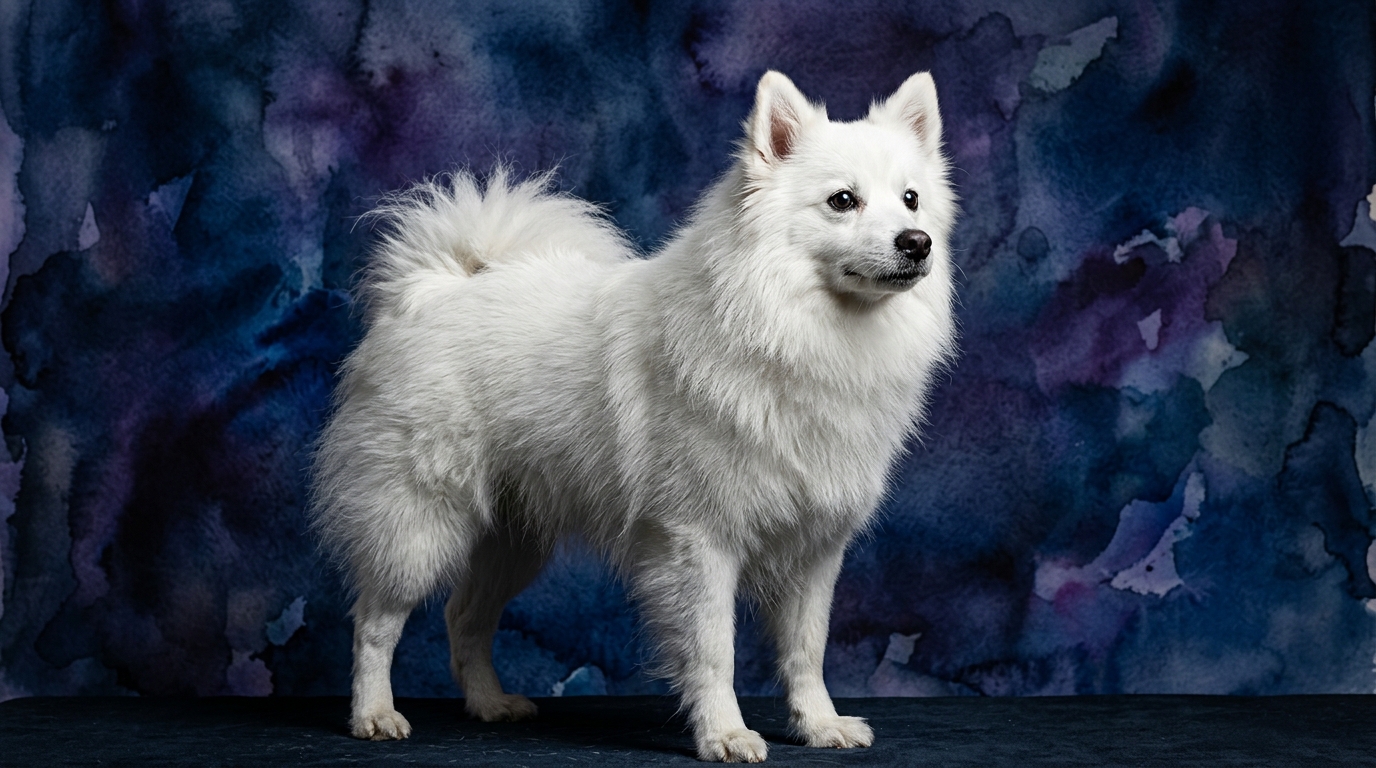
Side-by-Side Cognitive Profile: American Eskimo Dog
The American Eskimo Dog's problem-solving at a 3/5 level often involves more practical, physical challenges, such as figuring out how to open a gate, bypass a barrier to reach an interesting scent, or master a new puzzle toy. Their solutions lean towards active engagement with their environment and can sometimes involve a degree of clever persistence and trial-and-error to achieve a tangible goal.
Eskies are generally eager learners, absorbing new commands and tricks at a good pace, especially when motivated by food, praise, or the opportunity for an engaging activity. Their training speed reflects their historical role as performers and versatile working farm dogs, capable of grasping sequences and responding reliably to a variety of cues with enthusiasm.
The American Eskimo Dog's social intelligence is evident in their understanding of 'pack' dynamics within the human family, discerning leadership and responding to established rules and boundaries. They are adept at recognizing strangers versus familiar faces and often act as alert watchdogs, interpreting new situations with a keen sense of their surroundings and potential implications.
Their instinctive drives include a pronounced watchdog tendency, expressed through vocal alerts, and a strong desire for purpose or 'work,' stemming from their multi-faceted working past. They possess a moderate prey drive and an inherent inclination to be involved in family activities, showcasing a drive to contribute and be an active, integral member of the household.
Eskies demonstrate a robust memory for training cues, complex trick sequences, and the layout of their territory, including where specific items are located. They recall past experiences, both positive and challenging, and apply this knowledge to future interactions, making them consistent in their responses once a behavior is learned and reinforced.
Where the Japanese Chin Wins Cognitively
The Japanese Chin subtly edges out the American Eskimo Dog in the realm of nuanced emotional attunement. While both score 3/5 in social intelligence, the Chin's historical role as a companion to nobility has refined their ability to read and respond to human emotional states with exceptional sensitivity. They often predict their owner's needs or mood shifts before any verbal cue, offering comfort or quiet companionship at precisely the right moment. This isn't about complex commands, but about an exquisite, almost intuitive understanding of the human heart, making their social intelligence particularly refined for intimate domestic settings. Their problem-solving, too, often revolves around navigating social dynamics to achieve comfort or affection, a subtle form of cognitive prowess distinct from physical problem-solving.
Where the American Eskimo Dog Wins Cognitively
The American Eskimo Dog shows a distinct cognitive strength in practical, task-oriented problem-solving and sustained engagement. While both breeds score 3/5, the Eskie's background as a versatile working and performance dog means their problem-solving often involves more physical and sequential thinking – figuring out how to retrieve an object, manipulate a toy, or master an agility course. Their memory and training speed, while numerically similar, are geared towards retaining and executing complex sequences of commands with enthusiasm, reflecting a cognitive drive for purpose and activity. This makes them particularly adept at structured learning and situations requiring persistence and focus on a tangible objective.
Which Is Easier to Train and Why
Despite both breeds scoring 3/5 in training speed, the American Eskimo Dog generally presents as 'easier' to train for a wider range of activities due to their inherent motivation and desire for a 'job.' Eskies often thrive on structured training, enjoying the mental stimulation and the reward of accomplishing a task. Their vocal nature can be channeled into specific alerts, and their eagerness to please makes them responsive to consistent positive reinforcement. In contrast, the Japanese Chin, while trainable, can be more selectively motivated. They respond best when training directly enhances their bond or comfort, and may display a charming stubbornness if a task seems pointless or interferes with their preferred relaxation. While both learn, the Eskie's enthusiasm for engagement often translates to a more straightforward training experience for owners seeking an active participant.
Suitability for Active vs. Relaxed Owners
For active owners seeking a canine partner for adventures, training, or dog sports, the American Eskimo Dog is often the more suitable choice. Their 3/5 instinctive drive is channeled into a need for mental and physical engagement, making them excellent companions for hiking, agility, or learning extensive trick repertoires. They thrive on having a routine and a purpose. Conversely, the Japanese Chin is an ideal match for more relaxed owners who appreciate quiet companionship and a less demanding physical routine. Their intrinsic drives lean towards comfort and close proximity to their humans, finding joy in gentle play, lap-sitting, and observing household activities from a cozy perch. While they enjoy short walks, their cognitive strengths are best appreciated in a calm, predictable domestic environment.
The Verdict
Opt for a Japanese Chin if you seek an exquisitely sensitive, quiet companion who thrives on close emotional connection and gentle, predictable routines within a relaxed home environment.
Select an American Eskimo Dog if you desire an engaging, active, and clever partner eager for training, mental challenges, and consistent participation in a more dynamic household.
🧠 Find Your Pet's IQ Score
Our Pet IQ Lab assessment covers 25+ tests across 5 cognitive dimensions — personalized to your breed.
Take the Full IQ Test →Frequently Asked Questions
Do Japanese Chins bark a lot?
Japanese Chins are generally not excessive barkers, preferring to communicate through subtle cues or quiet 'chatter.' They typically only bark to alert their owners to something unusual or if they feel neglected, making them relatively quiet housemates.
Are American Eskimo Dogs good with children?
American Eskimo Dogs can be excellent with children, especially when raised with them and properly socialized. Their playful and protective nature makes them good family dogs, though their energy levels and watchdog tendencies mean supervision is always recommended with very young children.
How much exercise do these breeds need daily?
The Japanese Chin requires moderate exercise, typically satisfied with a few short daily walks and indoor play. The American Eskimo Dog, however, needs more significant daily activity, including longer walks, playtime, or engaging training sessions to keep them mentally and physically stimulated.