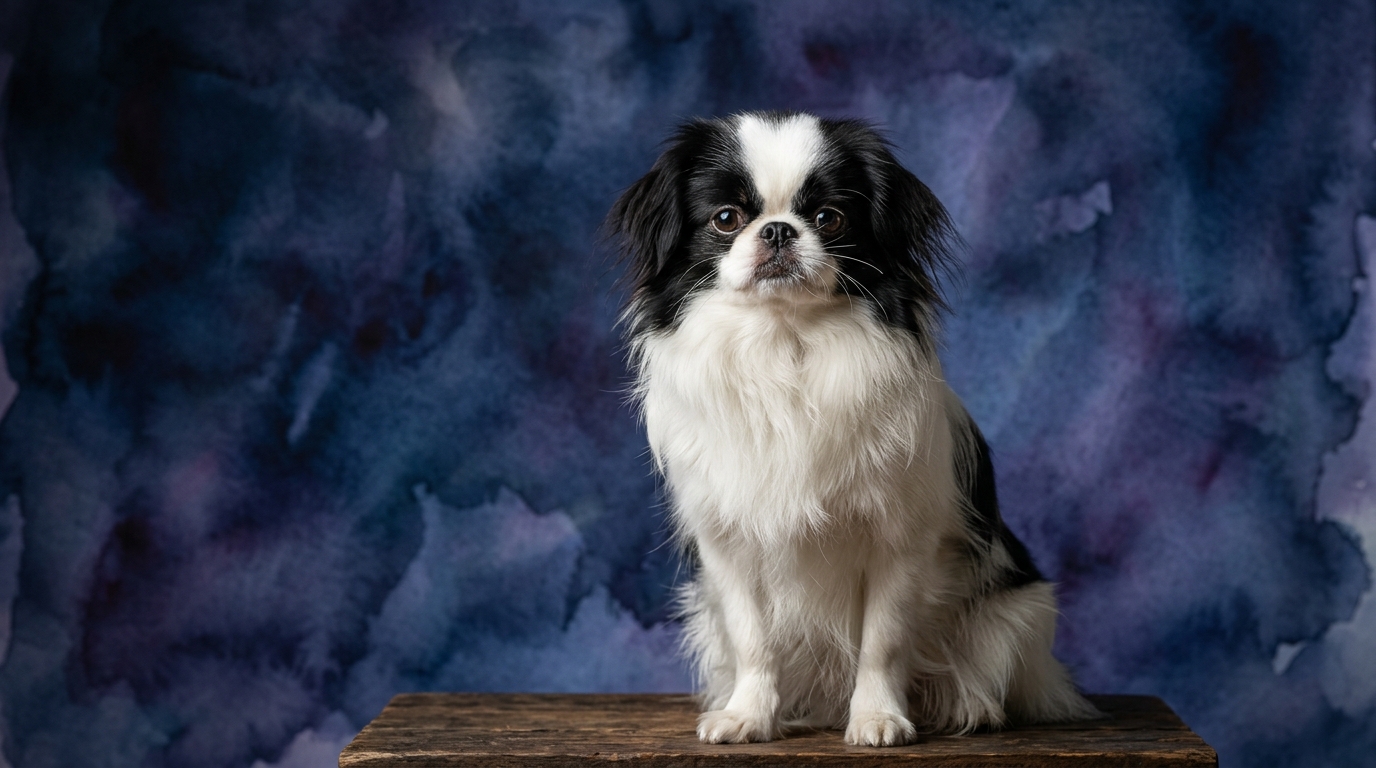

Side-by-Side Cognitive Profile: Japanese Chin vs. Tibetan Terrier
At The Cosmic Pet Pet IQ Lab, we assess canine intelligence across five key dimensions: problem solving, training speed, social intelligence, instinctive drive, and memory. Both the Japanese Chin and the Tibetan Terrier register a consistent 3 out of 5 across all these categories, a fascinating alignment given their distinct breed histories and temperaments. However, these identical scores belie nuanced differences in how their cognitive abilities express themselves.
For the Japanese Chin, a 3/5 in problem solving often translates to adeptness at navigating the complexities of household dynamics, figuring out how to gain attention, or subtly communicating desires for comfort. Their training speed at 3/5 indicates they learn new cues and routines effectively, especially when motivated by close human interaction and positive reinforcement. A 3/5 social intelligence highlights their refined ability to read human moods and integrate seamlessly into family life, often anticipating needs. Their instinctive drive, also 3/5, is typically focused on companionship, with minimal prey drive, reflecting their centuries as pampered companions. Finally, their 3/5 memory is excellent for retaining specific human interactions, favored routines, and household rules.
The Tibetan Terrier, while sharing these 3/5 scores, applies them differently due to its history as a versatile companion and watchdog in challenging environments. Their 3/5 problem solving might manifest in navigating varied terrains, figuring out how to access interesting objects, or devising strategies to explore their surroundings. A 3/5 training speed means they are capable learners, but their independent spirit often requires more patience and engaging methods to ensure consistent compliance. Their social intelligence at 3/5 allows them to bond deeply with multiple family members and interact appropriately in diverse social settings, often with an initial discerning reserve towards strangers. Their instinctive drive, also 3/5, includes a moderate territorial awareness and vigilance, making them effective, albeit gentle, guardians. Their 3/5 memory is robust for retaining complex spatial information, learned commands over time, and past training sessions, even if their initial learning pace might appear less eager than a highly biddable breed.
It's also worth noting the Tibetan Terrier's Coren rank of #63, which signifies its capacity for working and obedience intelligence, while the Japanese Chin is not Coren-ranked. This distinction doesn't imply one is inherently smarter, but rather reflects the historical emphasis on structured obedience in the Tibetan Terrier's development, whereas the Chin's role as a pure companion meant less focus on formal command execution.
Where the Japanese Chin Excels Cognitively
The Japanese Chin's cognitive strengths shine particularly in their nuanced social intelligence and their adaptability within a human-centric household. Their 3/5 social intelligence translates into an exceptional sensitivity to human emotions, allowing them to often anticipate their owner's moods or needs. This makes them remarkably intuitive companions, adept at offering comfort or seeking interaction at just the right moment. They possess a subtle communicative style, using body language and vocalizations to convey their desires, a testament to their refined social acumen.
Their problem-solving ability, while rated 3/5, is often channeled into social engineering rather than complex physical tasks. A Chin might excel at figuring out the optimal way to solicit a treat, secure a coveted lap spot, or persuade an owner into an extra play session. Their memory, also 3/5, is particularly strong for personal interactions, specific human preferences, and the intricate routines that define their life with their family, fostering incredibly deep and personalized bonds.
Where the Tibetan Terrier Shows Cognitive Strengths
The Tibetan Terrier’s cognitive profile, while having the same 3/5 scores, demonstrates strengths in environmental awareness and independent problem-solving. Their 3/5 problem-solving often manifests in their ability to navigate complex outdoor environments, figure out how to open a gate, or devise methods to reach an interesting scent or object. This breed exhibits a practical intelligence, applying their cognitive abilities to engage with and understand their physical surroundings.
Their instinctive drive, also at 3/5, supports their role as vigilant observers, making them adept at processing environmental cues and acting as effective, albeit gentle, watchdogs. This awareness allows them to discern novelties or potential changes in their surroundings with a keen sense. The Tibetan Terrier's social intelligence (3/5) enables them to form strong, lasting bonds with multiple family members and interact appropriately in diverse social settings, often with a discerning initial reserve that reflects their thoughtful nature. Their memory (3/5) is robust for retaining complex spatial layouts, multi-step routines, and a wide array of learned commands, even if their initial compliance might require more persuasive motivation.
Training Aptitude: Chin's Charms vs. TT's Tenacity
When it comes to training, both breeds score a 3/5 in training speed, yet their approaches to learning and compliance differ. The Japanese Chin's 3/5 training speed is often amplified by their strong desire to please and their inherent sensitivity. They respond exceptionally well to positive reinforcement, gentle methods, and consistent routines, quickly picking up house rules and basic manners. Their primary motivation for learning is often human affection and the desire for comfort and companionship, making them eager to engage in training sessions that are fun and rewarding. However, their sensitivity means they can be easily discouraged by harshness or inconsistency, making a positive and encouraging environment paramount for successful training.
The Tibetan Terrier's 3/5 training speed is coupled with a more independent and sometimes discerning spirit. They are capable learners, but their compliance can be conditional on their mood or their perceived value of the command. They require engaging, consistent training that appeals to their problem-solving nature, often thriving with clicker training or reward-based methods that make learning a game. Patience is crucial to navigate their occasional stubbornness, leveraging their memory for past successful interactions and positive outcomes. While they learn commands reliably, owners might find that a Tibetan Terrier evaluates a request before complying, a characteristic tied to their independent cognitive style. The Tibetan Terrier's Coren rank indicates their capability for formal obedience, but it underscores that this requires a handler who understands their unique blend of intelligence and independence.
Lifestyle Fit: The Cozy Companion vs. The Adventurous Ally
The cognitive profiles of these breeds lend themselves to different owner lifestyles. The Japanese Chin is best suited for owners who appreciate a calm, indoor companion. Their cognitive strengths, particularly their social acumen and memory for routines, align perfectly with a relaxed household where they can be central to family life, enjoying lap time, gentle play, and consistent affection. They thrive in quiet environments where their subtle communications and emotional sensitivity can be fully appreciated, making them ideal for apartment living or less active individuals.
The Tibetan Terrier, conversely, is ideal for more active owners who can provide regular exercise and mental stimulation. Their environmental problem-solving and moderate instinctive drive mean they enjoy outdoor adventures, puzzle toys, and participating in various family activities. Their cognitive profile suits an owner who values an independent yet loyal companion capable of navigating diverse situations and environments. They adapt well to suburban or rural settings with space to explore, and they enjoy activities that challenge both their bodies and their minds, reflecting their heritage as hardy, versatile dogs.
The Verdict: When to Choose Each Breed
The Verdict
Choose the Japanese Chin if you seek a highly attuned, sensitive companion whose cognitive strengths lie in deep emotional bonding and seamless integration into a calm, human-centric household.
Opt for the Tibetan Terrier if you desire a thoughtful, independent companion whose cognitive abilities thrive with varied stimulation, outdoor activity, and an owner who appreciates their discerning nature.
🧠 Find Your Pet's IQ Score
Our Pet IQ Lab assessment covers 25+ tests across 5 cognitive dimensions — personalized to your breed.
Take the Full IQ Test →Frequently Asked Questions
Are Japanese Chins difficult to train?
Japanese Chins are generally not difficult to train; their 3/5 training speed is often enhanced by their desire for human affection. They respond best to gentle, positive reinforcement methods and consistency, quickly learning house rules and basic commands when motivated by praise and comfort.
Do Tibetan Terriers need a lot of mental stimulation?
Yes, Tibetan Terriers benefit greatly from mental stimulation due to their problem-solving abilities and independent nature. Activities like puzzle toys, learning new tricks, and exploring varied environments keep their minds engaged and prevent boredom, aligning with their 3/5 problem-solving and instinctive drive.
How do their social behaviors differ?
The Japanese Chin's 3/5 social intelligence often manifests as exquisite sensitivity to human moods and a desire for constant companionship, while the Tibetan Terrier's 3/5 social intelligence allows them to bond deeply with multiple family members and interact with a thoughtful, sometimes reserved, demeanor towards new people.