Side-by-Side IQ Profile: Japanese Chin vs. Toy Poodle
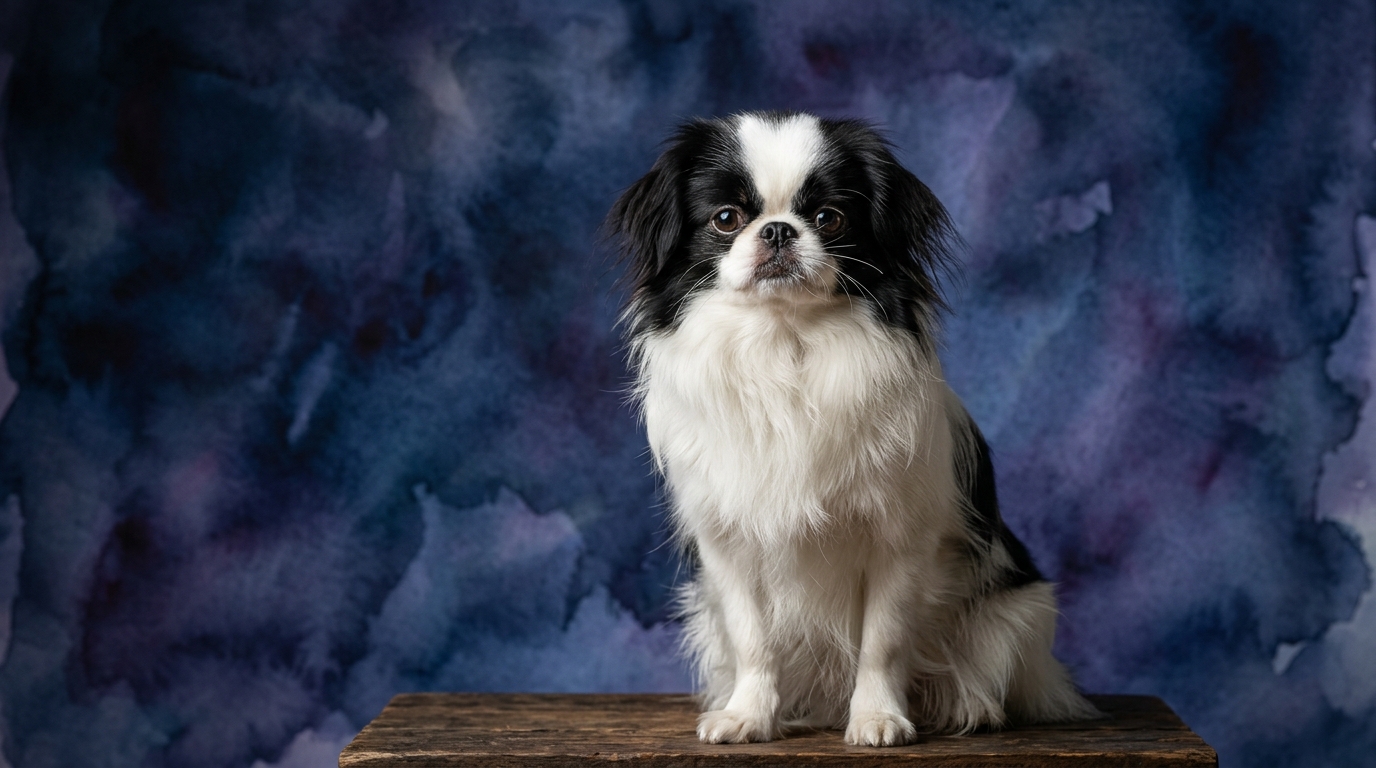
The Cosmic Pet Pet IQ Lab employs a five-dimensional framework to map canine intelligence, offering a detailed perspective beyond a simple ranking. For the Japanese Chin, we observe a consistently balanced cognitive profile, with Problem Solving, Training Speed, Social Intelligence, Instinctive Drive, and Memory all rated at 3 out of 5. This suggests a dog that is moderately adaptable, capable of learning at a steady pace, and possesses a solid understanding of social cues within its established circle. Its memory is reliable for daily routines, and its instinctive drives are present but not overwhelming. The Japanese Chin is not featured on Dr. Stanley Coren's broader intelligence ranking, reflecting its specialized role as a companion rather than a working breed historically requiring complex tasks.
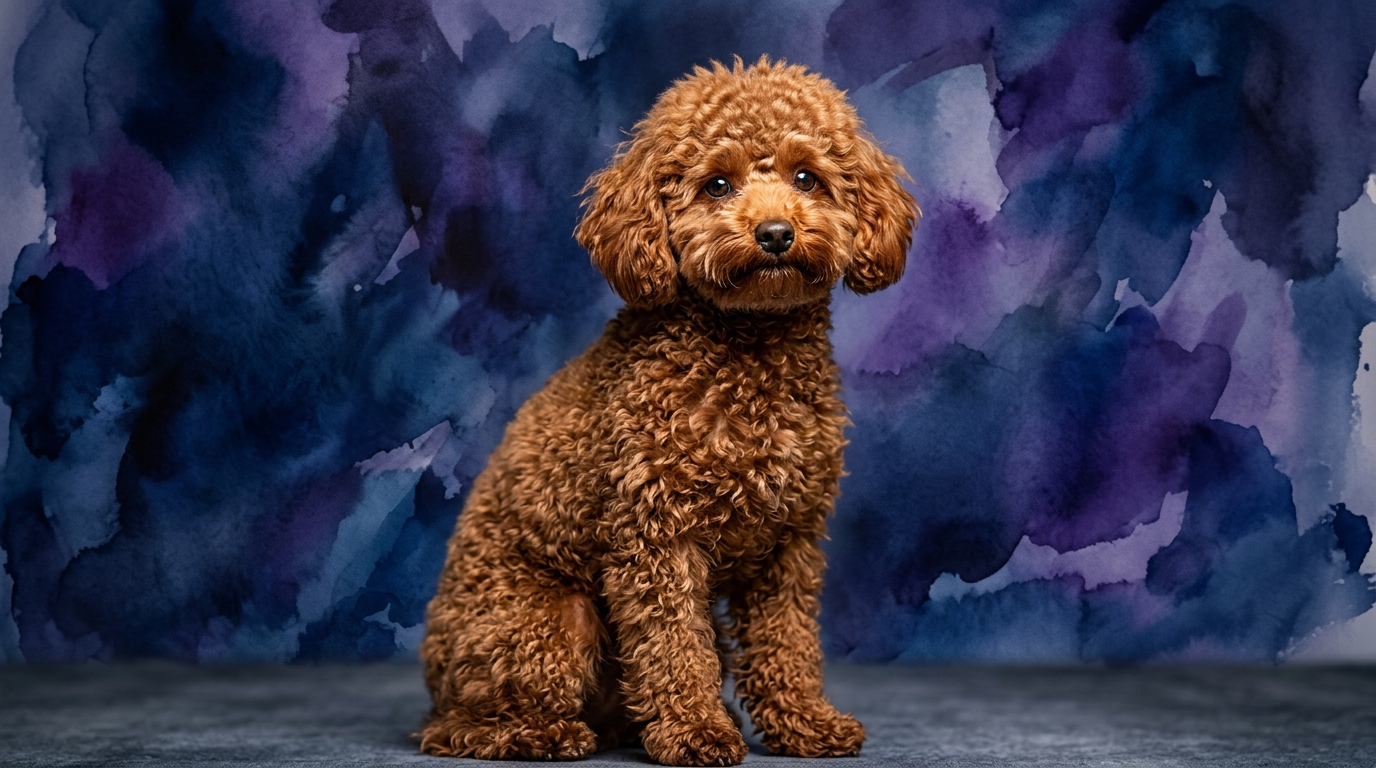
In stark contrast, the Toy Poodle presents a striking cognitive profile, earning a #2 ranking on Dr. Coren's scale, placing it among the most adept canine learners. Its scores are exceptionally high in Problem Solving (5/5), Training Speed (5/5), and Memory (5/5). This indicates a dog that rapidly grasps new concepts, excels at intricate tasks, and retains learned behaviors with remarkable fidelity. This cognitive prowess stems from its lineage as a water retriever, demanding quick thinking and recall. Interestingly, its Social Intelligence and Instinctive Drive are rated at 3 out of 5, mirroring the Japanese Chin. This suggests that while the Toy Poodle processes information and learns tasks at an accelerated rate, its social acumen and innate drives are on par with many other breeds, focusing more on human interaction than extensive independent exploration or complex social hierarchies outside its immediate family unit.
Where the Japanese Chin's Cognition Shines
While the Toy Poodle's metrics often present higher numerical scores, the Japanese Chin possesses distinct cognitive strengths that align with a specific lifestyle and companionship dynamic. Its balanced 3/5 scores across all dimensions, particularly in Problem Solving and Instinctive Drive, can be a profound advantage for owners seeking a less mentally demanding companion. A Japanese Chin typically exhibits moderate problem-solving inclinations, meaning it is less likely to become restless or destructive if not presented with constant complex puzzles. This breed's instinctive drives are present but not overpowering, translating to a dog that is generally content within a home environment without a strong urge to independently "work" or seek out intense physical challenges.
This can lead to a more relaxed and emotionally stable pet for owners who prefer a dog whose cognitive needs are met through affectionate interaction and gentle routines, rather than constant mental stimulation. Its 3/5 social intelligence often manifests as a deep, sensitive bond with its primary caregivers, rather than a need to engage with every new person it meets, creating a uniquely intimate connection.
Where the Toy Poodle's Cognition Excels
The Toy Poodle's cognitive strengths are undeniably impressive, particularly in areas demanding rapid acquisition and retention of information. Its 5/5 ratings in Problem Solving, Training Speed, and Memory are paramount. This means a Toy Poodle can quickly learn and execute complex sequences of commands, decipher intricate puzzle toys with speed, and remember these lessons over extended periods. For owners interested in dog sports like agility, obedience, or even advanced trick training, the Toy Poodle's capacity to process and apply new information efficiently is a significant asset.
Their elevated problem-solving ability means they often relish mental challenges, actively seeking out ways to engage their minds, whether it's figuring out how to open a cupboard or mastering a new routine. This cognitive drive makes them exceptionally responsive to structured learning environments and allows them to excel in roles requiring precise execution and adaptive thinking.
Training Dynamics: Japanese Chin vs. Toy Poodle
Based on their respective cognitive profiles, the Toy Poodle is demonstrably easier to train than the Japanese Chin. The Toy Poodle's 5/5 Training Speed and Memory scores mean it picks up new commands and behaviors with remarkable alacrity and retains them robustly. Owners will find that a Toy Poodle often requires fewer repetitions to master a task and will recall those lessons even after a long break. This breed thrives on structured training, often viewing it as an enjoyable mental exercise, and its eagerness to please combined with its cognitive capacity makes it highly responsive to positive reinforcement. For instance, teaching a Toy Poodle a multi-step fetch routine or a complex agility course can be a relatively smooth and quick process.
Conversely, the Japanese Chin, with its 3/5 Training Speed and Memory, requires a more patient and consistent approach. While certainly capable of learning, a Chin may take more repetitions to solidify a command and might need more frequent refreshers to maintain proficiency. Their training is often more successful when approached with a gentle hand and a focus on positive, reward-based methods, leveraging their social intelligence to build cooperation rather than relying solely on speed. For example, house-training a Japanese Chin might extend over a longer period, and teaching advanced tricks would require sustained, focused effort from the owner. Their training might feel less like a rapid-fire learning session and more like a gradual, relationship-building process.
Matching Cognition to Lifestyle: Active vs. Relaxed Owners
The cognitive profiles of these two breeds naturally align with different owner lifestyles. The Toy Poodle, with its exceptional problem-solving abilities and high training speed, thrives with active owners who are prepared to provide consistent mental engagement and physical activity. These dogs flourish when given opportunities to learn new tricks, participate in dog sports, or engage in interactive play that stimulates their sharp minds. Owners who enjoy teaching complex commands, visiting dog parks for energetic play, or even involving their pet in canine activities like rally obedience will find the Toy Poodle an enthusiastic and capable partner. Under-stimulated Toy Poodles may invent their own "problems" to solve, sometimes leading to undesirable behaviors like excessive barking or destructive chewing.
The Japanese Chin, on the other hand, is an ideal match for relaxed owners seeking a devoted, charming companion whose cognitive needs are more easily met through routine companionship and gentle interaction. Its moderate instinctive drive and problem-solving inclination mean it is less likely to become restless or bored if not constantly challenged with new tasks or vigorous exercise. This breed is often content with leisurely walks, cuddle sessions on the sofa, and being an integral part of daily household life. Owners who appreciate a dog that is happy to observe and participate in a calmer household rhythm, without demanding constant mental exertion or high-intensity physical outlets, will find the Japanese Chin a perfect fit. They are masters of quiet companionship, offering affection and subtle charm without the cognitive intensity of their Poodle counterpart.
The Verdict
When considering a Japanese Chin, you are choosing a companion whose balanced cognitive profile makes it a wonderfully adaptable and serene presence, ideal for owners who appreciate a gentle bond and a less demanding mental engagement from their pet.
For those seeking a dog that excels in rapid learning, complex problem-solving, and thrives on consistent mental challenges, the Toy Poodle stands out as an exceptional choice, perfectly suited for active engagement in training and canine sports.
🧠 Find Your Pet's IQ Score
Our Pet IQ Lab assessment covers 25+ tests across 5 cognitive dimensions — personalized to your breed.
Take the Full IQ Test →Frequently Asked Questions
Is a Japanese Chin difficult to train?
No, a Japanese Chin is not difficult to train, but it requires more patience and consistency than a Toy Poodle. With its 3/5 training speed and memory, it learns at a moderate pace and benefits from positive reinforcement and engaging, shorter sessions.
Do Toy Poodles need a lot of mental stimulation?
Yes, Toy Poodles absolutely need significant mental stimulation due to their 5/5 problem-solving and memory scores. They thrive on learning new commands, puzzle toys, and activities that challenge their sharp minds to prevent boredom and potential behavioral issues.
Which breed is better for first-time dog owners?
For first-time owners, the choice depends on lifestyle. A Japanese Chin might be easier to manage for those seeking a calmer companion without intense training demands, while a Toy Poodle could be fulfilling for those ready to commit to consistent training and mental enrichment.