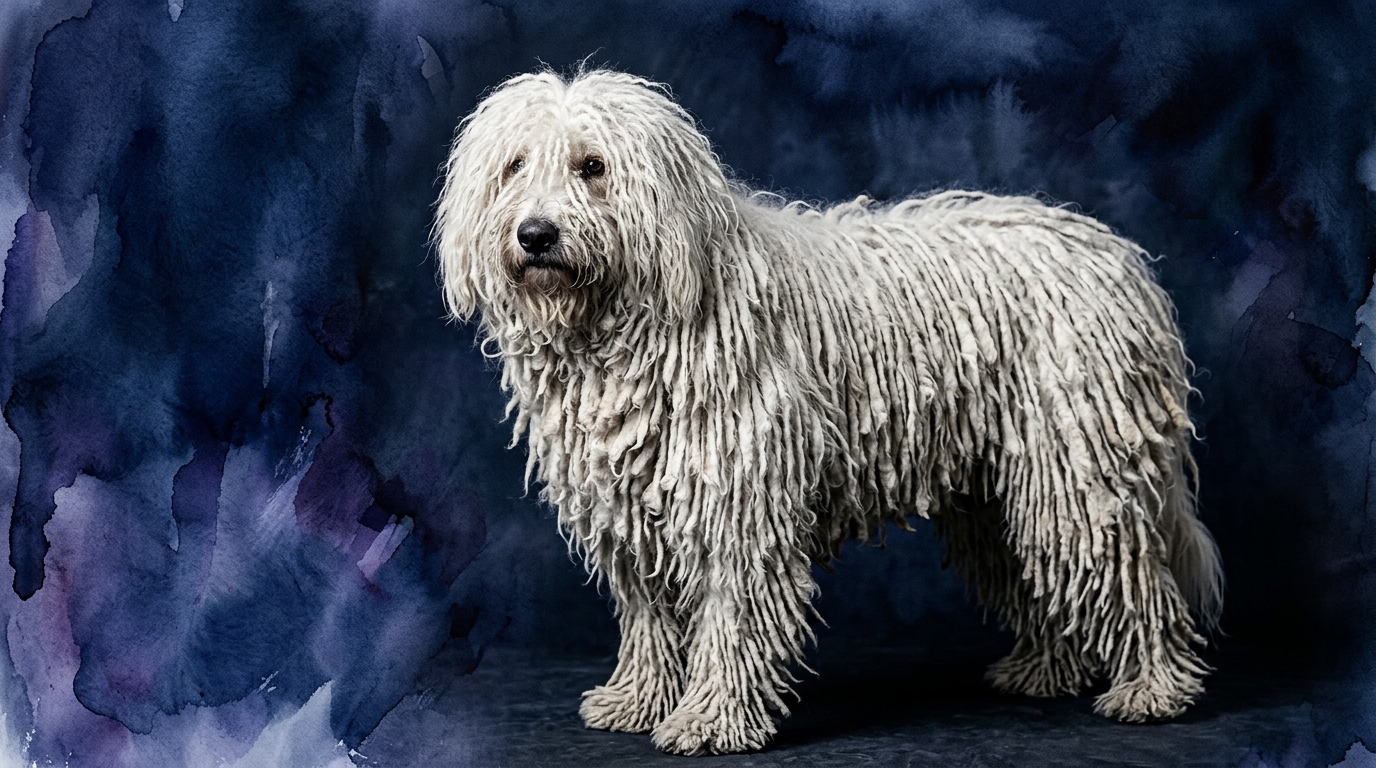
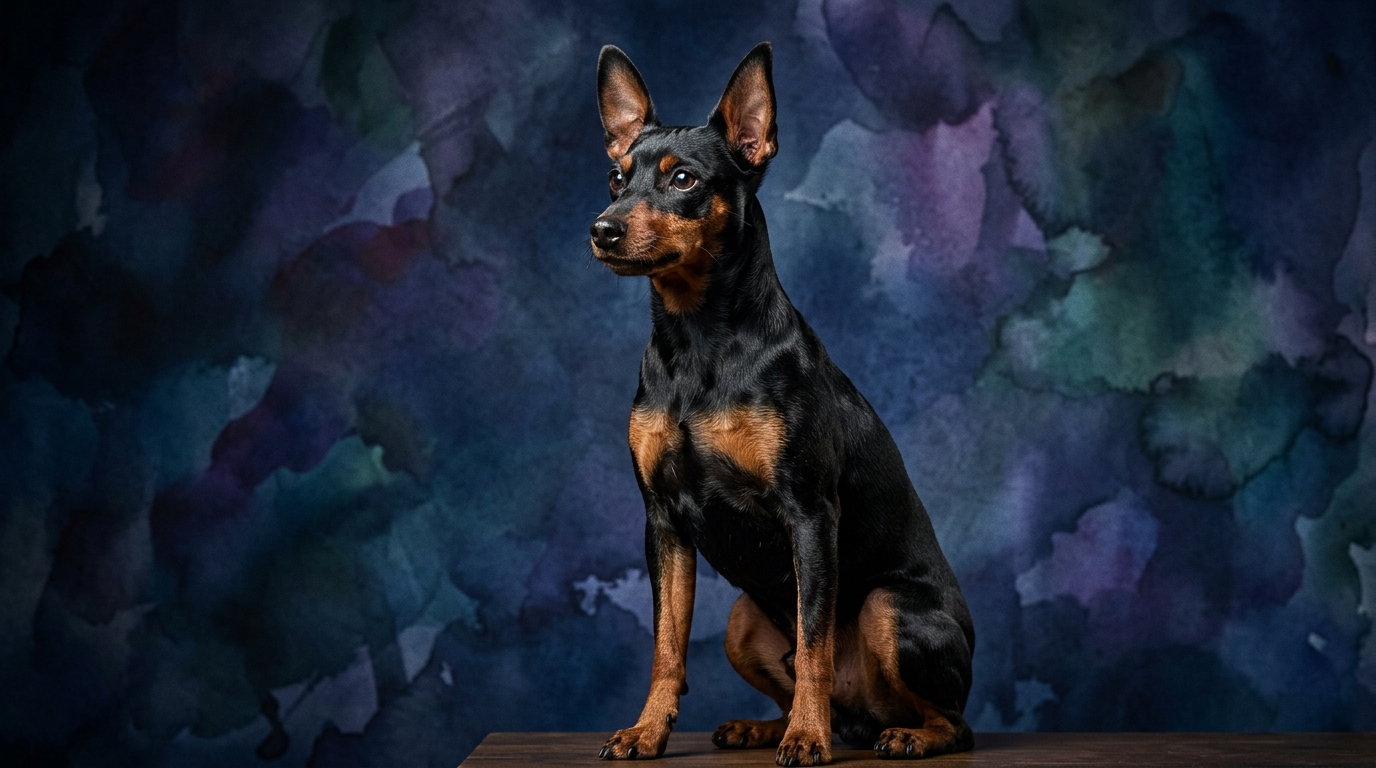
Side-by-Side IQ Profile: Komondor vs. Miniature Pinscher
At The Cosmic Pet Pet IQ Lab, we assess canine intelligence across five key dimensions. While both the Komondor (Working Group, Coren rank #67) and the Miniature Pinscher (Toy Group, not Coren-ranked) register a 3/5 across the board in our specific metrics, the *application* and *manifestation* of these aptitudes are profoundly shaped by their breed-specific histories and inherent drives. Understanding these nuances is key to appreciating their unique cognitive blueprints.
For the Komondor, their **Problem Solving (3/5)** exhibits a practical, independent approach, honed over centuries of guarding livestock. They are adept at assessing complex threats and devising strategies to protect their flock without direct human command, often making critical decisions based on their own keen judgment rather than waiting for instruction. Their solutions are typically robust, enduring, and singularly geared towards ensuring the safety and integrity of their charges. Their **Training Speed (3/5)** indicates they learn at a moderate pace, but their deep-seated independence means they require patient, consistent, and reward-based training that respects their self-thinking nature. They grasp concepts effectively, but their willingness to comply is often contingent on their perceived value of the task and its alignment with their protective instincts. Repetitive drill work can be less engaging for them than task-oriented learning, demanding a thoughtful training approach. With **Social Intelligence (3/5)**, Komondors form exceptionally strong, discerning bonds with their primary family and 'flock,' be it human or animal. They are typically reserved with strangers, possessing a keen ability to read intentions within their trusted circle, but they are not inherently inclined towards broad social engagement or seeking constant approval from a wide array of people. Their social cues are often subtle and direct. Their **Instinctive Drive (3/5)** is profoundly centered on guardianship and protection. This moderate score reflects a deep, unwavering commitment to their role, translating into consistent vigilance, territoriality, and a readiness to act when necessary. This powerful drive is not easily redirected and forms the bedrock of their behavioral patterns and decision-making processes. Finally, their **Memory (3/5)** is solid for routines, learned commands, and particularly for faces, territories, and past events. They retain training well once a concept is truly understood and accepted, and they remember perceived threats or safe individuals over long periods, contributing significantly to their reliable and consistent protective nature.
The Miniature Pinscher approaches **Problem Solving (3/5)** with a tenacious, often spirited, and highly creative attitude. They are clever at figuring out how to get what they want, whether it's opening a cabinet, outsmarting a gate latch, or manipulating their humans, often employing persistence, agility, and a touch of mischief. Their solutions are frequently self-serving and inventive, reflecting their assertive personality. In terms of **Training Speed (3/5)**, Min Pins learn at a moderate speed, but their training can be a test of wills due to their assertive and independent nature. They pick up commands but may choose whether or not to comply based on their mood, perceived benefit, or immediate interest. Consistency, positive reinforcement, and making training feel like a fun game are absolutely crucial for maintaining their engagement and compliance. Miniature Pinschers display **Social Intelligence (3/5)** by forming deep, often intense, attachments with their chosen humans, frequently acting as devoted, albeit sometimes demanding, companions. They can be wary of strangers and other animals, requiring careful and early socialization to ensure polite interactions, but they are remarkably perceptive of their family's emotions and subtle cues. Their **Instinctive Drive (3/5)**, while also a 3/5, manifests as a strong prey drive, an inherent desire to 'patrol' their territory with confidence, and a general air of self-importance. They possess a fearless energy that belies their small size, driven by an innate confidence and a need to assert themselves and explore within their environment. Min Pins have a good **Memory (3/5)** for commands, routines, and who provides the best treats or most engaging play. They remember past experiences, both positive and negative, which significantly influences their future responses and learning. This memory contributes to their ability to learn complex behaviors but also to the establishment of stubborn habits if not addressed early and consistently.
Where the Komondor Wins Cognitively
The Komondor’s cognitive strengths are deeply rooted in their historical role as a self-sufficient livestock guardian, a calling that demands a particular kind of mental fortitude. While both breeds register a 3/5 in problem-solving, the Komondor’s aptitude is uniquely geared towards complex, independent threat assessment and strategic defense, a skill honed over centuries. They demonstrate a superior capacity for evaluating environmental cues and formulating protective actions without direct human instruction, a critical attribute for a breed ranked #67 on Coren’s scale of working intelligence. Their social intelligence, though rated 3/5, translates into a profound discernment of intentions within their 'flock,' allowing them to quickly identify and neutralize perceived dangers with a quiet intensity. This breed's memory, also a 3/5, is particularly robust for retaining spatial awareness of their extensive territory and remembering specific individuals as allies or potential threats over long periods, fostering an exceptionally consistent and reliable protective presence. Their moderate instinctive drive is almost singularly focused on unwavering vigilance and protection, making them exceptionally reliable in their designated role.
Where the Miniature Pinscher Wins Cognitively
The Miniature Pinscher, despite not appearing on Coren’s ranking, showcases distinct cognitive advantages tailored to its companion role and smaller stature. Their 3/5 problem-solving ability often manifests as exceptional cleverness and resourcefulness in navigating a human household, such as devising ingenious ways to access forbidden areas or manipulate situations to their personal benefit. This isn't about guarding livestock, but about mastering their immediate domestic environment with spirited determination. Their social intelligence, also a 3/5, is expressed through an intense, perceptive bond with their primary caregivers, allowing them to keenly read human emotions and adapt their behaviors to elicit desired responses – a sophisticated form of social maneuvering within a family unit. The Min Pin's memory, rated 3/5, is particularly sharp for recalling which behaviors yield rewards or attention, making them quick learners when highly motivated by positive reinforcement. Their robust instinctive drive, also a 3/5, fuels a boundless curiosity and a fearless, confident exploration of their world, allowing them to adapt quickly to new, stimulating environments, unlike the more static, territorial focus of the Komondor.
Which is Easier to Train and Why
Despite both breeds scoring a 3/5 in training speed, the practical experience of training a Komondor versus a Miniature Pinscher differs significantly due to their intrinsic motivations and historical programming. The Komondor, a historical guardian, processes commands through the lens of its independent problem-solving and protective instincts. They learn at a moderate pace, but compliance hinges on their acceptance of the command's logical purpose within their world. Training requires immense patience, consistency, and a deep understanding of their self-reliant nature; they are not inherently driven to please. Conversely, the Miniature Pinscher, with its spirited and assertive temperament, can also be challenging despite its moderate learning speed. Their strong will and tendency towards self-interest mean that while they grasp concepts, execution can be selective. Training a Min Pin demands unwavering consistency, high-value rewards, and making the process engaging and fun to overcome their potential stubbornness and short attention span, channeling their energy effectively. Neither is 'easy' in the conventional sense, but the Komondor requires a trainer who respects their independence, while the Min Pin needs someone who can channel their exuberance and strong personality.
Which Suits Active Owners vs. Relaxed Owners
Matching a dog to an owner's lifestyle is crucial, and the Komondor and Miniature Pinscher present distinct profiles. The Komondor is best suited for owners who are active in the sense of providing ample space and a 'job' for their dog, rather than engaging in high-intensity, owner-led activities like jogging or competitive sports. They thrive in environments where they can patrol and protect a large, secure property, fulfilling their strong instinctive drive. A relaxed owner, in this context, means someone who appreciates a dog's independent nature and is content with a vigilant, rather than constantly interactive, companion. Conversely, the Miniature Pinscher requires an owner who is genuinely active and committed to providing consistent physical exercise and mental stimulation. Their boundless energy and moderate instinctive drive for exploration mean they need regular walks, play sessions, and engaging activities to prevent boredom and destructive behaviors. While they can adapt to apartment living, their owners must be proactive in meeting their daily needs for movement and engagement, making them less suitable for truly relaxed, sedentary lifestyles without significant owner effort.
The Verdict
Choose the Komondor if you seek a self-reliant, dedicated guardian with a large, secure property to oversee, and you are prepared to respect their independent decision-making and protective instincts. This breed thrives with owners who understand their deep-seated need to patrol and protect, rather than constantly seek interactive play.
Opt for the Miniature Pinscher if you desire a spirited, clever, and highly engaged companion who thrives on consistent training, mental challenges, and regular physical activity, and you are prepared to channel their assertive personality with firm, positive guidance.
🧠 Find Your Pet's IQ Score
Our Pet IQ Lab assessment covers 25+ tests across 5 cognitive dimensions — personalized to your breed.
Take the Full IQ Test →Frequently Asked Questions
Are Komondors good family dogs?
Yes, Komondors can be devoted family dogs, forming strong bonds with their immediate human 'flock.' However, their protective instincts mean they require extensive early socialization and careful introductions to strangers and other animals to ensure they distinguish between friend and foe appropriately.
Do Miniature Pinschers bark a lot?
Miniature Pinschers are known for their alert and vocal nature, often barking at perceived threats, strangers, or even just out of boredom or excitement. Consistent training from a young age can help manage excessive barking, but their natural vigilance means they will likely always be keen communicators.
How much exercise does a Komondor need?
A Komondor doesn't typically require intensive, structured exercise in the same way a high-energy sporting breed does. Instead, they need a large, securely fenced yard or property where they can freely patrol and monitor their territory, fulfilling their natural guardian role and getting sufficient movement.