Side-by-Side IQ Profile
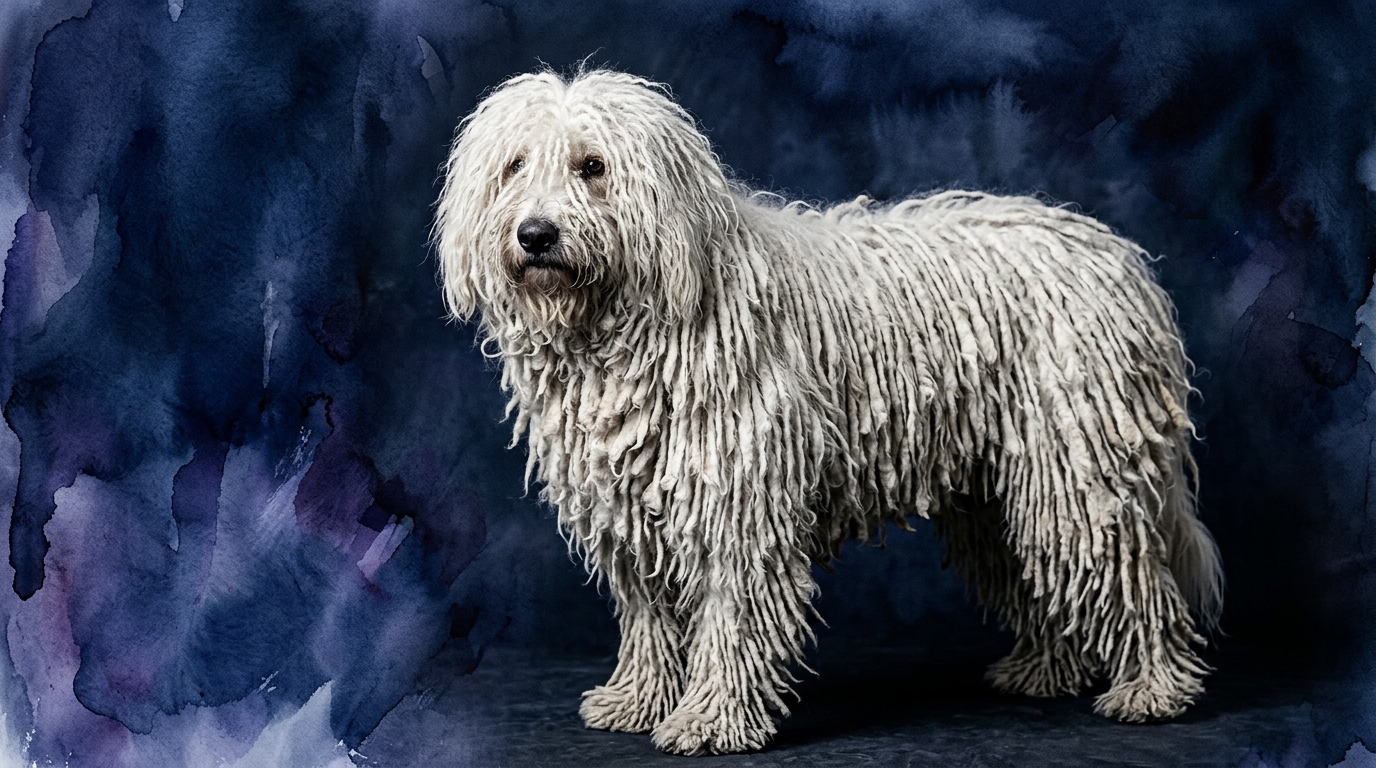
The Komondor, ranked #67 by Coren for working intelligence, presents a specialized cognitive profile. Its Problem Solving (3/5) is rooted in its historical role as a livestock guardian, demanding autonomous decision-making in the field; this isn't about solving intricate puzzles, but rather the practical application of judgment: assessing potential threats, discerning intentions, and responding independently to protect its charges without direct human intervention. Training Speed (3/5) is moderate, often requiring repetition and a clear understanding of the command's purpose from their perspective, as their deep-seated independence means they process commands through a lens of self-sufficiency. Social Intelligence (3/5) is highly specialized, primarily focused on distinguishing between trusted family members and potential intruders, exhibiting profound loyalty and protective instincts towards their immediate 'flock' but maintaining a reserved demeanor towards strangers. The Instinctive Drive (3/5) is almost exclusively directed towards livestock guarding and territorial defense, manifesting as a powerful inclination to patrol boundaries and observe surroundings. Finally, Memory (3/5) is reliable for established routines, the layout of their territory, and the identities of individuals they accept into their inner circle, retaining training and past experiences effectively.
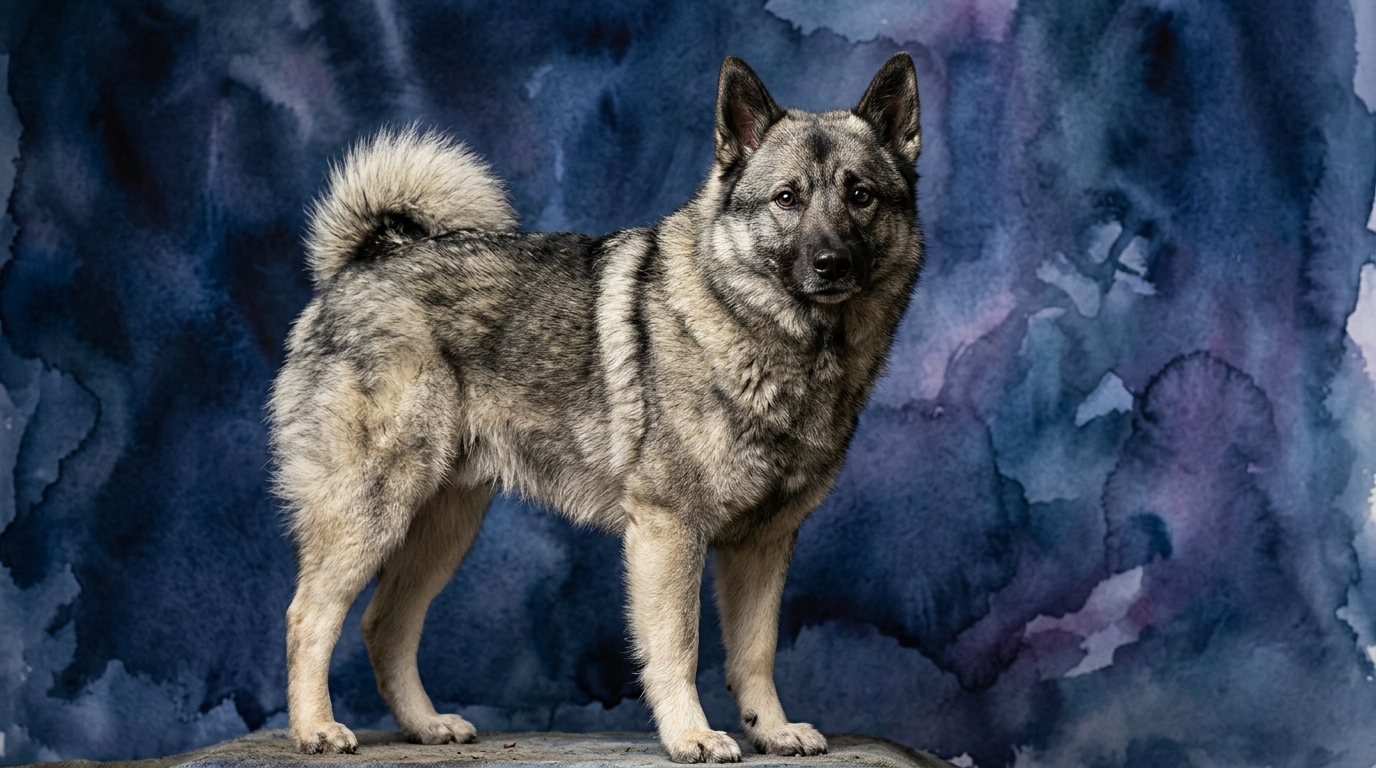
In contrast, the Norwegian Elkhound, holding a higher Coren rank of #36, displays a more generalized cognitive aptitude. Its Problem Solving (4/5) demonstrates a superior capacity for adaptive thinking, a trait refined by centuries of tracking and holding big game in challenging Nordic terrains; they exhibit a quick wit, capable of creatively navigating obstacles and learning from environmental feedback. Training Speed (4/5) is impressive, as Elkhounds generally acquire new commands and routines with efficiency, their cognitive processing allowing for quicker association between cues and actions. Social Intelligence (3/5) is moderate, characterized by strong bonds with their human family and a generally friendly disposition towards others, though they retain a certain independence and can be selective about interactions. Their Instinctive Drive (3/5) is profoundly linked to hunting, tracking, and exploring, translating into a strong desire to follow scents and investigate new environments. Memory (4/5) is robust and enduring, particularly for learned behaviors, intricate scent trails, and familiar routes, contributing to their reliability in retaining training cues and applying past experiences to new scenarios.
Where Komondor Wins Cognitively
The Komondor's cognitive strengths distinctly pivot on its capacity for autonomous, context-specific decision-making, particularly within a protective framework. Despite its lower Coren rank of 67, this breed displays an unmatched ability to make independent judgments when safeguarding its charges or territory, often without requiring direct human input. Its problem-solving (3/5) is not about mastering complex tricks, but rather a sophisticated, instinctual assessment of threats and a decisive reaction in real-time, making it singularly effective in its specialized guardian role. Furthermore, the Komondor's social intelligence (3/5), while moderate in scope, is acutely honed to differentiate between trusted individuals and perceived dangers, offering a nuanced understanding of its protective duties that the more generally amiable Elkhound's broader social processing might not prioritize. This discerning social processing allows the Komondor to maintain unwavering vigilance and act with resolute purpose when necessary, a critical cognitive advantage born from centuries of independent flock protection.
Where Norwegian Elkhound Wins Cognitively
The Norwegian Elkhound exhibits clear cognitive advantages in its adaptability and superior learning capabilities, metrics vividly reflected in its higher Coren rank of 36 and stronger scores in problem-solving (4/5), training speed (4/5), and memory (4/5). Its problem-solving skills are remarkably dynamic, enabling it to strategize and adjust swiftly to novel environmental conditions, a testament to its lineage of tracking big game across varied and unpredictable terrains. This cognitive agility allows the Elkhound to excel in diverse situations and master more intricate obedience and performance tasks. Moreover, the Elkhound's enhanced memory means it can internalize and recall a broader spectrum of commands and experiences with greater ease and persistence, making subsequent learning and behavioral retention notably more efficient. Its quicker training speed underscores a more immediate comprehension of new concepts and a pronounced willingness to engage actively in interactive learning sessions, a characteristic that sharply contrasts with the Komondor's more deliberate and self-reliant approach to directives.
Which is Easier to Train and Why
The Norwegian Elkhound generally presents as the more straightforward breed to train, primarily due to its higher scores in training speed (4/5) and problem-solving (4/5), coupled with a more adaptable and cooperative temperament. Elkhounds tend to grasp new commands and routines with greater alacrity and are often more eager to engage with their human companions, making positive reinforcement techniques highly effective. However, their independent hound spirit means consistency and engaging methods are still paramount, and they can be easily distracted by compelling scents. The Komondor, with a training speed of 3/5, demands a fundamentally different training philosophy. Their inherent independence and deep-seated guardian instincts mean they critically evaluate commands based on their own assessment of necessity and efficacy within their protective framework. Training a Komondor necessitates immense patience, clear, consistent boundaries, and a firm yet gentle approach focused on building a deep foundation of trust and mutual respect rather than expecting immediate, enthusiastic compliance. Their learning curve is less about rapid acquisition and more about profound understanding and acceptance of the command's ultimate value.
Which Suits Active Owners vs. Relaxed Owners
The Norwegian Elkhound is an exemplary match for active owners who relish outdoor adventures and consistent engagement. Its historical role as a robust hunting dog has endowed it with substantial stamina and a profound cognitive need for both physical and mental stimulation, manifesting as a strong desire for exploration and vigorous activity. Owners who enthusiastically partake in hiking, running, or various dog sports will discover that the Elkhound thrives on these challenges, benefiting immensely from both strenuous physical exertion and mentally stimulating tasks. Conversely, the Komondor, while requiring regular, moderate exercise to maintain physical health, is distinctly better suited for owners who value a more relaxed, watchful presence rather than a constant companion for high-energy exploits. Their activity often centers around patrolling a secure, expansive yard and diligently observing their domain, typically requiring less structured, intense exercise than the Elkhound. Owners who appreciate a calm, self-reliant guardian and can provide ample space for them to oversee their territory will find a deeply compatible companion in the Komondor.
The Verdict
Choose the Komondor if you seek an independent, dedicated guardian for your home and family, valuing a dog that makes its own protective judgments and requires an owner who respects its self-reliance.
Opt for the Norwegian Elkhound if you desire an engaged, adaptable companion for an active lifestyle, appreciating a dog that learns readily and enjoys participating in adventures with its human.
🧠 Find Your Pet's IQ Score
Our Pet IQ Lab assessment covers 25+ tests across 5 cognitive dimensions — personalized to your breed.
Take the Full IQ Test →Frequently Asked Questions
Do Komondors get along with other pets?
Komondors can coexist peacefully with other pets, especially if raised with them from a young age. Their guardian instinct extends to all members of their perceived "flock," but introductions to new animals should be managed carefully due to their inherent wariness of outsiders.
Are Norwegian Elkhounds good family dogs?
Norwegian Elkhounds are generally good family dogs, known for being loyal and affectionate with their human family members. They are playful and robust, making them suitable companions for older children who understand how to interact respectfully with dogs.
How much grooming does each breed require?
The Komondor requires significant grooming due to its unique corded coat, which needs regular separation to prevent matting and maintain hygiene, though it doesn't shed much. The Norwegian Elkhound has a dense double coat that sheds seasonally and requires regular brushing, especially during shedding periods, to manage loose fur.